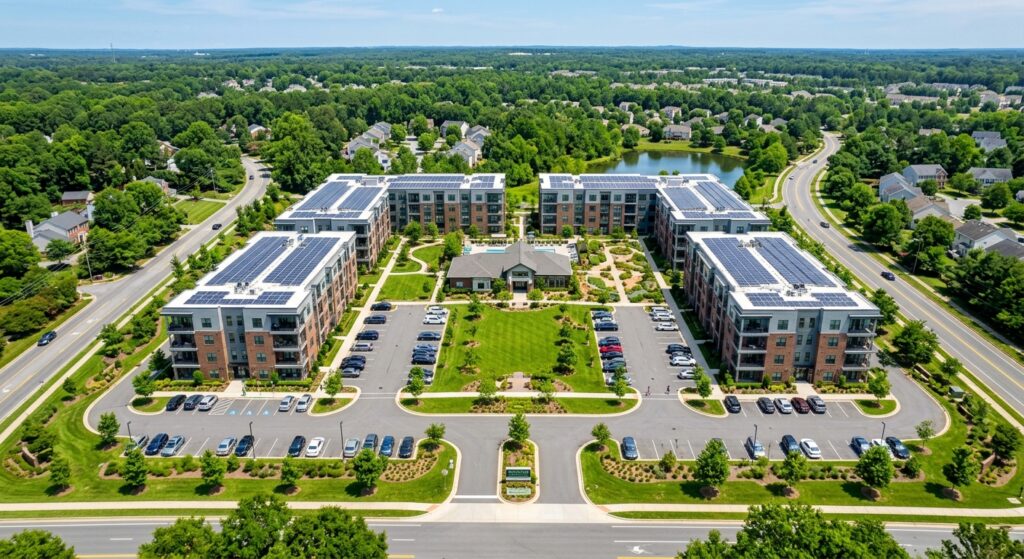
Energy Efficient Home Credit Multifamily: 2026 Guide
Energy Efficient Home Credit Multifamily: 2026 Complete Guide for Real Estate Investors
The energy efficient home credit multifamily (Section 45L) is one of the most underused tax credits available to real estate developers and investors in 2026. If you build or substantially reconstruct qualifying apartment units, you can earn thousands of dollars per dwelling unit in direct federal tax credits. This guide walks you through everything you need to know to claim this powerful incentive and boost your after-tax returns. Learn more about tax strategies for real estate investors at Uncle Kam.
This information is current as of 4/6/2026. Tax laws change frequently. Verify updates with the IRS at IRS.gov Energy Efficient Home Credit if reading this later.
Table of Contents
- Key Takeaways
- What Is the Energy Efficient Home Credit for Multifamily Properties?
- How Much Is the 45L Credit for Multifamily Projects in 2026?
- Who Qualifies for the Energy Efficient Home Credit on Multifamily Properties?
- What Are the ENERGY STAR and Zero Energy Ready Requirements?
- How Does Prevailing Wage Affect the 45L Credit Amount?
- How Do You Claim the Energy Efficient Home Credit for Multifamily Units?
- Can You Stack the 45L Credit With Other Tax Incentives?
- Uncle Kam in Action: Real Estate Developer Saves Big
- Next Steps
- Related Resources
- Frequently Asked Questions
Key Takeaways
- The Section 45L energy efficient home credit multifamily applies to newly built or substantially reconstructed apartment units placed in service by December 31, 2032.
- Multifamily credit amounts in 2026 range from $500 to $5,000 per dwelling unit, depending on certification level and prevailing wage compliance.
- Paying prevailing wages can multiply the 45L credit by up to 5x per unit on qualifying multifamily projects.
- You claim this credit using IRS Form 8908 and must obtain third-party energy certification before filing.
- The 45L credit can be stacked with cost segregation, bonus depreciation, and Low-Income Housing Tax Credits (LIHTC) for maximum tax savings.
What Is the Energy Efficient Home Credit for Multifamily Properties?
Quick Answer: The energy efficient home credit multifamily (Section 45L) is a federal tax credit for contractors, developers, and investors who build or substantially reconstruct qualifying energy-efficient apartment units. For 2026, credit amounts range from $500 to $5,000 per unit.
The Section 45L credit was significantly expanded by the Inflation Reduction Act (IRA) of 2022 and remains active through December 31, 2032. Before the IRA, multifamily builders received only a flat $2,000 credit per unit. The new law created tiered credit levels tied to two distinct certification pathways: ENERGY STAR Multifamily New Construction and the DOE Zero Energy Ready Home program.
For real estate investors, this is a dollar-for-dollar tax credit — not just a deduction. Every dollar of credit reduces your federal tax bill directly. On a 100-unit apartment project meeting Zero Energy Ready standards with prevailing wages, the potential benefit reaches $500,000. That is a powerful tool for any serious real estate investor’s tax strategy.
How Section 45L Changed After the Inflation Reduction Act
Before 2023, the old Section 45L credit was $2,000 per unit for homes meeting a 50% energy savings threshold. The IRA replaced that structure with a new, tiered approach. Now, the credit ties directly to specific certification programs rather than a generic percentage-based test.
Furthermore, the new rules added a prevailing wage incentive. If workers on a qualifying project are paid prevailing wages as defined by the Davis-Bacon Act, the per-unit credit multiplies by a factor of five. This change aligns the 45L credit with broader labor policy goals while giving developers a clear path to dramatically higher credits.
The Inflation Reduction Act of 2022 made these changes effective for homes acquired (i.e., sold to or leased by the first tenant) after December 31, 2022. Therefore, any multifamily property placed in service and first occupied during 2026 can qualify under the updated rules.
Pro Tip: The 45L credit flows to the contractor or developer — not the property owner who passively holds the building. Developers structured as pass-through entities (LLCs, S Corps, partnerships) pass the credit to their investors. Work with a tax strategist to ensure the credit reaches the right party.
How Much Is the 45L Credit for Multifamily Projects in 2026?
Quick Answer: In 2026, the energy efficient home credit multifamily ranges from $500 per unit (ENERGY STAR, no prevailing wage) to $5,000 per unit (Zero Energy Ready, with prevailing wage). The credit is claimed per qualified dwelling unit. Verify current amounts at IRS.gov.
The credit amount depends on two key variables: the certification tier your project achieves and whether prevailing wages are paid. Higher certification tiers require more rigorous energy performance. However, even the base-level ENERGY STAR certification delivers meaningful savings at scale.
2026 Section 45L Multifamily Credit Amount Table
| Certification Tier | No Prevailing Wage | With Prevailing Wage |
|---|---|---|
| ENERGY STAR Multifamily New Construction | $500 per unit | $2,500 per unit |
| DOE Zero Energy Ready Home (Multifamily) | $1,000 per unit | $5,000 per unit |
Note: These figures reflect IRS guidance as expanded by the Inflation Reduction Act. Verify current amounts at IRS.gov as the One Big Beautiful Bill Act (OBBBA) may have introduced further updates.
Example Calculation: 80-Unit Apartment Building in 2026
Consider a developer who builds an 80-unit multifamily project in North Carolina in 2026. Each unit meets ENERGY STAR Multifamily New Construction standards. The developer also pays prevailing wages throughout construction.
- Credit per unit (ENERGY STAR + prevailing wage): $2,500
- Total units: 80
- Total 45L credit: 80 × $2,500 = $200,000
Furthermore, if that same developer upgrades to DOE Zero Energy Ready Home certification with prevailing wages, the credit rises to $5,000 per unit. The total credit becomes $400,000 for the same 80-unit building. That is a meaningful boost to project returns. Use our North Carolina Small Business Tax Calculator to model how credits like the 45L affect your 2026 tax liability.
Pro Tip: On a large multifamily project, the incremental cost of upgrading from ENERGY STAR to Zero Energy Ready certification is often less than the additional $2,500-per-unit credit difference. Run a cost-benefit analysis before finalizing your building specs.
Who Qualifies for the Energy Efficient Home Credit on Multifamily Properties?
Quick Answer: The 45L credit is available to eligible contractors — those who construct or substantially reconstruct a qualified energy-efficient home and own the home during construction. Investors who buy completed buildings do not claim this credit directly.
The IRS defines an “eligible contractor” as the person who constructed or substantially reconstructed the qualified energy-efficient home and who owned the home at the time of construction. For multifamily purposes, this typically means the developer or general contractor holds the credit, not the end investor. However, in a pass-through entity structure, the credit flows to partners or members through the entity’s tax return.
What Types of Multifamily Properties Qualify?
A qualifying residence for Section 45L purposes must meet several basic requirements. The property must be located in the United States. It must be used as a residence. Moreover, it must be acquired by the first person who will occupy it after December 31, 2022, and before January 1, 2033.
For multifamily buildings, the credit applies on a per-dwelling-unit basis. Each apartment or unit in a qualifying building that meets the certification standards earns its own credit. Therefore, larger buildings earn larger total credits. The property type can include:
- Apartment buildings (3+ stories above grade plane using ENERGY STAR Multifamily standards)
- Mixed-use residential developments with qualifying residential units
- Low-income housing tax credit (LIHTC) multifamily projects
- Market-rate apartment communities
- Substantially reconstructed multifamily buildings (not just renovated)
What Counts as “Substantially Reconstructed”?
For existing buildings, substantial reconstruction means that at least 50% of the building’s exterior walls and structural components are new or replaced. This is a high bar. Therefore, standard renovations — like replacing HVAC systems or windows alone — do not qualify a building for the energy efficient home credit multifamily. The reconstruction must be so extensive that the resulting home qualifies under the relevant certification program’s guidelines.
Investors considering value-add apartment rehab projects should consult with an energy certifier before construction begins. Understanding the threshold early can help structure the project scope to maximize credit eligibility. Explore how Uncle Kam’s tax advisory services can guide your next multifamily development deal.
Pro Tip: If you own a multifamily property through an LLC or partnership and you acted as your own general contractor, your entity may be the eligible contractor. This means you — as the investor — can capture the 45L credit directly through your pass-through return.
What Are the ENERGY STAR and Zero Energy Ready Requirements?
Quick Answer: ENERGY STAR Multifamily New Construction requires homes to meet EPA’s current energy efficiency standards for multifamily buildings. The DOE Zero Energy Ready Home program requires an even higher performance level. Both programs require third-party verification.
ENERGY STAR Multifamily New Construction Requirements
The ENERGY STAR Multifamily New Construction program is the baseline tier for the 45L multifamily credit. Buildings must meet rigorous standards set by the EPA. These standards address insulation, air sealing, HVAC efficiency, windows, and water heating. The specific version of the standard that applies depends on when construction begins. Currently, the program uses Version 1.2 or later for multifamily buildings.
To earn ENERGY STAR certification for a multifamily project, the developer must:
- Partner with an EPA-recognized verifier or RESNET-certified rater
- Design the building to meet all program requirements before construction
- Pass third-party inspections and testing during and after construction
- Submit certification documentation to the EPA or the ENERGY STAR program
Certification fees and energy modeling typically cost between $10,000 and $30,000 for a large multifamily project. However, the potential 45L credit on a 100-unit ENERGY STAR building with prevailing wages is $250,000. That is a strong return on the investment in certification.
DOE Zero Energy Ready Home Requirements for Multifamily
The DOE Zero Energy Ready Home program represents the highest performance tier. A zero energy ready home is so energy-efficient that a renewable energy system could offset all of the home’s annual energy use. For multifamily buildings, this program sets requirements for:
- Extremely high levels of insulation and air sealing
- High-efficiency HVAC systems with heat recovery ventilation
- ENERGY STAR appliances and lighting
- EV-ready charging infrastructure
- Solar-ready construction (conduit, roof orientation, structural capacity)
For developers willing to make this investment, the reward is significant. On a 100-unit Zero Energy Ready project with prevailing wages, the 45L credit alone totals $500,000. Additionally, such buildings command higher rents and attract sustainability-focused tenants — further improving your investment’s return on equity.
Did You Know? Zero Energy Ready Home certification also makes multifamily projects eligible for certain state and utility incentive programs that stack on top of the federal 45L credit. Research available programs in your state before breaking ground.
How Does Prevailing Wage Affect the 45L Credit Amount?
 Free Tax Write-Off Finder
Quick Answer: Paying prevailing wages multiplies your 45L credit by five times. Without prevailing wages, multifamily ENERGY STAR units earn $500 each. With prevailing wages, each unit earns $2,500. The Davis-Bacon Act wage standards apply.
The prevailing wage requirement is one of the most important planning decisions in a multifamily development project. The Inflation Reduction Act tied higher credit amounts to prevailing wage compliance, following the standard established by the Davis-Bacon Act and related regulations enforced by the Department of Labor.
What Is the Davis-Bacon Prevailing Wage Standard?
The Davis-Bacon Act requires that workers on qualifying construction projects receive wages no less than the locally prevailing wage rates for similar work in the area. The Department of Labor publishes wage determinations by trade and county. These rates vary significantly by market and trade.
For the 45L credit, the prevailing wage requirement applies to all laborers and mechanics employed on the construction of the qualifying residence. Developers must document compliance carefully. This means maintaining certified payroll records for all contractors and subcontractors throughout the project.
Prevailing Wage Impact on Project Economics
Paying prevailing wages may increase labor costs by 10% to 30% in certain markets. However, the 5x multiplier on the 45L credit often more than offsets this additional cost. Consider a 150-unit apartment project:
| Scenario | Credit Per Unit | Total Credit (150 Units) |
|---|---|---|
| ENERGY STAR, no prevailing wage | $500 | $75,000 |
| ENERGY STAR, with prevailing wage | $2,500 | $375,000 |
| Zero Energy Ready, no prevailing wage | $1,000 | $150,000 |
| Zero Energy Ready, with prevailing wage | $5,000 | $750,000 |
The $675,000 credit difference between the base scenario and the top-tier scenario is remarkable. Even after increased labor costs, the net benefit of prevailing wage compliance is strongly positive in most multifamily markets. Work with your tax strategist to model the break-even point for your specific project before construction begins.
How Do You Claim the Energy Efficient Home Credit for Multifamily Units?
Quick Answer: You claim the energy efficient home credit multifamily using IRS Form 8908. Complete the form and attach it to your business return. You must have a valid energy certification from a qualified third party before filing.
Step-by-Step: Claiming the 45L Credit
Follow these steps to claim the energy efficient home credit on your multifamily project:
- Step 1 — Plan early: Engage an energy certifier and rater before construction. Discuss the ENERGY STAR or Zero Energy Ready certification pathway upfront.
- Step 2 — Build to spec: Follow the certification program’s requirements throughout construction. Do not deviate from the energy design without checking with your certifier.
- Step 3 — Document prevailing wages: If targeting the higher credit, maintain certified payroll records from all contractors and subcontractors for every pay period.
- Step 4 — Obtain certification: After construction, have a qualified third party conduct the required inspections and testing. Secure the official certification documentation.
- Step 5 — Complete Form 8908: Fill in the number of qualifying dwelling units, the applicable credit amount per unit, and attach supporting certification records.
- Step 6 — File with your return: Attach Form 8908 to your federal tax return (Form 1120, 1065, or 1040 Schedule C, depending on entity type).
What Records Should You Keep?
The IRS requires you to keep documentation to support your 45L credit claim. Specifically, you need:
- Third-party certification documentation (ENERGY STAR or Zero Energy Ready certificate)
- Energy modeling reports and test results (blower door test, duct leakage tests)
- Certified payroll records (if prevailing wages were paid)
- Project contracts showing you were the eligible contractor during construction
- Evidence of first occupancy dates for each qualifying unit
Maintain these records for at least seven years after filing. The IRS can audit energy credit claims, and proper documentation is your best defense. If you need support structuring and filing these claims, Uncle Kam’s tax prep and filing services specialize in complex credit strategies for real estate investors.
Can You Stack the 45L Credit With Other Tax Incentives?
Quick Answer: Yes. The Section 45L energy efficient home credit multifamily can be stacked with cost segregation studies, bonus depreciation, Low-Income Housing Tax Credits (LIHTC), and state energy incentives. Stacking multiplies your total tax benefit significantly.
Real estate investors who build or develop multifamily properties in 2026 have access to a powerful stack of federal and state tax incentives. The 45L credit is one piece of a broader strategy. Combining multiple incentives can dramatically reduce the effective cost of development and increase after-tax returns.
Cost Segregation and Bonus Depreciation
A cost segregation study identifies building components that qualify for accelerated depreciation — typically 5-year or 15-year property instead of 27.5-year residential property. In 2026, these shorter-life assets may qualify for bonus depreciation. However, always verify current bonus depreciation percentages with your tax advisor, as rates under the OBBBA may differ from prior-law rules.
On a $10 million multifamily project, a cost segregation study might reclassify $1.5 million to $2.5 million of assets into shorter depreciation lives. Combined with a $300,000 to $500,000 45L credit, the total first-year tax benefit can be enormous. Learn more about how Uncle Kam’s tax strategy services help real estate investors use these tools together.
Low-Income Housing Tax Credits (LIHTC)
Many affordable housing developers combine 45L credits with Low-Income Housing Tax Credits (LIHTC). Both credits can apply to the same project and the same units. However, under IRS rules, the 45L credit basis is reduced by the 45L credit amount claimed. This basis reduction affects your total LIHTC qualified basis calculation. Work with a qualified tax professional to model the interaction between these two credit programs before finalizing your project structure.
State and Utility Incentives
Many states offer additional tax credits or rebates for energy-efficient construction. Utility companies also provide rebates for high-efficiency HVAC systems, insulation, and lighting. These incentives do not necessarily reduce your federal 45L credit eligibility. However, they may affect your depreciable basis in the building. Research available programs through your state energy office or utility provider as part of your pre-development planning.
For North Carolina developers, our North Carolina Small Business Tax Calculator can help you estimate the combined impact of federal credits and state incentives on your 2026 project economics. This tool is a great starting point for your planning discussions with a tax advisor.
Pro Tip: The SALT deduction cap increased to $40,000 for 2026 under the OBBBA for taxpayers with MAGI under $500,000. Real estate investors who itemize should factor this into their overall strategy alongside energy credits. Visit the IRS Newsroom for the latest OBBBA guidance.

Uncle Kam in Action: Real Estate Developer Saves Big With 45L Credit
Client Snapshot: Marcus is a real estate developer and investor based in Raleigh, North Carolina. He manages a small portfolio of multifamily developments through a multi-entity LLC structure. In 2026, Marcus completed a 120-unit Class A apartment community targeting young professionals.
Financial Profile: The project had a total development cost of $18 million. Marcus’s entity generated approximately $2.1 million in taxable income before accounting for depreciation and credits. He was actively involved in construction decisions and management.
The Challenge: Marcus knew his project would have a substantial tax bill in the year of completion. However, he was unsure whether his building could qualify for the energy efficient home credit multifamily. He had not engaged an energy certifier early in the construction process. Furthermore, he was unaware of the prevailing wage multiplier available under Section 45L.
The Uncle Kam Solution: Uncle Kam’s team reviewed Marcus’s building specifications and confirmed that his project could still qualify for ENERGY STAR Multifamily New Construction certification through a retroactive certification process. His construction contractor had documented labor costs in detail, and the project site’s wages already met prevailing wage thresholds in Wake County, North Carolina, without additional cost.
Uncle Kam coordinated with a licensed energy certifier who conducted the necessary inspections and testing. The building passed ENERGY STAR certification for all 120 units. Because prevailing wages had been paid throughout construction, each unit qualified for the $2,500 credit — not just the base $500 credit.
The Results:
- 45L Tax Credit: 120 units × $2,500 = $300,000 in direct federal tax credits
- Cost Segregation Bonus: A cost segregation study identified an additional $420,000 in accelerated depreciation deductions
- Total Tax Savings: Approximately $450,000 in combined federal tax reduction for the 2026 tax year
- Investment in Uncle Kam: $18,500 in advisory and certification coordination fees
- First-Year ROI: Over 24x return on professional fees paid
Marcus had initially expected to write a large check to the IRS. Instead, he reinvested those savings into his next development project. See more client results like Marcus’s and learn how real estate investors are using federal tax incentives to build wealth faster in 2026.
Next Steps
If you own or plan to develop a multifamily property, follow these action steps now to capture the energy efficient home credit multifamily for 2026. Our team at Uncle Kam helps real estate investors structure deals and maximize every available credit and deduction.
- Step 1: Identify your current or planned projects that qualify as new construction or substantial reconstruction.
- Step 2: Contact an EPA-recognized energy certifier or RESNET rater to assess ENERGY STAR or Zero Energy Ready eligibility.
- Step 3: Review payroll records with your GC to determine if prevailing wage compliance is already met — or if it can be structured in.
- Step 4: Order a cost segregation study and combine it with your 45L credit strategy for maximum 2026 tax savings.
- Step 5: Schedule a tax advisory consultation with Uncle Kam to model your total tax benefit and plan your next development project.
Related Resources
- Real Estate Investor Tax Strategies at Uncle Kam
- Proactive Tax Strategy Planning Services
- Uncle Kam Tax Guides for Investors
- The MERNA™ Method: Uncle Kam’s Tax Optimization Framework
- Entity Structuring for Real Estate Developers
Frequently Asked Questions
Does the 45L credit apply to existing apartment buildings I am renovating?
Standard renovations do not qualify. However, a “substantial reconstruction” may qualify if it meets the IRS threshold — generally, more than 50% of the exterior walls and structural components must be new or replaced. Therefore, light value-add rehab projects typically do not meet this bar. Ground-up construction is the most common path to claiming the energy efficient home credit multifamily in 2026. Consult with your tax advisor and an energy certifier to assess whether your renovation scope meets the standard.
Is the 45L credit refundable or nonrefundable?
Under current law, the Section 45L energy efficient home credit is a nonrefundable general business credit. This means it can reduce your federal income tax liability to zero, but you cannot receive the excess as a cash refund. However, any unused credit may be carried back one year and carried forward up to 20 years. Therefore, even if you cannot use the full credit in 2026, you can apply it to future tax years. Work with a tax professional to plan the optimal use of this credit across multiple years.
What happens to the 45L credit if I sell the building after I claim it?
The 45L credit belongs to the eligible contractor who built the qualifying homes. Once you claim the credit on your tax return, you keep it regardless of a subsequent sale. However, if you sell the building before the units are first occupied, the credit may not yet be claimable — because the credit is triggered at the time of first occupancy. Furthermore, if your entity structure changes or ownership is transferred, consult a tax attorney to confirm credit eligibility is preserved. This is another reason why early planning with a tax advisor matters.
Can I claim the 45L credit for units in a building that also has commercial space?
Yes. The credit applies on a per-dwelling-unit basis. In a mixed-use building, only the qualifying residential units earn the credit. Commercial space, retail, or office units on the ground floor do not count. For example, in a building with 80 residential apartments and 5,000 square feet of retail on the ground floor, only the 80 qualifying apartment units are eligible for the 45L credit. This makes mixed-use projects very attractive from a tax perspective, as you can combine commercial depreciation strategies with residential energy credits.
How does the energy efficient home credit interact with the LIHTC credit on affordable housing projects?
Both the Section 45L credit and the Low-Income Housing Tax Credit (LIHTC) can apply to the same affordable multifamily project. However, the IRS requires you to reduce the building’s adjusted basis by the 45L credit amount claimed. This basis reduction flows into the LIHTC qualified basis calculation. In practice, this means the 45L credit slightly reduces the amount of LIHTC you can generate. In most cases, the net effect is still strongly positive — the 45L credit is worth more dollar-for-dollar than the small reduction in LIHTC. Always model both credits together before finalizing your affordable housing deal structure with your entity structuring advisor.
Is there a deadline to qualify for the Section 45L energy efficient home credit?
Yes. Under current law, qualifying homes must be acquired by the first person who occupies them before January 1, 2033. This gives developers a clear planning window through the end of 2032. Projects completed in 2026 are well within this window. Furthermore, the IRS requires that the home be a qualified energy-efficient home under the applicable certification standard in effect at the time of completion. Always verify the current version of the ENERGY STAR or Zero Energy Ready standard before starting design and construction. Visit IRS.gov for the most current guidance on the Section 45L credit deadline and requirements.
Last updated: April, 2026

