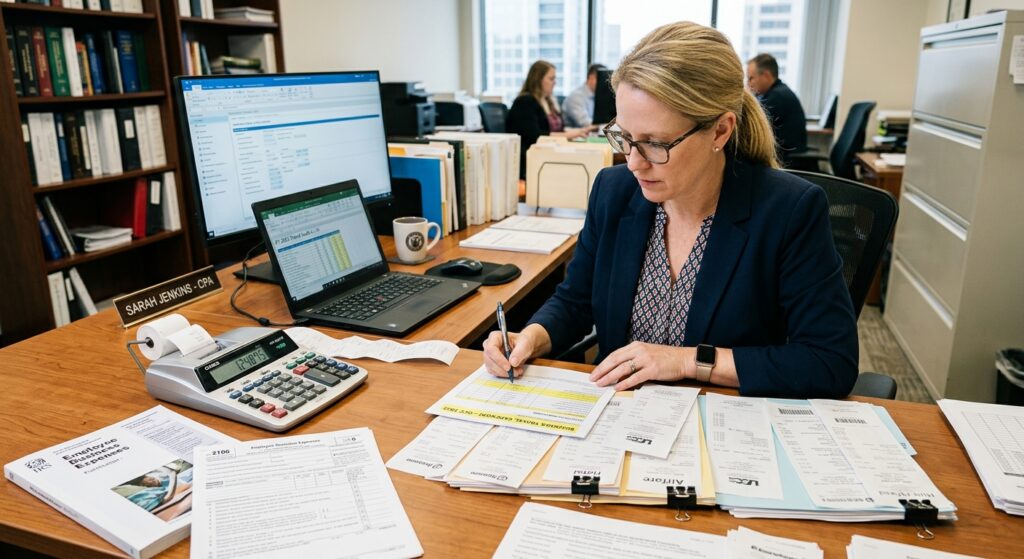
How to Deduct Per Diem Meal Allowance: Complete 2026 Tax Guide for Business Owners and Self-Employed Professionals
Understanding how to deduct per diem meal allowance is essential for maximizing your 2026 tax savings. Business owners, self-employed contractors, and traveling professionals can leverage per diem meal deductions to reduce their taxable income, but only when they follow strict IRS guidelines. This comprehensive guide walks you through eligibility requirements, deduction limits, documentation strategies, and real-world examples to ensure you claim every legitimate deduction. For the 2026 tax year, proper per diem accounting can save thousands in federal taxes—provided you understand the rules and maintain meticulous records.
Table of Contents
- Key Takeaways
- What Is a Per Diem Meal Allowance?
- What Are the 2026 Per Diem Meal Allowance Rates?
- Who Qualifies for Per Diem Meal Deductions?
- What Are the Per Diem Meal Allowance Rules for Self-Employed Professionals?
- How Do You Claim Per Diem Meal Deductions on Your 2026 Tax Return?
- What Documentation Is Required for Per Diem Meal Deductions?
- What Are Common Per Diem Meal Deduction Mistakes?
- Uncle Kam in Action
- Next Steps
- Frequently Asked Questions
Key Takeaways
- Per diem meal allowances let you deduct meal costs during business travel without itemizing each receipt.
- For 2026, the IRS standard per diem rate is approximately $75 daily for meals and incidental expenses.
- You must meet specific eligibility criteria: genuine business travel, overnight stays, and proper documentation.
- Self-employed professionals report per diem deductions on Schedule C, while employees use Form 2106.
- Meal deductions are subject to the 50% deduction limit unless specific IRS exceptions apply.
What Is a Per Diem Meal Allowance?
Quick Answer: A per diem meal allowance is a daily tax deduction that reimburses business meals during qualifying business travel without requiring itemized receipts for every meal.
A per diem meal allowance simplifies business meal deductions by allowing you to claim a fixed daily amount instead of tracking individual receipts. The IRS recognizes that business professionals traveling away from home incur ordinary meal expenses. Rather than maintaining detailed records for every coffee, lunch, and dinner, the per diem method provides a standardized deduction that covers meals and incidental expenses (M&IE).
The per diem approach differs from the actual expense method, which requires itemizing and documenting each meal purchase. For 2026, the per diem method offers significant tax planning advantages, particularly for consultants, traveling salespeople, contractors, and business owners who spend considerable time away from their primary office or home.
Two Methods for Deducting Business Meals
- Per Diem Method: Claim a fixed daily allowance set by the IRS for your travel location.
- Actual Expense Method: Track and itemize every meal receipt to substantiate your deduction.
Most traveling professionals choose the per diem method because it reduces administrative burden, minimizes audit risk, and often yields higher deductions. However, in certain high-cost markets, itemizing actual expenses may be more advantageous.
Why the 50% Meal Deduction Rule Applies
Even when using the per diem method, your deductible amount is generally limited to 50% of the per diem rate. This is because IRS Publication 463 establishes the 50% deduction limit for business meals, with limited exceptions for specific industries (such as transportation workers) where higher percentages may apply. Understanding this limitation is critical to calculating your actual tax benefit accurately.
What Are the 2026 Per Diem Meal Allowance Rates?
Quick Answer: For 2026, the IRS standard per diem rate for meals and incidental expenses is approximately $75 daily, though rates vary by geographic location and can be higher in major metropolitan areas.
The IRS updates per diem rates annually based on the General Services Administration (GSA) locality rates. For the 2026 tax year, most U.S. locations fall within the standard federal per diem rate of approximately $75 per day for meals and incidental expenses. However, rates are not uniform across the country. High-cost areas like New York City, San Francisco, and Washington, D.C., may have significantly higher allowances that can exceed $80-$90 per day.
| Location Type | 2026 Daily Per Diem Rate | Meals Only (50% of M&IE) |
|---|---|---|
| Standard U.S. Locations | $75 | $37.50 |
| High-Cost Metropolitan Areas | $80–$95 | $40–$47.50 |
| Premium International Markets | $100+ | $50+ |
How to Find Your Specific Location’s Per Diem Rate
The GSA per diem rates website maintains the official 2026 rates for every U.S. city and county. You can search by destination to confirm the exact rate applicable to your business travel. This step is critical because using an incorrect rate could result in IRS challenges. Always verify the rate for the specific date of travel, as rates may vary seasonally in certain locations.
Pro Tip: Save a screenshot of the GSA rate for your travel date as part of your documentation. This single step dramatically reduces audit risk and strengthens your deduction substantiation.
Who Qualifies for Per Diem Meal Deductions?
Quick Answer: You qualify if you traveled away from home on business, stayed overnight, incurred meal expenses, and maintained proper documentation of your trip purpose.
The IRS permits per diem meal deductions for most business professionals, but strict eligibility rules apply. Your trip must qualify as legitimate business travel, meaning you traveled primarily for business purposes and stayed away from your tax home long enough to claim meals. Casual day trips to nearby clients typically do not qualify. Similarly, mixing vacation with business (such as extending a business trip for personal leisure) requires careful allocation of business versus personal days.
Core Eligibility Requirements
- Traveled away from your tax home for business purposes.
- Stayed overnight or at least long enough to require a sleep or rest period.
- Incurred ordinary meal and incidental expenses during the trip.
- Maintained documentation proving the trip’s business purpose and duration.
Who qualifies includes self-employed consultants, traveling salespeople, contractors on multi-week projects, business owners attending conferences, and employees on employer-authorized travel. Real estate investors traveling to inspect properties, contractors moving between job sites, and truck drivers operating across multiple states frequently qualify. However, local commuting expenses, meals eaten at your regular workplace, and personal vacation meals do not qualify.
Special Eligibility Rules by Profession
Certain professions receive favorable treatment. Transportation industry workers, including truck drivers and railroaders, may deduct 80% of per diem meals rather than the standard 50%. Publication 463 details these exceptions. Similarly, merchant mariners and certain other specialized occupations have modified deduction percentages. If you work in transportation or a related industry, verify your industry’s specific rules to ensure maximum deductions.
What Are the Per Diem Meal Allowance Rules for Self-Employed Professionals?
Quick Answer: Self-employed professionals deduct per diem meals on Schedule C of their tax return, applying the same per diem rates and 50% deduction limit as employees, but with greater flexibility in defining business travel.
Self-employed professionals, contractors, and small business owners have significant advantages when claiming per diem meal deductions. Unlike employees who must navigate employer reimbursement policies, the self-employed can structure their business travel strategically. You can claim per diem meals for any business travel where you earned income, attended business development activities, or visited client sites. For consulting contracts spanning weeks or months, per diem deductions can accumulate substantially. You can use our Self-Employment Tax Calculator for Pennsylvania to estimate your total self-employment tax liability and understand how business meal deductions reduce your overall tax burden.
Schedule C Reporting Requirements
On Schedule C (Form 1040), self-employed professionals report business meal deductions on Line 27a. You cannot simply list “per diem meals” as a line item. Instead, you categorize the deduction under “Meals and entertainment” and note that you used the per diem method in your tax records. The IRS expects detailed contemporaneous documentation showing which days, cities, and trips generated these deductions. Without clear records, the IRS may disallow the entire deduction during an audit.
Multi-Day Trip Calculations for Self-Employed Professionals
Calculating per diem meals for multi-day business trips requires careful attention to IRS rules. If you traveled for business on Monday through Friday (five days), you claim five full days of per diem meals. For partial days, such as arriving late or departing early, you typically claim 75% of the daily rate. The partial day rules vary depending on whether you incurred meals on those partial days. Many self-employed professionals maintain a simple spreadsheet documenting each trip’s dates, locations, and number of days to simplify tax preparation.
How Do You Claim Per Diem Meal Deductions on Your 2026 Tax Return?
 Free Tax Write-Off Finder
Quick Answer: Claim per diem meals on Schedule C (self-employed) or Form 2106 (employees), multiplying your daily per diem rate by the number of qualifying business travel days, then reducing by 50% for the deduction limit.
The mechanics of claiming per diem meal deductions differ slightly depending on your business structure. Self-employed professionals report on Schedule C, while employees use Form 2106. Both methods require the same basic calculation: daily per diem rate multiplied by qualifying days, then reduced by 50% to reflect the deduction limitation. Understanding your correct form prevents filing errors that could trigger IRS inquiries.
Step-by-Step Calculation Example
- Step 1: Identify your travel destination and verify GSA per diem rate.
- Step 2: Count the number of qualifying business travel days.
- Step 3: Multiply daily rate by number of days (e.g., $75 × 10 days = $750).
- Step 4: Apply 50% deduction limit ($750 × 50% = $375 deductible).
- Step 5: Report on appropriate form with supporting documentation.
Many self-employed professionals find spreadsheet tracking invaluable. Creating a simple document showing trip dates, cities, per diem rates, number of days, gross deduction, and the 50% limited deduction creates an organized record. This documentation speeds tax preparation and provides clear evidence if the IRS requests substantiation.
What Documentation Is Required for Per Diem Meal Deductions?
Quick Answer: Maintain contemporaneous records showing travel dates, destinations, business purpose, and number of qualifying days. Unlike itemized meals, you do not need individual receipts when using the per diem method.
One of the primary advantages of the per diem method is reduced documentation burden. You do not need to save every restaurant receipt. However, the IRS still requires substantial evidence of your business travel. The Tax Court has consistently rejected per diem claims lacking adequate contemporaneous documentation. For 2026 audits, the IRS focuses heavily on whether you maintained clear records distinguishing business from personal travel.
Essential Documentation Elements
- Exact dates of business travel (arrival and departure dates).
- Names of cities or locations visited and business purposes.
- Names and contact information of business contacts met.
- Copies of GSA per diem rates for your travel dates and destinations.
- Calendar, journal, or log documenting business activities each day.
- Hotel receipts, airline tickets, or mileage logs proving the trip occurred.
Pro Tip: Maintain a contemporaneous travel log created during the trip, not reconstructed weeks later. Digital calendar entries, text message confirmations of meetings, or email correspondence with clients serve as excellent proof of business purpose.
Why Contemporaneous Documentation Matters
The IRS specifically requires “contemporaneous documentation,” meaning you created the record at or near the time of the trip. Reconstructing travel records months or years after the fact during tax preparation invites scrutiny. The burden of proof shifts to you if challenged. Documented proof that you maintained trip records contemporaneously dramatically strengthens your position in any IRS dispute, reducing the likelihood of disallowance even if a minor detail is questioned.
What Are Common Per Diem Meal Deduction Mistakes?
Quick Answer: Common mistakes include claiming per diem for local commutes, forgetting the 50% deduction limit, using incorrect GSA rates, and lacking documentation proving business purpose.
Year after year, IRS audits reveal predictable patterns in per diem meal deduction mistakes. Understanding these pitfalls helps you avoid costly errors. Most mistakes stem from either misunderstanding the rules or insufficient record-keeping. Fortunately, these errors are easily prevented with careful attention to IRS requirements.
The Five Biggest Per Diem Mistakes
- Mistake 1: Claiming Local Meals: Meals eaten during regular office commutes or lunches at your home city are not deductible. Only meals during qualifying business trips count.
- Mistake 2: Ignoring the 50% Limit: Forgetting to reduce your per diem by 50% results in overstated deductions that trigger audit notices.
- Mistake 3: Using Wrong Per Diem Rates: Using outdated rates or incorrect destinations creates documentation gaps the IRS can easily challenge.
- Mistake 4: Mixing Business and Vacation: Failing to separate business travel days from vacation days results in disallowed deductions for the entire trip.
- Mistake 5: No Supporting Documentation: Claiming per diem without contemporaneous records leaves you vulnerable to complete disallowance if audited.
The Treasury Department provides audit guidance that specifically targets inadequately documented per diem claims. By understanding these common mistakes, you can implement systems that protect your deductions and reduce audit risk significantly.

Uncle Kam in Action: How a Self-Employed Consultant Maximized Per Diem Deductions
Maria is a management consultant earning approximately $180,000 annually through consulting contracts across multiple states. Throughout 2025, she spent roughly 120 days traveling between client sites across the Northeast. She typically stayed in major metropolitan areas like Boston and Philadelphia, where the GSA per diem rates exceed the national average significantly.
Previously, Maria tracked individual restaurant receipts, categorizing each meal and attempting to allocate expenses between business and entertainment. This process consumed hours each tax season. More importantly, Maria was inconsistent—some trips were well-documented while others included minimal records. When Uncle Kam reviewed her 2025 tax situation, we discovered significant optimization opportunities. First, we identified that Maria qualified for enhanced per diem rates in every city where she worked. Boston’s GSA rate was $85 daily, while Philadelphia was $80. She had been using the standard $75 rate for all locations, leaving thousands on the table annually.
Second, we implemented a contemporaneous travel log system. Maria created a simple spreadsheet tracking each trip with dates, cities, client names, and daily business activities. Using this documentation, we accurately claimed 105 qualifying business travel days (excluding partial days and one week of combined business/vacation time). At an average rate of $82 per day, Maria’s per diem meals totaled $8,610. After applying the 50% deduction limitation, her deductible meal expenses equaled $4,305 annually.
In Maria’s 24% federal tax bracket, this deduction generated $1,033 in annual tax savings. Additionally, the improved documentation system reduced her tax preparation time by 40%, eliminating hours of receipt reconciliation. By implementing proper per diem tracking and using correct GSA rates, Maria recovered $1,033 in her first year alone, easily justifying the minimal effort required for travel logging. For the 2026 tax year, we project similar savings as Maria continues consulting. Our recommendation to explore advanced tax strategy planning identified additional optimization opportunities through entity restructuring that could generate an additional $8,000+ in annual savings. Maria now maintains meticulous travel documentation and has become an evangelist for the per diem method, advising fellow consultants to use it systematically.
Next Steps
Ready to maximize your per diem meal deductions for 2026? Take these immediate actions to ensure you capture every legitimate deduction.
- Audit Your 2025 Travel: Review last year’s business travel to identify trips you may have overlooked when calculating per diem deductions.
- Build Your Documentation System: Create a travel log template for 2026 to track dates, destinations, business purposes, and per diem rates before tax season arrives.
- Verify Current GSA Rates: Bookmark the GSA per diem website and check your locations now to understand your available deductions.
- Consult a Tax Professional: If your business involves significant travel, professional tax advisory services can identify strategies tailored to your situation that generate substantial savings.
Frequently Asked Questions
Can I use per diem meals if I travel to the same location weekly?
Yes, provided you maintain a tax home elsewhere and each trip qualifies as legitimate business travel. However, the IRS scrutinizes regular weekly travel patterns carefully. If you’re assigned to a location for an extended period, that location may become your temporary tax home, disqualifying per diem claims. Generally, assignments lasting longer than 12 months establish a new tax home. Documentation proving your primary residence remains your tax home is essential for supporting these deductions.
What happens if I mix business and personal travel on the same trip?
You must allocate days carefully. Only business travel days qualify for per diem deductions. If you traveled for business Monday through Wednesday and took vacation Thursday through Saturday, claim per diem only for the three business days. Some taxpayers fail to make this allocation and claim the entire week, which is improper and auditable. Your contemporaneous documentation should clearly identify which days involved business activities and which were personal.
Do I need itemized receipts if I use the per diem method?
No, itemized meal receipts are not required for per diem claims. However, you must maintain documentation proving the business trip occurred, such as hotel receipts, airline confirmations, or client meeting records. The documentation requirement is about proving the trip and business purpose, not the individual meals. Many taxpayers incorrectly believe “per diem method” means zero documentation—this is false and creates audit vulnerability.
Can I deduct meals if my employer doesn’t reimburse me?
Yes, unreimbursed employee business expenses remain deductible if you itemize deductions on Schedule A (subject to the 2% AGI threshold limitation). However, self-employed individuals have a cleaner deduction path through Schedule C. Employees should evaluate whether per diem deductions justify itemizing versus claiming the standard deduction. For self-employed professionals, per diem deductions provide direct business expense deductions without itemization limitations.
Does the 50% meal deduction limit apply to truckers and transportation workers?
No, the IRS provides exceptions for certain transportation workers. Truck drivers, railroad employees, and certain merchant mariners can deduct 80% of their per diem meals instead of 50%. Additionally, some employees provided meals by their employer (such as airline crews) may qualify for 100% deductions. IRS Publication 463 details these exceptions. If you work in transportation, always verify your industry’s specific rules to maximize deductions.
What if the IRS audits my per diem meal deductions?
Provide your contemporaneous travel documentation: trip dates, cities visited, business purposes, GSA rate confirmations, and hotel/airline receipts. The IRS examines whether your travel genuinely qualified as business travel and whether your documentation substantiates the claims. Well-organized files with clear trip summaries resolve most audits favorably. If your documentation is inadequate, the IRS can disallow the entire deduction. This is why contemporaneous documentation is so critical—it provides the evidence needed to defend your deduction successfully.
Related Resources
- Complete Tax Strategy Planning Services
- Self-Employed Tax Optimization Strategies
- Tax Planning for Business Owners
- See How Our Clients Save on Taxes
- Trucker Per Diem OTR Tax Deductions
Last updated: March, 2026
This information is current as of 3/25/2026. Tax laws change frequently. Verify updates with the IRS if reading this later.

