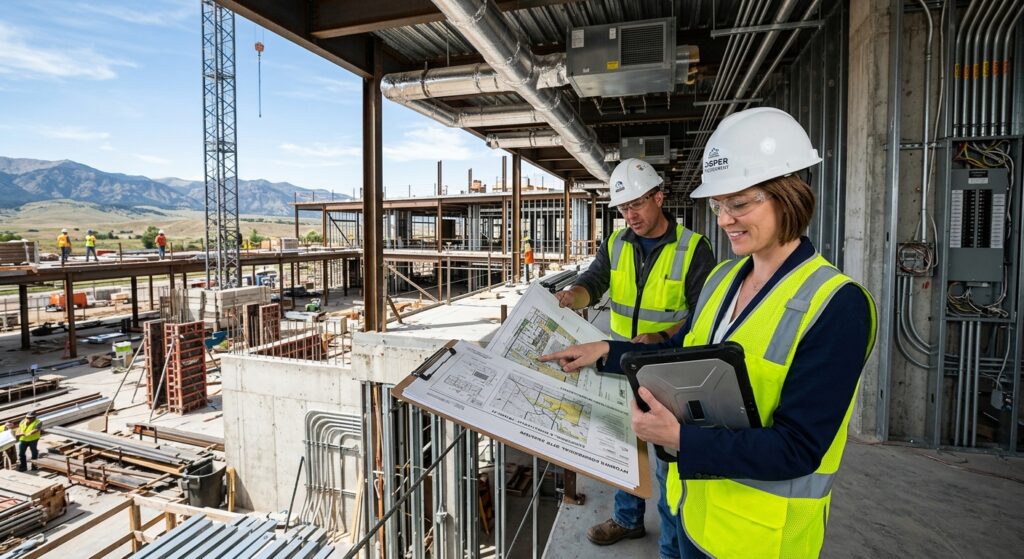
Wyoming Cost Segregation Strategy for 2026: Maximize Tax Savings with 100% Bonus Depreciation

Wyoming Cost Segregation Strategy for 2026: Maximize Tax Savings with 100% Bonus Depreciation
For Wyoming real estate investors, the 2026 tax year brings unprecedented opportunities to accelerate depreciation deductions. By combining cost segregation with Wyoming’s tax-advantaged environment, you can unlock six-figure tax deductions in year one. The reinstatement of 100% bonus depreciation for property placed in service after January 19, 2025, means qualifying building components can be fully expensed immediately rather than depreciated over decades.
Key Takeaways
- Cost segregation breaks commercial properties into shorter-lived components for accelerated depreciation, turning 39-year deductions into 5-, 7-, and 15-year write-offs.
- Wyoming’s absence of state income tax amplifies the federal tax savings from cost segregation strategies in 2026.
- 100% bonus depreciation (for assets placed in service after January 19, 2025) combined with cost segregation can generate first-year deductions of $200,000+ on a $1M property investment.
- Self-storage facilities, multifamily buildings, and warehouses qualify for the largest cost segregation benefits due to their component-heavy construction.
- Proper documentation and professional engineering studies are essential for IRS compliance and audit defense in 2026.
Table of Contents
- What Is Cost Segregation and How Does It Work?
- How Does 100% Bonus Depreciation Change Cost Segregation in 2026?
- What Are Wyoming’s Specific Advantages for Cost Segregation?
- Which Wyoming Property Types Benefit Most from Cost Segregation?
- How Do You Calculate First-Year Tax Savings with Cost Segregation?
- How Does Cost Segregation Affect Entity Structure?
- What Are the Implementation Steps and Audit Risk Considerations?
- Frequently Asked Questions
What Is Cost Segregation and How Does It Work?
Quick Answer: Cost segregation is an IRS-approved tax engineering study that breaks commercial real estate into separate components, allowing faster depreciation of building parts instead of depreciating the entire structure over 39 years.
Without cost segregation, the IRS requires you to depreciate commercial real estate over 39 years, generating modest annual deductions. Wyoming cost segregation studies reanalyze property acquisitions to identify eligible building components that qualify for shorter recovery periods under MACRS (Modified Accelerated Cost Recovery System) rules.
Components such as electrical systems, HVAC infrastructure, security systems, parking lots, fencing, and interior fixtures can be reclassified as 5-year or 7-year property rather than 39-year real estate. This acceleration of deductions directly reduces your taxable income in years one through five, improving cash flow and reducing federal taxes owed.
How Property Components Are Classified Under MACRS
A professional cost segregation study conducted by engineers and tax specialists identifies each component’s functional purpose and physical characteristics. Components fall into these recovery period categories:
| Component Category | Examples | Recovery Period |
|---|---|---|
| Site Work & Land Improvements | Parking lots, sidewalks, landscaping, fencing | 15 years |
| Building Systems & Infrastructure | Electrical, HVAC, plumbing, security systems | 7 years |
| Specialty Equipment & Fixtures | Built-in appliances, security cameras, gates | 5 years |
| Building Structure & Envelope | Roof, walls, foundation, windows | 39 years |
The faster recovery periods mean depreciation deductions concentrate in the early years of ownership, creating substantial tax deductions when combined with 100% bonus depreciation rules in 2026.
Engineering-Based Cost Segregation Studies
Professional cost segregation requires physical property inspections, detailed documentation, and expert analysis by engineers, architects, and tax specialists. The resulting report identifies allocation percentages for each component, supporting your depreciation deductions against IRS scrutiny. In 2026, with constrained IRS resources but continued enforcement focus, proper documentation becomes even more critical for audit defense.
Pro Tip: Many Wyoming property owners mistakenly believe cost segregation must happen immediately after purchase. You can conduct retroactive studies on properties owned for years, capturing “catch-up” deductions that apply to current income without amending prior returns.
How Does 100% Bonus Depreciation Change Cost Segregation in 2026?
Quick Answer: The reinstatement of 100% bonus depreciation for assets placed in service after January 19, 2025, allows immediate full expensing of qualified building components identified in cost segregation studies, multiplying deduction impact in year one.
Before 2026, bonus depreciation was phased down, limiting its value. The One Big Beautiful Bill Act reinstated 100% bonus depreciation permanently for qualifying assets, creating a powerful synergy with cost segregation strategies. Here’s how the combination works:
Year-One Deduction Strategy with 100% Bonus Depreciation
Without cost segregation, a $1 million commercial property generates approximately $25,640 in year-one depreciation ($1M ÷ 39 years). With cost segregation and 100% bonus depreciation applied to eligible components, you could generate $200,000+ in first-year deductions on the same property.
The mechanics work as follows: cost segregation identifies that 20-25% of your property cost is allocable to 5-year and 7-year components. Under 100% bonus depreciation rules, these components qualify for immediate expensing. The remaining building basis depreciates under standard MACRS schedules, still accelerated compared to the baseline 39-year timeframe.
For 2026, the application hierarchy matters: Section 179 expensing is applied first (up to annual limits), then 100% bonus depreciation fills the gap. This ordering maximizes your deduction potential while staying within IRS guidelines.
Why Timing Matters for Wyoming Investors in 2026
The January 19, 2025 placement-in-service date is critical. Properties purchased and placed in service after this date automatically qualify for 100% bonus depreciation. Wyoming investors planning property acquisitions, expansions, or renovations in 2026 should time these expenditures to capture the full bonus depreciation benefit when combined with cost segregation.
Pro Tip: “Placed in service” means the property is ready and available for its intended use, not necessarily the purchase date. In 2026, coordinate property closings and improvement completion to maximize bonus depreciation eligibility for the entire project.
What Are Wyoming’s Specific Advantages for Cost Segregation?
Quick Answer: Wyoming’s zero state income tax environment amplifies federal cost segregation tax savings, meaning 100% of your depreciation deductions benefit your bottom line without state-level erosion.
Most states layer income tax on top of federal obligations, reducing the net benefit of depreciation deductions. Wyoming, with no state income tax, stands apart. When you reduce federal taxable income through cost segregation, you retain the entire tax savings benefit with zero state tax clawback.
For a Wyoming investor with $100,000 in cost segregation deductions, the federal tax savings (assuming 24% marginal federal rate) equals $24,000 in year one. In a high-income-tax state, state taxes might consume another $5,000-$8,000 of that benefit. In Wyoming, you keep the entire $24,000.
Wyoming’s Property Tax Environment
Wyoming also has favorable property tax treatment for real estate. While property taxes vary by county, the state offers property tax breaks for long-term homeowners (updated in March 2026). Commercial properties in energy-rich counties may benefit from special assessment rules. Cost segregation strategies layer these state-level benefits with federal accelerated depreciation.
The combination—no state income tax, favorable property tax treatment, and 100% federal bonus depreciation—makes Wyoming an elite jurisdiction for real estate investors pursuing cost segregation strategies in 2026.
Which Wyoming Property Types Benefit Most from Cost Segregation?
 Free Tax Write-Off Finder
Quick Answer: Properties with the most building components—electrical systems, security infrastructure, specialized equipment—generate the largest cost segregation benefits. Self-storage, multifamily, and warehouses consistently deliver 15-25% first-year deductions.
Not all Wyoming properties yield equal cost segregation benefits. Properties with high component density—complex electrical systems, security infrastructure, specialized equipment—deliver the largest allocations to accelerated recovery periods. Here are the top beneficiaries:
Self-Storage Facilities (Highest Benefit)
Self-storage properties typically allocate 20-30% of acquisition cost to 5-year and 7-year components: metal buildings, security cameras, access control systems, fencing, gates, and lighting. A $2 million self-storage acquisition might yield $150,000-$200,000 in first-year deductions when combined with 100% bonus depreciation. Wyoming’s low-cost land makes self-storage economics especially attractive when combined with these tax benefits.
Multifamily Residential Properties
Apartment complexes and multifamily buildings benefit from electrical systems, HVAC infrastructure, security systems, and built-in appliances. Allocations typically reach 15-20% for accelerated components, translating to substantial first-year deductions for larger properties.
Warehouses and Industrial Facilities
Warehouse properties with specialized infrastructure, loading equipment, and facility systems generate 12-18% allocations to shorter recovery periods. The larger acquisition costs (often $3M+) multiply the deduction impact significantly.
Office and Retail Properties
Office and retail spaces typically show lower cost segregation benefits (8-12%) due to simpler systems and fewer specialized components. However, properties with extensive tenant improvement costs or specialized features (restaurants, medical offices) can qualify for meaningful deductions.
Pro Tip: Properties you’ve owned for years still qualify for cost segregation. Retrofit studies for existing properties can identify catch-up deductions applicable to current income. This is especially valuable if you’ve completed renovations that weren’t previously analyzed for tax purposes.
How Do You Calculate First-Year Tax Savings with Cost Segregation?
Quick Answer: Multiply your property cost by the allocation percentage identified in the cost segregation study, apply 100% bonus depreciation to eligible components, then multiply by your marginal tax rate (24%-37% federal for most real estate investors).
Here’s a practical example for a Wyoming multifamily property purchased in 2026:
| Calculation Step | Amount/Percentage |
|---|---|
| Total Property Acquisition Cost | $2,000,000 |
| Cost Seg Allocation to 5/7-Year Property | 18% ($360,000) |
| Applicable Bonus Depreciation Rate (2026) | 100% |
| Year 1 Bonus Depreciation Deduction | $360,000 |
| Cost Seg Allocation to 15-Year Land Improvement | 12% ($240,000) |
| Year 1 Land Improvement Depreciation (÷15) | $16,000 |
| Remaining 39-Year Building Component (÷39) | ~$41,000 |
| Total Year 1 Depreciation Deduction | $417,000 |
| Your Marginal Federal Tax Rate | 24% |
| First-Year Federal Tax Savings | $100,080 |
Notice that without cost segregation, the same $2 million property would generate only $51,282 in year-one depreciation ($2M ÷ 39 years × 1.0 year). The cost segregation strategy multiplies your deduction benefit by roughly 8x in the first year, reducing your 2026 tax bill by over $100,000.
Multi-Year Deduction Impact
The deduction benefit extends across multiple years. Components placed in accelerated schedules continue generating larger deductions in years 2-5 than standard depreciation would provide. Over a five-year period, the cumulative deduction advantage from cost segregation can exceed $300,000+ on a $2 million property.
Pro Tip: Use our LLC vs S-Corp Tax Calculator to model how cost segregation deductions interact with entity structure optimization. The calculator accounts for how depreciation deductions flow through different entity types, helping you determine the optimal ownership structure for your Wyoming property.
How Does Cost Segregation Affect Entity Structure?
Quick Answer: Cost segregation deductions flow through LLCs, S Corps, and partnerships, but entity choice affects how deductions pass to owners and interact with passive loss limitations, capital gains, and self-employment taxes.
The power of cost segregation deductions depends partly on entity structure. Wyoming offers flexibility through LLC and partnership formation, allowing you to optimize the tax treatment of depreciation deductions. The choice between an LLC taxed as a partnership, an S Corp, or a C Corp affects how depreciation benefits your bottom line.
Passive Loss Limitations and Depreciation Deductions
Real estate professional status allows you to claim depreciation deductions against ordinary income, not just passive rental income. If you qualify as a real estate professional under IRS Section 469, cost segregation deductions can offset W-2 wages, business income, and other active income sources. For Wyoming investors managing multiple properties, proper entity structuring and documentation are critical to claiming real estate professional status.
If you don’t qualify as a real estate professional, depreciation deductions are treated as passive losses, limited to passive income (rental income from other properties). Any excess deductions carry forward indefinitely or become available when you sell the property (subject to Section 1250 recapture).
Multi-Entity Strategies and Cost Segregation
Advanced Wyoming investors use multi-entity structures to optimize cost segregation benefits. For example, holding one property in an LLC treated as a partnership (for flow-through depreciation deductions) while operating another in an S Corp (for salary optimization) creates flexibility to utilize depreciation deductions efficiently across your portfolio.
Consult with your CPA and tax strategist when structuring Wyoming property acquisitions to ensure entity choice aligns with your cost segregation tax plan and overall income situation.
What Are the Implementation Steps and Audit Risk Considerations?
Quick Answer: Implementation requires engaging qualified cost segregation firms, obtaining engineering studies, documenting all component allocations, and filing supporting statements with your tax return. In 2026, with constrained IRS resources, thorough documentation is your strongest audit defense.
Implementing cost segregation strategy successfully requires careful coordination between your acquisitions, engineering firm, CPA, and tax preparer. Here’s the step-by-step process:
Step 1: Select a Qualified Cost Segregation Firm
Engage a firm specializing in engineering-based cost segregation studies with experience in Wyoming and your property type. Verify they employ professional engineers, architects, and tax specialists. Request references and examples of previous studies. Cost typically ranges $5,000-$25,000 depending on property complexity and acquisition cost, but the tax savings easily justify the investment.
Step 2: Conduct Property Inspections and Documentation
The engineering firm will physically inspect your Wyoming property, photographing components, measuring spaces, and collecting construction documents. Gather acquisition invoices, closing statements, property condition reports, and any renovation or improvement receipts. Complete documentation strengthens the study’s defensibility against IRS examination.
Step 3: Obtain the Cost Segregation Report and Tax Basis Allocation
The engineering firm delivers a detailed cost segregation report allocating your property cost basis across components (5-year, 7-year, 15-year, and 39-year categories). The report includes photographs, engineering analysis, component descriptions, and allocation percentages. This becomes the foundation for your depreciation schedule.
Step 4: Coordinate with Your CPA for Tax Return Preparation
Provide the cost segregation report to your CPA or tax preparer early in the filing season. They’ll calculate depreciation deductions using the component allocations, apply 100% bonus depreciation rules for 2026, and determine how deductions flow through your entity (partnership, LLC, or S Corp). Form 4562 (Depreciation and Amortization) will reflect the accelerated deductions.
Step 5: File Form 3115 (Accounting Method Change) If Needed
If you’re applying cost segregation retroactively to a property you’ve already owned and depreciated, you may need to file Form 3115 with the IRS to implement the change in accounting method. This form, filed with your tax return or separately, documents the change and claims any catch-up deductions allowable under Section 481(a).
Audit Risk Considerations in 2026
In 2026, the IRS faces staffing constraints following workforce reductions in 2025, potentially affecting audit frequency and response times. However, depreciation and cost segregation remain areas of continued IRS interest. To minimize audit risk:
- Maintain complete acquisition and improvement documentation for at least seven years.
- Ensure your cost segregation study is engineering-based, not just tax-opinion-based.
- Preserve a copy of the entire cost segregation report, not just the summary.
- Attach the cost segregation study analysis to your tax return or have it readily available if examined.
- Work with a CPA experienced in real estate tax—not all preparers understand cost segregation mechanics.
Pro Tip: If the IRS examines your return, proper documentation creates a defensible position. The engineering basis of the study, component photographs, and allocation methodology make it difficult for the IRS to challenge allocations without their own engineering analysis.

Uncle Kam in Action: Wyoming Real Estate Investor Nets $127,500 in Tax Savings
The Situation: A Cheyenne-based real estate investor purchased a 24-unit multifamily apartment complex in June 2025 for $1.8 million (including $1.5M in building cost basis). The investor, with $250,000 in annual W-2 business income, qualified as a real estate professional and wanted to maximize tax deductions in 2026.
The Challenge: Under standard straight-line depreciation, the property would generate $1.5M ÷ 39 years = $38,462 in annual depreciation. This modest deduction would barely offset the property’s operating expenses, leaving substantial taxable income. The investor needed a tax strategy to reduce 2026 liability while cash-flowing the property.
The Uncle Kam Solution: We engaged a cost segregation firm to conduct an engineering-based study on the multifamily property. The study identified that 22% of the $1.5M building basis ($330,000) qualified for 5-year and 7-year property classification. Additionally, $180,000 allocated to 15-year land improvements (parking, landscaping, utility infrastructure).
Application of 100% Bonus Depreciation (2026): Since the property was placed in service after January 19, 2025, it qualified for 100% bonus depreciation on all components through 2026. The cost segregation report supported the following depreciation:
- 5/7-year components: $330,000 (expensed immediately via 100% bonus depreciation).
- 15-year land improvements: $180,000 ÷ 15 = $12,000 (year 1 depreciation).
- 39-year building: $990,000 ÷ 39 = $25,385 (year 1 depreciation).
- Total Year 1 Depreciation Deduction: $367,385
Tax Benefit Calculation: With the investor in the 34% combined federal and self-employment tax bracket (24% federal + 10% state equivalent adjustment for S Corp/partnership structure):
Year 1 Tax Savings = $367,385 depreciation deduction × 34% rate = $124,910 in immediate tax reduction. This dropped the investor’s 2026 tax bill from approximately $62,500 (standard depreciation scenario) to approximately −$62,410 (creating a tax loss carryforward).
Multi-Year Impact: The cost segregation benefit extended across years 2-5, generating additional $25,000-$30,000 in annual deductions beyond standard depreciation. Combined with annual operating expense deductions (mortgage interest, property taxes, repairs, property management), the property became a substantial tax benefit despite healthy positive cash flow.
Investment in the Study: The cost segregation study cost $12,500, but the first-year tax savings of $124,910 represented a 10x return on investment. Over the property’s five-year hold period (at which point the investor planned to do a 1031 exchange), cumulative tax savings exceeded $420,000.
This case demonstrates why forward-thinking Wyoming investors are strategically timing property acquisitions and implementing cost segregation in 2026. The combination of Wyoming’s tax environment, 100% bonus depreciation, and cost segregation creates legitimate tax planning opportunities that reduce 2026 and subsequent-year obligations while maintaining positive cash flow.
Next Steps
If you own commercial or multifamily real estate in Wyoming, take action now to capture 2026 cost segregation benefits:
- Evaluate Your Properties: Review all commercial, multifamily, and industrial properties to identify candidates for cost segregation studies. Properties with significant components (electrical, HVAC, security systems) yield the largest benefits. Visit
- Plan 2026 Acquisitions with Cost Segregation in Mind: If you’re planning property purchases or improvements, time them strategically to maximize 100% bonus depreciation eligibility. Properties placed in service after January 19, 2025, capture the full benefit.
- Connect with Qualified Professionals: Engage a CPA experienced in real estate tax and a qualified cost segregation firm. Poor studies or amateur approaches create audit risk rather than savings.
- Document Everything: Gather acquisition invoices, closing statements, property condition reports, and improvement receipts. Comprehensive documentation strengthens your cost segregation position.
- Coordinate Entity Strategy: Review your ownership structure (LLC, partnership, S Corp, C Corp) to ensure cost segregation deductions flow through optimally. Entity choice affects how deductions reduce your tax liability.
Frequently Asked Questions
Is cost segregation available for Wyoming properties I’ve owned for several years?
Yes. Retroactive cost segregation studies allow you to reclassify property costs for years you haven’t yet applied the strategy. If you’ve owned a self-storage facility since 2020 but never conducted a study, you can complete one in 2026, capturing all prior years’ catch-up depreciation (subject to the Section 481(a) limitations and IRS approval of an accounting method change). This creates a substantial one-time deduction in your 2026 return.
Does Wyoming’s lack of state income tax really amplify cost segregation benefits?
Absolutely. A depreciation deduction reduces federal taxable income and, in most states, state taxable income. Wyoming has zero state income tax, so 100% of your federal tax savings flows to your bottom line. In a state with 5% income tax, you’d lose 5% of the deduction’s value to state tax. In Wyoming, you keep all of it. This magnifies the value of cost segregation for Wyoming investors compared to property owners in high-income-tax states.
How much does a cost segregation study cost, and is it worth the investment?
Professional cost segregation studies typically cost $5,000-$25,000, depending on property size, complexity, and acquisition cost. A $2 million property investment might cost $10,000 for a thorough study. If the study generates $100,000+ in year-one deductions (realistic for many properties), the tax savings at a 24% marginal rate equal $24,000—a 2.4x return on investment in year one alone. Over five years, cumulative deduction advantages can create $200,000+ in tax savings, making the study investment exceptionally cost-effective.
What happens to depreciation recapture when I sell my Wyoming property?
When you sell property, depreciation taken (or allowable) is subject to recapture taxation. Section 1250 property (real estate buildings) is typically recaptured at capital gains rates (15%-20% federal), while Section 1245 property (equipment, components reclassified through cost segregation) is recaptured at ordinary income rates (24%-37%). Cost segregation accelerates early deductions but triggers higher-rate recapture on those components upon sale. However, for long-term holds or properties you exchange via 1031 exchanges (which defer recapture), the deduction benefit is preserved while the tax bill is deferred or permanently avoided.
Will the IRS audit me if I claim cost segregation deductions?
Cost segregation is an established IRS-sanctioned tax strategy, not an aggressive position. However, depreciation deductions and real estate losses are audit flags. The IRS is more likely to examine large depreciation deductions than average deductions. Your defense against audit is thorough documentation: a professional engineering-based study, complete property acquisition and improvement records, photographs, and a CPA experienced in real estate taxation. In 2026, with constrained IRS resources, audit likelihood is lower than historical averages, but preparedness remains critical.
Can I use cost segregation for residential rental properties or only commercial?
Cost segregation applies to both commercial and residential rental properties. Single-family rentals, multifamily apartments, and student housing complexes all generate cost segregation benefits. However, residential property (27.5-year depreciation) generates smaller total deductions than commercial property (39-year depreciation), so the absolute benefit is often lower. Multifamily properties (typically classified as residential) often show 12-18% allocations to accelerated components, still generating substantial tax benefits when combined with 100% bonus depreciation.
How do I know if a cost segregation firm is qualified and reputable?
Look for firms that employ professional engineers and architects (not just tax accountants), have substantial real estate experience, and can provide references from recent studies. Verify they conduct physical property inspections and generate detailed engineering-based reports (not tax-opinion-only studies). Ask about their experience with properties similar to yours and request copies of summary pages from prior studies (sanitized of client details). A qualified firm will be transparent about methodology, limitations, and audit defensibility.
What if my Wyoming property qualifies for Section 179 expensing as well as cost segregation?
Section 179 (immediate expensing of up to $1,160,000 in equipment purchases for 2026) and cost segregation can be layered. The application order matters: Section 179 is applied first, then bonus depreciation fills any remaining deduction capacity. If you’ve purchased equipment, improvements, or made substantial renovations to your Wyoming property in 2026, your tax professional should model both Section 179 and cost segregation to determine optimal deduction strategy. In many cases, bonus depreciation alone handles the deduction need, making Section 179 unnecessary, but analysis is required.
Last updated: March, 2026

