Cost Seg Single Family Rentals: 2026 Tax Savings Guide for Real Estate Investors
For the 2026 tax year, cost seg single family rentals represent one of the most powerful strategies for real estate investors to accelerate depreciation deductions and dramatically improve cash flow. With 100% bonus depreciation reinstated under the One Big Beautiful Bill Act for assets placed in service after January 19, 2025, investors can now immediately write off significant portions of rental property improvements—rather than spreading deductions over decades.
Table of Contents
- Key Takeaways
- What Is Cost Segregation for Single-Family Rentals?
- How Does 100% Bonus Depreciation Work in 2026?
- Which Property Components Qualify for Accelerated Depreciation?
- When Should You Conduct a Cost Segregation Study?
- What Are the Documentation Requirements for IRS Compliance?
- How Do Property Tax Reclassifications Impact Rental Investors?
- Uncle Kam in Action: Atlanta Investor Saves $84,000
- Next Steps
- Frequently Asked Questions
- Related Resources
Key Takeaways
- Cost segregation reclassifies rental property components from 27.5-year to shorter depreciation schedules, dramatically accelerating deductions.
- 100% bonus depreciation for 2026 allows immediate write-offs of qualifying assets placed in service after January 19, 2025.
- Engineering-based studies connecting tax classifications to physical components are required for IRS compliance.
- Catch-up depreciation applies to previously purchased properties without requiring amended returns.
- Some jurisdictions are reclassifying single-family rentals as commercial property, increasing property tax rates significantly.
What Is Cost Segregation for Single-Family Rentals?
Quick Answer: Cost segregation is an IRS-approved tax strategy that breaks down a rental property into individual components, reclassifying many elements from the standard 27.5-year residential depreciation schedule to shorter 5-year, 7-year, or 15-year recovery periods.
Cost seg single family rentals involve a detailed engineering study that identifies which building components qualify for accelerated depreciation. Instead of depreciating the entire rental property over 27.5 years as the IRS typically requires, this advanced tax planning strategy separates personal property and land improvements that can be written off much faster.
For 2026, this approach has become exponentially more valuable. The One Big Beautiful Bill Act reinstated 100% bonus depreciation for qualifying property placed in service after January 19, 2025. This means components reclassified through cost segregation can often be fully expensed in year one—creating massive immediate tax savings.
The Standard Depreciation Problem
Without cost segregation, the IRS requires residential rental properties to be depreciated over 27.5 years. For a $400,000 single-family rental (excluding land value), this results in annual depreciation deductions of approximately $14,545. While helpful, this slow depreciation pace doesn’t maximize cash flow or provide significant year-one tax relief.
How Cost Segregation Changes Everything
A properly executed cost segregation study identifies property elements that fall outside the building structure itself. According to IRS Publication 946, these components include:
- Specialized electrical and lighting systems (5-year or 7-year property)
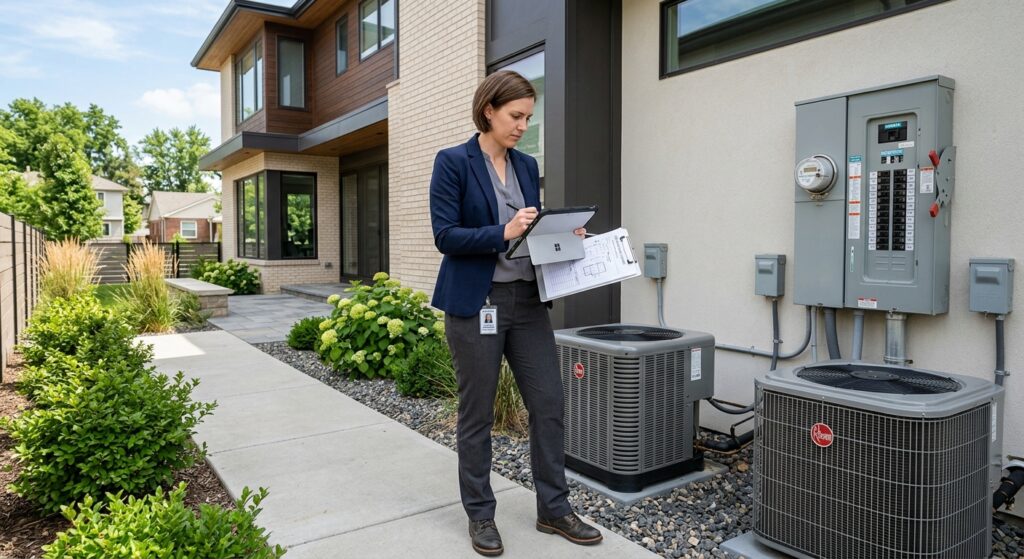
- HVAC systems and components (5-year or 15-year property)
- Security systems and access controls (5-year property)
- Decorative finishes and non-structural elements (5-year property)
- Landscaping, fencing, and site improvements (15-year property)
- Parking areas, driveways, and sidewalks (15-year land improvements)
Typically, 20% to 40% of a single-family rental’s depreciable basis can be reclassified through cost segregation. For real estate investors, this creates substantial first-year deductions, especially when combined with 100% bonus depreciation available in 2026.
Pro Tip: Cost segregation isn’t limited to newly purchased properties. You can perform catch-up depreciation on rentals acquired in prior years, applying missed deductions to your 2026 tax return without amending previous filings.
How Does 100% Bonus Depreciation Work in 2026?
Quick Answer: For the 2026 tax year, qualifying property placed in service after January 19, 2025 is eligible for 100% first-year bonus depreciation, allowing complete immediate expensing of assets identified through cost segregation studies.
The reinstatement of 100% bonus depreciation under the One Big Beautiful Bill Act represents a game-changing opportunity for cost seg single family rentals. This provision allows investors to immediately deduct the full cost of qualifying property in the year it’s placed in service—rather than spreading deductions over 5, 7, or 15 years.
Timing Requirements for 2026
To qualify for 100% bonus depreciation in 2026, assets must have been placed in service after January 19, 2025. This includes:
- Rental properties purchased after this date
- Renovations, improvements, or upgrades completed after this date
- New equipment or systems installed after this date
Properties placed in service before this cutoff date don’t qualify for 100% bonus depreciation but still benefit from accelerated depreciation schedules identified through cost segregation.
Interaction With Section 179
Both Section 179 expensing and bonus depreciation offer immediate deductions, but they must be applied in a specific hierarchy. Section 179 must be claimed first, with any remaining basis then eligible for bonus depreciation. Section 179 has income limitations—deductions can’t exceed taxable income. However, bonus depreciation has no such restriction and can create net operating losses.
For most single-family rental investors, bonus depreciation proves more advantageous because it allows unlimited deductions regardless of current-year income levels.
Real-World 2026 Example
Consider an investor who purchases a single-family rental in March 2026 for $500,000 ($400,000 building, $100,000 land). A cost segregation study identifies $140,000 in qualifying personal property and land improvements:
- $60,000 in 5-year property (HVAC, electrical, appliances)
- $80,000 in 15-year land improvements (landscaping, driveway, fencing)
With 100% bonus depreciation, the investor can deduct the entire $140,000 in 2026—plus regular depreciation on the remaining $260,000 building basis ($9,455 for 2026). Total first-year depreciation: $149,455.
Without cost segregation, this investor would only claim $14,545 in standard depreciation. The difference—$134,910 in additional first-year deductions—could save over $47,000 in federal taxes alone (assuming a 35% marginal rate).
Pro Tip: Bonus depreciation can create passive activity losses that offset other rental income. If you qualify as a real estate professional under IRS rules, these losses may offset ordinary income from wages or business activities.
Which Property Components Qualify for Accelerated Depreciation?
Quick Answer: Personal property items (5-7 year depreciation) and land improvements (15-year depreciation) qualify for accelerated depreciation, including electrical systems, HVAC components, security systems, appliances, landscaping, driveways, and site work.
Understanding which components qualify for reclassification is critical for maximizing cost seg single family rentals benefits. The IRS provides clear guidance, but proper identification requires engineering expertise to accurately allocate costs.
5-Year and 7-Year Personal Property
These assets are considered personal property rather than real property and qualify for the shortest depreciation schedules:
- Appliances: Refrigerators, dishwashers, ranges, washers, dryers
- Decorative elements: Crown molding, chair rails, specialty lighting fixtures
- Floor coverings: Carpeting, vinyl flooring, laminate (not permanently affixed)
- Window treatments: Blinds, shades, non-structural coverings
- Security systems: Cameras, motion sensors, alarm panels
- Smart home technology: Thermostats, door locks, lighting controls
15-Year Land Improvements
Site improvements separate from the building structure qualify for 15-year depreciation:
- Driveways and parking areas: Asphalt or concrete paving
- Sidewalks and pathways: Exterior walkways not integral to building access
- Landscaping: Trees, shrubs, irrigation systems, decorative plantings
- Fencing: Property boundary fencing, privacy fencing, decorative fencing
- Exterior lighting: Pathway lighting, landscape lighting, security lighting
- Site utilities: Septic systems, well systems, underground utilities to property line
HVAC and Electrical System Allocation
One of the most valuable aspects of cost segregation for single-family rentals involves properly allocating mechanical and electrical systems. While the core structural systems remain 27.5-year property, many components qualify for shorter schedules:
- Individual HVAC units serving specific rooms (5-year property)
- Standalone water heaters (5-year property)
- Specialty electrical circuits for appliances (5-year property)
- Exterior electrical service beyond the building (15-year property)
This granular analysis requires engineering expertise to properly document and support the allocation methodology. The IRS scrutinizes these classifications, making professional cost segregation studies essential for audit defense.
| Component Category | Depreciation Period | 2026 Bonus Eligible? | Typical % of Property Value |
|---|---|---|---|
| Appliances & Equipment | 5-7 years | Yes (if placed in service after 1/19/25) | 5-10% |
| Decorative Finishes | 5-7 years | Yes (if placed in service after 1/19/25) | 3-8% |
| Land Improvements | 15 years | Yes (if placed in service after 1/19/25) | 10-20% |
| Building Structure | 27.5 years | No | 60-80% |
When Should You Conduct a Cost Segregation Study?
Quick Answer: Conduct a cost segregation study immediately after purchasing or substantially improving a rental property valued at $200,000 or more, or perform catch-up studies on previously acquired properties to capture missed depreciation on your 2026 return.
Timing is critical for maximizing cost seg single family rentals benefits. The good news: You’re not limited to the year of purchase. The IRS allows catch-up depreciation through Form 3115, enabling investors to claim missed deductions without amending prior-year returns.
Optimal Timing Scenarios
Scenario 1: New Acquisition in 2026
If you purchased a single-family rental after January 19, 2025, conduct the study before filing your 2026 tax return. This allows you to capture 100% bonus depreciation on qualifying components placed in service this year.
Scenario 2: Major Renovation or Improvement
Substantial improvements completed in 2026 create new depreciable basis. A cost segregation study on the improvement costs can unlock immediate deductions, even if the original property was purchased years ago.
Scenario 3: Catch-Up on Prior Acquisitions
Properties purchased in 2024, 2023, or earlier years that never had cost segregation studies can benefit from catch-up depreciation. File Form 3115 with your 2026 return to claim all missed accelerated depreciation in a single year—without amending previous returns.
Minimum Property Value Thresholds
Cost segregation studies typically cost $3,000 to $10,000 depending on property complexity. To justify this investment, most tax professionals recommend minimum property values:
- $200,000+ for single-family rentals (excluding land value)
- $150,000+ if recent substantial renovations were completed
- $500,000+ portfolio value for multiple properties studied together
The tax savings typically deliver a 5x to 15x return on the study cost. For example, a $5,000 study generating $100,000 in additional first-year deductions could save $35,000 in taxes (at a 35% marginal rate)—a 600% return on investment.
Strategic Timing Considerations
Consider these factors when deciding when to conduct a cost segregation study:
- High-income years: Accelerated deductions provide maximum value when your marginal tax rate is highest.
- Passive loss limitations: If you have suspended passive losses from prior years, cost segregation can generate additional losses to utilize when you dispose of properties.
- Real estate professional status: If you qualify, accelerated depreciation can offset non-passive income immediately.
- Disposition planning: Conduct studies several years before selling to maximize cumulative tax savings while managing depreciation recapture exposure.
Pro Tip: Many investors conduct catch-up cost segregation studies on their entire rental portfolio in a single high-income year. This strategy creates massive deductions when they’re most valuable, offsetting bonuses, capital gains, or business income.
What Are the Documentation Requirements for IRS Compliance?
 Free Tax Write-Off Finder
Quick Answer: IRS-compliant cost segregation requires engineering-based studies connecting tax classifications to physical property components, detailed component-level cost allocations, photographic documentation, and written reports supporting all depreciation schedule reclassifications.
With IRS enforcement focus remaining strong despite workforce reductions in 2025, proper documentation for cost seg single family rentals has never been more critical. Poorly supported studies face extended reviews, information requests, or asset reclassification during audits.
Essential Study Components
A qualified cost segregation study must include:
- Physical inspection: On-site evaluation by qualified personnel documenting property components
- Photographic evidence: Detailed photos of assets being reclassified
- Engineering analysis: Technical documentation connecting physical components to tax classifications
- Cost allocation: Detailed breakdown showing how purchase price or construction costs were allocated
- Written narrative report: Comprehensive explanation of methodology and conclusions
- Asset detail schedules: Component-level depreciation schedules for tax software
IRS Audit Defense Standards
The IRS Cost Segregation Audit Techniques Guide outlines specific expectations for supporting documentation. Studies must demonstrate:
- Clear nexus between physical assets and depreciation classifications
- Reasonable cost allocation methodologies based on actual property characteristics
- Compliance with IRS depreciation guidelines and revenue rulings
- Qualified personnel credentials (engineers, architects, or experienced cost segregation specialists)
Given the constrained IRS environment in 2026, maintaining robust documentation is essential. While processing delays may occur, enforcement priorities remain focused on high-value deductions like accelerated depreciation. Ensure your tax advisor engages qualified cost segregation professionals who follow industry best practices.
Common Documentation Mistakes
Avoid these errors that trigger IRS scrutiny:
- Generic percentage allocations: Avoid studies that use industry averages without property-specific analysis.
- Unsupported cost estimates: Every dollar allocated must be traceable to actual property features.
- Missing site inspections: Desktop studies without physical property evaluation lack credibility.
- Inadequate professional qualifications: Ensure study preparers have engineering credentials or extensive cost segregation experience.
- Incomplete asset descriptions: Vague component descriptions won’t withstand audit scrutiny.
| Documentation Element | Purpose | IRS Requirement Level |
|---|---|---|
| Physical Property Inspection | Verify actual components and condition | Mandatory |
| Engineering Analysis | Support technical classifications | Mandatory |
| Component Photographs | Visual documentation of assets | Highly Recommended |
| Written Narrative Report | Explain methodology and conclusions | Mandatory |
| Detailed Cost Allocations | Show how basis was distributed | Mandatory |
How Do Property Tax Reclassifications Impact Rental Investors?
Quick Answer: Some jurisdictions are reclassifying single-family rentals as commercial property for property tax purposes, increasing tax assessments from 25% to 40% of assessed value—a roughly 60% property tax hike that significantly impacts investor cash flow.
While cost seg single family rentals deliver valuable federal income tax benefits, investors must also monitor local property tax developments. In 2026, a troubling trend has emerged: certain counties are departing from decades of precedent by reclassifying rental homes as commercial property for property tax assessment purposes.
The Tennessee Reclassification Case
Tennessee counties including Rutherford and Sumner have begun reclassifying single-family rentals, citing a narrow court decision in Sevier County, Tennessee, et al. v. Tennessee State Board of Equalization. However, that case addressed timeshare arrangements—not traditional rental homes.
The reclassification increases property tax rates from 25% to 40% of assessed value. For a typical rental home, this translates to approximately $1,200 in additional annual property taxes—a 60% increase. These higher carrying costs reduce net operating income and compress already-tight investment returns.
Market Impact on Single-Family Rental Supply
The property tax reclassification trend creates serious implications for housing affordability:
- Investors pass increased costs to tenants through higher rents
- Marginal rental properties become economically unviable and exit the market
- Reduced rental supply exacerbates existing housing shortages
- Smaller local investors are pushed out, consolidating ownership among larger operators
Tennessee lawmakers are considering legislation (HB1670/SB1675) to reaffirm that homes used as residences should be classified as residential property regardless of ownership structure. Similar legislative efforts may emerge in other states facing comparable reclassification pressures.
Strategic Responses for Investors
If your jurisdiction implements or considers single-family rental reclassifications:
- Appeal property tax assessments citing historical classification precedent
- Engage local real estate investor associations for collective advocacy
- Factor potential property tax increases into acquisition underwriting
- Maximize federal income tax deductions through cost segregation to offset higher property taxes
- Consider geographic diversification to markets with stable property tax treatment
While property tax reclassifications create headwinds, aggressive federal income tax planning through cost segregation and bonus depreciation becomes even more critical for maintaining profitability.
Did You Know? The federal income tax savings from cost segregation and 100% bonus depreciation often exceed the total annual property tax burden on a rental property. A $5,000 property tax increase is easily offset by $15,000-$30,000 in additional federal tax deductions.

Uncle Kam in Action: Atlanta Investor Saves $84,000 With Strategic Cost Segregation
Client Profile: Marcus T., a real estate investor who purchased three single-family rental properties in the Atlanta suburbs during 2024 and early 2026, totaling $1.2 million in acquisitions. He was claiming standard 27.5-year depreciation and paying significant taxes on his W-2 income as a corporate executive.
The Challenge: Marcus was frustrated watching his rental income get absorbed by federal and state taxes. His marginal federal rate of 35% meant that every dollar of rental profit cost 35 cents in taxes. He’d heard about cost segregation but assumed it was only for commercial buildings. Additionally, he wasn’t aware that his 2026 property placed in service qualified for 100% bonus depreciation.
The Uncle Kam Solution: Our team conducted comprehensive cost segregation studies on all three properties. We identified $380,000 in accelerated depreciation across the portfolio:
- Property 1 (purchased 2024): $110,000 reclassified – catch-up depreciation claimed via Form 3115
- Property 2 (purchased 2024): $125,000 reclassified – catch-up depreciation claimed via Form 3115
- Property 3 (purchased February 2026): $145,000 reclassified – 100% bonus depreciation applied
We also helped Marcus establish proper documentation showing his real estate professional status qualification, allowing the accelerated depreciation to offset his W-2 income rather than being limited to passive rental income.
The Results:
- Additional 2026 Deductions: $380,000 in accelerated depreciation
- Federal Tax Savings: $133,000 (35% federal rate)
- Georgia State Tax Savings: $21,000 (5.75% state rate)
- Total First-Year Tax Savings: $154,000
- Investment in Studies: $18,500 for three comprehensive cost segregation reports
- Uncle Kam Fee: $12,000 for tax planning and implementation
- Net Tax Savings After Costs: $123,500
- Return on Investment: 405% first-year ROI
“I couldn’t believe I’d been leaving this much money on the table,” Marcus said. “The Uncle Kam team showed me how to use cost segregation not just on my newest property, but to go back and capture missed depreciation on properties I bought two years ago. The catch-up depreciation alone saved me over $84,000 in federal taxes. This strategy has completely changed my investment returns.”
Marcus now conducts cost segregation studies on every rental property acquisition and has referred multiple investor colleagues to Uncle Kam. His experience demonstrates the transformative power of strategic tax planning for cost seg single family rentals. See more success stories at our client results page.
Next Steps
Ready to unlock significant tax savings through cost seg single family rentals? Take these action steps:
- Schedule a consultation with Uncle Kam to review your rental property portfolio and identify cost segregation opportunities.
- Gather acquisition documents for properties purchased in 2024, 2025, and 2026 including closing statements and improvement receipts.
- Request cost segregation proposals for properties valued at $200,000+ to compare potential tax savings against study costs.
- Evaluate your real estate professional status to determine if accelerated depreciation can offset non-passive income.
- Review local property tax classifications and appeal any inappropriate commercial reclassifications of rental homes.
Don’t leave tens of thousands in tax savings unclaimed. Our entity structuring experts can help you maximize every available deduction for your real estate investments in 2026 and beyond.
Frequently Asked Questions
Can I do cost segregation on a rental property I purchased several years ago?
Yes, absolutely. The IRS allows catch-up cost segregation on properties purchased in any prior year. You file Form 3115 (Application for Change in Accounting Method) with your 2026 tax return to claim all the missed accelerated depreciation in a single year. You don’t need to amend prior returns. This catch-up depreciation can create substantial deductions even for properties you’ve owned for five or ten years.
Does cost segregation trigger IRS audits?
Cost segregation is a completely legal and IRS-approved tax strategy. However, large depreciation deductions can attract IRS attention, which is why proper documentation is critical. Engineering-based studies with detailed component analysis, physical inspections, photographs, and written reports provide strong audit defense. Working with qualified cost segregation professionals dramatically reduces audit risk and ensures you can substantiate every dollar of claimed deductions.
What happens to accelerated depreciation when I sell the property?
When you sell a rental property, all depreciation claimed (both regular and accelerated) is subject to depreciation recapture. Personal property depreciation is recaptured at ordinary income rates up to 25%. However, the time value of money makes cost segregation extremely valuable. Taking $100,000 in deductions today (saving $35,000 in taxes now) and paying recapture tax in five years still delivers significant net benefit, especially considering the opportunity to invest those tax savings.
Can I use cost segregation if I’m subject to passive activity loss limitations?
Yes, but the benefits may be limited. If you’re a passive investor (not a real estate professional), accelerated depreciation creates passive losses that can only offset passive income. However, these losses aren’t lost—they carry forward indefinitely. You can use them to offset future rental income or to offset all income when you eventually sell the property. If you qualify as a real estate professional, accelerated depreciation can offset ordinary income immediately.
How long does a cost segregation study take to complete?
Most single-family rental cost segregation studies take 4 to 8 weeks from initial engagement to final report delivery. The process includes property inspection, engineering analysis, cost allocation, report preparation, and review. You can expedite studies for an additional fee if you need results before your tax filing deadline. Working with Uncle Kam, we coordinate timing to ensure studies are completed when you need them for optimal tax planning.
Is cost segregation worth it for properties under $200,000?
Generally, the cost-benefit analysis becomes less favorable below $200,000 in depreciable basis (excluding land). Study costs of $3,000-$5,000 need to generate $15,000-$25,000 in additional deductions to justify the investment. However, if you own multiple smaller properties, you can sometimes bundle them into a single study to reduce per-property costs. Additionally, properties with extensive recent renovations may justify studies even at lower values.
Does 100% bonus depreciation apply to used rental properties?
For real estate, bonus depreciation only applies to certain components classified as personal property, not to the building itself. When you conduct a cost segregation study, components like appliances, flooring, and fixtures that are reclassified to 5-year or 7-year property qualify for 100% bonus depreciation if placed in service after January 19, 2025. Land improvements with 15-year lives also qualify. This applies whether the overall property is new construction or a previously owned building.
How do I find a qualified cost segregation provider?
Look for providers with engineering credentials (PE or similar), extensive experience with residential rental properties, detailed written reports, and strong IRS audit support. Avoid providers using generic software templates or percentage-based allocation methods without property-specific analysis. The best approach is working with a comprehensive tax strategy firm like Uncle Kam that coordinates cost segregation with your overall tax planning, ensuring maximum benefit across all deduction strategies.
Related Resources
- Comprehensive Tax Planning Strategies for Real Estate Investors
- Real Estate Investor Tax Services
- The MERNA Method: Our Proven Tax Strategy Framework
- Tax Planning Guides and Resources
- Business Solutions for Property Management and Accounting
Last updated: March, 2026
This information is current as of 3/20/2026. Tax laws change frequently. Verify updates with the IRS or a qualified tax professional if reading this later.

