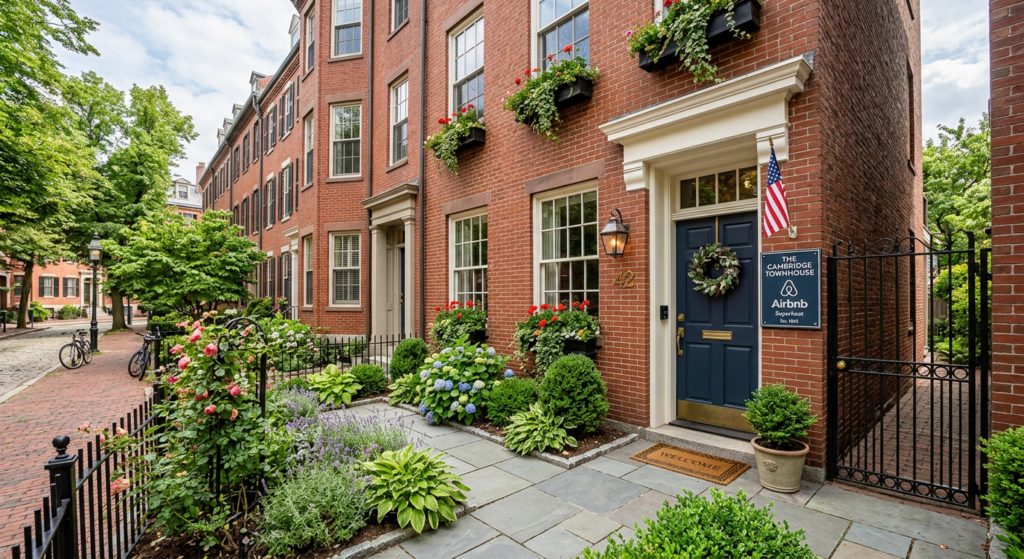
Cambridge Airbnb Taxes for 2026: Complete Guide for Short-Term Rental Hosts
Cambridge Airbnb taxes are a critical concern for short-term rental hosts looking to maximize profits while staying compliant with federal, state, and local regulations. For the 2026 tax year, Cambridge property owners operating on Cambridge tax preparation services should understand that Airbnb income is treated as self-employment income by the IRS, requiring Schedule C reporting, self-employment tax calculations, and adherence to Massachusetts state income tax rules. Whether you’re a first-time host or managing multiple properties, understanding the full scope of Cambridge Airbnb taxes ensures you avoid penalties, claim all eligible deductions, and plan your tax liability effectively.
Table of Contents
- Key Takeaways
- How Is Airbnb Income Reported to the IRS?
- What Deductions Can Cambridge Airbnb Hosts Claim?
- How Much Self-Employment Tax Will You Owe?
- What About Massachusetts State Income Tax on Airbnb Rental Income?
- Are There Cambridge Local Taxes or Special Regulations?
- When Should You File Quarterly Estimated Taxes?
- Uncle Kam in Action
- Next Steps
- Frequently Asked Questions
Key Takeaways
- Airbnb income is reported on IRS Schedule C as self-employment income for 2026.
- Self-employment tax is approximately 15.3% of net profit (Social Security + Medicare).
- Cambridge Airbnb hosts can deduct mortgage interest, property taxes, utilities, repairs, cleaning, and advertising expenses.
- Massachusetts imposes state income tax on all Airbnb rental income at graduated rates.
- Quarterly estimated tax payments are required if you expect to owe $1,000 or more in federal taxes.
How Is Airbnb Income Reported to the IRS?
Quick Answer: Airbnb income is reported on IRS Schedule C (Form 1040) as self-employment income. You’ll report gross rental income minus deductible expenses to calculate net profit.
Cambridge Airbnb hosts must report all rental income on their federal tax return using Schedule C: Profit or Loss from Business. For the 2026 tax year, this form allows you to list all Airbnb gross income received during the year, then subtract eligible business expenses to determine your net profit or loss. The IRS considers short-term rental income as business income, not passive investment income, which means you’re subject to both federal income tax and self-employment tax.
When Does Airbnb Send Tax Forms?
Airbnb typically sends you a Form 1099-NEC (Miscellaneous Income) or Form 1099-K (Payment Card Transactions) by January 31 each year if you earned income above certain thresholds. However, not all Airbnb hosts receive these forms. Even if Airbnb doesn’t issue a 1099-K form, you are still required to report all Airbnb income on your Schedule C. The IRS cross-references Airbnb’s records with your tax return, so accurate reporting is essential for compliance with 2026 tax rules.
Schedule C Income Reporting Requirements
You must report gross Airbnb rental income (line 1a of Schedule C) which is the total amount guests paid you before any expenses. Then you deduct business expenses (lines 8-27) such as cleaning supplies, property maintenance, insurance, and utilities. The resulting figure is your net profit, which is subject to both federal income tax and self-employment tax. For Cambridge Airbnb hosts earning over $400 in net profit, Schedule C filing is mandatory for the 2026 tax year.
Pro Tip: Keep detailed records of all Airbnb income and expenses throughout 2026. Use spreadsheets or accounting software to track dates, amounts, and business purpose for each transaction to substantiate your deductions if audited.
What Deductions Can Cambridge Airbnb Hosts Claim?
Quick Answer: Eligible deductions include mortgage interest, property taxes, insurance, utilities, cleaning costs, repairs, maintenance, HOA fees, and advertising expenses related to your Airbnb rental.
The IRS allows Cambridge Airbnb hosts to deduct ordinary and necessary business expenses directly related to generating rental income. These deductions reduce your taxable income, lowering your overall tax liability. Proper deduction tracking can mean the difference between owing $5,000 and owing $2,000 in federal taxes for the 2026 tax year.
Major Deduction Categories for Short-Term Rentals
| Deduction Type | Examples |
|---|---|
| Utilities | Electricity, water, gas, internet, phone |
| Repairs & Maintenance | Paint, plumbing fixes, HVAC repairs, roof fixes |
| Cleaning & Supplies | Cleaning service, linens, soap, towels, trash bags |
| Insurance | Landlord insurance, liability coverage, guest damage protection |
| Property Taxes | Cambridge property taxes (percentage allocable to Airbnb use) |
| Advertising | Airbnb service fees, professional photos, website hosting |
Depreciation and Capital Improvements
If your Airbnb property qualifies, you may deduct depreciation on the building (not land) over 27.5 years using IRS Publication 946. Capital improvements like new roofs, flooring, or kitchen upgrades are depreciated over time rather than deducted immediately. For Cambridge property owners, depreciation can generate significant tax deductions even in years with lower rental income. However, depreciation recapture may apply when you sell the property, so consult a tax professional before claiming large depreciation amounts.
Did You Know? The IRS distinguishes between repairs (deductible immediately) and capital improvements (depreciated over time). A $500 roof patch is a repair; a $5,000 roof replacement is a capital improvement. Understanding this distinction can save thousands in taxes.
How Much Self-Employment Tax Will You Owe?
Quick Answer: Self-employment tax for 2026 is approximately 15.3% (12.4% Social Security + 2.9% Medicare) on 92.35% of your net Airbnb profit after deducting the business portion of self-employment tax.
As a Cambridge Airbnb host, you’re classified as self-employed, meaning you must pay both the employee and employer portions of Social Security and Medicare taxes. Unlike traditional employees where employers pay half, self-employed individuals pay the full 15.3% rate. For example, if your net Airbnb profit is $30,000 after deductions, your self-employment tax would be approximately $4,243 for the 2026 tax year.
Self-Employment Tax Calculation
The calculation process follows several steps. First, multiply your net profit from Schedule C by 92.35% (this adjusts for the self-employment tax deduction). Then apply the 15.3% rate to this amount. Finally, you can deduct half of your self-employment tax from your adjusted gross income, which provides some tax relief. Cambridge Airbnb hosts earning $50,000 or more in net profit should consider using self-employment tax calculators to estimate their 2026 liability and plan for quarterly payments.
Medicare Surtax Considerations
If your total income (including wages, self-employment income, and investment income) exceeds $200,000 (single) or $250,000 (married filing jointly) for 2026, you’re subject to an additional 0.9% Medicare surtax on wages and self-employment income above these thresholds. Cambridge Airbnb hosts with substantial rental income should calculate whether they’ll trigger this additional tax, as it can add hundreds of dollars to their 2026 tax liability.
 Free Tax Write-Off Finder
What About Massachusetts State Income Tax on Airbnb Rental Income?
Quick Answer: Massachusetts taxes all Airbnb rental income at its flat state income tax rate of 5% on net business income. Cambridge hosts must file Massachusetts Form 1 alongside federal returns for 2026.
Massachusetts residents operating an Airbnb must report rental income to the Massachusetts Department of Revenue. The state applies a flat 5% income tax rate to your net Airbnb profit (after deductions) calculated on your federal Schedule C. For Cambridge hosts, this means additional state tax liability on top of federal taxes. If you earned $30,000 net profit, Massachusetts would collect approximately $1,500 in state income tax for 2026.
Massachusetts Form 1 Filing Requirements
Cambridge Airbnb hosts must file Massachusetts Form 1 (Individual Income Tax Return) if their Massachusetts taxable income exceeds the filing threshold. Most rental property owners file even with modest income to claim deductions and credits. The 2026 tax year filing deadline for Massachusetts is the same as federal: April 15, 2027. Filing electronically is recommended to receive faster processing and confirmation of receipt from the state.
Pro Tip: Massachusetts allows deductions for the same expenses claimed on federal Schedule C. Maintaining coordinated federal and state tax records ensures consistency and reduces audit risk for Cambridge Airbnb operations.
Are There Cambridge Local Taxes or Special Regulations?
Quick Answer: Cambridge does not currently impose a specific occupancy tax or short-term rental tax. However, local zoning regulations and homeowner association rules may restrict Airbnb operations in your property.
Unlike some Massachusetts municipalities and cities nationwide, Cambridge has not implemented a dedicated short-term rental tax or occupancy tax as of March 2026. However, Cambridge hosts must still comply with local zoning ordinances and regulations governing residential rental properties. Many Cambridge neighborhoods have specific rules limiting short-term rentals, requiring permits, or restricting rental duration. Before operating an Airbnb in Cambridge, verify your property’s zoning classification with the City of Cambridge Planning Department.
Zoning and Permit Requirements
Cambridge properties in residential zoning districts may require special permits for short-term rentals. Some neighborhoods restrict rentals to principal residences only, meaning you cannot rent out a second property as a full-time Airbnb. Violation of local zoning regulations can result in fines, cease-and-desist orders, and loss of rental income. Cambridge hosts should obtain written confirmation from the planning department that their intended Airbnb use complies with local regulations before listing on the platform.
Homeowner Association Restrictions
If your Cambridge property is in a condo or managed community with a homeowner association (HOA), check your deed restrictions and HOA bylaws. Many HOAs prohibit short-term rentals or require advance written approval. Violating HOA restrictions can result in fines or legal action, regardless of tax compliance. Review your property documents carefully before launching your 2026 Airbnb operation.
When Should You File Quarterly Estimated Taxes?
Quick Answer: If you expect to owe $1,000 or more in federal taxes for 2026, you must make quarterly estimated tax payments using Form 1040-ES by the following deadlines.
Cambridge Airbnb hosts are required to make quarterly estimated tax payments if they expect to owe at least $1,000 in federal income tax after accounting for any W-2 wage withholding. Unlike traditional employees who have taxes automatically withheld from paychecks, self-employed Airbnb hosts must calculate and remit taxes to the IRS four times per year for 2026.
2026 Quarterly Estimated Tax Deadlines
| Quarter | Period Covered | Due Date |
|---|---|---|
| Q1 2026 | January 1 – March 31 | April 15, 2026 |
| Q2 2026 | April 1 – May 31 | June 15, 2026 |
| Q3 2026 | June 1 – August 31 | September 15, 2026 |
| Q4 2026 | September 1 – December 31 | January 18, 2027 |
Calculating Your Quarterly Payment Amount
To estimate quarterly payments, calculate your expected annual net profit, multiply by your combined federal and self-employment tax rate (typically 25-30%), then divide by four. Many Cambridge hosts use prior-year income as a baseline. IRS Form 1040-ES includes a worksheet to help you determine the correct amount. If you underpay estimated taxes significantly, the IRS charges penalties and interest, even if you ultimately owe nothing when filing your 2026 return.
Pro Tip: For Cambridge Airbnb hosts with variable monthly income, consider making estimated payments based on actual earnings. If January-March generates $8,000 in profit, pay estimated tax on that actual amount rather than assuming equal quarterly income.

Uncle Kam in Action: Cambridge Airbnb Host Tax Success
Meet Sarah: A Cambridge property owner who purchased a one-bedroom condo near Harvard Square in 2024. Sarah wanted to generate passive income by listing her property on Airbnb during the academic year when student families and university visitors drive demand. Like many first-time hosts, Sarah was overwhelmed by tax obligations and feared leaving money on the table.
The Challenge: Sarah projected earning $28,000 in gross Airbnb revenue for 2026, but she had no system for tracking expenses or managing tax liability. She didn’t understand whether her condo’s HOA restrictions allowed short-term rentals, and she worried about missing quarterly estimated tax deadlines. Sarah’s friend mentioned paying nearly $8,000 in unexpected taxes, which terrified her into inaction.
The Uncle Kam Solution: Sarah engaged Uncle Kam’s Cambridge tax preparation services to structure her Airbnb operation optimally. Our team conducted a comprehensive review of her property documents, confirming her HOA permitted short-term rentals with advance notice. We established a dedicated business accounting system and identified $9,200 in deductible expenses Sarah hadn’t considered: property management fees, professional cleaning service, guest amenities, and partial utilities allocation.
The Results: With $28,000 gross income and $9,200 deductible expenses, Sarah’s net profit was $18,800. We calculated her 2026 federal income tax of $2,820, self-employment tax of $2,656, and Massachusetts state tax of $940—a total of $6,416. However, by implementing quarterly estimated tax payments, Sarah avoided underpayment penalties worth $400+. Most importantly, we identified $3,500 in depreciation deductions that Sarah can claim, reducing her taxable income and saving her approximately $875 in combined federal and state taxes. Sarah’s effective tax rate dropped from a projected 25% to just 22%, saving over $840 in the first year while ensuring IRS compliance.
Year-Over-Year Impact: Sarah invested $1,200 in professional tax planning and saved $840 in the first year alone. Over a 10-year property ownership horizon, optimized tax strategies could save Sarah $8,400+ while providing peace of mind about compliance and audit protection.
Next Steps
- Verify your Cambridge property’s zoning classification and HOA restrictions allow Airbnb before listing.
- Establish a dedicated business accounting system to track Airbnb income and all deductible expenses.
- Calculate your estimated federal and state tax liability using Form 1040-ES and consult Cambridge tax professionals for optimization strategies.
- Set aside 25-30% of gross Airbnb income monthly to cover quarterly estimated tax payments and year-end liability.
- Schedule a comprehensive tax strategy review to identify depreciation, expense deductions, and potential entity restructuring opportunities.
Frequently Asked Questions
Do I Have to Report Airbnb Income if I Earn Under $400?
According to the IRS, self-employed individuals must file Schedule C if net profit is $400 or more for 2026. However, this doesn’t mean income under $400 is tax-free. If your total income including a small Airbnb business falls above your standard deduction ($37,500 for single filers in 2026), you must file a tax return. Consult a tax professional to determine your specific filing requirements.
Can I Deduct My Mortgage Principal?
No, mortgage principal payments are not deductible because they represent personal equity building. However, mortgage interest IS fully deductible as a business expense on Schedule C. If your Cambridge Airbnb mortgage interest is $4,000 annually, you can claim the full deduction. This is a significant benefit for hosts with substantial mortgage debt, as the interest deduction reduces taxable income substantially.
What Happens if I Don’t File Quarterly Estimated Taxes?
If you owe $1,000 or more in taxes but don’t make quarterly payments, the IRS charges underpayment penalties and interest. For 2026, the IRS underpayment penalty rate is substantial, often adding $300-500+ to your overall tax liability. Even if you can pay the full amount when filing your return in April 2027, the penalty still applies. Setting up quarterly payments prevents this unnecessary expense.
Should I Form an LLC for My Cambridge Airbnb?
Forming an LLC provides liability protection if a guest is injured at your Cambridge Airbnb property. However, an LLC does not reduce your self-employment or income taxes unless you elect corporate taxation. For most single-property Cambridge hosts, an LLC is optional but recommended for liability protection. Consult a tax professional about entity selection based on your specific situation, property value, and insurance coverage.
Is Airbnb Income Considered Passive Investment Income?
No. The IRS considers short-term rental income active business income, not passive investment income. This means you cannot use losses from other business activities to offset Airbnb profit. Conversely, Airbnb losses cannot offset passive investment income from stocks or bonds. Understanding this distinction is important for Cambridge hosts with multiple income sources, as it affects how losses are treated on your 2026 tax return.
Can I Deduct Home Office Expenses for Managing My Airbnb?
Yes, if you maintain a dedicated office space in your home for managing your Airbnb business (separate from the rental property itself), you can deduct home office expenses. Using the simplified method, you can deduct $5 per square foot (up to 300 square feet = $1,500 maximum for 2026). The regular method allows deduction of actual utilities, rent/mortgage interest allocation, and property tax portions. Keep detailed records of your office location and usage to support this deduction.
This information is current as of 3/9/2026. Tax laws change frequently. Verify updates with the IRS or a Massachusetts tax professional if reading this later.
Related Resources
- Comprehensive Tax Strategy Planning for Self-Employed Business Owners
- Tax Planning for Real Estate Investors and Rental Property Owners
- Self-Employed Tax Guide: 1099 Income, Deductions, and Quarterly Payments
- IRS Schedule C: Profit or Loss from Business (Form 1040)
- Massachusetts Department of Revenue – Individual Income Tax Forms and Instructions
Last updated: March, 2026

