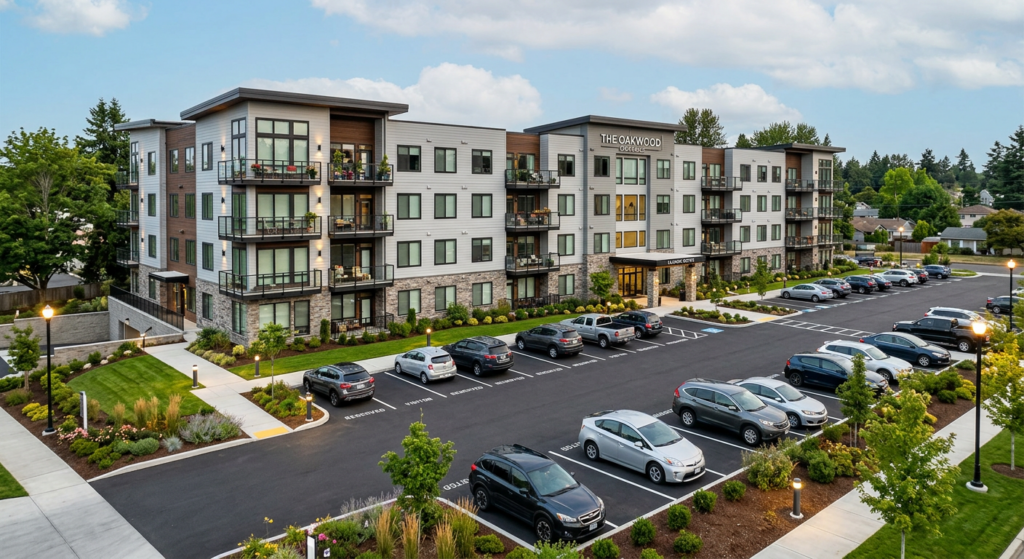
2026 Cost Segregation Study Rental Property Tax Guide
For the 2026 tax year, real estate investors who conduct a 2026 cost segregation study rental property analysis can unlock unprecedented tax savings. The One Big Beautiful Bill Act (OBBBA), signed into law on July 4, 2025, restored 100% bonus depreciation. This means rental property owners can now accelerate depreciation deductions and potentially save six figures in taxes by reclassifying building components into shorter recovery periods.
Table of Contents
- Key Takeaways
- What Is a Cost Segregation Study for Rental Property?
- How Does the 2026 Bonus Depreciation Work?
- What Property Components Qualify for Acceleration?
- How Much Can You Save With a Cost Segregation Study?
- When Should Rental Property Owners Conduct a Study?
- What Are the Risks and Compliance Requirements?
- Uncle Kam in Action: How a Dallas Investor Saved $187,000
- Next Steps
- Frequently Asked Questions
- Related Resources
Key Takeaways
- The OBBBA restored 100% bonus depreciation for 2026, allowing immediate write-offs of qualifying property.
- Cost segregation reclassifies building components into 5-, 7-, and 15-year property classes.
- Typical rental properties can accelerate 20-40% of their basis into shorter depreciation schedules.
- Investors can conduct retroactive studies for properties purchased in prior years using Form 3115.
- Professional engineering-based studies meet IRS standards and reduce audit risk significantly.
What Is a Cost Segregation Study for Rental Property?
Quick Answer: A cost segregation study identifies building components that can be depreciated over 5, 7, or 15 years instead of the standard 27.5-year residential rental schedule. This accelerates deductions and increases immediate cash flow for real estate investors.
A 2026 cost segregation study rental property analysis is an IRS-approved engineering-based approach. It breaks down a building’s cost into specific components. Each component receives its appropriate tax classification. Most real estate investors initially depreciate their entire rental property over 27.5 years for residential rentals or 39 years for commercial properties. However, significant portions of a building qualify for much faster depreciation.
The process involves detailed engineering analysis and documentation. A qualified cost segregation specialist physically inspects the property. They review construction documents, blueprints, and invoices. Then they identify every component that qualifies for accelerated depreciation under IRS Publication 946. The resulting report provides detailed documentation that withstands IRS scrutiny.
The Legislative Game-Changer for 2026
The One Big Beautiful Bill Act transformed the cost segregation landscape. Signed on July 4, 2025, it restored 100% bonus depreciation for qualifying property. Previously, bonus depreciation was scheduled to phase down to 40% by 2025. Now, real estate investors can write off the entire accelerated portion in year one. This creates massive first-year deductions and immediate cash flow benefits.
According to market analysis published in March 2026, the OBBBA generated a projected $129 billion in corporate tax savings across S&P 500 companies. For individual real estate investors, the impact is equally significant. The restoration of full expensing means rental property owners can now maximize depreciation strategies. This reduces their 2026 tax liability substantially while maintaining long-term wealth-building through real estate.
Who Benefits Most From Cost Segregation?
Cost segregation delivers the greatest value to specific investor profiles. Properties with higher acquisition costs see larger absolute dollar savings. Investors with substantial taxable income can utilize the accelerated deductions immediately. Those planning to hold properties long-term benefit from improved cash flow during the critical early ownership years.
- Multi-family properties valued above $500,000
- Recently renovated buildings with significant capital improvements
- Properties with extensive site improvements or specialized equipment
- Investors with active income above the standard deduction thresholds
- Real estate professionals who meet material participation requirements
Pro Tip: For 2026, investors with modified adjusted gross income below $300,000 (married filing jointly) can fully utilize passive activity losses. Plan your cost segregation timing accordingly to maximize current-year benefits.
How Does the 2026 Bonus Depreciation Work?
Quick Answer: For 2026, the OBBBA allows 100% first-year bonus depreciation on qualifying property with recovery periods of 20 years or less. This means 5-, 7-, and 15-year property identified through cost segregation can be fully deducted in the year placed in service.
Bonus depreciation under the OBBBA applies to new and used property placed in service during 2026. The property must be acquired after September 27, 2017, and placed in service by December 31, 2026. For rental property owners, this means components identified through cost segregation qualify for immediate expensing. Therefore, investors can deduct 100% of qualifying personal property and land improvements in year one.
Interaction With the QBI Deduction
The OBBBA also made the 20% Qualified Business Income deduction permanent. Rental property owners who materially participate in their rental activities may qualify for the QBI deduction. However, bonus depreciation reduces your qualified business income. This creates a strategic planning opportunity. Investors must balance maximizing current deductions with preserving QBI for the 20% deduction.
For high-income investors, the QBI deduction phases out when taxable income exceeds certain thresholds. For 2026, the phase-out begins at taxable income of $383,900 for married filing jointly. As a result, strategic use of cost segregation and bonus depreciation can help manage income levels. This preserves qualification for various tax benefits while maximizing overall deductions.
Comparing Bonus Depreciation to Section 179
Section 179 expensing offers an alternative immediate deduction method. However, bonus depreciation provides superior benefits for most rental property scenarios. Section 179 has annual dollar limits and requires positive taxable income. Bonus depreciation has no dollar cap and can create tax losses. For large rental properties, bonus depreciation through cost segregation delivers far greater benefits.
| Feature | Bonus Depreciation (2026) | Section 179 |
|---|---|---|
| Percentage Allowed | 100% (OBBBA restoration) | 100% up to limit |
| Annual Dollar Limit | None | $1,220,000 for 2026 |
| Income Requirement | Can create losses | Limited to taxable income |
| Property Types | New and used | New and used |
| Real Property Components | QIP and qualifying improvements | Very limited |
What Property Components Qualify for Acceleration?
Quick Answer: Personal property (5-7 year), land improvements (15-year), and Qualified Improvement Property qualify for accelerated depreciation. Typical rentals can reclassify 20-40% of property basis into these shorter recovery periods.
The IRS Cost Segregation Audit Techniques Guide provides detailed classification rules. A professional cost segregation study identifies components that qualify for faster depreciation. The goal is to separate personal property and land improvements from the building structure. This moves assets from 27.5-year or 39-year schedules into 5-, 7-, or 15-year categories.
5-Year Property Classifications
Five-year property includes assets that aren’t permanent building components. These items typically serve tenants directly or support property operations. In rental properties, this category often represents 15-25% of total property value.
- Appliances: Refrigerators, ranges, dishwashers, washers, dryers
- Carpeting and removable flooring not permanently affixed
- Decorative light fixtures and ceiling fans
- Window treatments: Blinds, shades, curtain rods
- Computer equipment and office furniture
- Specialized security systems and access control equipment
15-Year Property Classifications
Fifteen-year property primarily includes land improvements and Qualified Improvement Property. For rental properties, this category frequently represents the largest opportunity for acceleration. Most studies identify 10-20% of property value as 15-year property.
- Site improvements: Parking lots, driveways, sidewalks
- Landscaping: Trees, shrubs, irrigation systems
- Fencing and retaining walls
- Exterior lighting not attached to the building
- Swimming pools and recreational facilities
- Qualified Improvement Property: Interior non-structural improvements
Pro Tip: Qualified Improvement Property placed in service after December 31, 2017, qualifies for 15-year MACRS treatment and 100% bonus depreciation in 2026. This includes interior improvements like new flooring, wall finishes, and ceiling updates.
Building Components That Remain 27.5-Year Property
Not everything qualifies for acceleration. Structural building components must remain on the standard residential rental depreciation schedule. This includes the building shell, structural framework, and permanently integrated systems.
- Foundation, walls, roof structure
- Plumbing systems serving the entire building
- HVAC systems (unless unit-specific)
- Electrical wiring and panels
- Elevators and escalators
 Free Tax Write-Off Finder
How Much Can You Save With a Cost Segregation Study?
Quick Answer: Most rental property owners save $40,000 to $150,000 in first-year taxes on properties valued between $1 million and $5 million. The exact savings depend on property characteristics, investor tax bracket, and ability to utilize passive losses.
Tax savings from cost segregation depend on several factors. The property’s purchase price and construction quality affect how much can be reclassified. Your effective tax rate determines the dollar value of deductions. Your overall tax strategy influences whether you can use the deductions immediately or must carry them forward.
Example Calculation: $2 Million Apartment Building
Consider a $2 million multi-family property purchased in 2026. The building allocation is $1.6 million, with $400,000 in land value. Without cost segregation, you would depreciate $1.6 million over 27.5 years. This produces annual depreciation of approximately $58,182.
A cost segregation study identifies $480,000 (30% of building) as qualifying property:
- $160,000 as 5-year property (appliances, carpeting, fixtures)
- $320,000 as 15-year property (parking lot, landscaping, site work)
- $1,120,000 remains as 27.5-year property (building structure)
With 100% bonus depreciation in 2026, you can immediately deduct the entire $480,000 in year one. Therefore, your first-year depreciation becomes $520,727 instead of $58,182. This creates an additional $462,545 in first-year deductions. At a 37% marginal tax rate, this saves $171,142 in federal taxes for 2026.
| Scenario | Year 1 Depreciation | Tax Savings (37% rate) |
|---|---|---|
| Without Cost Segregation | $58,182 | $21,527 |
| With Cost Segregation + 100% Bonus | $520,727 | $192,669 |
| Additional First-Year Benefit | $462,545 | $171,142 |
Return on Investment Analysis
A professional cost segregation study typically costs between $5,000 and $15,000 for most rental properties. The investment depends on property complexity, building size, and documentation availability. However, the return on investment is exceptional. In the example above, a $10,000 study fee generates $171,142 in tax savings. This represents a 1,611% first-year return on investment.
Moreover, the benefits compound over time. While you accelerate deductions into year one, you don’t lose depreciation. You simply shift the timing. This improved cash flow in early ownership years allows for reinvestment, debt reduction, or portfolio expansion. For real estate investors building wealth, this acceleration provides tremendous strategic advantages.
Pro Tip: The time value of money makes accelerated depreciation extremely valuable. A dollar of tax savings today is worth more than a dollar saved years from now. Factor in reinvestment returns when evaluating cost segregation benefits.
When Should Rental Property Owners Conduct a Study?
Quick Answer: The optimal time is during the year of acquisition or immediately after. However, retroactive studies using Form 3115 allow investors to capture missed depreciation from prior years without amending returns.
For properties purchased in 2026, conduct the study before filing your tax return. This allows you to capture maximum first-year benefits from 100% bonus depreciation. The study should begin within 30-60 days of acquisition. This timing ensures fresh documentation and allows the engineering team to complete analysis before tax deadlines.
Retroactive Cost Segregation Studies
If you purchased rental property in previous years, you haven’t missed the opportunity. The IRS allows retroactive cost segregation through an automatic change in accounting method. You file Form 3115 with your current year tax return. This form reports all the “missed” depreciation from prior years as a catch-up deduction in the current year.
For example, suppose you bought a property in 2022 and never conducted a cost segregation study. In 2026, you can file Form 3115 with your return. The form calculates the difference between depreciation actually taken and what you should have taken. This difference becomes a current-year deduction. Therefore, you can still benefit from acceleration even if the property was purchased years ago.
Under Form 3115 procedures, you don’t need to amend prior returns. The IRS treats this as a prospective accounting method change. You report the catch-up adjustment on Form 3115, which attaches to your current return. This simplifies the process significantly and avoids triggering amended return audits.
Strategic Timing Considerations
Several strategic factors influence optimal study timing. Investors should consider their current-year income, passive activity loss limitations, and multi-year tax planning. In some cases, deferring the study one year may produce better overall results.
- Conduct immediately if you have substantial active income to offset
- Consider deferring if passive loss limitations prevent current utilization
- Coordinate with real estate professional status elections
- Evaluate alongside other major deductions like Section 199A or NOL carryforwards
- Time studies to maximize QBI deduction benefits
What Are the Risks and Compliance Requirements?
Quick Answer: The primary risk is IRS audit exposure if studies lack proper documentation. Using qualified professionals who follow the IRS Audit Techniques Guide minimizes risk. Proper studies have a 95%+ success rate during IRS examinations.
Cost segregation is an IRS-approved strategy, but implementation quality matters. Low-quality studies that lack engineering rigor face higher audit risk and challenge rates. However, professionally prepared studies that follow IRS Cost Segregation guidelines rarely face successful challenges. The key is proper documentation and defensible methodology.
Essential Documentation Requirements
A compliant cost segregation study must include specific elements. The documentation should withstand IRS scrutiny and clearly support all classification decisions. Quality providers deliver comprehensive reports that meet these standards.
- Detailed property inspection report with photographs
- Engineering analysis explaining classification methodology
- Cost allocation summaries by asset class
- Reference to applicable tax code sections and IRS guidance
- Signed engineer certification and professional credentials
- Narrative explaining property-specific factors and construction details
Choosing a Qualified Cost Segregation Provider
Provider selection significantly impacts both study quality and audit risk. Not all cost segregation firms offer equal expertise. Look for providers with engineering credentials, tax expertise, and proven track records defending studies during IRS examinations.
- Licensed professional engineers on staff
- CPAs with real estate tax specialization
- Documented audit defense experience
- Industry-standard software and methodology
- Professional liability insurance covering their work
- Willingness to support you during IRS examinations
Common Mistakes to Avoid
Several common errors increase audit risk and reduce study effectiveness. Avoid these pitfalls by working with experienced professionals and following established best practices.
| Mistake | Risk | Solution |
|---|---|---|
| Using desktop-only studies without site visits | Inaccurate classifications, IRS challenges | Require physical property inspection |
| Overly aggressive component classification | Audit adjustments, penalties | Use conservative, defensible approaches |
| Inadequate documentation and support | Cannot defend positions during audit | Comprehensive engineering-based reports |
| Ignoring passive activity loss rules | Cannot utilize current-year deductions | Coordinate with overall tax planning |
| Failing to update depreciation schedules | Incorrect future-year depreciation | Provide study to tax preparer immediately |
Pro Tip: Request a sample report before engaging a cost segregation provider. Review their documentation quality, methodology explanation, and adherence to IRS guidelines. A quality report should exceed 40 pages with detailed engineering analysis.

Uncle Kam in Action: How a Dallas Investor Saved $187,000
Marcus Johnson, a successful real estate investor from Dallas, Texas, contacted Uncle Kam in early 2026. He had recently acquired a 24-unit apartment complex for $3.2 million. Marcus generated substantial income from his W-2 job as a corporate executive, earning $450,000 annually. Additionally, he owned three other rental properties producing positive cash flow. He needed a strategy to reduce his 2026 tax liability.
The Challenge: Marcus faced a significant tax burden. His marginal federal tax rate hit 37%, and he qualified as a real estate professional due to his active involvement in property management. However, he was taking only standard 27.5-year depreciation on his newest acquisition. This produced just $93,090 in annual depreciation. His effective tax rate on rental income remained high, limiting cash flow for portfolio expansion.
The Uncle Kam Solution: Our tax advisory team recommended an immediate cost segregation study combined with 100% bonus depreciation under the OBBBA. We coordinated with a qualified engineering firm to conduct a detailed property analysis. The study identified $1,088,000 (34% of building basis) as qualifying for accelerated depreciation. This included $272,000 in 5-year property and $816,000 in 15-year property.
We filed the study results with Marcus’s 2026 tax return. Because Marcus qualified as a real estate professional, he could utilize the entire passive loss immediately. The accelerated depreciation created a first-year write-off of $1,156,625 instead of the standard $93,090.
The Results: Marcus achieved exceptional tax savings through this strategic approach:
- Tax Savings: $187,417 in federal tax savings for 2026
- Investment: $12,500 for the professional cost segregation study
- First-Year ROI: 1,399% return on the study investment
- Cash Flow Impact: Additional $174,917 available for reinvestment after study costs
Marcus used the tax savings to fund a down payment on his next acquisition. The improved cash flow allowed him to accelerate his portfolio growth by 18 months. Moreover, he now requests cost segregation studies on all new acquisitions. He has also filed Form 3115 to capture missed depreciation on his three older properties. Visit our client results page to see more real estate investor success stories.
Next Steps
Taking advantage of the 2026 cost segregation study rental property opportunity requires strategic planning and expert implementation. Follow these actionable steps to maximize your tax savings:
- Review your current rental property portfolio for cost segregation opportunities
- Calculate your potential first-year tax savings using your property value and tax rate
- Evaluate your ability to utilize passive losses against active income
- Schedule consultations with qualified cost segregation providers before April 2026
- Consider retroactive studies using Form 3115 for properties purchased in prior years
- Work with Uncle Kam’s tax strategy team to coordinate cost segregation with your overall tax plan
Time is critical for 2026. The 100% bonus depreciation under the OBBBA provides exceptional benefits this year. However, future legislative changes could modify these rules. Real estate investors should act now to lock in maximum tax savings under current law.
Frequently Asked Questions
Can I do cost segregation on a property I bought several years ago?
Yes, absolutely. The IRS allows retroactive cost segregation through Form 3115, an automatic accounting method change. You can capture all missed depreciation from prior years as a catch-up deduction in your current tax year. This approach doesn’t require amending previous returns. Many investors successfully apply cost segregation to properties purchased 5-10 years ago. The cumulative catch-up deduction can be substantial, especially when combined with 2026’s 100% bonus depreciation rules.
What if I don’t have enough income to use all the depreciation?
Unused passive activity losses from cost segregation carry forward indefinitely. They can offset future rental income or be fully deductible when you sell the property. Real estate professionals who meet material participation requirements can use losses against ordinary income immediately. Additionally, if your modified adjusted gross income is under $100,000, you can deduct up to $25,000 in passive losses annually. Strategic timing and income planning maximize current-year utilization.
Does cost segregation increase my chances of an IRS audit?
Cost segregation is a recognized IRS-approved strategy and doesn’t automatically trigger audits. However, aggressive or poorly documented studies can raise red flags. Professional engineering-based studies following the IRS Audit Techniques Guide have extremely high success rates during examinations. The key is working with qualified providers who deliver comprehensive documentation. Quality studies actually reduce risk by providing bulletproof support for your tax positions.
What happens to my depreciation when I sell the property?
When you sell, all depreciation (including accelerated amounts) is subject to depreciation recapture taxed at a maximum 25% rate. However, this is still advantageous. You received deductions at your ordinary income rate (up to 37%) and pay back at the lower 25% rate. Additionally, 1031 exchanges allow you to defer this recapture indefinitely by reinvesting in replacement property. The time value of money from accelerated deductions provides significant economic benefits even with eventual recapture.
Can I combine cost segregation with other real estate tax strategies?
Yes, cost segregation works exceptionally well with other strategies. It pairs effectively with real estate professional status elections, allowing immediate loss utilization. The 20% QBI deduction under Section 199A can apply to rental activities after cost segregation deductions. Short-term rental strategies benefit from both cost segregation and ordinary loss treatment. Combining multiple strategies through comprehensive planning produces optimal results. Work with tax professionals experienced in integrated approaches.
What’s the minimum property value where cost segregation makes sense?
Most professionals recommend properties valued at $500,000 or higher. At this threshold, the tax savings typically exceed study costs by 10-20 times. Properties under $500,000 may still benefit, especially if they have extensive site improvements or recent renovations. The decision depends on property characteristics, your tax situation, and study costs. Request a preliminary analysis from cost segregation providers. Many offer free initial assessments to determine if your property qualifies.
How long does a cost segregation study take to complete?
A typical study takes 4-8 weeks from engagement to final report delivery. The timeline depends on property complexity, documentation availability, and provider workload. Begin the process at least 60 days before your tax filing deadline. For newly acquired properties, start within 30 days of closing. This ensures completion before you file your return. Rush services are available for time-sensitive situations, though they may cost more.
Related Resources
- Tax Strategies for Real Estate Investors
- Comprehensive Tax Planning Services
- Expert Tax Preparation and Filing
- Free Tax Savings Calculators
- Real Estate Tax Guides and Resources
This information is current as of 3/4/2026. Tax laws change frequently. Verify updates with the IRS or consult a tax professional if reading this later.
Last updated: March, 2026

