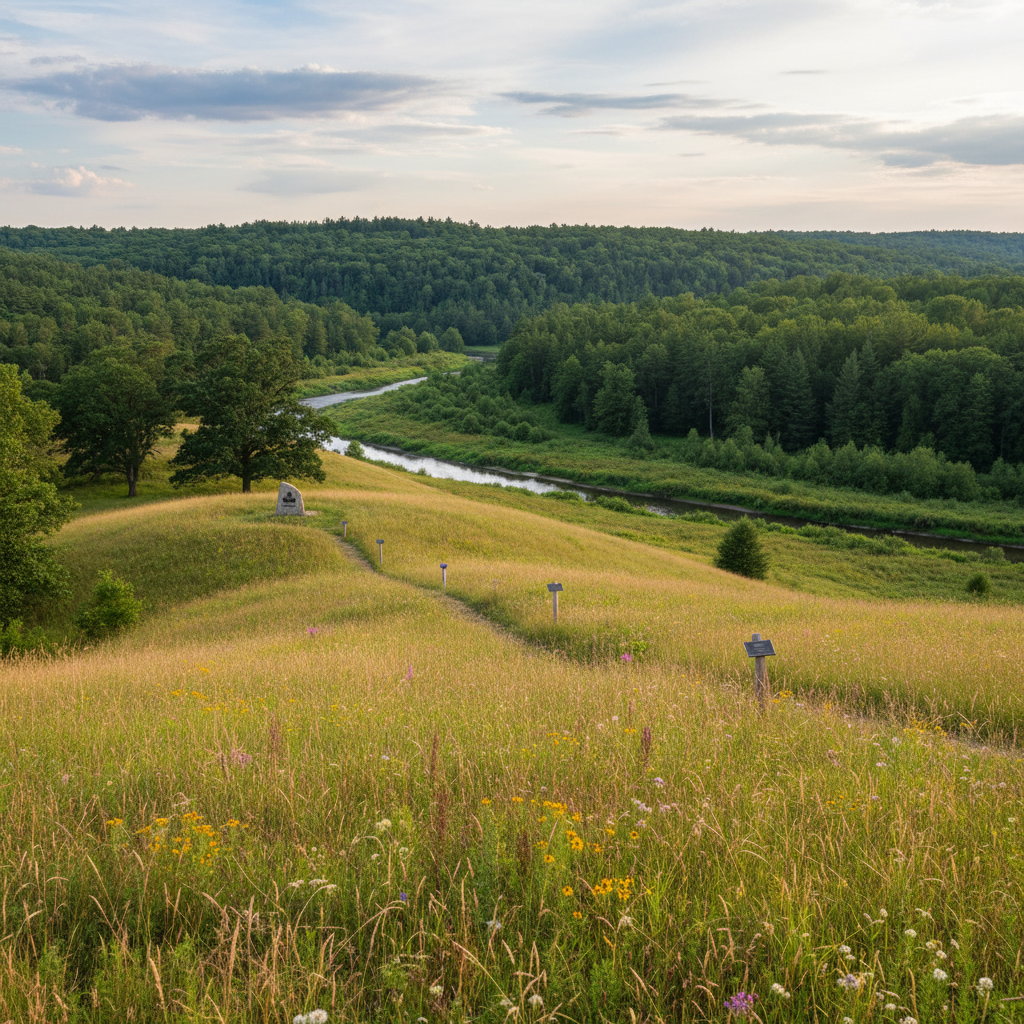
Conservation Easement Tax Deduction: 2026 Guide
For the 2026 tax year, the conservation easement tax deduction offers real estate investors a powerful strategy to reduce taxable income while preserving environmentally significant land. This charitable contribution allows property owners to deduct up to 50% of adjusted gross income annually, with unused amounts carried forward for 15 years, creating substantial long-term tax savings.
Table of Contents
- Key Takeaways
- What Is a Conservation Easement Tax Deduction?
- How Much Can You Deduct with a Conservation Easement in 2026?
- What Properties Qualify for Conservation Easement Deductions?
- How Does the 15-Year Carryforward Work?
- What Are the Qualified Appraisal Requirements for 2026?
- How Can Real Estate Investors Strategically Use Conservation Easements?
- Uncle Kam in Action: Lakefront Property Conservation Success
- Next Steps
- Frequently Asked Questions
- Related Resources
Key Takeaways
- Conservation easement deductions allow real estate investors to deduct up to 50% of AGI annually in 2026
- Qualified farmers and ranchers can deduct up to 100% of AGI per year
- Unused deduction amounts carry forward for 15 years under current IRS rules
- A qualified appraisal and Form 8283 are mandatory for donations exceeding $5,000
- Strategic timing can maximize deductions when combined with other tax planning strategies
What Is a Conservation Easement Tax Deduction?
Quick Answer: A conservation easement tax deduction is a charitable contribution deduction for permanently restricting development rights on environmentally significant property. For 2026, it offers substantial tax savings for real estate investors who preserve land while maintaining ownership.
A conservation easement tax deduction represents one of the most powerful wealth preservation strategies available to property owners. When you donate a conservation easement, you give up certain development rights to your property in perpetuity. However, you retain ownership, can continue using the land for existing purposes, and receive a federal income tax deduction based on the property’s reduced fair market value.
The IRS defines conservation easements as legally binding agreements that restrict certain uses of the property to protect conservation values. These restrictions run with the land permanently, binding all future owners.
The Core Components of Conservation Easement Deductions
For 2026, conservation easement tax deductions function as charitable contributions under IRC Section 170(h). This means they reduce your taxable income dollar-for-dollar, unlike tax credits which reduce tax owed. The deduction equals the difference between your property’s fair market value before and after the easement restriction.
For example, if your property is worth $2 million with full development rights but only $500,000 with development restrictions, your charitable deduction would be $1.5 million. Under 2026 rules, you can deduct up to 50% of your adjusted gross income each year, carrying forward unused amounts for up to 15 years.
Types of Conservation Purposes Recognized by the IRS
The IRS recognizes four conservation purposes that qualify for tax deductions:
- Preservation of land for outdoor recreation or education for the public
- Protection of relatively natural habitat for fish, wildlife, or plants
- Preservation of open space for scenic enjoyment or pursuant to governmental policy
- Preservation of historically important land areas or structures
Pro Tip: Work with experienced tax advisors to structure your easement properly. IRS scrutiny of conservation easements has increased significantly, making professional guidance essential for compliance.
How Much Can You Deduct with a Conservation Easement in 2026?
Quick Answer: For 2026, most investors can deduct up to 50% of adjusted gross income annually. Qualified farmers and ranchers can deduct up to 100% of AGI, with unused amounts carried forward for 15 years.
The conservation easement tax deduction limits for 2026 follow well-established IRS guidelines that distinguish between general property owners and those engaged in agricultural production. Understanding these limits is critical for maximizing your tax benefit.
Standard Deduction Limits for Real Estate Investors
Under current law, real estate investors can deduct conservation easement contributions up to 50% of their adjusted gross income in any given tax year. This represents a significantly higher limit than standard charitable contributions to public charities, which are limited to 60% of AGI for cash donations but only 30% for appreciated property donations.
For example, if your 2026 AGI is $500,000, you can deduct up to $250,000 in conservation easement value in a single year. Any unused deduction carries forward for up to 15 years, subject to the same 50% AGI limitation in each subsequent year.
| Taxpayer Type | Annual AGI Limit | Carryforward Period |
|---|---|---|
| General Property Owners | 50% of AGI | 15 years |
| Qualified Farmers/Ranchers | 100% of AGI | 15 years |
| Standard Charitable Donations (cash) | 60% of AGI | 5 years |
Enhanced Limits for Qualified Farmers and Ranchers
Real estate investors who qualify as farmers or ranchers receive preferential treatment under IRC Section 170(b)(1)(E). These taxpayers can deduct conservation easement contributions up to 100% of their adjusted gross income annually.
To qualify as a farmer or rancher for this purpose, you must derive more than 50% of your gross income from the trade or business of farming. This includes income from cultivating land, raising livestock, or producing agricultural or horticultural commodities. According to IRS Publication 225, this determination is made based on your gross income for the year of the contribution.
Calculating Your Maximum 2026 Deduction
Let’s examine a practical calculation for a real estate investor in 2026:
- Conservation easement value: $1,800,000
- 2026 Adjusted Gross Income: $600,000
- Year 1 deduction (50% limit): $300,000
- Remaining carryforward: $1,500,000
- Available carryforward period: 15 years (through 2041)
This investor can continue deducting up to 50% of AGI each year until the full $1.8 million deduction is exhausted or the 15-year period expires, whichever comes first.
Pro Tip: Coordinate conservation easement deductions with other income-producing events. If you anticipate a large capital gain from property sales in future years, the 15-year carryforward allows you to offset that income strategically.
What Properties Qualify for Conservation Easement Deductions?
Quick Answer: Qualifying properties must serve a recognized conservation purpose, be donated to a qualified organization, and include restrictions that are perpetual. Scenic land, wildlife habitat, farmland, and historic properties commonly qualify.
Not every property or easement structure qualifies for the conservation easement tax deduction. The IRS imposes strict requirements to prevent abuse while encouraging legitimate conservation efforts. For 2026, these qualification standards remain consistently enforced.
Conservation Purpose Requirements
Your property must serve at least one of the four conservation purposes recognized under IRC Section 170(h)(4). The most common qualifying purposes for real estate investors include:
- Open Space Preservation: Land must provide significant public benefit through scenic enjoyment or pursuant to clearly delineated governmental conservation policy
- Wildlife Habitat Protection: Property must provide relatively natural habitat for fish, wildlife, plants, or similar ecosystems
- Agricultural Land Preservation: Working farms and ranches that produce food or fiber for commercial purposes
- Historic Preservation: Land or structures with historical, architectural, or cultural significance
According to recent data from the National Park Service, conservation easements have protected over 165,000 acres through programs like Florida’s Rural and Family Lands Protection Program, demonstrating the scale and impact of these preservation efforts.
Qualified Organization Requirements
Conservation easements must be donated to qualified organizations under IRC Section 170(h)(3). These include:
- Federal, state, or local governmental entities
- Publicly supported charities organized exclusively for conservation purposes
- Certain supporting organizations and controlled entities
The recipient organization must have the resources and commitment to enforce the easement restrictions in perpetuity. Most land trusts accredited by the Land Trust Accreditation Commission meet these requirements.
Perpetuity and Exclusivity Standards
For 2026, the IRS continues to require that conservation easements be granted in perpetuity. This means the restrictions must bind all future property owners forever. Temporary easements or those with termination provisions do not qualify for the deduction.
Additionally, the easement must be exclusive to the donee organization. You cannot grant overlapping easements to multiple organizations on the same property without specific IRS approval.
 Free Tax Write-Off Finder
How Does the 15-Year Carryforward Work?
Quick Answer: Unused conservation easement deductions carry forward for 15 years after the donation year. You can deduct up to 50% of AGI annually (100% for farmers) until the deduction is exhausted or the carryforward period expires.
The 15-year carryforward provision represents one of the most valuable aspects of the conservation easement tax deduction. This extended timeframe, significantly longer than the five-year carryforward for most charitable contributions, allows real estate investors to fully utilize large deductions over time.
How Carryforward Mechanics Work
When you donate a conservation easement in 2026, you first deduct the maximum allowable amount against your current year income (50% of AGI for most investors). Any unused deduction automatically carries forward to 2027, then 2028, and so on, for up to 15 years following the donation year.
The carryforward operates on a first-in, first-out basis. If you make multiple conservation easement donations, you must use the oldest carryforward amounts first before applying more recent donations.
Strategic Multi-Year Planning Example
Consider a real estate investor who donates a conservation easement valued at $2 million in 2026:
| Tax Year | AGI | Max Deduction (50%) | Remaining Carryforward |
|---|---|---|---|
| 2026 | $400,000 | $200,000 | $1,800,000 |
| 2027 | $500,000 | $250,000 | $1,550,000 |
| 2028 | $600,000 | $300,000 | $1,250,000 |
| 2029-2041 | Varies | Up to 50% AGI | Until exhausted |
This investor has until the 2041 tax year to fully utilize the $2 million deduction. The extended carryforward provides flexibility to match deductions with high-income years.
Coordinating with Other Tax Strategies
Smart real estate investors coordinate conservation easement carryforwards with other income-producing events. For example, if you plan to sell a rental property generating a $500,000 capital gain in 2028, you can use conservation easement carryforwards to offset that income, potentially saving $119,000 in federal taxes (assuming the 23.8% long-term capital gains rate including net investment income tax).
Pro Tip: Maintain meticulous records of carryforward amounts. Track each year’s deduction, remaining balance, and expiration date. Your tax preparer will need this documentation annually through 2041.
What Are the Qualified Appraisal Requirements for 2026?
Quick Answer: Conservation easement donations exceeding $5,000 require a qualified appraisal completed no earlier than 60 days before the donation and no later than the tax return due date. Form 8283 must be filed with your return.
The IRS imposes strict appraisal requirements for conservation easement tax deductions. These rules, detailed in IRS Publication 561, aim to prevent overvaluation while ensuring legitimate conservation efforts receive appropriate tax benefits.
Qualified Appraiser Standards
For 2026, a qualified appraiser must meet specific criteria:
- Hold professional appraiser designation or demonstrate verifiable education and experience
- Regularly perform appraisals for compensation
- Demonstrate competency in valuing the type of property being appraised
- Not be the donor, donee, or related party
- Not have fees contingent on the appraised value or deduction amount
The appraiser must also complete IRS Form 8283, Section B, certifying their qualifications and independence. Using an appraiser who specializes in conservation easement valuations is strongly recommended given the complexity and IRS scrutiny involved.
Required Appraisal Components
A qualified appraisal for a conservation easement must include:
- Description of the property before and after the easement restriction
- Fair market value of the property before the easement (unrestricted value)
- Fair market value of the property after the easement (restricted value)
- Valuation methodology and comparable sales analysis
- Description of the conservation purpose and restrictions
- Appraiser’s qualifications and statement of independence
Form 8283 Reporting Requirements
For conservation easement donations exceeding $5,000, you must file Form 8283 (Noncash Charitable Contributions) with your tax return. Section B of this form requires:
- Detailed description of the donated property
- Appraised fair market value
- Acquisition date and cost basis
- Donee organization information and acknowledgment
- Qualified appraiser declaration
For conservation easements valued over $500,000, the appraisal itself must be attached to your tax return. This heightened documentation requirement reflects the IRS’s increased scrutiny of high-value easement donations.
Pro Tip: Budget $15,000 to $50,000 for a comprehensive conservation easement appraisal. While expensive, a well-documented appraisal is your best defense against IRS challenges that could disallow the entire deduction.
How Can Real Estate Investors Strategically Use Conservation Easements?
Quick Answer: Strategic use involves timing easement donations to coincide with high-income years, coordinating with property sales, estate planning integration, and combining with other tax reduction strategies for maximum benefit.
For sophisticated real estate investors, conservation easements represent far more than a simple charitable deduction. When integrated into comprehensive tax planning, these tools can generate multi-generational wealth preservation benefits.
Timing Strategies for Maximum Tax Benefit
The optimal time to donate a conservation easement often coincides with unusually high-income events:
- Large Property Sales: If you’re selling multiple properties in 2026, donate the easement in the same year to offset capital gains
- Business Exit Events: Entrepreneurs selling businesses can use conservation easements to offset ordinary income from the sale
- Roth Conversion Years: Execute large Roth conversions while offsetting the income with easement deductions
- Bonus Income: Use easements in years with exceptional business performance or one-time bonuses
Estate Planning Integration
Conservation easements offer unique estate planning advantages for real estate investors. By donating an easement during your lifetime, you:
- Reduce the property’s fair market value for estate tax purposes
- Receive immediate income tax benefits while living
- Preserve family land from development pressure after your death
- Potentially qualify for additional estate tax deductions under IRC Section 2031(c)
For families with valuable land holdings, this dual benefit of income tax deductions plus estate tax reduction can save millions in combined taxes.
Combining with Other Investment Strategies
Advanced investors often combine conservation easements with other tax-advantaged strategies:
- Opportunity Zone Investments: Use easement deductions to offset gains when exiting Qualified Opportunity Funds
- Like-Kind Exchanges: Donate easements on replacement properties acquired through 1031 exchanges
- Cost Segregation Studies: Layer conservation easements with accelerated depreciation strategies
- Charitable Remainder Trusts: Donate easement-restricted property to CRTs for additional tax benefits
Partnership and Multi-Owner Considerations
When property is owned by partnerships, LLCs, or other pass-through entities, conservation easement deductions flow through to individual partners based on their ownership percentage. This creates planning opportunities:
- Partners in high-income years can benefit more from their share of deductions
- Special allocations may allow strategic distribution of tax benefits
- Family partnerships can spread deductions across multiple taxpayers
However, the IRS closely scrutinizes partnership conservation easements. Ensure your entity structure reflects genuine economic substance beyond tax benefits.

Uncle Kam in Action: Lakefront Property Conservation Success
Client Snapshot: Michael and Susan Rodriguez, married real estate investors, owned a 250-acre lakefront property in East Texas. They purchased the land in 2015 for $1.2 million, intending to subdivide and develop it. By 2025, surrounding development pressures increased the property’s value substantially.
Financial Profile: The Rodriguez family generated $850,000 in annual income from rental properties and business ventures. They faced combined federal and state tax rates approaching 45%, resulting in annual tax bills exceeding $380,000.
The Challenge: The couple wanted to preserve the natural beauty of their lakefront property for future generations while reducing their substantial tax burden. However, they were concerned about permanently restricting the land’s development potential and wanted to ensure they maximized available tax benefits.
The Uncle Kam Solution: Our team implemented a comprehensive conservation easement strategy:
- Engaged a qualified appraiser specializing in conservation easements who valued the development rights at $3.2 million
- Identified a qualified land trust with 40+ years of experience managing conservation easements
- Structured the easement to preserve wildlife habitat and water quality while allowing continued family use
- Timed the donation for December 2025 to begin utilizing deductions immediately
- Prepared comprehensive documentation including qualified appraisal and Form 8283
The Results:
- 2026 Tax Savings: $191,250 (50% of $850,000 AGI = $425,000 deduction × 45% tax rate)
- Remaining Carryforward: $2,775,000 available through 2040
- Projected 15-Year Benefit: $1,440,000 in total tax savings (assuming consistent income)
- Investment Cost: $45,000 (appraisal, legal fees, and planning)
- First-Year ROI: 325% ($191,250 saved ÷ $45,000 invested)
The Rodriguez family retained ownership of their cherished property, secured its preservation for future generations, and generated substantial tax savings. They reinvested the tax savings into additional income-producing properties, accelerating their wealth-building trajectory.
Michael noted: “We initially thought donating the easement meant giving up our land. Uncle Kam showed us we could preserve what we love, pass it to our children, and save over $1.4 million in taxes over the next 15 years. It was the perfect solution.”
Want similar results? Explore more success stories at our client results page.
Next Steps
Ready to explore conservation easement opportunities for your real estate portfolio? Take these actions:
- Inventory your real estate holdings to identify properties with conservation value
- Calculate your potential tax savings based on current AGI and property valuations
- Research qualified land trusts operating in your property’s region
- Consult with experienced tax advisors specializing in conservation easements
- Schedule a comprehensive tax strategy session to integrate easements into your overall plan
At Uncle Kam, we specialize in helping real estate investors navigate complex conservation easement transactions. Our team coordinates with qualified appraisers, land trusts, and legal professionals to ensure your easement maximizes tax benefits while achieving your conservation goals.
Frequently Asked Questions
Can I donate a conservation easement on property I just purchased?
Yes, but your deduction is limited to your cost basis, not the current fair market value. If you purchase property for $500,000 and immediately donate an easement valued at $2 million, your deduction is capped at your $500,000 basis. However, if you hold the property for more than one year before donation, you can deduct the full appraised value of the easement. This “holding period” requirement prevents immediate arbitrage strategies.
What happens if the IRS challenges my easement valuation?
The IRS may challenge your appraisal if they believe the valuation is inflated. If challenged, you may need to provide additional documentation, obtain an independent review appraisal, or negotiate a settlement. In some cases, the IRS may disallow the entire deduction if the appraisal doesn’t meet qualified appraisal standards. Working with experienced professionals who understand IRS scrutiny patterns significantly reduces audit risk.
Can I claim both conservation easement deductions and standard deduction?
No. Conservation easement deductions are itemized deductions, so you must itemize to claim them. For 2026, the standard deduction is $31,500 for married filing jointly and $15,750 for single filers. If your total itemized deductions (including the conservation easement, mortgage interest, state taxes up to $40,000, and other items) exceed your standard deduction, itemizing provides greater tax benefit.
Are there any states that offer additional tax credits for conservation easements?
Yes, several states offer additional tax incentives beyond the federal deduction. Colorado, Virginia, Georgia, and California have state-level conservation easement tax credit programs. These credits often can be sold or transferred if you don’t have sufficient state tax liability to use them. Always investigate state-level benefits when considering an easement donation.
How does a conservation easement affect my property taxes?
Conservation easements typically reduce property taxes because the assessed value decreases after development rights are extinguished. The amount of reduction depends on your local assessment methodology. In many jurisdictions, property is reassessed at the restricted value, resulting in annual property tax savings. This creates an ongoing benefit in addition to the one-time income tax deduction.
Can I modify or terminate a conservation easement in the future?
Conservation easements are perpetual and cannot be routinely terminated or modified. However, in rare circumstances involving changed conditions or impossibility of enforcement, easements may be amended through court proceedings. These circumstances are extremely limited. Before donating an easement, carefully consider whether you can commit to permanent restrictions. Once donated, there’s virtually no turning back.
What if I die before using all my conservation easement carryforward?
Unfortunately, conservation easement carryforwards do not transfer to your heirs or estate. Unused carryforwards expire upon death. This makes strategic planning crucial—donors should structure easement gifts when they have sufficient remaining life expectancy and income to utilize the full 15-year carryforward period. For older donors, smaller easements or alternative charitable giving strategies may be more appropriate.
How do conservation easements interact with the Alternative Minimum Tax?
For 2026, conservation easement deductions are allowed for Alternative Minimum Tax purposes, making them more valuable than many other tax preference items. However, if you’re subject to AMT, the tax savings from the easement may be reduced because AMT rates (26% or 28%) are lower than ordinary income rates. Coordinate easement planning with your tax preparation team to model AMT implications.
Related Resources
- Advanced Tax Strategy Planning for Real Estate Investors
- Comprehensive Tax Services for Real Estate Investors
- Ongoing Tax Advisory and Strategic Planning
- Real Client Success Stories and Tax Savings
Last updated: February, 2026
This information is current as of 2/27/2026. Tax laws change frequently. Verify updates with the IRS or consult qualified tax professionals if reading this later.

