
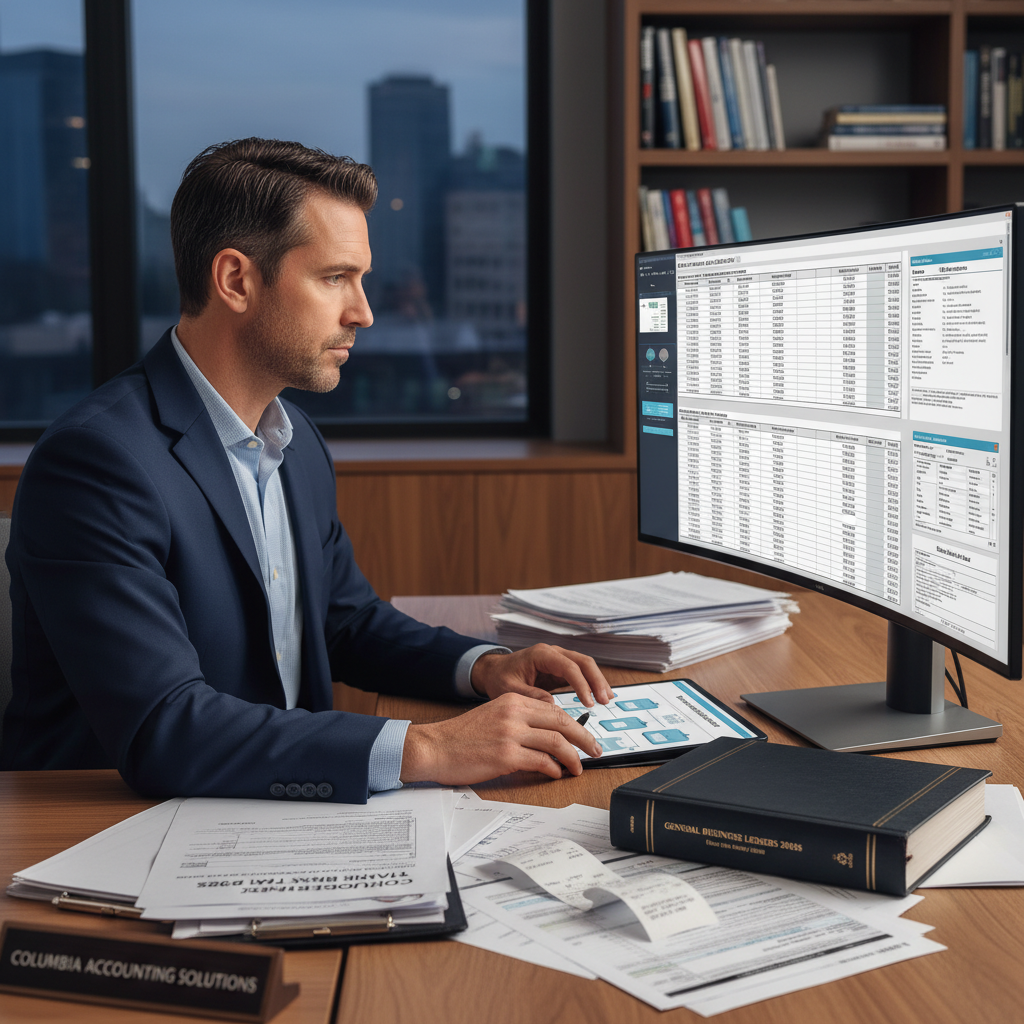
Columbia Small Business Tax Planning 2026: Complete Strategy Guide for Maximum Deductions & Savings
For the 2026 tax year, columbia small business tax planning has never been more critical or rewarding. The One Big Beautiful Bill Act (OBBBA), which took effect in July 2025, fundamentally transformed the tax landscape for business owners with game-changing provisions including a permanent Section 199A Qualified Business Income deduction, doubled Section 179 equipment deductions to $2.5 million, and new bonus depreciation opportunities. Small business owners who understand and implement these 2026 tax strategies can dramatically reduce their tax liability while keeping more money in their operations.

Table of Contents
- Key Takeaways
- What Changed in 2026 Tax Law for Small Business Owners?
- How Can You Maximize Section 179 Deductions in 2026?
- What is the Qualified Business Income Deduction Strategy?
- How Can You Reduce Self-Employment Tax Burden?
- What Business Deductions Should You Claim in 2026?
- Uncle Kam in Action: Real Business Tax Savings
- Next Steps
- Frequently Asked Questions
Key Takeaways
- Section 179 deduction limit doubled to $2.5 million for 2026, allowing immediate equipment expense deductions.
- Section 199A QBI deduction made permanent with new $400 minimum deduction for qualifying businesses.
- Standard business mileage rate increased to 70 cents per mile for 2026 tax year calculations.
- 100% bonus depreciation available for qualified production property through December 2030.
- Strategic planning now can reduce 2026 tax liability by 15-30% depending on business structure and income.
What Changed in 2026 Tax Law for Small Business Owners?
Quick Answer: The One Big Beautiful Bill Act permanently expanded the Section 199A QBI deduction, doubled Section 179 limits to $2.5 million, made bonus depreciation permanent, and created new vehicle loan interest deductions—all favorable changes for 2026 columbia small business tax planning strategy.
Understanding the 2026 tax law changes is essential for small business owners. The most significant legislation affecting your 2026 tax filing is the One Big Beautiful Bill Act (OBBBA), which became effective in July 2025. This transformative law introduced multiple provisions that directly benefit businesses through enhanced deductions, expanded depreciation options, and new strategic planning opportunities.
The Section 199A Qualified Business Income deduction, which allows eligible business owners to deduct up to 20% of their qualified business income, was originally scheduled to expire after 2025. However, the OBBBA made this deduction permanent, providing long-term planning certainty. More importantly, starting in 2026, a new minimum deduction of $400 became available for taxpayers with at least $1,000 in QBI from a business in which they materially participate.
Additionally, the standard business mileage rate for vehicle use increased to 70 cents per mile for the 2026 tax year, up from the previous year’s rate. This increase directly benefits business owners who drive for business purposes, including property inspections, client meetings, and supplier visits. The increase represents a meaningful boost to deductible mileage expenses for small businesses.
Section 179 Deduction Limit Doubled to $2.5 Million
The OBBBA raised the Section 179 expense deduction limit from $1.25 million to $2.5 million for tax years beginning in 2025. The phase-out threshold simultaneously increased to $4 million. This doubling of the deduction limit represents a major tax break for small business owners purchasing equipment, vehicles, technology infrastructure, or business property improvements.
Unlike standard depreciation that spreads equipment costs over multiple years, Section 179 allows you to deduct the full cost of qualifying property in the year it is placed in service. For 2026, this means a business that purchases $2.5 million in eligible equipment can deduct the entire amount on the current year’s tax return, potentially eliminating or significantly reducing tax liability. The phase-out threshold of $4 million means the deduction begins reducing dollar-for-dollar once total equipment purchases exceed $4 million in a single year.
100% Bonus Depreciation Extended Through 2030
Bonus depreciation, which allows businesses to immediately deduct a percentage of the cost of certain property, has been made permanent and set at 100% through December 2030. This provision applies to qualified property acquired and placed in service before January 1, 2031. For columbia small business tax planning in 2026, this means you can take a full first-year deduction for eligible assets rather than depreciating them over their useful lives.
How Can You Maximize Section 179 Deductions in 2026?
Quick Answer: Maximize 2026 Section 179 deductions by timing equipment purchases strategically before year-end, ensuring purchases fall within eligible property categories, and coordinating timing with your business cash flow and income levels.
Strategic timing of equipment purchases represents one of the most effective columbia small business tax planning tactics for 2026. Since Section 179 deductions apply to property placed in service during the tax year, year-end purchases can provide immediate tax benefits. However, property must be placed in service—meaning ready and available for use—by December 31 to qualify for the current year deduction.
Eligible property under Section 179 includes machinery, equipment, vehicles, computer systems, furniture, fixtures, and certain building improvements. The deduction applies to tangible personal property and certain real property improvements with useful lives of 20 years or less. Property that qualifies includes HVAC systems, roofing, fire protection systems, security systems, and specialized equipment unique to your business operations.
Plan Multi-Year Equipment Purchases
Rather than purchasing all equipment in a single year, strategic businesses spread major purchases across multiple years to optimize tax deductions while maintaining appropriate equipment asset levels. If your business generates $2 million in annual profit, purchasing $2.5 million in equipment in 2026 could eliminate your entire tax liability for that year. However, this creates a significantly reduced deduction in 2027 if equipment purchases drop.
A smarter approach involves coordinating equipment purchases with business cash flow cycles, anticipated income levels, and long-term capital needs. By spreading purchases more evenly, you maintain consistent tax deductions across multiple years, which provides more predictable tax planning and smoother cash flow management.
Document Equipment as Business Assets
For the Section 179 deduction to hold up under IRS audit, comprehensive documentation is essential. Maintain purchase invoices, proof of payment, evidence of delivery, and documentation showing the equipment is placed in service and used for business purposes. For vehicles, document the business use percentage and maintain mileage logs. This documentation becomes critical if the IRS questions the timing or qualification of your Section 179 deduction claim.
What is the Qualified Business Income Deduction Strategy?
Quick Answer: The Section 199A QBI deduction allows up to 20% of qualified business income deduction, with a new $400 minimum for qualifying 2026 businesses, providing substantial tax reduction opportunities for owners of small business operations.
The Section 199A Qualified Business Income (QBI) deduction represents one of the most valuable tax provisions for small business owners in 2026. Made permanent by the OBBBA, this deduction allows eligible business owners to deduct up to 20% of their qualified business income from their taxable income. For a business generating $100,000 in annual profit, the potential deduction reaches $20,000, directly reducing the income subject to tax.
The new $400 minimum deduction provision is particularly valuable for small businesses with lower income levels. Even if your QBI is only $2,000, you qualify for the $400 deduction if you materially participate in the business. This minimum threshold ensures that part-time businesses and side enterprises still receive meaningful tax benefits from their business activities.
QBI applies to owners of S corporations, partnerships, sole proprietorships, and LLC members treated as pass-through entities. The deduction does not apply to employees receiving W-2 wages, as their income is taxed differently. However, business owners operating through these pass-through structures qualify, making this deduction broadly applicable to most small business owners.
Maximize QBI Through Entity Structure
The most effective columbia small business tax planning strategy involves structuring your business to maximize QBI benefits. S corporation elections, partnership allocations, and LLC structure selection all impact your QBI deduction. A business owner earning $150,000 annually might reduce their tax liability by $9,000 to $30,000 annually through proper QBI planning—a significant ongoing benefit.
How Can You Reduce Self-Employment Tax Burden?
Quick Answer: Reduce self-employment tax through quarterly estimated payments, proper entity structuring, maximizing deductible business expenses, and leveraging retirement plan contributions to reduce taxable business income.
Self-employment tax represents a significant burden for self-employed business owners and sole proprietors. The self-employment tax rate combines the employee and employer portions of Social Security (12.4% up to $184,500 maximum earnings for 2026) and Medicare taxes (2.9% with no cap on earnings). For business owners with net earnings of $400 or more, self-employment tax is mandatory, calculated on Schedule SE and reported on Form 1040.
The maximum Social Security tax wage base for 2026 is $184,500, meaning business owners with earnings exceeding this threshold pay no additional Social Security tax on income above this limit. This creates a planning opportunity: business owners approaching the wage base threshold can coordinate income recognition timing to optimize their self-employment tax burden across multiple years.
Using our Self-Employment Tax Calculator for Utah residents, you can estimate your 2026 self-employment tax liability based on projected business income and make informed decisions about expense timing and estimated tax payments.
Timing Quarterly Estimated Tax Payments
Self-employed business owners must make quarterly estimated tax payments using IRS Form 1040-ES. These payments are due April 15, June 15, September 15, and January 15 of the following year. Failure to make adequate quarterly payments results in penalties and interest, even if you ultimately owe little tax when filing your annual return.
To calculate estimated tax payments accurately, project your annual income, subtract deductible business expenses and estimated self-employment tax, then divide the result by four to determine each quarterly payment. Underestimating quarterly payments increases interest charges, while overpaying reduces your available business cash flow. Professional tax planning helps optimize this balance.
Leverage Retirement Plans to Reduce Self-Employment Tax
Contributing to qualified retirement plans such as Solo 401(k)s or SEP-IRAs directly reduces your net business income and therefore your self-employment tax liability. A self-employed business owner with $100,000 in business income can reduce taxable income by contributing $20,000 to a Solo 401(k), which reduces both income tax and self-employment tax.
What Business Deductions Should You Claim in 2026?
Quick Answer: Claim all ordinary and necessary business expenses including vehicle mileage at 70 cents per mile, equipment purchases under Section 179, business insurance, office supplies, professional services, and home office deductions if you qualify.
Comprehensive deduction documentation is foundational to effective columbia small business tax planning for 2026. The IRS allows deduction of all ordinary and necessary business expenses incurred to generate business income. These deductions reduce taxable income dollar-for-dollar, making expense tracking and documentation critical to maximizing tax reduction.
Vehicle Mileage and Transportation Expenses
The 2026 standard business mileage rate of 70 cents per mile applies to vehicles driven for business purposes. Business use includes meeting clients, purchasing supplies, managing rental properties, checking on business locations, and traveling between multiple business sites. A business owner driving 15,000 business miles annually can deduct $10,500 in 2026 mileage expenses. Maintaining a contemporaneous mileage log showing dates, destinations, miles driven, and business purpose of each trip is essential for substantiation.
Alternatively, if you track actual vehicle expenses including fuel, insurance, maintenance, registration, and depreciation, you can deduct these actual expenses. Most business owners find the mileage deduction simpler and equally valuable for tax planning purposes.
Home Office and Professional Expenses
If you operate a qualified home-based business, home office deductions may apply. The IRS provides two calculation methods: the simplified method allows $5 per square foot (up to 300 sq ft, maximum $1,500), while the regular method calculates a percentage of actual home expenses. Professional expenses including accounting fees, tax preparation, legal services, and consulting services are fully deductible business expenses.
Pro Tip: Maintain a comprehensive spreadsheet of all business expenses throughout 2026, organized by category. This documentation eliminates year-end scrambling and provides ready substantiation for any IRS inquiries regarding your deductions.
Insurance premiums for business liability, professional liability, and property damage coverage are deductible business expenses. Utilities, internet service, phone service, and office supplies are all ordinary business expenses that reduce taxable income. Health insurance premiums for self-employed business owners are above-the-line deductions, reducing adjusted gross income before the standard deduction.
Uncle Kam in Action: Real Business Tax Savings Example
Client Profile: Sarah, a 42-year-old marketing consulting business owner operating as an S corporation, generated $180,000 in gross business income for 2026. She employed one part-time assistant, paid $35,000 in business insurance, and incurred $25,000 in vehicle, travel, and office expenses. Sarah wanted to expand her office equipment and purchase new computers and software before year-end.
The Challenge: Without strategic planning, Sarah faced a projected 2026 tax liability of approximately $42,000 in combined federal and self-employment taxes. She questioned whether she could reduce this burden while still managing her growing business cash flow effectively.
The Uncle Kam Solution: Our tax advisory team conducted comprehensive 2026 tax planning covering three critical areas. First, we identified $55,000 in overlooked deductible expenses Sarah hadn’t claimed, including depreciation on her office furniture, professional development costs, and software subscriptions. Second, we coordinated her S corporation salary ($95,000) with distribution timing to optimize her QBI deduction benefits and reduce self-employment tax on the distribution portion ($85,000). Third, we recommended purchasing $45,000 in new computer equipment, software, and office furniture before year-end, allowing full Section 179 deduction in 2026.
The Results: By implementing our columbia small business tax planning strategies, Sarah’s 2026 tax liability decreased to $18,500—a reduction of $23,500 compared to her original projection. Her quarterly estimated tax payments were adjusted downward, improving her business cash flow by approximately $6,000 annually. The equipment investments were fully deductible under Section 179, providing both tax reduction and essential business infrastructure upgrades. Sarah’s annual investment in professional tax planning paid for itself many times over through the tax liability reduction achieved.
Next Steps
Take these actions immediately to optimize your 2026 columbia small business tax planning:
- Schedule a tax advisory consultation to review your 2026 business structure and identify optimization opportunities before year-end.
- Compile a comprehensive list of equipment purchases planned for 2026 to maximize Section 179 deductions before December 31.
- Document all business mileage using a contemporaneous log to support your 70-cent-per-mile 2026 deduction claims.
- Review your quarterly estimated tax payments to ensure you’re paying appropriately based on 2026 projections.
- Contact a tax professional to evaluate your business entity structure and whether S corporation election, partnership conversion, or other structural changes could yield additional 2026 tax savings.
Frequently Asked Questions
How much can I deduct under Section 179 in 2026?
The Section 179 deduction limit for 2026 is $2.5 million, with a phase-out threshold of $4 million. This means you can deduct up to $2.5 million in qualifying equipment purchases in a single year. The phase-out means that for every dollar of purchases exceeding $4 million, your available deduction decreases dollar-for-dollar. The deduction can reduce your taxable income to zero, but you cannot carry forward excess deductions to future years.
Does the Section 199A deduction apply to my business?
The Section 199A QBI deduction applies to owners of pass-through entities including S corporations, partnerships, sole proprietorships, and LLCs taxed as partnerships. The deduction does not apply to C corporation shareholders or employees receiving W-2 wages. If you have net business income of at least $400 and materially participate in your business, you likely qualify for the deduction. Certain service businesses have income limitations, but most small businesses qualify for the full 20% deduction.
What documentation should I maintain for business deductions?
For all business deductions, maintain invoices, receipts, credit card statements, and bank records showing the business purpose and date of each expense. For mileage deductions, keep a contemporaneous mileage log with dates, destinations, miles driven, and business purpose. For equipment purchases, maintain invoices and proof of payment. For home office deductions, maintain property tax bills and utility statements. Documentation substantiates your deductions if the IRS questions them, and poor documentation can result in deduction disallowance.
When should I make quarterly estimated tax payments in 2026?
Quarterly estimated tax payments are due April 15, June 15, September 15 of 2026, and January 15, 2027. These dates apply to federal estimated taxes. Some states have different payment dates, so verify your state’s requirements. Calculate each quarterly payment based on your projected annual income, less anticipated deductions and estimated self-employment tax. Underpayment penalties apply if you pay less than 90% of current year liability or 100% of prior year liability (110% if prior year income exceeded $150,000).
Can I use bonus depreciation and Section 179 together?
Yes, bonus depreciation and Section 179 can be used together or separately, providing flexibility in your depreciation strategy. Bonus depreciation allows 100% immediate deduction of qualifying property purchased and placed in service before January 1, 2031. Section 179 allows elective immediate deduction of up to $2.5 million in equipment. You choose which method maximizes tax benefits based on your specific situation. Coordination of these two provisions is an advanced tax planning strategy that professional tax advisors can optimize.
What is the difference between ordinary expenses and capital improvements?
Ordinary expenses like supplies, utilities, and routine maintenance are fully deductible in the year incurred. Capital improvements that add value to your business property must be capitalized and depreciated over their useful lives (typically 5-27.5 years). A new roof for your business building is a capital improvement, while regular roof repairs are ordinary maintenance. The distinction is important because capital improvements provide deductions across multiple years, while ordinary expenses reduce current-year taxes immediately.
How do I report my business income if I’m self-employed?
Self-employed business owners report income and expenses on Schedule C (Form 1040), calculating net profit. If net profit exceeds $400, you calculate self-employment tax on Schedule SE. The net profit is then transferred to your Form 1040, and self-employment tax is added to your income tax liability. This combined tax can range from 25-40% of net profit depending on your income level and business structure. Strategic deduction maximization is essential to minimize this substantial tax burden.
This information is current as of 2/23/2026. Tax laws change frequently. Verify updates with the IRS or a tax professional if reading this later.
Related Resources
- Business Owners Tax Planning Services
- IRS Form 4562: Depreciation and Amortization
- Comprehensive Tax Strategy Services
- IRS Topic 554: Self-Employment Tax
- Entity Structuring and Business Formation
Last updated: February, 2026

