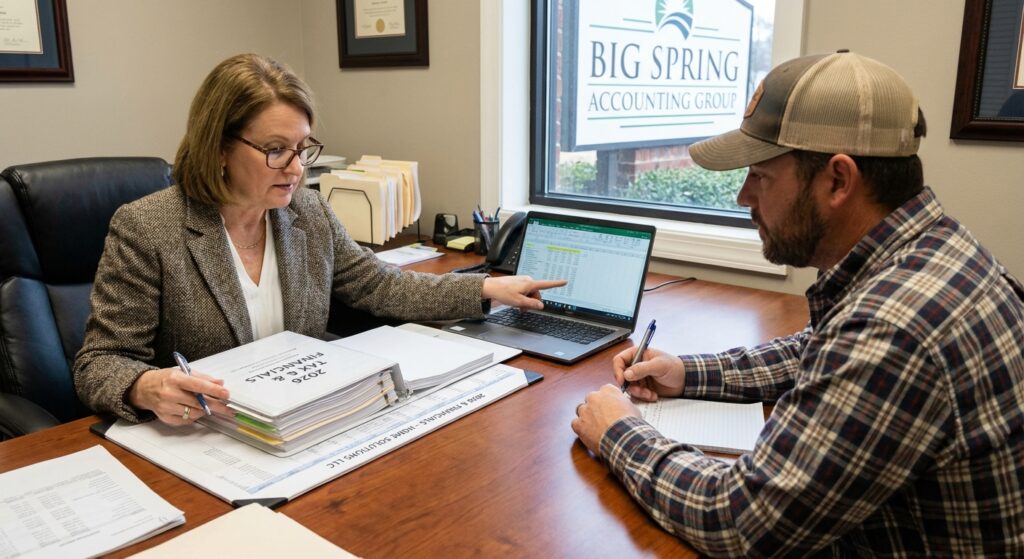
Huntsville Small Business Tax Planning Guide for 2026: Essential Strategies for Local Business Owners

Huntsville Small Business Tax Planning Guide for 2026: Essential Strategies for Local Business Owners
For the 2026 tax year, Huntsville small business owners face significant opportunities to reduce their tax burden through strategic planning and proper entity structuring. With new IRS deductions, updated tax brackets, and changing regulations, effective huntsville small business tax planning has never been more critical. Whether you operate an LLC, S-Corporation, sole proprietorship, or other business structure, this guide provides actionable 2026 tax strategies tailored to local business conditions.
Table of Contents
- Key Takeaways
- What Are the Top 2026 Tax Strategies for Huntsville Business Owners?
- How Should You Structure Your Business Entity for Tax Efficiency?
- What Deductions Can You Maximize in 2026?
- How Can You Optimize Self-Employment Tax in 2026?
- What Retirement Planning Strategies Apply in 2026?
- When Should You Make Quarterly Estimated Payments?
- Uncle Kam in Action: Real Results for Huntsville Business Owners
- Next Steps
- Frequently Asked Questions
Key Takeaways
- Strategic entity selection (LLC vs. S-Corp vs. C-Corp) can save Huntsville business owners $5,000-$25,000+ annually in 2026.
- Maximizing business deductions—home office, vehicle expenses, equipment depreciation—reduces taxable income significantly.
- For 2026, the standard deduction is $15,000 for single filers and $30,000 for married filing jointly.
- Quarterly estimated tax payments prevent penalties and ensure cash flow management throughout the year.
- Contributing to SEP-IRA or Solo 401(k) plans can reduce both income tax and self-employment tax obligations.
What Are the Top 2026 Tax Strategies for Huntsville Business Owners?
Quick Answer: Top strategies include maximizing business deductions, optimizing entity structure, implementing retirement plans, and managing quarterly estimated payments for proper 2026 tax planning.
Huntsville small business tax planning in 2026 requires a multi-faceted approach. Many business owners leave thousands on the table by failing to coordinate their tax strategy with their business structure. The most successful Huntsville entrepreneurs combine strategic entity selection with aggressive but compliant deduction capture.
The IRS has made clear that small business owners must maintain comprehensive documentation for all deductions. For 2026, this means keeping detailed records of home office usage, vehicle mileage, equipment purchases, and contractor payments. Each documented expense directly reduces taxable income and increases your bottom line.
Strategic Timing of Income and Expenses
In 2026, controlling the timing of income recognition and expense deduction can substantially impact your tax bill. Accrual basis business owners have flexibility in when invoices are issued. Cash basis owners should consider accelerating discretionary expenses before year-end. Deferring income into the following tax year may also be strategically appropriate depending on your projected income.
Pro Tip: Coordinate income timing with the 2026 tax bracket structure. If you’re near a bracket threshold, strategic timing of income could save you 12% or more on marginal dollars.
Qualified Business Income (QBI) Deduction Planning
The Qualified Business Income deduction allows eligible business owners to deduct up to 20% of their QBI from 2026 taxable income. This deduction applies to pass-through entities including S-Corps, LLCs, and sole proprietorships. Understanding phase-out thresholds and limitations is critical for maximizing this valuable 2026 benefit.
How Should You Structure Your Business Entity for Tax Efficiency?
Quick Answer: Entity selection depends on your business structure, income level, and liability concerns. S-Corp election often saves self-employed business owners $5,000-$15,000 annually through self-employment tax optimization.
Your business entity structure is one of the most important decisions affecting 2026 tax liability. Huntsville business owners can choose from several structures, each with distinct tax consequences. The right choice depends on your income level, business risk profile, and long-term growth plans.
Many Huntsville entrepreneurs operate as sole proprietors or single-member LLCs by default. While simple, this structure often results in unnecessary self-employment tax. For income-producing businesses, an S-Corp election can dramatically reduce your 2026 tax burden by allowing you to split income between W-2 salary and distributions.
LLC vs. S-Corp: The 2026 Comparison
An LLC (Limited Liability Company) provides liability protection while maintaining pass-through taxation. However, LLCs taxed as sole proprietorships or partnerships pay self-employment tax on all net business income. For 2026, the self-employment tax rate remains 15.3% (12.4% Social Security + 2.9% Medicare), applied to 92.35% of net self-employment income.
An S-Corporation election for your LLC provides the same liability protection but with different tax treatment. S-Corps must pay reasonable W-2 salary to owners, but remaining profits can be distributed as dividends, avoiding self-employment tax. For profitable Huntsville businesses, this strategy routinely saves $5,000-$25,000 annually in 2026.
| Factor | LLC (Default) | S-Corp Election |
|---|---|---|
| Self-Employment Tax on All Income | 15.3% on 92.35% of net income | Only on W-2 salary component |
| Complexity & Compliance | Simple (Schedule C) | Moderate (Form 1120-S, payroll) |
| Average Annual Tax Savings | $0 | $5,000-$25,000+ for income-producing businesses |
| Breakeven Income Level | N/A | Around $60,000 net business income |
Pro Tip: Use our Self-Employment Tax Calculator for Kirkland to calculate your specific 2026 savings potential with S-Corp election.
C-Corporation Considerations for 2026
C-Corporations are a separate tax entity with a flat corporate tax rate. For most Huntsville small businesses, C-Corps create double taxation concerns. However, for businesses retaining significant income for growth, a C-Corp can defer taxation. This structure requires careful analysis based on your specific situation and distribution plans.
What Deductions Can You Maximize in 2026?
Quick Answer: Key 2026 deductions include home office ($5/sq ft or actual), vehicle expenses (mileage or actual), equipment depreciation, contractor payments, and professional development. Proper documentation is essential for all deductions.
Huntsville business owners often overlook significant 2026 deduction opportunities. The IRS allows deduction of ordinary and necessary business expenses, but documentation is critical. Each deduction must be properly substantiated to withstand potential audit scrutiny.
Home Office Deduction Strategy
For Huntsville home-based business owners, the home office deduction can significantly reduce 2026 taxable income. The IRS offers two methods: the simplified method ($5 per square foot, maximum 300 sq ft = $1,500) or the actual expense method.
The actual expense method captures a percentage of your mortgage interest, property taxes, utilities, insurance, and repairs. For a dedicated home office using 200 square feet in a 2,000 square foot home (10%), you could deduct 10% of your total housing expenses. This often exceeds the simplified method, especially for larger dedicated spaces.
- Simplified method: $5 per sq ft for 2026 tax year
- Maximum simplified deduction: $1,500 annually
- Actual expense method: Deduct percentage of all housing costs
- Space must be regularly used exclusively for business
- Potential depreciation recapture if you sell the home
Vehicle and Transportation Expenses
For 2026, business vehicle expenses can be deducted using either the standard mileage rate method or actual expense method. The IRS standard mileage rate for 2026 is approximately 67 cents per business mile (though rates may be updated). Track all business mileage meticulously—the IRS scrutinizes mileage deductions heavily.
The actual expense method allows deduction of gasoline, maintenance, insurance, registration, depreciation, and lease payments. If you use your vehicle 75% for business and 25% personal, you deduct 75% of all vehicle expenses. Detailed trip logs are mandatory documentation for this method.
Pro Tip: For 2026, start a dedicated mileage log immediately. Apps like Stride Health or Everlance automatically track business miles, ensuring compliance and maximizing deduction documentation.
Equipment and Technology Deductions
Section 179 expensing allows Huntsville business owners to immediately deduct equipment purchases up to the annual limit, rather than depreciating over multiple years. For 2026, this provides significant cash flow benefits for capital investments.
Computers, software, furniture, machinery, and vehicles may qualify for Section 179 expensing. Bonus depreciation also applies to certain assets. Consulting with a tax professional ensures you capture all available deductions for equipment and technology purchases.
 Free Tax Write-Off Finder
How Can You Optimize Self-Employment Tax in 2026?
Quick Answer: Self-employment tax optimization in 2026 involves S-Corp salary strategy, quarterly estimated payments, and SEP-IRA contributions. These strategies can reduce your SE tax from 15.3% to near-zero on distributed profits.
Self-employment tax represents the largest tax burden for many Huntsville self-employed business owners. For 2026, this 15.3% tax applies to 92.35% of your net self-employment income. Understanding optimization strategies is essential for maximizing your after-tax business income.
The self-employment tax rate breaks down as 12.4% for Social Security (up to $168,600 of earnings in 2026) and 2.9% for Medicare (with additional 0.9% Medicare tax on earnings above $200,000 for single filers or $250,000 for married filing jointly). Strategic income splitting through S-Corp structure directly reduces this tax.
S-Corp Salary Optimization Strategy
The core of SE tax optimization is the S-Corp reasonable salary requirement. The IRS requires S-Corp owners to pay themselves reasonable W-2 salary for work performed. However, once reasonable salary is paid, remaining business profit can be distributed as dividends, avoiding SE tax entirely on those distributions.
For example, a Huntsville consulting business with $100,000 net profit might pay the owner $60,000 W-2 salary (reasonable for the work) and distribute $40,000 as dividends. The dividends avoid the full 15.3% SE tax, saving approximately $6,180 in 2026.
Quarterly Estimated Tax Payments and Withholding
Failure to make quarterly estimated tax payments (Form 1040-ES for 2026) results in penalties and interest. Huntsville business owners must generally make four quarterly payments based on projected annual income. Underpayment penalties apply if you pay less than 90% of current year tax or 100% of prior year tax.
For S-Corp owners, payroll withholding reduces the need for large quarterly estimated payments. The W-2 wages are subject to employer and employee payroll taxes, reducing your estimated payment obligations. This integrated tax payment system is another advantage of S-Corp structure for 2026.
Pro Tip: Set aside 30% of net business income quarterly for estimated payments in 2026. This buffer ensures you avoid underpayment penalties and maintain positive cash flow.
What Retirement Planning Strategies Apply in 2026?
Quick Answer: For 2026, Huntsville business owners can contribute up to $23,500 to Solo 401(k) plans or up to 25% of W-2 wages to SEP-IRAs, reducing both income and self-employment tax immediately.
Retirement plan contributions for self-employed business owners serve dual purposes: tax savings and long-term wealth building. For 2026, strategic retirement contributions can reduce your taxable income by $20,000-$60,000+, directly lowering your tax bill while building retirement savings.
Solo 401(k) Plan Benefits for 2026
Solo 401(k) plans allow Huntsville self-employed business owners to contribute up to $23,500 (2026 employee deferral limit) plus up to 25% of compensation as employer contributions. For business owners with $100,000 net income, total contributions could exceed $48,000 in 2026, directly reducing taxable income and SE tax.
Solo 401(k) plans also allow loans against your balance and provide flexibility for business owners. Setup costs are minimal, and administration is straightforward for most business structures. Many Huntsville accountants recommend Solo 401(k) plans for serious tax optimization.
- Employee deferrals: Up to $23,500 (2026 limit)
- Employer contributions: Up to 25% of net self-employment income
- Loan options: Borrow against balance for business purposes
- Catch-up contributions: Additional $7,500 for age 50+ in 2026
- Deadline: December 31, 2026 to establish; contributions due by April 15, 2027
SEP-IRA as Alternative Retirement Strategy
Simplified Employee Pensions (SEP-IRAs) offer a simpler alternative for Huntsville business owners. SEP-IRAs allow contributions up to 25% of net self-employment income or $69,000 (2026 limit), whichever is less. For business owners wanting simplicity without Solo 401(k) complexity, SEP-IRAs provide excellent tax savings.
SEP-IRAs require minimal setup and no annual filings. If you have employees, contributions must apply to them proportionally, which may affect your planning. For solo entrepreneurs and small business owners, SEP-IRAs represent the easiest high-contribution retirement planning option for 2026.
When Should You Make Quarterly Estimated Payments?
Quick Answer: For 2026, quarterly estimated payments are due April 15, June 15, September 15, and January 15 (next year). Underpayment penalties apply if total payments fall below 90% of current year or 100% of prior year tax.
Huntsville business owners must make quarterly estimated tax payments throughout 2026 to avoid penalties. The IRS requires estimated payments when you expect to owe at least $1,000 in taxes for the year. Self-employed business owners, rental income earners, and others with significant non-withheld income must comply.
2026 Quarterly Payment Schedule and Deadlines
| Quarter | Due Date | Income Period Covered |
|---|---|---|
| Q1 | April 15, 2026 | January 1 – March 31, 2026 |
| Q2 | June 15, 2026 | April 1 – May 31, 2026 |
| Q3 | September 15, 2026 | June 1 – August 31, 2026 |
| Q4 | January 15, 2027 | September 1 – December 31, 2026 |
Payments are made via IRS Direct Pay, EFTPS, or authorized payment processors. Each payment requires your Social Security Number, tax period, and payment amount. Underpayment penalties compound if you miss deadlines, making timely payment critical.
Calculating Estimated Payments
To calculate 2026 estimated payments, project your annual net business income and apply your effective tax rate. For most self-employed owners, estimating conservatively is safer—overpayment results in a refund, while underpayment triggers penalties.
Pro Tip: For safe harbor compliance in 2026, pay 100% of your 2025 tax liability spread across four quarterly payments. This eliminates underpayment penalties regardless of 2026 income changes.

Uncle Kam in Action: Real Results for Huntsville Business Owners
Client Profile: Sarah, a Huntsville-based management consultant, operated as a sole proprietor with $95,000 annual net business income. She worked from a dedicated home office and drove frequently for client meetings. Despite legitimate business expenses, her self-employment tax obligations exceeded $13,000 annually.
The Challenge: Sarah felt overwhelmed by her tax burden and unsure if she was claiming all eligible deductions. She had invested in equipment and software but wasn’t certain about depreciation strategies. Her primary concern was reducing her 2026 tax bill while maintaining full IRS compliance.
The Uncle Kam Solution: We implemented a comprehensive tax strategy combining three critical components. First, we elected S-Corp status for Sarah’s LLC, converting her business to a more tax-efficient structure. Second, we optimized her business deductions, establishing a home office deduction ($12,000 annually using actual expense method) and documenting vehicle expenses via mileage tracking. Third, we established a Solo 401(k) plan with $48,000 annual contribution capacity.
The Results: With S-Corp status, Sarah paid herself $65,000 reasonable salary (subject to payroll taxes) and received $30,000 in dividends (avoiding SE tax). Combined with home office deduction maximization, vehicle expense optimization, and Solo 401(k) contributions of $40,000, her 2026 tax situation transformed dramatically.
Financial Impact for 2026:
- Self-Employment Tax Savings: $4,590 (versus sole proprietor structure)
- Income Tax Reduction (deductions + retirement contributions): $8,400
- Total First-Year Tax Savings: $12,990
- Professional Fees Paid to Uncle Kam: $2,500
- Return on Investment (ROI): 520% first year, recurring annually
Sarah’s experience demonstrates the power of coordinated tax planning. By combining strategic tax planning with proper entity structuring and deduction optimization, Huntsville business owners can dramatically reduce tax liability while remaining fully compliant. Sarah continues this strategy annually, maintaining $12,000+ tax savings through 2026 and beyond.
Next Steps
Take action on your Huntsville small business tax planning for 2026 immediately:
- Audit Your Entity Structure: Evaluate if your current LLC or sole proprietorship is tax-efficient for 2026. S-Corp election could save thousands.
- Document Business Expenses: Implement tracking systems for mileage, home office usage, and equipment purchases before they’re forgotten.
- Establish Retirement Plans: Open a Solo 401(k) or SEP-IRA immediately to maximize 2026 contributions before year-end deadlines.
- Review Quarterly Payments: Calculate Q2-Q4 estimated tax obligations for 2026 and set reminders for April 15, June 15, and September 15 deadlines.
- Schedule Tax Advisory Review: Work with tax advisory professionals for personalized 2026 planning based on your Huntsville business specifics.
Frequently Asked Questions
What is reasonable salary for an S-Corp owner in 2026?
“Reasonable salary” means compensation comparable to what similar businesses pay for equivalent work. The IRS examines industry standards, your experience, business profitability, and role complexity. For consulting businesses, 50-70% of net business income is often considered reasonable salary, with the remainder distributed. Documentation of comparable salaries from industry data strengthens your position if audited.
Can I claim a home office deduction without a dedicated room?
The IRS requires your home office space to be used “regularly and exclusively” for business. While a dedicated room is simplest, a portion of a room can qualify if that specific area is used only for business. You cannot claim space used for personal purposes too. The simplified $5/sq ft method requires only reasonable calculation, while actual expense method requires detailed documentation of the percentage allocated to business use.
What happens if I miss a quarterly estimated payment deadline?
Missing quarterly estimated payment deadlines triggers underpayment penalties calculated on the portion underpaid for that quarter. Penalties compound daily from the due date forward. For 2026, the penalty interest rate is established quarterly by the IRS. Making up missed payments as soon as possible reduces total penalties, though they cannot be entirely eliminated. File your 2026 return timely to claim any excess payment credits.
Should Huntsville business owners consider C-Corp status?
C-Corporations have distinct advantages and disadvantages for 2026. The primary concern is double taxation—corporate income tax plus shareholder dividend tax. However, C-Corps can deduct owner salaries and retain earnings at the corporate rate. For businesses seeking to reinvest profits rather than distribute to owners, C-Corp structure may offer tax deferral benefits. This requires careful analysis based on your specific situation and growth plans.
How do I document business expenses for IRS compliance in 2026?
Proper documentation is essential for defending deductions in an audit. For business expenses, maintain original receipts, invoices, or bank statements showing dates, vendors, amounts, and business purpose. For mileage, keep daily trip logs recording date, destination, miles driven, and business purpose. For home office, photograph your space and document square footage measurements. Digital record-keeping systems (cloud storage, accounting software) provide audit-ready documentation automatically.
Can I deduct business meals and entertainment in 2026?
For 2026, business meals are deductible at 50% if they are ordinary and necessary business expenses with business purpose and attendees documented. Exception: meals provided at temporary work locations can be 100% deductible in limited circumstances. Entertainment expenses follow different rules—documentation of the business purpose is critical. The IRS scrutinizes meal deductions heavily, so clear documentation is essential to support any deductions claimed.
What is the QBI deduction and how does it apply to my 2026 taxes?
The Qualified Business Income (QBI) deduction allows eligible business owners to deduct up to 20% of QBI from their taxable income for 2026. This applies to pass-through entities including sole proprietorships, S-Corps, LLCs, and partnerships. Your pass-through income, business structure, and personal income level determine eligibility and limitations. For most Huntsville small business owners, the 20% QBI deduction is available without phase-out, providing substantial tax savings.
When should I hire a tax professional for 2026 planning?
Professional tax planning is valuable when you’re earning significant business income, considering entity changes, or have complex situations. For Huntsville business owners exceeding $100,000 net income, professional tax planning typically returns several times its cost through strategic structure and deduction optimization. Schedule planning consultations early in the year to implement strategies during 2026, rather than waiting until tax preparation time.
This information is current as of 2/16/2026. Tax laws change frequently. Verify updates with the IRS or professional tax advisor if reading this later in 2026 or beyond.
Related Resources
- Business Entity Structuring for Tax Efficiency
- Self-Employment Tax Strategies and Planning
- Tax Strategy Blog for Business Owners
- Bookkeeping and Business Solutions
- 2026 Tax Deadline Calendar
Last updated: February, 2026

