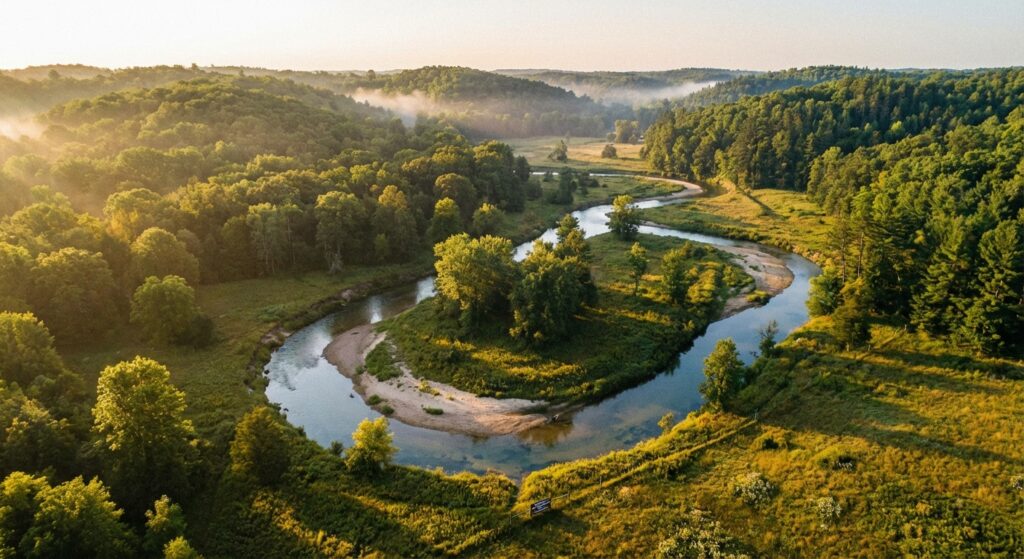
Conservation Easement Tax Benefits for Real Estate Investors in 2026
For the 2026 tax year, conservation easement tax benefits offer real estate investors powerful opportunities to reduce taxable income while protecting land for future generations. By donating a conservation easement to a qualified organization, property owners can claim charitable deductions up to 50% of their adjusted gross income annually, with unused portions carried forward for 15 years. This strategy enables investors to preserve property value, maintain ownership rights, and achieve substantial tax savings simultaneously.
Table of Contents
- Key Takeaways
- What Are Conservation Easement Tax Benefits?
- How Much Can You Deduct with a Conservation Easement in 2026?
- Who Qualifies for Conservation Easement Deductions?
- What Are the IRS Requirements for Conservation Easements?
- How Do You Implement a Conservation Easement Strategy?
- What Are the Risks and Red Flags?
- Uncle Kam in Action: Conservation Easement Success
- Next Steps
- Frequently Asked Questions
- Related Resources
Key Takeaways
- Conservation easements allow deductions up to 50% of AGI annually for 2026, with 15-year carryforward periods
- Farmers and ranchers can deduct up to 100% of AGI under enhanced provisions
- Property must be donated to qualified 501(c)(3) organizations and meet perpetuity requirements
- Qualified appraisals are mandatory for deductions exceeding $5,000
- IRS scrutiny of syndicated easements remains high in 2026
What Are Conservation Easement Tax Benefits?
Quick Answer: Conservation easement tax benefits are charitable deductions real estate investors receive when donating development rights to qualified organizations. For 2026, these deductions can equal the property’s reduced fair market value.
A conservation easement represents a legally binding agreement where property owners voluntarily restrict certain uses of their land to preserve its conservation values as defined by the IRS. In exchange for these restrictions, the Internal Revenue Code Section 170(h) allows owners to claim a charitable contribution deduction based on the reduction in property value. This creates a powerful tax strategy that simultaneously achieves conservation goals and financial benefits.
In essence, the mechanism works through transfer of specific property rights. Specifically, property ownership includes a bundle of rights including development, mining, timber harvesting, and subdivision. As a result, when you donate a conservation easement, you permanently relinquish some of these rights while retaining ownership and other uses. Therefore, the difference between your property’s value before and after the easement becomes your charitable deduction.
The Four Qualified Conservation Purposes
For 2026, the IRS recognizes four conservation purposes under IRC Section 170(h)(4). In other words, your easement must exclusively serve at least one purpose:
- Preservation of land for outdoor recreation or education: Public parks, trails, or educational facilities
- Protection of natural habitat: Ecosystems supporting fish, wildlife, or plants
- Preservation of open space: Scenic views, agricultural land, or forests for public benefit
- Historic preservation: Buildings or land areas of historical significance
Real Estate Investment Applications
For real estate investors, conservation easements offer strategic advantages beyond immediate tax deductions. For instance, investors with appreciated land can harvest substantial deductions while maintaining ownership and many profitable uses. Additionally, agricultural properties can continue farming operations. Similarly, timberland can maintain selective harvesting rights. Furthermore, even residential properties can preserve home sites while protecting surrounding acreage.
The strategy particularly benefits investors with high-income years who need substantial deductions. A conservation easement on property worth $2 million might generate a $1.5 million deduction if development rights represent 75% of value. With proper planning, this deduction spreads across multiple years, providing lasting tax relief.
Pro Tip: Conservation easements work best for investors with properties they plan to hold long-term. The perpetual nature means future generations inherit both the restrictions and the preserved property character.
How Much Can You Deduct with a Conservation Easement in 2026?
Quick Answer: For 2026, most investors can deduct up to 50% of adjusted gross income annually. Farmers and ranchers may deduct up to 100% of AGI. Unused deductions carry forward for 15 years.
Importantly, the deduction amount depends on three factors: the easement’s appraised value, your adjusted gross income, and whether you qualify as a farmer or rancher. Therefore, understanding these limitations ensures you maximize the conservation easement tax benefits available under current law.
Standard Deduction Limits for 2026
Under IRC Section 170(b)(1)(E), qualified conservation contributions follow these annual limits:
| Taxpayer Category | Maximum Annual Deduction | Carryforward Period |
|---|---|---|
| Individual Investors (Standard) | 50% of AGI | 15 years |
| Farmers & Ranchers (Qualified) | 100% of AGI | 15 years |
| Corporate Donors | 10% of taxable income | 5 years |
Therefore, an investor with $500,000 in adjusted gross income can deduct up to $250,000 in the first year. For example, if the easement’s value is $1 million, the remaining $750,000 carries forward, allowing $250,000 deductions for the next three years (assuming consistent AGI), with any remainder available through year 15.
Enhanced Benefits for Agricultural Property Owners
Real estate investors owning farms or ranches receive enhanced deduction limits. To qualify for the 100% AGI limit in 2026, you must meet these requirements:
- Property must be used for substantial agricultural production for at least 2 years before donation
- The easement must restrict uses to agricultural or conservation purposes
- Agricultural income must constitute a substantial portion of your total income
This enhanced treatment recognizes agriculture’s unique conservation value. For example, a rancher with $400,000 AGI can deduct the full amount annually, potentially exhausting even large easement values within just a few years. This accelerated deduction schedule proves particularly valuable for agricultural landowners working with USDA conservation programs.
Calculating Your Potential Tax Savings
Ultimately, the actual tax savings depend on your marginal tax rate. Consider this example for 2026:
- Easement Value: $2,000,000
- Your AGI: $800,000
- Annual Limit (50%): $400,000
- Marginal Tax Rate: 35% federal
- Year 1 Federal Savings: $140,000
- Total Years to Use: 5 years
- Total Federal Savings: $700,000
Additionally, many states offer income tax deductions or credits for conservation easements. Some states provide transferable tax credits that you can sell if you cannot use them, creating immediate cash value beyond federal benefits.
Pro Tip: Time your easement donation strategically. If you anticipate a high-income year from property sales or business exits, donating that year maximizes your first-year deduction and provides relief when you need it most.
Who Qualifies for Conservation Easement Deductions?
Quick Answer: Property owners who donate perpetual easements to qualified 501(c)(3) organizations can claim deductions. The property must meet conservation purposes and you must hold sufficient documentation proving value reduction.
In practice, qualification for conservation easement tax benefits requires meeting multiple criteria spanning property characteristics, organizational recipients, and documentation standards. As a result, each element receives IRS scrutiny, making compliance essential.
Property Eligibility Requirements
However, not all properties qualify for conservation easements. For 2026, your property must meet these standards:
- Conservation Value: Property must possess significant conservation attributes such as wildlife habitat, scenic views, agricultural productivity, or historic importance
- Baseline Documentation: You must complete a baseline report documenting current conditions before donation
- Clear Title: Property title must be unencumbered or with acceptable subordination agreements from lienholders
- Perpetual Restrictions: Easement terms must last forever, surviving property transfers
In contrast, properties with development potential typically offer the highest deductions since restricting development creates substantial value differences. However, properties with minimal development potential or those already restricted by zoning may not generate meaningful deductions.
Qualified Organization Requirements
Your easement must be donated to a qualified 501(c)(3) organization committed to conservation. Acceptable recipients include:
- Land trusts accredited by the Land Trust Alliance
- Government agencies (federal, state, or local)
- Certain public charities with conservation missions
Moreover, the organization must have the resources and commitment to monitor and enforce easement terms indefinitely. Consequently, established land trusts with proven track records typically make the most reliable partners. Therefore, research potential recipients thoroughly, as the IRS has disallowed deductions where organizations lacked legitimate conservation missions or enforcement capacity.
Donor Holding Period and Intent
For certain large deductions, the IRS requires you to have held the property for at least three years before donation. This rule, designed to prevent abusive transactions, applies when:
- The claimed deduction exceeds $5,000
- You acquired the property within three years of the contribution
- The property’s tax basis increased through improvements or partial sales
In short, this holding period prevents investors from acquiring properties solely for easement deductions. Accordingly, your documentation should demonstrate legitimate investment or conservation intent independent of tax benefits.
 Free Tax Write-Off Finder
What Are the IRS Requirements for Conservation Easements?
Quick Answer: For 2026, you must obtain a qualified appraisal, file Form 8283, maintain baseline documentation, and ensure the easement meets perpetuity and conservation purpose requirements under Treasury Regulations.
Notably, IRS compliance requirements for conservation easements are extensive and technical. The IRS Publication 561 provides detailed guidance, but working with experienced professionals is essential for proper compliance.
Qualified Appraisal Requirements
First, any conservation easement deduction exceeding $5,000 requires a qualified appraisal conducted by a qualified appraiser. For 2026, these requirements include:
- Timing: Appraisal must be conducted no earlier than 60 days before donation and completed before filing deadline
- Before-and-After Method: Appraiser must value property before and after easement restrictions
- Appraiser Qualifications: Must hold recognized credentials and demonstrate easement valuation experience
- Independence: Appraiser cannot have conflicts of interest or receive fees based on valuation amount
Furthermore, the appraisal report must contain detailed descriptions, valuation methods, comparable sales analysis, and explicit consideration of easement restrictions. As a result, incomplete or deficient appraisals are among the most common reasons the IRS disallows deductions.
Form 8283 Filing Requirements
You must file Form 8283 (Noncash Charitable Contributions) with your tax return. For easements valued over $5,000, Section B requires:
- Detailed property description including legal description and location
- Donee organization acknowledgment and signature
- Qualified appraiser declaration and signature
- Appraiser qualifications summary
- Valuation method and date
Additionally, for deductions exceeding $500,000, you must also attach the complete qualified appraisal to your return. In turn, this enhanced reporting helps the IRS identify transactions requiring additional scrutiny.
Baseline Documentation Report
Treasury Regulations require a comprehensive baseline documentation report completed before or concurrent with easement donation. This report typically includes:
- Detailed property description and maps
- Photographic documentation of current conditions
- Descriptions of natural resources, habitats, and conservation values
- Current land uses and existing structures
- Evaluation of conservation purposes served
In effect, the baseline report provides the reference point for future monitoring and enforcement. It protects both you and the easement holder by clearly documenting conditions at donation.
Perpetuity and Amendment Restrictions
The easement deed must explicitly state that restrictions are perpetual and binding on all future owners. Additionally, Treasury Regulations require specific language addressing potential amendments and extinguishments. The deed must state that if the easement is ever terminated, the easement holder receives a proportionate share of proceeds equal to the easement’s value at termination.
These perpetuity requirements ensure conservation values remain protected indefinitely. Consequently, easements cannot be donated “for a period of years” or with sunset provisions.
Pro Tip: Have your easement deed and appraisal reviewed by a qualified tax advisor before recording. Technical defects can disqualify otherwise legitimate deductions, and corrections after recording may be impossible.
How Do You Implement a Conservation Easement Strategy?
Quick Answer: Implementation involves property evaluation, land trust selection, appraisal, legal documentation, recording, and tax filing. The process typically requires 6-12 months from initial consultation to completion.
Above all, successfully implementing a conservation easement requires careful planning and coordination among multiple professionals. The following step-by-step approach ensures compliance while maximizing conservation easement tax benefits.
Step 1: Initial Property Assessment
Begin by evaluating whether your property is suitable for conservation easement donation:
- Identify conservation values: habitat, scenic views, agricultural productivity, water resources
- Assess development potential and zoning restrictions
- Review existing encumbrances and title issues
- Estimate potential deduction value through preliminary appraisal
Ultimately, this assessment helps determine whether the transaction makes financial and practical sense. Properties with limited development potential or significant existing restrictions may not generate sufficient deductions to justify the effort and cost.
Step 2: Select a Qualified Land Trust
Research and contact land trusts operating in your area. Consider these factors:
- Accreditation: Land Trust Alliance accreditation indicates adherence to best practices
- Experience: Track record with similar properties and easement types
- Financial Capacity: Resources for long-term monitoring and stewardship
- Mission Alignment: Conservation priorities matching your property’s values
Subsequently, the land trust will conduct its own due diligence, evaluating whether your property meets its acceptance criteria. This process can take several months as the organization assesses conservation significance and long-term stewardship obligations.
Step 3: Engage Professional Advisors
Assemble a qualified team including:
- Tax Attorney or Advisor: Structure the transaction and ensure IRS compliance
- Qualified Appraiser: Certified appraiser experienced in easement valuations
- Real Estate Attorney: Draft and review easement deed
- Environmental Consultant: Prepare baseline documentation report
However, professional fees for conservation easements can range from $15,000 to $50,000 or more depending on property complexity. However, these costs are typically deductible as expenses related to tax advice and property management.
Step 4: Complete Documentation and Valuation
With your team assembled, complete the required documentation:
- Qualified appraisal using before-and-after methodology
- Baseline documentation report with maps, photos, and resource descriptions
- Conservation easement deed with IRS-compliant perpetuity language
- Title insurance and subordination agreements if needed
Next, the land trust will review all documentation to ensure it meets their requirements and Treasury Regulations. Consequently, multiple drafts and revisions are common during this negotiation phase.
Step 5: Execute and Record the Easement
Once all parties approve the documentation:
- Sign the conservation easement deed
- Record the deed in the county land records
- Obtain acknowledgment letter from land trust for tax records
- Finalize baseline documentation with recorded easement reference
As a result, recording creates a permanent public record of the easement, providing notice to all future owners. The date of recording typically establishes your contribution date for tax purposes.
Step 6: File Tax Returns and Claim Deductions
In the year of donation and subsequent carryforward years:
- Complete and file Form 8283 with your tax return
- Attach the qualified appraisal if deduction exceeds $500,000
- Track carryforward amounts on Schedule A
- Maintain comprehensive records for IRS audit defense
Work with your tax preparation professional to ensure proper reporting across all applicable years. The 15-year carryforward period means you may claim deductions for more than a decade after donation.
What Are the Risks and Red Flags?
Quick Answer: Major risks include inflated appraisals, syndicated easement schemes, non-compliant documentation, and IRS challenges. The IRS actively audits conservation easements and maintains a special compliance initiative targeting abusive transactions.
Nevertheless, while legitimate conservation easements provide valuable tax benefits, certain practices have drawn intense IRS scrutiny. Understanding these risks protects you from costly mistakes and potential penalties.
Syndicated Conservation Easement Transactions
The IRS has identified syndicated conservation easements as a priority audit area. These transactions typically involve:
- Promoters organizing pass-through entities to acquire property
- Multiple investors purchasing interests primarily for tax benefits
- Claimed deductions exceeding investment by 2.5x or more
- Aggressive appraisals with questionable valuation methodologies
In 2026, the IRS continues aggressive enforcement against these arrangements. Consequently, participants face not only disallowed deductions but also accuracy-related penalties of 20% to 40% of the underpayment. If the IRS proves the transaction lacked economic substance, penalties can reach 40% with no possibility of reasonable cause exception.
The key distinction is economic substance. If your primary purpose is tax avoidance rather than conservation, and the transaction lacks legitimate business purpose beyond tax benefits, the entire deduction may be disallowed. Additionally, these transactions now appear on the IRS list of reportable transactions, requiring disclosure on Form 8886.
Appraisal Overvaluation Issues
Inflated appraisals represent the most common conservation easement problem. Warning signs include:
- Appraiser has financial interest in maximizing valuation
- Comparable sales selected from different markets or time periods
- Assumptions about highest and best use that ignore realistic development constraints
- Failure to properly consider existing zoning and regulatory restrictions
The IRS increasingly retains its own expert appraisers to challenge valuations. If your deduction is disallowed due to overvaluation, you face the accuracy-related penalty plus potential penalties against your appraiser. Choose appraisers based on credentials and reputation, not promised valuations.
Documentation and Compliance Defects
Technical defects can completely disqualify otherwise legitimate easements. Common problems include:
- Easement deed lacking required perpetuity language
- Missing or inadequate baseline documentation
- Incomplete Form 8283 or missing signatures
- Appraisal failing to meet qualified appraisal standards
- Amendment provisions allowing future modification of restrictions
Courts have held that strict compliance is required. Minor documentation errors can result in complete loss of deductions, even when the conservation easement itself is legitimate and properly recorded.
Pro Tip: Avoid conservation easement promoters promising deductions far exceeding your investment. Legitimate easements involve your own property held for investment or conservation purposes, not interests in promoter-organized syndicates.
Audit Defense Preparation
Given increased IRS scrutiny, prepare for potential audits by:
- Maintaining comprehensive records documenting all aspects of the transaction
- Keeping evidence of conservation purpose and property characteristics
- Documenting your conservation intent and motivations beyond tax benefits
- Retaining all correspondence with land trusts and advisors
In summary, proper documentation protects your deduction if challenged and demonstrates good faith compliance with tax law requirements.

Uncle Kam in Action: Conservation Easement Success for a Montana Ranch Owner
Sarah and Tom owned a 640-acre ranch in Montana held for over 20 years. They actively managed the property for cattle grazing while maintaining pristine wildlife habitat and scenic mountain views. As they approached retirement, they faced a challenge: substantial appreciated value created significant estate tax exposure, but they wanted their children to inherit the ranch intact.
The Challenge: The ranch’s fair market value exceeded $4 million due to development potential for luxury home sites. If they sold, capital gains taxes would exceed $600,000. If they passed the property to their children, estate taxes could force a sale to pay tax obligations. They needed a solution preserving both the ranch character and family ownership.
The Uncle Kam Solution: Our team recommended a comprehensive conservation easement strategy. After thorough property evaluation, we identified that development restrictions would preserve the ranch’s agricultural and conservation values while generating substantial deductions. We coordinated with a reputable Montana land trust, securing their acceptance for a conservation easement protecting the property’s wildlife habitat and scenic views.
The easement prohibited subdivision and residential development beyond existing structures while allowing continued ranching operations. A qualified appraiser determined the easement reduced property value by $2.8 million—the difference between development value and agricultural value. As qualifying farmers, Sarah and Tom could deduct 100% of their AGI annually, accelerating the benefit timeline.
The Tax Savings Results
The Results: Over four years, they claimed $2.8 million in charitable deductions. At their 35% marginal tax rate, federal tax savings totaled $980,000. Additionally, Montana’s conservation easement credit provided $110,000 in state tax benefits. Their total investment—including appraisal, legal fees, and our advisory services—was $42,000. First-year ROI exceeded 20x, with total savings providing a 26x return on professional fees.
Beyond tax benefits, the easement reduced the property’s estate tax value by $2.8 million, eliminating approximately $1.1 million in future estate taxes. Their children now inherit a protected ranch with guaranteed agricultural character, and the family legacy continues on land that will never face subdivision pressure. Sarah and Tom review detailed results at our client results page, where their story inspires other landowners considering conservation options.
Next Steps
If you own investment property with conservation values, consider these immediate actions:
- Conduct an initial assessment of your property’s conservation characteristics and development potential
- Contact local land trusts to discuss potential easement acceptance and requirements
- Consult with a qualified tax advisor about deduction timing and AGI optimization
- Obtain preliminary appraisal estimates to evaluate potential tax benefits
- Review your multi-year income projections to maximize carryforward utilization
Conservation easements represent complex transactions requiring expert guidance. Uncle Kam specializes in strategic planning for real estate investors, ensuring you maximize tax benefits while maintaining full IRS compliance. Our team coordinates with appraisers, attorneys, and land trusts to streamline the process from initial evaluation through final tax filing.
Frequently Asked Questions
Can I claim a conservation easement deduction if I purchased property specifically for that purpose?
Yes, but with significant limitations. For deductions exceeding $5,000, you must hold the property for at least three years if you purchased it specifically for easement donation. Additionally, the IRS examines your intent closely. If your sole purpose was tax benefits without legitimate conservation or investment intent, the deduction may be challenged under economic substance doctrines. Document legitimate investment purposes independent of tax benefits.
What happens to the conservation easement if I sell my property?
The conservation easement remains with the property permanently. It binds all future owners who must honor the restrictions. This permanence is required for tax deductions. When you sell, the easement reduces the property’s fair market value, which should be reflected in the sale price. Buyers purchasing easement-encumbered property accept the restrictions in exchange for the reduced price and ongoing conservation benefits.
Do state tax benefits exist for conservation easements beyond federal deductions?
Many states offer additional incentives. Some provide state income tax deductions mirroring federal treatment. Others offer transferable tax credits that can be sold if you cannot use them. For example, Colorado, Virginia, and South Carolina have robust transferable credit programs. State programs vary significantly, so consult advisors familiar with your state’s specific provisions to maximize combined federal and state benefits for 2026.
How does a conservation easement affect property taxes?
Property tax implications vary by jurisdiction. Since conservation easements reduce fair market value, they should reduce property tax assessments accordingly. Many states have specific provisions for assessing easement-encumbered land at agricultural or conservation use value rather than development value. Contact your local assessor to request reassessment after recording the easement. This can provide ongoing property tax savings adding to income tax benefits.
What if the land trust that holds my easement dissolves or fails to monitor compliance?
Qualified land trusts typically have provisions for easement transfer to another qualified organization if they dissolve. This protects perpetual enforcement. Additionally, state attorneys general have authority to enforce charitable easements even if the holder fails to act. However, this risk underscores the importance of selecting financially stable, well-established land trusts with proven long-term stewardship capacity and adequate endowment funding for monitoring.
Can I deduct expenses paid to attorneys, appraisers, and advisors for conservation easement work?
Yes, but the treatment depends on the expense type. Legal and appraisal fees directly related to the donation are generally deductible as miscellaneous itemized deductions subject to the 2% AGI floor (though this floor was suspended through 2025 and may be extended). Tax advisory fees related to determining tax consequences are similarly treated. However, some expenses may need to be capitalized rather than deducted. Consult your tax advisor about proper classification for 2026.
How do conservation easements interact with the alternative minimum tax?
Conservation easement deductions are allowed for alternative minimum tax purposes, but certain adjustments may apply. The AMT calculation uses different rules for some deductions and income items. For high-income taxpayers subject to AMT, the effective tax benefit may be reduced. However, the deduction still provides value under AMT, unlike some other preference items. Model your specific situation to determine AMT impact before proceeding.
Related Resources
- Tax Strategies for Real Estate Investors
- Comprehensive Tax Planning Services
- Advanced Strategies for High-Net-Worth Individuals
- Uncle Kam Tax Strategy Guides
Last updated: February, 2026
This information is current as of 2/12/2026. Tax laws change frequently. Verify updates with the IRS or a qualified tax professional if reading this later.

