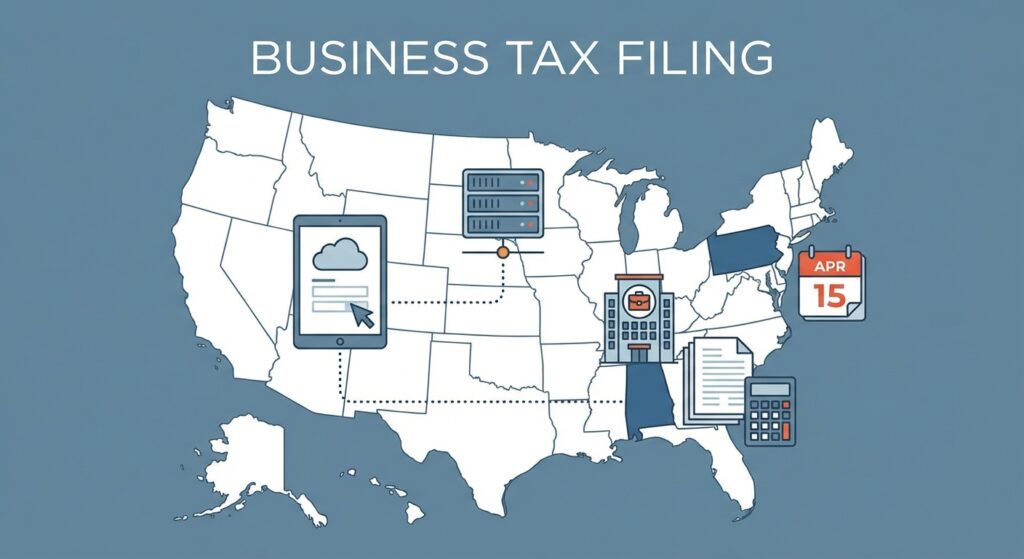
2026 Business Privilege Tax: Everything You Need to Know
Table of Contents
- Key Takeaways
- What is the Business Privilege Tax?
- Who Must Pay the Business Privilege Tax?
- Business Privilege Tax vs. Other Business Taxes: What’s the Difference?
- State-by-State Business Privilege Tax Guide for 2026
- 2026 Business Privilege Tax Rates & Calculation
- How to Calculate Your Business Privilege Tax Liability
- Key Filing Deadlines for 2026
- How to File and Pay
- Are There Exemptions or Credits?
- Business Privilege Tax Strategies to Minimize Your Liability
- Uncle Kam in Action: Multi-State Business Saves $8,400 on Business Privilege Tax
- Frequently Asked Questions
- Tips for Staying Compliant
- Next Steps
- Additional Resources
Key Takeaways
- The Business Privilege Tax (BPT) is a state or local fee for the privilege of doing business in specific jurisdictions, not a federal tax
- Alabama, Pennsylvania (Philadelphia and other municipalities), and West Virginia currently impose BPT in 2026
- BPT rates range from 0.025% to 0.175% of net worth in Alabama, while Philadelphia charges 1.415% on net income plus 1.415% on gross receipts
- Filing deadlines typically fall on April 15, 2026, but vary by jurisdiction
- Small business exemptions exist in many jurisdictions—Philadelphia exempts the first $100,000 in gross receipts
- BPT is generally tax-deductible as a business expense on your federal return per IRS Publication 535
- Multi-state businesses can owe BPT in multiple jurisdictions simultaneously
- Strategic entity structuring and nexus planning can reduce your total BPT liability by thousands of dollars annually
What is the Business Privilege Tax?
The Business Privilege Tax (BPT) is a fee imposed by certain states and local governments for the privilege of conducting business within their jurisdiction. Unlike federal income taxes that apply nationwide, BPT is jurisdiction-specific and applies only in select states and municipalities that have enacted this type of levy.
The tax concept dates back over a century, when states sought additional revenue sources beyond property and sales taxes. The BPT serves as compensation to state and local governments for providing infrastructure, legal protections, access to courts, and other benefits that enable businesses to operate successfully.
Key characteristics of BPT include:
- Location-specific: Only certain states and cities impose BPT, making geographic considerations crucial for business planning
- Entity-based: The tax typically applies based on your business structure (corporation, LLC, partnership) rather than just income levels
- Separate from income tax: BPT is charged in addition to state and federal income taxes, not instead of them
- Variable calculation methods: Different jurisdictions calculate BPT based on net worth, gross receipts, net income, or a combination of factors
Understanding BPT is essential for business owners because it represents a fixed cost of doing business in certain locations. Even unprofitable businesses may owe BPT based on gross receipts or net worth, making it different from income-based taxes that only apply when you’re profitable.
Who Must Pay the Business Privilege Tax?
BPT requirements vary by jurisdiction, but generally apply to a broad range of business entities. If you operate in a state or municipality with BPT, you’ll likely need to pay if you fall into any of these categories:
- Corporations (C-corps and S-corps): Nearly all corporations doing business in BPT jurisdictions must pay, regardless of profitability
- Limited Liability Companies (LLCs): Both single-member and multi-member LLCs are typically subject to BPT
- Limited Liability Partnerships (LLPs): Professional service partnerships usually must pay BPT
- Sole proprietors: In some jurisdictions, sole proprietors operating under a business name are subject to BPT
- Partnerships: General partnerships conducting business in BPT jurisdictions often owe the tax
- Out-of-state businesses with nexus: Even if your business is headquartered elsewhere, you may owe BPT if you have sufficient business activity (nexus) in a BPT jurisdiction
What Creates BPT Nexus?
Nexus—the connection that triggers tax obligations—can be established through various activities:
- Physical office, warehouse, or retail location in the jurisdiction
- Employees working regularly in the jurisdiction
- Inventory stored in the jurisdiction
- Generating a threshold amount of revenue from customers in the jurisdiction
- Owning real property in the jurisdiction
- Having sales representatives regularly soliciting business in the jurisdiction
Post-Wayfair (the 2018 Supreme Court case), many states have expanded nexus rules to include businesses with purely economic presence—meaning even remote businesses selling to customers in BPT jurisdictions may owe the tax if they exceed revenue or transaction thresholds.
Commonly Impacted States & Cities in 2026
| State/City | Applicable BPT? | Notes |
|---|---|---|
| Alabama | Yes | State-level BPT applies to most business entities. See Alabama Department of Revenue |
| Pennsylvania (Philadelphia) | Yes | Philadelphia imposes BPT as part of BIRT. See Philadelphia BIRT |
| Pennsylvania (Pittsburgh) | Yes | Pittsburgh also levies business privilege taxes on gross receipts |
| West Virginia | Yes | Business franchise tax applies to corporations and limited liability entities |
| New Jersey | No | No BPT as of 2026, but corporation business tax applies |
| California | No | No BPT, but minimum franchise tax of $800 for corporations and LLCs |
Business Privilege Tax vs. Other Business Taxes: What’s the Difference?
Business owners often confuse BPT with other common business taxes. Here’s how they differ:
Business Privilege Tax vs. Income Tax
Income tax (both federal and state) is calculated based on your net taxable income—revenue minus deductible expenses. You only pay income tax when your business is profitable.
BPT, by contrast, is often based on gross receipts, net worth, or a flat fee, meaning you may owe BPT even in years when your business operates at a loss. In Alabama, for example, BPT is calculated on net worth, not income. A business with $2 million in assets but zero profit would still owe Alabama BPT.
Business Privilege Tax vs. Franchise Tax
Franchise tax and BPT are similar concepts—both are fees for the privilege of doing business as a legal entity. In fact, some states use the terms interchangeably. The key distinction:
- Franchise tax typically applies at the state level (Texas, Delaware, California)
- BPT may apply at state or local/municipal levels (Philadelphia’s BPT is a city tax)
West Virginia’s “business franchise tax” functions identically to other states’ BPT. The calculation methods also vary—some franchise taxes use a margin-based approach (Texas), while BPT often uses net worth or gross receipts.
Business Privilege Tax vs. Sales Tax
Sales tax is collected from customers at the point of sale on taxable goods and services. Your business acts as a collection agent, remitting the tax to the state.
BPT is paid directly by your business from your own funds, not collected from customers. BPT is a cost of doing business, while sales tax is a pass-through tax that doesn’t affect your bottom line (assuming you collect it properly).
Business Privilege Tax vs. Property Tax
Property tax is assessed on real estate and sometimes personal property (equipment, inventory) your business owns.
BPT is not tied to property ownership. However, some BPT calculations (like Alabama’s net worth method) may indirectly include the value of business property as part of your overall net worth calculation.
Understanding these distinctions helps you accurately budget for all tax obligations and avoid surprises. For comprehensive business tax planning, contact Uncle Kam’s tax experts to review your complete tax profile.
State-by-State Business Privilege Tax Guide for 2026
Alabama Business Privilege Tax
Rate: 0.025% to 0.175% of net worth, depending on entity type
Maximum Tax: $15,000 for most entities (higher for financial institutions)
Who Pays: Corporations, LLCs, LLPs, and other business entities
Filing Deadline: April 15, 2026
Key Details: Alabama’s BPT is based on your business’s net worth (assets minus liabilities). The specific rate depends on your entity type. Net worth is calculated as of the first day of your tax year.
Learn More: Alabama Department of Revenue
Pennsylvania (Philadelphia) Business Privilege Tax
Rate: 1.415% on net income + 1.415% on gross receipts (BIRT)
Minimum Tax: Varies based on gross receipts
Exemption Threshold: First $100,000 in gross receipts exempt
Who Pays: All businesses with Philadelphia nexus, including sole proprietors
Filing Deadline: April 15, 2026
Key Details: Philadelphia combines its Business Privilege Tax with its Business Income and Receipts Tax (BIRT), creating a two-component tax. Both net income and gross receipts are taxed at 1.415% each. However, businesses with less than $100,000 in gross receipts are exempt from the gross receipts component.
Learn More: Philadelphia Department of Revenue
Pennsylvania (Pittsburgh) Business Privilege Tax
Rate: 0.0006 times gross receipts (6 mills)
Minimum Tax: $0
Who Pays: Businesses operating in Pittsburgh
Filing Deadline: April 15, 2026
Key Details: Pittsburgh’s BPT is significantly simpler than Philadelphia’s, calculated solely on gross receipts at a much lower rate. However, Pittsburgh also imposes a payroll tax on employees working in the city.
Learn More: City of Pittsburgh Finance Department
West Virginia Business Franchise Tax
Rate: $50 minimum for corporations with less than $50,000 in capital; tiered rates above that threshold
Maximum Tax: $11,250 for corporations with capital over $500 million
Who Pays: Corporations and limited liability entities
Filing Deadline: April 15, 2026 (or due date of federal return)
Key Details: West Virginia’s business franchise tax is based on your company’s capital structure. The calculation uses either net worth or a capital stock method, whichever produces a higher tax.
Learn More: West Virginia State Tax Department
2026 Business Privilege Tax Rates & Calculation
BPT calculation methods vary significantly by jurisdiction. Understanding the specific formula for each location where you owe BPT is crucial for accurate budgeting and compliance.
Alabama BPT Calculation
Alabama uses a net worth-based calculation with tiered rates:
- Corporations: 0.175% of net worth, minimum $100, maximum $15,000
- LLCs and LLPs: 0.175% of net worth, minimum $100, maximum $15,000
- Financial Institutions: Higher rates and maximums apply
Net Worth Definition: Total assets minus total liabilities as reported on your federal return, apportioned to Alabama based on your business activity in the state.
Philadelphia BIRT Calculation
Philadelphia’s BIRT has two components:
- Net Income Component: 1.415% of taxable net income allocated to Philadelphia
- Gross Receipts Component: 1.415% of gross receipts (exempt for first $100,000)
Your total BIRT liability is the sum of both components. For example, a business with $500,000 in Philadelphia gross receipts and $75,000 in net income would calculate:
- Net income tax: $75,000 × 1.415% = $1,061.25
- Gross receipts tax: ($500,000 – $100,000) × 1.415% = $5,660
- Total BIRT: $6,721.25
Apportionment Considerations
If you operate in multiple states or cities, you’ll need to apportion your net worth, income, or receipts to each jurisdiction. Apportionment formulas typically consider:
- Property factor: Percentage of your property located in the jurisdiction
- Payroll factor: Percentage of payroll paid to employees in the jurisdiction
- Sales factor: Percentage of sales delivered to customers in the jurisdiction
Many jurisdictions now use single-sales factor apportionment, weighting the sales factor at 100% and ignoring property and payroll. Check specific state rules, as apportionment significantly affects your BPT liability.
 Free Tax Write-Off Finder
How to Calculate Your Business Privilege Tax Liability
Let’s walk through detailed calculation examples for the two most common BPT scenarios:
Example 1: Alabama BPT Calculation
Business Profile:
- ABC Manufacturing LLC
- Total assets: $3,500,000
- Total liabilities: $1,200,000
- 100% of business conducted in Alabama
Step 1: Calculate net worth
Net worth = Assets – Liabilities
Net worth = $3,500,000 – $1,200,000 = $2,300,000
Step 2: Apply Alabama apportionment (100% in this case)
Alabama apportioned net worth = $2,300,000 × 100% = $2,300,000
Step 3: Calculate BPT at 0.175%
BPT = $2,300,000 × 0.175% = $4,025
Step 4: Check against minimum and maximum
Minimum: $100
Maximum: $15,000
$4,025 falls within the range, so Alabama BPT = $4,025
Example 2: Philadelphia BIRT Calculation
Business Profile:
- XYZ Consulting Corp
- Total gross receipts: $850,000 (all from Philadelphia clients)
- Taxable net income: $185,000
- 100% of operations in Philadelphia
Step 1: Calculate net income component
Net income tax = $185,000 × 1.415% = $2,617.75
Step 2: Calculate gross receipts component
Taxable receipts = $850,000 – $100,000 (exemption) = $750,000
Gross receipts tax = $750,000 × 1.415% = $10,612.50
Step 3: Sum both components
Total Philadelphia BIRT = $2,617.75 + $10,612.50 = $13,230.25
Multi-State Example: Operating in Both Alabama and Philadelphia
If your business operates in multiple BPT jurisdictions, you’ll calculate each separately based on apportioned figures. See the case study below for a detailed multi-state scenario.
For personalized BPT calculations and optimization strategies, schedule a consultation with Uncle Kam.
Key Filing Deadlines for 2026
Missing BPT deadlines triggers penalties and interest that compound quickly. Mark these key dates on your calendar:
| Jurisdiction | Filing Deadline | Extension Deadline | Notes |
|---|---|---|---|
| Alabama | April 15, 2026 | October 15, 2026 | Extension requires payment of estimated tax by April 15 |
| Philadelphia | April 15, 2026 | October 15, 2026 | Extension automatic if federal extension filed |
| Pittsburgh | April 15, 2026 | October 15, 2026 | Follows federal extension rules |
| West Virginia | April 15, 2026 | October 15, 2026 | Due on same date as federal corporation return |
Quarterly Estimated Payments
Some jurisdictions require quarterly estimated BPT payments if your annual liability exceeds certain thresholds:
- Philadelphia: Quarterly estimates required if prior year BIRT exceeded $5,000
- Alabama: No quarterly estimates for BPT (separate from income tax estimates)
2026 Quarterly Due Dates (where applicable):
- Q1: April 15, 2026
- Q2: June 16, 2026
- Q3: September 15, 2026
- Q4: January 15, 2027
Penalty and Interest Rates for Late Filing
- Alabama: 10% late payment penalty plus 1% monthly interest
- Philadelphia: 5% penalty plus 1.5% monthly interest (18% annual rate)
A $10,000 BPT payment filed 3 months late in Philadelphia would incur approximately $950 in penalties and interest—nearly 10% of the tax owed.
How to File and Pay
Filing BPT returns has become increasingly streamlined with electronic filing systems. Here’s how to file in each major jurisdiction:
Alabama BPT Filing Process
- Register with Alabama: Create an account at My Alabama Taxes
- Gather documentation: You’ll need your federal tax return, balance sheet, and apportionment worksheets
- Complete Form BPT-V: Alabama’s Business Privilege Tax return
- File electronically or by mail: E-filing is strongly encouraged and processed faster
- Pay via ACH, credit card, or check: Electronic payment receives immediate confirmation
Alabama Forms: Available at Alabama Department of Revenue Forms
Philadelphia BIRT Filing Process
- Register for a Philadelphia Tax Account Number: Required for all businesses operating in the city
- Access the eFile portal: Philadelphia’s Business Tax eFile system
- Complete the BIRT return: The system walks you through income and receipts calculations
- Review apportionment: If you operate outside Philadelphia, carefully complete apportionment schedules
- Submit and pay electronically: ACH debit is the preferred payment method
Philadelphia also requires a Business Income and Receipts Tax Account Statement (BIRT-EZ Account Statement) to be filed annually, even for businesses with no tax liability, to maintain active status.
Best Practices for BPT Filing
- File electronically: Reduces errors, provides instant confirmation, and processes refunds faster
- Keep detailed records: Maintain documentation supporting your BPT calculations for at least 4 years
- Use professional tax software: Many corporate tax software packages include BPT calculations and forms
- Reconcile with your accounting records: Ensure figures on your BPT return match your financial statements
- File even if you owe zero: Some jurisdictions require informational returns even when no tax is due
For businesses operating in multiple BPT jurisdictions, consider working with a tax professional experienced in multi-state taxation to ensure compliance across all locations.
Are There Exemptions or Credits?
Yes. Many BPT jurisdictions offer exemptions, credits, and special provisions that can significantly reduce your tax liability:
Common Exemptions
Small Business Exemptions
- Philadelphia: First $100,000 in gross receipts exempt from the gross receipts component of BIRT
- Alabama: Minimum tax of $100 applies to smallest businesses, but no complete exemption based on size
- West Virginia: Minimum franchise tax of $50 for corporations with minimal capital
Entity-Type Exemptions
- Nonprofit organizations: 501(c)(3) and other qualifying nonprofits are typically fully exempt from BPT
- Government entities: Federal, state, and local government agencies are exempt
- Certain regulated utilities: May be exempt or subject to different tax structures
Industry-Specific Exemptions
- Pennsylvania: Certain agricultural cooperatives may qualify for exemptions
- Manufacturing credits: Some jurisdictions offer credits or reduced rates for manufacturers
Available Tax Credits
Economic Development Credits
Many BPT jurisdictions offer credits to incentivize business investment and job creation:
- Job creation credits: Credits for each new full-time employee hired
- Investment credits: Credits for capital investments in property, plant, and equipment
- Research and development credits: Available in some jurisdictions for R&D activities
- Enterprise zone credits: Enhanced credits for businesses operating in designated economic development zones
Philadelphia-Specific Credits
- Sustainable business tax credit: For businesses meeting environmental sustainability standards
- Local hiring credit: Credits for hiring Philadelphia residents
How to Claim Exemptions and Credits
- Determine eligibility: Review your jurisdiction’s tax code and official guidance
- Gather documentation: Maintain records proving eligibility (payroll records, investment receipts, nonprofit status determination letter)
- Complete required forms: Most credits require supplemental schedules attached to your BPT return
- File timely: Some credits must be claimed within specific time periods or require pre-approval
- Maintain compliance: Many credits have recapture provisions if you don’t maintain eligibility conditions for a specified period
Unclaimed credits represent one of the largest sources of overpaid BPT. A comprehensive tax credit review can identify thousands in annual savings.
Business Privilege Tax Strategies to Minimize Your Liability
Strategic planning can legally reduce your BPT burden. Here are five proven strategies:
1. Optimize Your Business Entity Structure
Different entity types face different BPT rates and rules. In some cases, restructuring as a different entity type can reduce BPT:
- Consider LLC vs. Corporation: In jurisdictions where rates differ by entity type, the optimal structure may save thousands annually
- Evaluate holding company structures: Separating operations across multiple entities can sometimes reduce total BPT through apportionment benefits
- Review S-corp vs. C-corp election: While BPT often applies equally to both, other state tax considerations may favor one over the other
Caution: Entity restructuring has significant legal and tax implications beyond BPT. Always consult with legal and tax advisors before making changes.
2. Strategic Nexus Planning
Carefully managing where your business establishes nexus can reduce or eliminate BPT obligations:
- Evaluate office locations: If you’re considering expansion, locate offices in jurisdictions without BPT when feasible
- Use remote workers strategically: Having employees work remotely from low-tax jurisdictions rather than high-BPT cities can reduce nexus
- Review inventory storage: Storing inventory in third-party fulfillment centers in low-tax jurisdictions may reduce nexus in BPT cities
- Be aware of economic nexus thresholds: Stay below thresholds that trigger BPT in jurisdictions where you don’t have physical presence
3. Maximize Apportionment Benefits
If you operate in multiple states, careful apportionment planning can reduce BPT:
- Properly allocate sales: Ensure sales are correctly sourced to minimize receipts apportioned to high-BPT jurisdictions
- Review property ownership: In net worth-based BPT states, leasing rather than owning property can reduce apportioned net worth
- Strategic payroll allocation: Locating administrative functions in low-BPT jurisdictions reduces payroll apportionment to high-tax areas
4. Timing Income and Expense Recognition
For BPT based on net income or gross receipts, timing can matter:
- Accelerate deductions: In jurisdictions with net income-based BPT, maximizing deductions reduces both income tax and BPT
- Defer receipts when beneficial: If gross receipts push you over an exemption threshold, deferring year-end invoicing may preserve the exemption
- Manage net worth fluctuations: In net worth-based states, time major asset purchases or debt paydowns to minimize year-beginning net worth
5. Claim All Available Credits and Exemptions
As detailed in the exemptions and credits section, many businesses fail to claim valuable credits:
- Conduct an annual credit review
- Apply for pre-approved credit programs when expanding or hiring
- Maintain meticulous documentation to support credit claims
- Consider hiring a specialist to identify overlooked credits
For a customized BPT reduction strategy, contact Uncle Kam’s multi-state tax team.

Uncle Kam in Action: Multi-State Business Saves $8,400 on Business Privilege Tax
The Challenge
TechFlow Solutions, a software consulting firm, operates offices in both Birmingham, Alabama and Philadelphia, Pennsylvania. The company has:
- 35 employees (20 in Alabama, 15 in Philadelphia)
- $4.2 million in annual revenue
- Net worth: $1.8 million
- Net income: $520,000
- Two office leases and significant computer equipment
Before working with Uncle Kam, TechFlow filed BPT returns in both states but hadn’t optimized their structure or apportionment. Their 2025 BPT liability was:
- Alabama BPT: $3,150 (based on 100% of net worth apportioned to Alabama)
- Philadelphia BIRT: $63,908 (based on 100% of receipts and income apportioned to Philadelphia)
- Total 2025 BPT: $67,058
Uncle Kam’s Solution
Our tax team conducted a comprehensive multi-state tax review and implemented three strategies:
Strategy 1: Correct Apportionment
TechFlow had been filing as if 100% of operations occurred in each jurisdiction. We corrected their apportionment using the three-factor formula:
Alabama apportionment:
- Property factor: 55% (lease value and equipment)
- Payroll factor: 57% (20 of 35 employees)
- Sales factor: 48% (based on customer billing addresses)
- Average: 53.3%
Philadelphia apportionment:
- Property factor: 45%
- Payroll factor: 43%
- Sales factor: 52%
- Average: 46.7%
Strategy 2: Maximize Philadelphia Gross Receipts Exemption
We restructured TechFlow’s billing to properly allocate receipts between jurisdictions and ensured maximum benefit from Philadelphia’s $100,000 gross receipts exemption.
Strategy 3: Lease Rather Than Purchase Equipment
TechFlow was planning a $300,000 equipment purchase. We recommended leasing instead, which reduced net worth (lowering Alabama BPT) without impairing operations.
The Results
2026 BPT Liability After Optimization:
- Alabama BPT: $1,680 (53.3% apportionment, reduced net worth)
- Philadelphia BIRT: $56,978 (46.7% apportionment, $100K exemption applied)
- Total 2026 BPT: $58,658
Annual Savings: $8,400 (12.5% reduction)
Over five years, these changes will save TechFlow approximately $42,000 in BPT alone—plus additional savings on state income taxes from improved apportionment.
Key Takeaway
Multi-state businesses often overpay BPT by thousands due to incorrect apportionment and failure to optimize entity structure. A professional review can identify substantial savings while maintaining full compliance.
Is your business overpaying BPT? Schedule a free multi-state tax review with Uncle Kam.
Frequently Asked Questions
Can a business owe BPT in multiple cities or states?
Yes. If you operate in multiple jurisdictions that impose BPT, you may owe tax in each. For example, a business with offices in both Philadelphia and Pittsburgh would owe BPT to both cities, in addition to any state-level BPT obligations. However, you’ll apportion your tax base (net worth, receipts, or income) to each jurisdiction based on your level of business activity there, so you won’t pay full tax to multiple jurisdictions on the same revenue or assets.
Is BPT deductible on federal taxes?
Yes. BPT is generally deductible as a business expense on your federal income tax return. According to IRS Publication 535, state and local taxes paid in connection with your trade or business are deductible. You’ll typically deduct BPT on Schedule C (sole proprietors), Form 1065 (partnerships), Form 1120 (C corporations), or Form 1120-S (S corporations). This deductibility reduces the effective cost of BPT by your marginal federal tax rate.
What happens if I miss the filing deadline?
Missing the BPT deadline triggers penalties and interest that compound quickly. In Philadelphia, you’ll face a 5% late filing penalty plus 1.5% monthly interest (18% annually). Alabama charges a 10% late payment penalty plus 1% monthly interest. Beyond financial penalties, late filing can trigger audits and damage your business’s standing with state and local tax authorities. If you’ve missed a deadline, file and pay as soon as possible to minimize penalties, and consider requesting penalty abatement if you have reasonable cause for the delay.
Are remote businesses subject to BPT?
Possibly, depending on whether your business has established nexus in a BPT jurisdiction. Following the Supreme Court’s Wayfair decision, many states and cities have adopted economic nexus rules that can subject remote businesses to BPT based solely on the volume of sales to customers in the jurisdiction, even without physical presence. For example, if your remote business generates significant revenue from Philadelphia customers, you may owe Philadelphia BIRT. Check each jurisdiction’s specific nexus rules—thresholds vary widely, from $100,000 to $500,000 in annual sales.
How does BPT interact with LLC vs. corporation status?
The impact of entity type on BPT varies by jurisdiction. In Alabama, both LLCs and corporations generally pay BPT at the same 0.175% rate on net worth, with the same $15,000 maximum. In Philadelphia, BIRT applies equally to all business entities, including sole proprietors, partnerships, LLCs, and corporations. However, some jurisdictions have different rates or thresholds for different entity types. More importantly, entity type significantly affects how you report and pay BPT (particularly for multi-member LLCs, which may be treated as partnerships or corporations depending on their tax election).
Is the BPT changing for 2026?
As of early 2026, no major changes to BPT rates or structures have been enacted in Alabama, Philadelphia, or other major BPT jurisdictions. However, tax laws change frequently, and some jurisdictions are considering reforms. Philadelphia periodically adjusts BIRT rates as part of annual budget processes. Alabama’s BPT structure has remained stable for several years. Always check with your jurisdiction’s tax authority or consult Uncle Kam’s tax updates for the latest changes before filing.
Can I appeal or amend a BPT return?
Yes. If you discover errors on a filed BPT return, most jurisdictions allow you to file an amended return to correct mistakes. In Alabama, you can file an amended BPT return using the same form as your original return, clearly marking it “Amended.” Philadelphia allows amended BIRT returns through its electronic filing system. You typically have 3-4 years from the original filing deadline to file an amended return claiming a refund. If you disagree with an assessment issued by tax authorities, you can appeal through each jurisdiction’s formal appeals process, which usually involves requesting reconsideration, then potentially proceeding to an administrative hearing or tax court.
Do I need to pay BPT if my business operates at a loss?
In most cases, yes. Unlike income taxes that only apply to profitable businesses, BPT often uses gross receipts or net worth as the tax base. In Alabama, BPT is based on net worth, not income—so even a business operating at a loss owes BPT if it has positive net worth. In Philadelphia, the gross receipts component of BIRT applies regardless of profitability. However, if your business has no gross receipts and negative net worth, you may owe minimal or no BPT. This is one reason BPT can be particularly burdensome for startups and struggling businesses.
Where can I find more guidance on BPT compliance?
Each BPT jurisdiction provides official guidance, forms, and instructions on their tax authority websites (see Additional Resources below). For personalized assistance, consider working with a CPA or tax attorney experienced in multi-state taxation. Uncle Kam’s business tax planning services include BPT compliance, strategic planning, and representation in audits and appeals. You can also find helpful information from professional organizations like the American Institute of CPAs (AICPA) and state CPA societies.
Tips for Staying Compliant
BPT compliance doesn’t have to be complicated. Follow these best practices to avoid penalties and optimize your tax position:
1. Track All Business Activities by Jurisdiction
Maintain detailed records showing where your business operates:
- Employee locations and remote work arrangements
- Office locations and lease agreements
- Inventory storage and fulfillment locations
- Customer locations and delivery destinations
- Where services are performed
These records are essential for accurate apportionment and defending your BPT calculations in an audit.
2. Monitor Nexus Thresholds
Keep tabs on economic nexus thresholds in BPT jurisdictions where you don’t have physical presence. Crossing a threshold mid-year triggers filing obligations, estimated payments, and potential lookback liability.
3. Calendar All BPT Deadlines
Set up reminders for:
- Quarterly estimated payment due dates
- Annual return deadlines
- Extension deadlines
- Registration deadlines in new jurisdictions
4. Reconcile BPT Returns with Financial Statements
Before filing, verify that figures on your BPT returns reconcile with your balance sheet and income statement. Discrepancies can trigger audits or indicate errors that may result in underpayment penalties.
5. Review Tax Law Changes Annually
BPT rules, rates, and thresholds change regularly. Subscribe to tax updates from jurisdictions where you file, or work with a tax professional who monitors changes for you. Uncle Kam provides automatic tax update alerts for clients.
6. Work with a Multi-State Tax Professional
If you operate in multiple states or cities, the complexity of BPT compliance increases dramatically. A CPA or tax attorney specializing in multi-state taxation can:
- Ensure proper apportionment across jurisdictions
- Identify tax-saving strategies and credits
- Represent you in audits and appeals
- Plan entity structures to minimize total tax burden
7. Maintain Documentation for Audits
Keep all supporting documentation for at least 4 years:
- Federal and state income tax returns
- Balance sheets and income statements
- Apportionment worksheets and calculations
- Property records and lease agreements
- Payroll records by location
- Sales records showing customer locations
- Correspondence with tax authorities
8. File Even When No Tax Is Due
Some jurisdictions require “zero returns” or informational filings even when you owe no BPT. Failing to file these returns can result in penalties and loss of good standing. Check each jurisdiction’s specific requirements.
Next Steps
Now that you understand the Business Privilege Tax and its implications for your business, here’s how to take action:
Immediate Actions (This Week)
- Determine where you owe BPT: Review the State-by-State Guide above and identify which jurisdictions where you operate impose BPT
- Mark key deadlines: Add BPT filing and payment deadlines to your calendar with reminders 30 days in advance
- Gather necessary documentation: Collect your most recent balance sheet, income statement, and federal tax return
- Register in new jurisdictions: If you’ve recently expanded to a BPT jurisdiction, register for a tax account immediately
Short-Term Actions (This Month)
- Calculate estimated BPT: Use the calculation examples above to estimate your 2026 BPT liability
- Review apportionment: If you operate in multiple states, verify that you’re correctly apportioning your tax base
- Identify available credits: Review the exemptions and credits section to find savings opportunities
- Set up estimated payments: If required in your jurisdiction, establish quarterly estimated payment accounts and schedules
Long-Term Actions (This Quarter)
- Conduct a multi-state tax review: Evaluate your total state and local tax burden, including BPT, income tax, sales tax, and property tax
- Consider entity restructuring: Work with advisors to determine if a different entity structure would reduce your total tax burden
- Develop nexus management strategy: Plan future expansions with BPT implications in mind
- Implement systems for ongoing compliance: Set up processes to track nexus, calculate apportionment, and monitor tax law changes
Get Professional Help
BPT compliance and planning is complex, especially for multi-state businesses. Uncle Kam’s tax professionals specialize in helping businesses like yours:
- Minimize BPT through strategic planning
- Ensure accurate filing across all jurisdictions
- Claim all available exemptions and credits
- Represent you in audits and appeals
- Plan entity structures for optimal tax efficiency
Schedule a free BPT consultation to discover how much you could save.
Additional Resources
Official Government Resources
- Alabama Department of Revenue: Business Privilege Tax
- Philadelphia Department of Revenue: BIRT and BPT Information
- Pittsburgh Finance Department: Business Taxes
- West Virginia State Tax Department: Business Franchise Tax
- IRS Publication 535: Business Expenses
Professional Organizations
- AICPA: State Business Taxes To Watch
- Federation of Tax Administrators
- Council On State Taxation (COST)
Uncle Kam Resources
- Business Tax Planning Services
- Small Business Tax Guide
- 2026 Business Tax Filing Checklist
- Multi-State Tax Compliance Guide
- Business Tax Credits and Incentives
- Contact Uncle Kam’s Tax Team
This article provides general information about the Business Privilege Tax as of February 2026. Tax laws change frequently, and every business’s situation is unique. For advice specific to your circumstances, consult with a qualified tax professional.

