
Seattle Tax Advisor Services
Strategic Tax Planning for Seattle’s Tech Workforce, Professionals, Executives, Investors & Business Owners
Seattle is one of the most complex tax environments in the country — driven by Amazon, Microsoft, Boeing, healthcare systems, biotech, professional services, remote work, and a rapidly shifting multi-state workforce.
High-income earners, tech employees, investors, and multi-state commuters require strategic tax planning far beyond standard filing.
Most Seattle tax advisory clients manage:
● High-income W-2 (tech, engineering, aerospace, medical, corporate)
● 1099 contractor or consulting income
● Multi-state exposure (WA, CA, OR, TX + remote states)
● Rental properties (Queen Anne, Capitol Hill, Ballard, Bellevue, Fremont)
● RSUs, ISOs, ESPPs & complex equity compensation packages
● K-1 income from private equity, syndications & funds
● LLC + S-Corp ownership
● Large investment portfolios
● Pension, IRA & SSA income
● Short-term rentals (Airbnb & VRBO)
Our Seattle tax advisors engineer long-term tax reduction systems for high-income, multi-entity, multi-state financial lives.

Why Seattle Residents Choose Our Tax Advisory Firm
● Senior tax strategists with 40+ years combined experience
● Specialists in Amazon/Microsoft tech compensation & engineering income
● Advanced multi-state planning for WA–CA–OR–TX relocators
● Rental property & STR tax optimization
● RSU/ISO/ESPP equity compensation planning
● K-1 review + private fund & syndication optimization
● Entity structuring (LLC, S-Corp, multi-LLC portfolios)
● IRS representation & complex case resolution
● Transparent tax advisory pricing
● Year-round partner-level guidance
Your tax advisor must understand Seattle’s high-income, stock-heavy, multi-state financial reality — ours do.

Tax Advisor Services for Individuals in Seattle
We support tech employees, executives, engineers, medical professionals, remote workers, and investors with elite-level proactive tax planning.
Individual advisory services include:
● Multi-state WA–CA–OR–TX strategy
● RSU/ISO/ESPP tax timing, liquidation & optimization
● Rental property depreciation & STR planning
● K-1 review + fund/syndication strategy
● Capital gains management & harvesting
● High-income blended W-2/1099 strategy
● Retirement tax planning (IRA, 401(k), pensions, SSA)
● AGI management & tax bracket planning
● IRS notices, audits & amendments
We design long-term tax efficiency around your income, equity, and investments.
Tax Advisor Services for Seattle Business Owners
Seattle’s business landscape includes tech startups, marketing agencies, logistics companies, real estate investors, engineering firms, restaurants, consultants, financial firms, and medical practices.
Business advisory services include:
● S-Corp tax optimization
● Multi-LLC structuring for real estate & consulting practices
● C-Corp strategy for tech & agency growth
● Multi-state nexus & compliance planning
● Real estate tax planning + cost segregation
● Quarterly projections & CFO-level forecasting
● Owner distribution & compensation strategy
● Audit protection & tax compliance systems
● Strategic business scaling models
We help Seattle business owners build tax-efficient structures that support growth.


What Sets Our Seattle Tax Advisors Apart
Seattle taxpayers often have extremely complex income ecosystems, including:
● Amazon + Microsoft equity packages
● Engineering + corporate multi-state income
● CA/OR/TX relocation tax issues
● Rental property depreciation variations
● K-1 income from private equity + syndications
● Multi-LLC real estate + consulting portfolios
● Large investment accounts
● Blended W-2 + 1099 income
● Retirement planning for high-net-worth families
We don’t just reduce taxes — we architect financial longevity.
Areas We Serve Across Seattle & The Eastside
Seattle
Bellevue
Redmond
Kirkland
Ballard
Fremont
Capitol Hill
Queen Anne
South Lake Union
Shoreline
Renton
Tacoma
Issaquah
Our advisors support high-income clients across Seattle and the Eastside corridor.
What Seattle Clients Say About Our Tax Advisors

Real Client Case Study — Seattle, WA
Client: M. Soto — Senior Software Engineer + Multi-State Earner
Financial Mix: W-2 tech income + RSUs + K-1s + WA–CA wages + Seattle rentals
Problem:
A complex mix of multi-state income, equity vesting taxes, rental depreciation errors, and unorganized investment reporting.
What We Did:
● Reconstructed WA/CA multi-state allocation
● Built a multi-year RSU liquidation tax strategy
● Rebuilt depreciation on Seattle rental properties
● Cleaned multi-year K-1 & investment reporting
● Optimized tax exposure using AGI/timing strategies
Result:
$34,500 in projected annual tax savings.
Model Your Taxes by State- Before You File

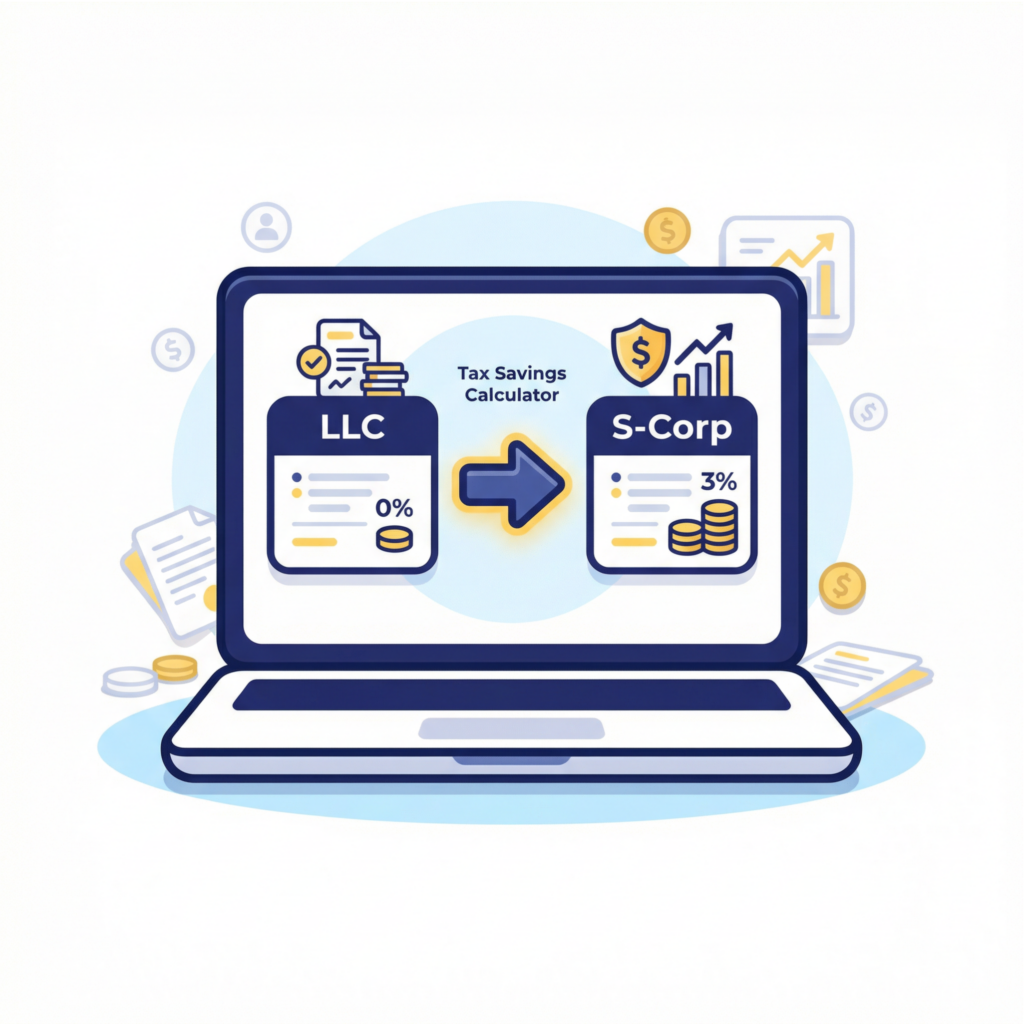
LLC vs S-Corp Tax Calculator
Self-Employment tax Calculator

Small Business Tax Calculator

Not TurboTax. Not H&R Block. A Real Strategy.
Software files your taxes. We engineer your tax strategy. There’s a difference — and it’s worth thousands.
We Find What They Miss
TurboTax asks questions. H&R Block fills out forms. Our MERNA™-certified strategists dig into your income, entity structure, and lifestyle to uncover deductions most CPAs overlook — legally saving clients $15K–$150K+ per year.
Strategy, Not Just Filing
Filing your return is the last step. We start months earlier — restructuring entities, layering write-offs, and building a tax plan that works year-round. By the time we file, you’ve already won.
A Real Strategist in Your Corner
No chatbots. No call centers. You get a dedicated, MERNA™-certified tax strategist who knows your situation, answers your questions, and fights for every dollar — every year.
Work With a Seattle Tax Advisory Firm That Understands High-Income, Multi-State, Equity-Heavy Financial Lives
We offer a free tax advisory consultation for Seattle residents.
We’ll analyze your income, equity, rentals, entity structure, and multi-state exposure to uncover immediate tax-saving opportunities.
Book a Free Strategy Call and Meet Your Match.
Professional, Licensed, and Vetted MERNA™ Certified Tax Strategists Who Will Save You Money.
FAQ — TAX PREPARATION IN SEATTLE TAX ADVISOR
As a freelance software developer based in South Lake Union, what specific industry-related deductions can I claim in addition to standard business expenses, and how does the Seattle B&O tax affect my income?
Beyond general business expenses, Seattle-based freelance software developers can often deduct subscriptions to development tools (e.g., GitHub Copilot, JetBrains IDEs), professional development courses relevant to new coding languages, and home office expenses (if meeting IRS criteria, Publication 587). The Seattle Business & Occupation (B&O) tax applies to gross receipts; for most service businesses like yours, the rate is currently 0.0033%, which you’ll report and pay quarterly or annually depending on your gross income.
I'm a new landlord with a rental property in Capitol Hill. What are the key Washington State and Seattle-specific tax considerations for rental income, and are there any local landlord-specific deductions I should be aware of?
As a Washington landlord, you’re primarily concerned with federal income tax on your rental income and allowable deductions (e.g., mortgage interest, property taxes, repairs, depreciation per IRS Publication 527). While Washington has no state income tax, Seattle imposes a B&O tax on rental income if you meet certain thresholds, with rates varying by activity. Be aware of local regulations like the Seattle Rental Registration and Inspection Ordinance (RRIO) fees, which are generally deductible business expenses.
My small e-commerce business, operating out of Ballard, sells goods nationwide. How do I navigate Washington's sales tax nexus rules, particularly with the Wayfair decision, and what local Seattle taxes might apply?
Washington’s sales tax nexus rules are complex post-Wayfair; if your sales into Washington exceed $100,000 or 200 transactions annually, you likely have economic nexus and must collect and remit state (6.5%) and local sales taxes. For your Ballard-based operation, you’ll also owe Washington B&O tax on your gross receipts, with rates varying by business classification (e.g., retailing at 0.00471), and potentially the Seattle B&O tax if your gross income exceeds local thresholds.
I recently moved to West Seattle from California and now work remotely for a California-based tech company. How do I avoid double taxation, and what are the primary differences in state tax filing for a Washington resident compared to a California resident?
As a Washington resident, you will primarily file federal taxes. Since Washington has no state income tax, you won’t file a state income tax return here. However, California may still require you to file a non-resident return if you have California-sourced income, but you can usually claim a credit for taxes paid to California on your California return to avoid true double taxation. Ensure your employer correctly withholds taxes based on your Washington residency.
What are the specific tax implications and reporting requirements for a small non-profit organization located near Pike Place Market that relies on local donations and grants, particularly concerning Washington's charitable solicitation laws?
For non-profits in Washington, while generally exempt from federal income tax under IRS Section 501(c)(3), you’ll still need to file Form 990 annually. You must also register with the Washington Secretary of State under the Charitable Solicitations Act if you solicit donations. While Washington has no state income tax, your non-profit may be subject to the state’s B&O tax on certain unrelated business income (UBIT) or specific activities, and potentially local Seattle B&O taxes if applicable.
I'm a real estate agent specializing in the Queen Anne market. Beyond standard business deductions, are there any unique write-offs or tax strategies specific to Washington State real estate professionals, especially concerning continuing education or MLS fees?
As a Washington real estate agent, you can deduct essential business expenses like MLS fees, continuing education required for your license renewal, professional association dues (e.g., Seattle King County REALTORS®), and marketing expenses specific to the Queen Anne market. While Washington has no state income tax, you’ll still pay federal self-employment tax (Social Security and Medicare) on your net earnings. Consider setting up a SEP IRA or Solo 401(k) for tax-advantaged retirement savings.