
Cost Segregation in Hartford: Maximize 2026 Real Estate Tax Deductions
For real estate investors in Hartford and across Connecticut, cost segregation in Hartford remains one of the most powerful tax strategies available in 2026. With the permanent reinstatement of 100% bonus depreciation through the One Big Beautiful Bill Act, property owners can now accelerate deductions worth hundreds of thousands of dollars in their first year of ownership. This comprehensive guide explains how cost segregation works, why it matters for 2026, and how to implement this proven strategy to minimize your tax liability while maximizing cash flow.
Table of Contents
- Key Takeaways
- What Is Cost Segregation?
- How Does Cost Segregation Work?
- What Are the Tax Benefits in 2026?
- How Does the 100% Bonus Depreciation Impact Cost Segregation?
- What Property Types Qualify?
- Why Cost Segregation in Hartford Makes Sense
- Uncle Kam in Action
- Next Steps
- Frequently Asked Questions
- Related Resources
Key Takeaways
- Cost segregation in Hartford accelerates depreciation deductions to reduce taxes in year one of property ownership.
- The 100% permanent bonus depreciation under the OBBBA means eligible property can be fully deducted in the first year.
- Average savings range from $50,000 to $500,000+ depending on property cost and composition.
- Commercial and multi-family properties in Hartford are prime candidates for cost segregation analysis.
- A professional cost segregation study costs $3,000–$15,000 but typically pays for itself through first-year tax savings.
What Is Cost Segregation?
Quick Answer: Cost segregation in Hartford is an IRS-approved tax strategy that accelerates depreciation by breaking down real estate into individual components and assigning shorter depreciation schedules.
Most real estate investors treat their entire building as a single asset. They depreciate it over 27.5 years for residential or 39 years for commercial property. Cost segregation in Hartford changes this approach. Instead of depreciating everything together, a professional cost segregation study identifies specific building components and personal property that can be depreciated much faster—sometimes in just 5, 7, or 15 years.
Here’s the key difference: A standard depreciation approach treats a $1 million office building as one asset depreciating over 39 years. A cost segregation analysis might identify $200,000 in personal property and building systems that depreciate in 5–7 years, plus $150,000 in components depreciating in 15 years, while the remaining $650,000 depreciates over 39 years. This creates dramatically larger deductions in the first decade of ownership.
Why Cost Segregation Matters for Hartford Investors
Hartford’s real estate market includes commercial properties, multi-family apartment buildings, retail centers, and industrial warehouses. Many of these properties are older structures (built before 1980) with significant components like HVAC systems, electrical systems, carpeting, and fixtures that can be reclassified for accelerated depreciation.
Cost segregation analysis is particularly valuable for larger acquisitions in Hartford where the cost basis exceeds $500,000. Even a modest 10% acceleration of deductions can translate to $50,000+ in immediate tax savings when combined with 2026’s 100% bonus depreciation rules.
How Does Cost Segregation Work?
Quick Answer: A professional engineer or tax specialist conducts an onsite inspection, prepares detailed documentation, and files Form 3115 (Application for Change in Accounting Method) with the IRS.
The cost segregation process follows a specific sequence designed to maximize IRS compliance while capturing every available deduction. Most studies take 4–8 weeks to complete from initial inspection to final report delivery.
Step-by-Step Cost Segregation Process
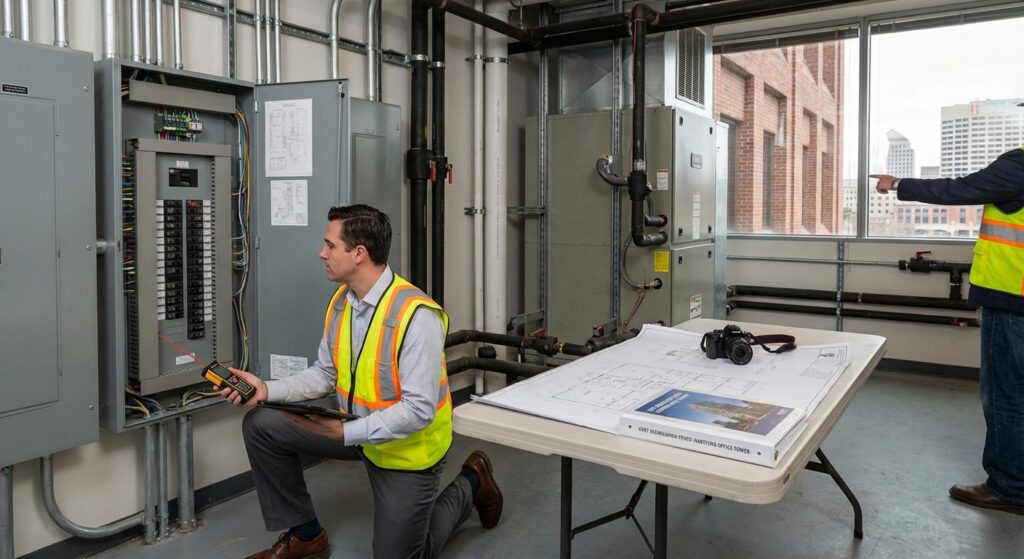
- Phase 1: Property Inspection — A professional engineer visits the property and documents every building component, system, fixture, and piece of equipment. Photos, measurements, and construction details are recorded.
- Phase 2: Component Identification — The engineer categorizes assets by their IRS-approved depreciation schedule (5-year, 7-year, 15-year, or 39-year categories).
- Phase 3: Cost Allocation — The purchase price and closing costs are allocated among identified components based on current replacement value, engineering judgment, and IRS guidelines.
- Phase 4: Form 3115 Filing — Your CPA or tax advisor files the change-in-accounting-method request with the IRS, supporting your cost segregation study with detailed documentation.
- Phase 5: Modified Tax Returns — If the property was acquired in prior years, you may file amended returns to claim accelerated deductions for past years as well.
Pro Tip: Many investors wait to complete a cost segregation study until they are confident they’ll hold the property for at least 3–5 years. This ensures you capture the full benefit of accelerated deductions before a potential sale.
What Are the Tax Benefits of Cost Segregation in Hartford for 2026?
Quick Answer: Cost segregation in Hartford generates deductions equal to accelerated depreciation on classified assets, reducing taxable income and allowing investors to retain more cash while maintaining property ownership.
The primary benefit of cost segregation is deferring taxes to future years, effectively giving you an interest-free loan from the IRS. Here’s a practical example: If a $2 million commercial property in Hartford has $300,000 allocated to 5-year property under a cost segregation study, you can deduct that entire $300,000 in year one instead of spreading it over 39 years. This creates a $300,000 deduction in the first year alone.
For a real estate investor in the 35% combined federal and Connecticut state tax bracket, that $300,000 deduction saves $105,000 in taxes in year one. This cash savings can be reinvested in additional properties, improvements, or operations.
Primary Tax Benefits Breakdown
- Accelerated Depreciation Deductions: Capture decades of depreciation in the first few years of ownership.
- Passive Loss Deductions: Use depreciation losses to offset passive real estate income or, in some cases, active income (depending on qualification as a Real Estate Professional).
- Cash Flow Preservation: Reduce taxable income while maintaining actual rental income cash flow—a key advantage of depreciation deductions that don’t require actual cash outlay.
- Increased Return on Investment: Larger deductions mean lower tax liability, which improves the overall return on your real estate investment.
Did You Know? Depreciation is a “non-cash” deduction, meaning you can report depreciation losses on your tax return while still receiving actual rental income from tenants. This creates a powerful tax arbitrage opportunity for real estate investors.
How Does the 100% Bonus Depreciation Impact Cost Segregation?
Quick Answer: The One Big Beautiful Bill Act permanently reinstated 100% bonus depreciation for qualified property acquired after January 19, 2025, allowing immediate full deduction of asset basis in the year placed in service.
For 2026, this is game-changing. Under the previous rules, bonus depreciation was scheduled to phase out, declining by 20% annually starting in 2023. The permanent reinstatement of 100% bonus depreciation means that cost segregation studies completed for 2026 acquisitions can accelerate deductions even faster than before.
The IRS issued Notice 2026-11 on January 14, 2026, providing official guidance on this permanent change. The notice confirms that property acquired after January 19, 2025, qualifies for the full 100% additional first-year depreciation deduction.
Cost Segregation + Bonus Depreciation: 2026 Example
Consider a $5 million office building purchased in Hartford on February 1, 2026. A cost segregation study identifies:
- $800,000 in 5-year property (HVAC, electrical, fixtures)
- $600,000 in 15-year property (structural improvements)
- $3,600,000 in 39-year property (building structure)
With 100% bonus depreciation available for 2026:
- Year 1 depreciation deduction: $800,000 (5-year property fully deducted immediately)
- Depreciation on 15-year property: $40,000 annual deduction (15-year straight-line applies)
- Depreciation on 39-year property: $92,308 annual deduction (39-year straight-line applies)
Total year 1 deduction with cost segregation in Hartford: $932,308
Without cost segregation, you’d only deduct $128,205 in year 1 ($5,000,000 ÷ 39 years). The cost segregation study creates an additional $804,103 in first-year deductions.
| Scenario | Year 1 Depreciation (2026) | Tax Savings @ 35% Rate |
|---|---|---|
| Standard (No Cost Segregation) | $128,205 | $44,872 |
| With Cost Segregation | $932,308 | $326,308 |
| Advantage | $804,103 | $281,436 |
What Property Types Qualify for Cost Segregation in Hartford?
Quick Answer: Most commercial, industrial, and multi-family properties qualify, as long as the property is placed in service after January 19, 2025, or you’re conducting a retrospective study on properties acquired earlier.
Cost segregation in Hartford works best for properties with significant personal property, fixtures, and building system components. The analysis is particularly valuable when a property has a higher cost basis, which means more dollars to allocate to accelerated depreciation schedules.
Property Types and Cost Segregation Viability
- Commercial Office Buildings: Excellent candidates. HVAC, electrical, flooring, ceilings, and interior walls can represent 15–25% of building cost, qualifying for accelerated depreciation.
- Multi-Family Apartment Complexes: Strong opportunities. Common areas, appliances, flooring, and utility systems generate significant 5-year and 7-year property classifications.
- Retail Shopping Centers: Good potential. Parking lot, signage, tenant improvements, and building systems offer multiple depreciation categories.
- Industrial and Warehouse Facilities: Very strong candidates. Loading docks, specialized equipment, flooring, and safety systems often qualify for aggressive cost segregation.
- Hotels and Hospitality: Excellent. Furniture, fixtures, equipment, and specialized systems (kitchens, HVAC) create substantial accelerated deductions.
- Medical and Professional Buildings: Good opportunities, especially those with specialized equipment and systems.
Pro Tip: The higher the cost basis of your property, the larger the absolute tax savings from cost segregation. A $10 million property might yield $150,000+ in year 1 tax savings, while a $1 million property might yield $15,000–$30,000. Still valuable for smaller properties, but ensure the study cost is justified by potential savings.
Why Cost Segregation in Hartford Makes Strategic Sense
Quick Answer: Hartford’s commercial real estate market, diverse property types, and active investor community make cost segregation particularly valuable, especially with 2026’s permanent bonus depreciation rules.
Hartford has experienced significant real estate activity in recent years. The city’s commercial district includes older office buildings, renovated mixed-use properties, and new development projects. Many of these properties—especially acquisitions or major improvements completed in 2025–2026—are prime candidates for cost segregation analysis.
Additionally, Connecticut’s state income tax rates are among the highest in the nation, ranging from 3% to 6.99% depending on income level. This means tax savings generated through cost segregation in Hartford benefit from both federal and state tax deduction advantages. A $300,000 depreciation deduction saves not just federal taxes but Connecticut state taxes as well.
Market Timing for 2026 Cost Segregation
For Hartford investors who acquired property in 2025 or early 2026, now is the ideal time to complete a cost segregation study. The permanent reinstatement of 100% bonus depreciation means you’re locking in maximum deductions for as long as the current tax law remains in effect. Federal tax law changes periodically, so capturing this benefit while it’s available is strategic planning.

Uncle Kam in Action: Hartford Real Estate Investor Saves $218,000 with Cost Segregation
Client Snapshot: A Hartford-based real estate investor who acquired a five-story commercial office building in downtown Hartford in March 2026 for $8.5 million. The property includes ground-floor retail space and four upper floors of office suites. The investor is a Real Estate Professional (qualifying to deduct passive losses against active income), actively managing three Hartford-area properties.
Financial Profile: Total real estate portfolio valued at $22 million generating approximately $1.8 million in gross rental revenue annually. Combined federal and Connecticut state income tax rate: 37.5% (35% federal marginal rate + 6.99% Connecticut state income tax).
The Challenge: After acquiring the Hartford commercial building, the investor faced a substantial increase in taxable income from rental operations across all three properties. In 2026, the investor projected taxable income of approximately $650,000 across all three properties combined. Without depreciation deductions, the investor would owe approximately $243,750 in combined federal and state taxes on this income—significantly reducing cash flow available for property improvements and additional investments.
The Uncle Kam Solution: The investor engaged a professional cost segregation firm to conduct a comprehensive analysis of the Hartford building. The study, completed in June 2026, identified the following component breakdown:
- $1,200,000 in 5-year personal property and fixtures (HVAC systems, electrical equipment, retail fit-outs, signage)
- $800,000 in 15-year components (parking lot improvements, structural enhancements)
- $5,500,000 in 39-year building structure
Combined with the 100% bonus depreciation available for 2026, the investor deducted the full $1,200,000 of 5-year property in year one, plus regular depreciation on the 15-year and 39-year components. Total year 1 depreciation deduction from this property alone: $1,441,538.
The Results:
- Tax Savings: The cost segregation study generated $1,441,538 in 2026 depreciation deductions, reducing the investor’s taxable real estate income by 50% (from $650,000 to approximately $208,462 after accounting for standard operating deductions and depreciation). This saved $240,075 in combined federal and state income taxes in 2026 alone.
- Investment: The cost segregation study fee was $12,000, a one-time cost paid to the engineering and tax firm.
- Return on Investment (ROI): The investor achieved a 20:1 return on investment in the first year alone ($240,075 in tax savings ÷ $12,000 study cost = 20x ROI in year 1). Over the next four years, as the accelerated 5-year depreciation continues, the investor will realize an additional estimated $500,000+ in cumulative tax savings, making this is one of the highest-return tax strategies available to real estate investors.
This is just one example of how our proven tax strategies have helped clients achieve significant savings and financial peace of mind through strategic real estate tax planning.
Next Steps
If you own commercial, multi-family, or industrial property in Hartford or anywhere in Connecticut, cost segregation in Hartford could deliver substantial tax savings. Here are your immediate action steps:
- Review Your Property Portfolio: Identify properties with a cost basis of $500,000 or higher. Make a list of acquisition dates, purchase prices, and property types.
- Consult with a Tax Professional: Contact a CPA or tax advisor specializing in real estate to determine whether cost segregation makes sense for your specific properties and tax situation.
- Get a Cost Segregation Quote: Request a proposal from an accredited cost segregation firm. Most firms provide free initial consultations and can estimate potential tax savings before you commit.
- Act Before Year-End 2026: To maximize 2026 tax savings, complete your cost segregation study and file the required Form 3115 with your 2026 tax return by April 15, 2027.
- Connect with Our Team: If you’d like personalized guidance on cost segregation in Hartford and how it fits your overall tax strategy, contact us for a confidential tax advisory consultation. We’ll analyze your properties and provide a customized cost segregation roadmap.
Frequently Asked Questions
Is cost segregation legal? Will the IRS audit me?
Yes, cost segregation is a legitimate, IRS-approved strategy used by thousands of investors annually. The strategy is backed by official IRS guidance and notices. When conducted properly by qualified professionals and documented with a detailed engineering report, cost segregation withstands IRS scrutiny. The key is working with experienced professionals and maintaining thorough documentation of the analysis.
What happens to depreciation when I sell the property?
When you sell the property, depreciation recapture applies. Any depreciation deductions you’ve claimed (whether through standard depreciation or cost segregation) are “recaptured” at a 25% federal tax rate, plus your applicable state income tax rate. This means you’ll owe taxes on the depreciation benefits you’ve claimed. However, the tax deferral benefit during the holding period—allowing you to use that money for other investments—typically exceeds the recapture cost. Additionally, if you perform a 1031 exchange into another property, you can defer the recapture taxes indefinitely.
Can I do cost segregation on properties I bought several years ago?
Yes, this is called a “retrospective” cost segregation study. Even if you acquired the property years ago, you can file an amended Form 3115 to claim accelerated depreciation for prior years. The IRS generally allows back-filing for three years (2023, 2024, and 2025 for properties acquired in those years). This means you could receive substantial refunds on prior tax years while benefiting from accelerated deductions going forward.
How long does a cost segregation study take and what does it cost?
A typical cost segregation study takes 4–8 weeks from initial inspection to final report delivery. Costs range from $3,000 to $15,000 depending on property size and complexity. A $5 million commercial property usually costs $8,000–$12,000. Most cost segregation firms will provide a detailed estimate during the initial consultation. The cost is typically tax-deductible as a professional service expense.
What’s the difference between cost segregation and bonus depreciation?
Cost segregation identifies which building components qualify for accelerated depreciation schedules (5-year, 7-year, 15-year, 27.5-year, or 39-year). Bonus depreciation is a separate tax deduction that allows you to deduct 100% of eligible property cost in the year placed in service (in 2026). They work together: cost segregation identifies the components, then bonus depreciation can be applied to accelerate the deductions even further. Using both strategies together maximizes tax savings.
Will cost segregation hurt my ability to qualify for a real estate professional status?
No, cost segregation has no impact on real estate professional status qualification. Your status depends on hours worked in real property business and whether real property activities constitute your principal business activity. Cost segregation simply optimizes the depreciation deductions you’re already entitled to claim within your real estate professional activities.
Can I use cost segregation in Hartford on properties I own through an LLC or corporation?
Yes, cost segregation works regardless of ownership structure. Whether you hold property in your personal name, through an LLC, S corporation, partnership, or C corporation, cost segregation analysis and depreciation deductions apply. Your tax advisor will ensure the depreciation deductions flow through to your personal return in the correct format based on your entity structure.
What if my property is financed with debt? Does that affect cost segregation?
Financing has no impact on cost segregation analysis or depreciation deductions. Cost segregation applies to your total cost basis (your actual cash investment plus any debt used to finance the property). The depreciation deductions are available whether the property is fully paid or heavily leveraged.
Is cost segregation worth it for properties under $500,000?
For properties under $500,000, the cost of a professional study (typically $5,000–$10,000) may not be justified by the absolute tax savings. However, if you own multiple smaller properties or anticipate significant income in 2026, a cost segregation study could still make financial sense. Ask a cost segregation firm for an estimate of potential savings before committing. Sometimes the analysis reveals substantial depreciation opportunities that justify the cost even for smaller properties.
Related Resources
- Real Estate Investor Tax Strategies and Services
- Optimize Your Real Estate Entity Structure for Maximum Tax Benefits
- 2026 Tax Strategy Planning for Real Estate Investors
- IRS Depreciation Rules and Guidelines
- IRS Notice 2026-11: Bonus Depreciation Guidance
Last updated: January, 2026

