
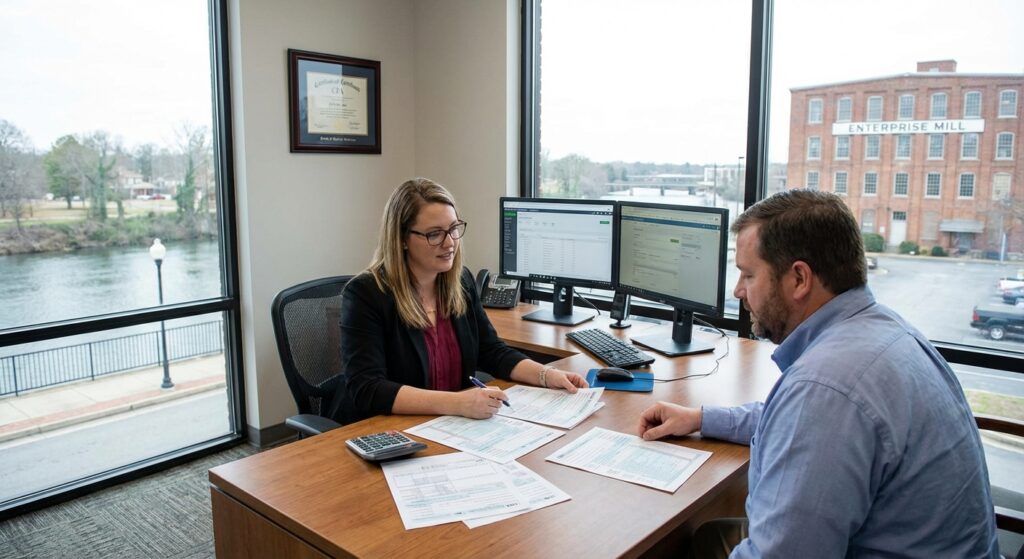
How to Find the Best Tax Preparer in Augusta for Your 2026 Tax Return
Finding the best tax preparer in Augusta can save you thousands of dollars on your 2026 tax return while ensuring complete IRS compliance. Whether you’re self-employed, a business owner, or managing complex investments, selecting the right tax professional makes all the difference. This comprehensive guide walks you through identifying qualified tax preparers, understanding professional credentials, and asking the critical questions that separate mediocre preparation from exceptional tax strategy.
Table of Contents
- Key Takeaways
- What Qualifications Matter Most in a Tax Preparer?
- How to Identify Red Flags When Choosing a Tax Preparer
- Comparing Tax Preparation Options for Your Situation
- What Critical Questions Should You Ask Before Hiring?
- Does Your Situation Require Specialized Tax Expertise?
- Uncle Kam in Action
- Next Steps
- Frequently Asked Questions
- Related Resources
Key Takeaways
- The best tax preparer in Augusta holds credentials like CPA, Enrolled Agent, or tax attorney status. These qualifications indicate formal training and ongoing continuing education requirements.
- Red flags include guaranteed refunds, pressure to sign blank returns, refusal to explain deductions, and lack of proper credentials or professional liability insurance.
- For 2026, standard deductions are $31,500 for married filing jointly, $16,550 for single filers, and $23,900 for heads of household. A quality preparer maximizes these benefits.
- Interview multiple candidates and ask about their experience with your specific tax situation—business ownership, investments, rental properties, or self-employment income.
- Choose a tax professional offering proactive tax strategy services, not just annual compliance filing.
What Qualifications Matter Most in a Tax Preparer?
Quick Answer: The best tax preparer in Augusta holds a CPA, Enrolled Agent credential, or tax attorney status. These professionals have passed rigorous exams and must complete annual continuing education, ensuring current knowledge of 2026 tax law changes.
Not all tax preparers are created equal. Understanding professional credentials is the first step in finding someone qualified to handle your 2026 return. The IRS recognizes three primary types of tax professionals with distinct qualifications and authorities.
Certified Public Accountant (CPA)
A CPA represents the gold standard for tax preparers in Augusta. CPAs must pass the Uniform CPA Examination, maintain professional liability insurance, and complete 40 hours of continuing education annually. This means your tax preparer stays current with changes like the 2026 standard deduction increases and new tax credits affecting your return.
CPAs can represent clients before all IRS levels, including audit defense and appeals. They’re authorized to sign tax returns as preparers and provide comprehensive financial advisory services beyond tax compliance. For complex situations—business ownership, significant investment income, or multi-state operations—a CPA’s comprehensive knowledge becomes invaluable.
Enrolled Agent (EA)
Enrolled Agents hold the IRS credential specifically for tax representation and return preparation. To become an EA, professionals must pass a three-part Enrolled Agent examination or have prior work experience with the IRS. Like CPAs, EAs must maintain professional standards and complete continuing education. Many EAs specialize exclusively in tax preparation, making them highly knowledgeable about the detailed rules affecting your 2026 return.
EAs can represent you before the IRS, handle amended returns, and respond to IRS correspondence. They cannot perform accounting or bookkeeping unless they hold additional credentials. For individuals and small businesses seeking specialized tax expertise at potentially lower costs than CPAs, an EA is often an excellent choice for Augusta tax preparation.
Tax Attorney
Tax attorneys combine legal expertise with tax knowledge, making them ideal for complex situations involving tax disputes, estate planning, or business restructuring. They hold a law degree and specialize in tax law. When IRS disputes escalate to litigation, a tax attorney provides the legal authority to represent you in court, whereas CPAs and EAs cannot.
For most straightforward 2026 tax return preparation, a tax attorney may be unnecessary. However, if your situation involves trust administration, partnership issues, or potential audit defense concerns, their specialized expertise justifies the investment.
Pro Tip: When evaluating credentials, verify them directly through official channels. The IRS maintains a directory of enrolled agents, and state accounting boards verify CPA licenses. Never accept credentials at face value.
How to Identify Red Flags When Choosing a Tax Preparer
Quick Answer: Major red flags include promised refunds before reviewing documents, pressure to sign blank returns, refusal to explain deductions, lack of published credentials, no professional liability insurance, and fees based on refund size rather than services rendered.
While finding the best tax preparer in Augusta, recognizing warning signs protects both your finances and legal standing. The IRS actively warns taxpayers about predatory tax preparation practices that expose you to audit risk and penalties.
Warning Sign: Guaranteed Refunds
No legitimate tax preparer can guarantee a specific refund amount before thoroughly reviewing your documents and income. Anyone claiming they’ll get you a maximum refund is either making unsupported promises or suggesting aggressive deductions that lack proper documentation. Guaranteed refund claims often precede audit letters and penalties for undisclosed liability.
Warning Sign: Pressure to Sign Blank Returns
You must review and understand every number on your return before signing. A professional tax preparer walks you through key items, explains your filing status impact on the 2026 standard deduction, and confirms all income sources. If your preparer pressures you to sign without reviewing details, that’s a major red flag indicating either incompetence or intentional misrepresentation.
Warning Sign: Refund-Based Fees
Professional tax preparers charge hourly rates or flat fees based on return complexity, not refund size. When fees are calculated as a percentage of your refund, the preparer has financial incentive to inflate deductions. This creates conflicts of interest and increases audit risk for you, while the preparer avoids consequences.
| Red Flag | What It Means | Action Required |
|---|---|---|
| Guaranteed Refund | Unrealistic promises before document review | Find another preparer immediately |
| Blank Form Signing | You sign without reviewing final return | Walk away from this relationship |
| No Credentials | Unverifiable CPA, EA, or attorney status | Request proof or seek different preparer |
| Refund-Based Fees | Fee percentage tied to your refund amount | Negotiate hourly rate or find alternative |
| No Insurance | No professional liability coverage mentioned | Question their risk management practices |
Did You Know? The IRS publishes specific guidance on choosing qualified tax professionals to help taxpayers avoid scams and incompetent preparers. Reference this official list when vetting your options.
Comparing Tax Preparation Options for Your Situation
Quick Answer: For simple W-2 returns with minimal deductions, software might suffice. For self-employed, business owners, or investors, professional preparation through the best tax preparer in Augusta becomes essential for optimizing your 2026 return and ensuring compliance.
Taxpayers have multiple options for preparing their 2026 return. Understanding the trade-offs between DIY software, discount chains, and professional preparers helps you choose what’s right for your financial situation.
DIY Tax Software
Tax software offers accessibility and low cost. These platforms guide you through questions and apply the 2026 standard deduction automatically. However, software cannot understand your unique financial situation, identify overlooked deductions, or provide advice on complex issues. Many business owners and self-employed individuals miss thousands in potential savings attempting DIY preparation.
Tax Preparation Chains
National tax preparation chains offer accessibility but frequently employ preparers with minimal qualifications. Staff turnover means inconsistent service quality. Chain preparers rarely provide strategic advice—they process returns following standard templates without considering your specific tax optimization opportunities. Many chain locations operate seasonally, creating continuity issues year to year.
Professional Tax Preparers
The best tax preparer in Augusta provides several advantages over software or chains. Professionals understand complex situations, identify deductions you might miss, provide ongoing strategic advice, and represent you if audited. For business owners, self-employed professionals, and investors, professional preparation often saves multiples of the service cost through deduction optimization and compliance risk reduction.
What Critical Questions Should You Ask Before Hiring?
Quick Answer: Ask about credentials, experience with your situation, audit defense capabilities, fee structure, communication frequency, and how they stay current with 2026 tax law changes. These questions reveal whether you’ve found someone offering compliance-only preparation or strategic tax planning.
Before hiring a tax preparer, conduct a thorough interview. Ask these essential questions to distinguish between competent professionals and those who will cost you thousands through missed opportunities.
Question 1: What Are Your Professional Credentials?
Verify the preparer holds CPA, Enrolled Agent, or tax attorney credentials. Ask for their license number and offer to verify independently. If they cannot produce verified credentials, this is disqualifying. Professional credentials indicate formal training, ongoing education requirements, and accountability through professional regulatory bodies.
Question 2: Do You Have Experience with Situations Like Mine?
If you’re self-employed, ask about small business return experience. Real estate investors should confirm expertise with rental property taxation, depreciation, and 1031 exchanges. Business owners need to know about entity selection and optimization. A preparer claiming experience across all areas likely specializes in none. Find someone with demonstrated expertise in your specific circumstances.
Question 3: How Do You Handle Audit Representation?
Ask whether they represent clients before the IRS if audited. Not all CPAs and EAs maintain active audit defense practices. Some refer audit clients elsewhere, which means you lose continuity and knowledge. The best tax preparer in Augusta handles audit defense internally, providing seamless representation and maximizing your negotiating position.
Question 4: What’s Your Fee Structure?
Legitimate preparers charge hourly rates or flat fees based on complexity. Fees should never be contingent on refund size. For 2026, complex returns with business income, rental properties, or significant investments justifiably cost more than simple W-2 returns. Request a fee estimate before beginning work. Transparent pricing prevents surprise costs and clarifies value expectations.
Does Your Situation Require Specialized Tax Expertise?
Quick Answer: If you have business income, rental properties, significant investments, cryptocurrency holdings, or anticipated major life changes in 2026, you need a specialist. General preparers miss optimization opportunities costing thousands annually. Professional tax preparation services in Augusta should include strategic guidance specific to your situation.
Many taxpayers use basic preparers for routine returns but underestimate costs when situations become complex. Specialists in business taxation, real estate investment, or high-income planning provide expertise that generic preparation misses entirely.
Self-Employment and Business Taxation
Self-employed individuals and business owners face complex requirements beyond basic tax filing. For 2026, you need expertise in separating personal and business income, identifying legitimate deductions, calculating self-employment tax correctly, and implementing payroll if you have employees. A specialist understands the specific documentation requirements that protect you during audits.
Real Estate Investment Taxation
Real estate investors benefit from specialized knowledge about depreciation strategies, passive activity loss limitations, 1031 exchange timing, and distinguishing rental income from business income. These distinctions significantly impact your 2026 tax liability. A specialist ensures you’re maximizing legal deductions while maintaining proper documentation for IRS scrutiny.
Investment and High-Income Taxation
If you earn significant income from investments, business ownership, or professional services, standard preparation is insufficient. Net Investment Income Tax, Alternative Minimum Tax, and income phase-outs for deductions and credits create planning opportunities missed by general preparers. A specialist implements strategies reducing your overall tax burden while maintaining compliance.
Pro Tip: Interview multiple specialists and compare their understanding of your situation. Ask each preparer to identify specific opportunities unique to your circumstances. The specialist who demonstrates deepest understanding of your situation’s tax implications is usually your best choice.

Uncle Kam in Action: Self-Employed Consultant Saves $18,400 with Strategic Tax Preparation
Client Snapshot: Marcus is a management consultant in Augusta providing specialized services to mid-market companies. He’s been self-employed for four years and works with various contract companies, some requiring W-9 arrangements and others offering 1099 agreements.
Financial Profile: Marcus reported $185,000 in gross consulting income during 2025, with approximately $35,000 in business expenses. He was filing his own returns using popular tax software and maintaining minimal business records.
The Challenge: When Marcus consulted with Uncle Kam’s team about his 2026 tax planning, we discovered several critical issues. His current approach was missing legitimate deductions, his home office claim lacked proper documentation, and his business structure wasn’t optimized. Additionally, he was calculating self-employment tax incorrectly—paying roughly $8,200 annually on income that could be substantially reduced through proper structuring.
The Uncle Kam Solution: We implemented a comprehensive approach combining three 2026 tax strategies. First, we transitioned Marcus to an S Corporation election, allowing him to split income between reasonable W-2 salary ($82,000) and distributions ($103,000). This strategy alone reduces self-employment tax by approximately $10,600 annually because distributions avoid the 15.3% self-employment tax. Second, we identified and documented $18,000 in previously overlooked home office, equipment, and professional development deductions. Third, we established quarterly estimated tax payment schedules, eliminating underpayment penalties.
The Results:
- Tax Savings: $18,400 in annual tax reduction through S Corporation election and deduction optimization in his 2026 return
- Investment: A one-time investment of $4,200 for entity formation and tax planning consultation plus $2,800 annually for professional tax preparation
- Return on Investment (ROI): A 4.4x return on investment in the first year alone, with $18,400+ annual savings continuing indefinitely
This is just one example of how our proven tax strategies have helped clients achieve significant savings and financial peace of mind. Marcus now understands the value of professional expertise versus DIY software. His case demonstrates why finding the best tax preparer in Augusta makes such dramatic financial difference.
Next Steps
Now that you understand what makes a tax preparer truly excellent, take action to find the best professional for your 2026 return:
- Verify credentials immediately. Visit the IRS Tax Professional Directory to confirm CPA or Enrolled Agent status before scheduling consultations.
- Schedule interviews with at least three candidates. Use the critical questions outlined above to evaluate each preparer’s expertise and communication style.
- Request fee estimates in writing. Compare pricing transparently and ensure you understand what’s included in each preparer’s service.
- Ask about 2026-specific services. Confirm whether your potential preparer offers proactive tax strategy planning or only compliance-focused filing.
- Explore comprehensive tax preparation services available in Augusta that combine preparation with strategic planning. The best investment pays dividends through optimized returns for years to come.
Frequently Asked Questions
What’s the difference between a CPA and an Enrolled Agent?
Both CPAs and EAs can prepare tax returns and represent you before the IRS. CPAs hold broader qualifications, including accounting and bookkeeping expertise beyond taxation. EAs specialize exclusively in tax preparation and representation. For pure tax preparation, either credential is excellent. For comprehensive accounting services and business advisory, a CPA offers broader capabilities.
Can I deduct tax preparation fees on my 2026 return?
Historically, tax preparation fees were deductible as miscellaneous itemized deductions for those who itemized. However, under current tax law through 2025, the miscellaneous deduction suspension extends through 2026, meaning most taxpayers cannot deduct tax preparation costs. Consult your preparer about any developments in tax legislation that might affect this during 2026.
How early should I start looking for a tax preparer?
Begin your search for the best tax preparer in Augusta by November or December of the prior year. This timing allows interviews before the busy tax season, ensuring your preferred preparer can accommodate you. Last-minute searching in February or March often results in accepting whoever’s available rather than choosing your best fit. Quality preparers book appointments months in advance.
What should I bring to my first tax preparation appointment?
Prepare by gathering all W-2 forms, 1099 documents, K-1 partnership statements, investment statements, records of charitable contributions, mortgage interest statements, property tax payments, business expense documentation, and prior-year tax returns. The more organized you are, the more efficiently your preparer can work, potentially reducing fees and increasing optimization opportunities. Don’t expect a professional to spend hours searching your documents for information you should provide.
Should I use a local tax preparer or national service?
Local preparers offer relationship continuity, personal attention, and understanding of Augusta-specific tax issues. National services provide accessibility but often lack personalization. For complex situations requiring ongoing advisory, local specialists typically deliver superior value. You can develop a relationship where your preparer understands your situation deeply and provides proactive advice year-round.
What happens if my preparer makes an error on my return?
Professional preparers maintain liability insurance covering errors and omissions. If your preparer makes a mistake, their insurance should cover resulting penalties and interest. Before hiring, confirm your preparer carries professional liability insurance. This protection is essential—if errors occur, you need assurance they’ll be corrected at no cost to you.
Related Resources
- Comprehensive Tax Strategy Services for optimizing your 2026 return beyond basic compliance
- Ongoing Tax Advisory Relationships providing year-round planning and strategic guidance
- Client Case Studies demonstrating real tax savings from professional preparation
- IRS Tips for Choosing a Tax Professional from official government sources
- Self-Employed Tax Resources for specialized guidance on 1099 income and business taxation
Last updated: January, 2026

