
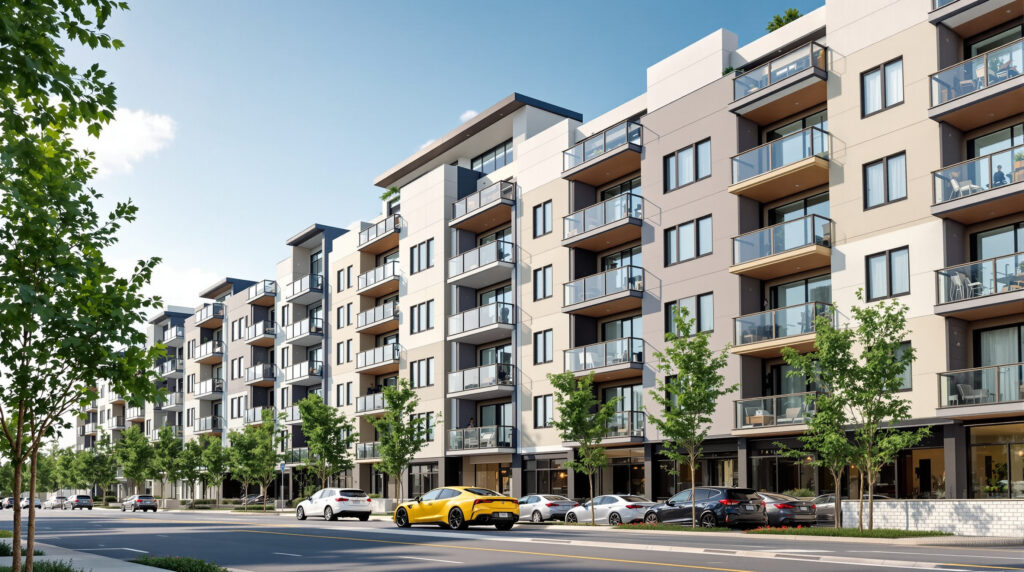
Multifamily Cost Segregation: Tax Deductions and Depreciation Strategies for Real Estate Investors
Multifamily cost segregation is a powerful tax strategy that enables real estate investors to dramatically accelerate depreciation deductions on apartment buildings and residential rental properties. By separating the components of a multifamily property into distinct asset classes with varying depreciation schedules, you can shift substantial deductions to the early years of ownership. This approach can result in six-figure tax savings while maintaining full compliance with IRS regulations and depreciation rules.
Table of Contents
- Key Takeaways
- What Is Multifamily Cost Segregation?
- How Does Cost Segregation Work on Apartment Buildings?
- What Are the Tax Benefits of Multifamily Cost Segregation?
- What Types of Property Components Qualify for Accelerated Depreciation?
- What Is the Step-by-Step Process for Implementing Multifamily Cost Segregation?
- Who Qualifies for Cost Segregation and What Are the Requirements?
- How Much Can You Actually Save with Cost Segregation?
- Uncle Kam in Action: Multifamily Investor
- Next Steps
- Frequently Asked Questions
Key Takeaways
- Multifamily cost segregation reclassifies building components into shorter depreciation periods, accelerating tax deductions.
- Real estate investors can shift tens of thousands in depreciation to Year 1 of property ownership.
- The strategy applies to residential rental properties, apartments, duplexes, and small multifamily complexes.
- A professional cost segregation study typically costs $3,000 to $8,000 but generates six-figure tax savings over time.
- Section 1245 property depreciates faster than Section 1250 property, enabling greater first-year deductions.
What Is Multifamily Cost Segregation?
Quick Answer: Multifamily cost segregation is an IRS-approved tax strategy that breaks down apartment building costs into depreciable components. Components are assigned depreciation schedules ranging from 5 to 39 years, allowing faster tax deductions in early ownership years.
Cost segregation is a legitimate tax planning method recognized by the IRS and detailed in IRS Publication 946. When you purchase a multifamily property, the IRS typically groups the entire structure into a single depreciation category of 27.5 years for residential rental property. However, multifamily cost segregation allows you to identify and separate specific components—such as carpeting, appliances, flooring, and certain fixtures—into different asset classes with shorter depreciation periods.
This strategic reclassification doesn’t change the total depreciation you’ll claim over the asset’s lifetime. Instead, it accelerates when you claim the deductions. By front-loading depreciation into the early years of property ownership, you create substantial tax deductions during high-income years. These deductions can offset other income sources, reducing your overall tax liability and freeing up cash flow for reinvestment.
The Core Concept Behind Cost Segregation
Think of a multifamily property like a complex machine. The structure itself (the building frame, foundation, and exterior walls) depreciates over 27.5 years. However, the internal components—the kitchen appliances, bathroom fixtures, carpet, paint, and landscaping—can depreciate much faster. Some components qualify as 5-year property under MACRS (Modified Accelerated Cost Recovery System) depreciation rules. Others fall into 7-year or 15-year categories.
A cost segregation study identifies every depreciable component in your multifamily property. Professional engineers and tax specialists conduct detailed physical inspections, cost allocations, and depreciation schedules. The result is a comprehensive report that supports your tax filing and withstands IRS scrutiny. By properly categorizing property components, you maximize the amount of depreciation deductions claimed in Year 1, creating immediate tax savings that compound over time.
Pro Tip: Cost segregation works best when implemented immediately after purchasing a multifamily property. The sooner you claim accelerated deductions, the sooner you benefit from tax savings and improved cash flow.
How Does Cost Segregation Work on Apartment Buildings?
Quick Answer: Multifamily cost segregation works by separating your property into distinct components and assigning shorter depreciation schedules. Engineers and tax specialists conduct studies that allocate costs to specific elements, enabling accelerated deductions under IRS rules.
The mechanics of cost segregation begin with property acquisition. When you purchase a multifamily property, you typically record the entire purchase price in a single asset category. Under standard IRS depreciation rules, residential rental properties depreciate over 27.5 years using straight-line depreciation. This means equal annual deductions for nearly three decades.
A cost segregation study changes this approach. Professional engineers visit your property and document every depreciable component. They measure carpet square footage, identify appliance types and ages, inspect fixtures, evaluate landscaping improvements, assess parking surface materials, and catalog dozens of other property elements. This detailed inventory is then matched to IRS cost basis allocation and MACRS depreciation schedules.
The Three-Step Process
First, engineers conduct a physical inspection of the multifamily property. They document all structural components, building systems, and personal property items. Second, they allocate the property’s total cost basis among identified components using engineering judgment, builder specifications, and industry data. Third, they assign each component to the appropriate MACRS depreciation category and calculate accelerated deductions using the half-year convention.
The resulting cost segregation study becomes your tax filing support document. You use its allocations and depreciation schedules when calculating your Form 4562 depreciation deductions. The study must follow IRS guidelines outlined in Revenue Ruling 2011-14 and Revenue Procedure 2011-14 to ensure audit defensibility.
Did You Know? The IRS has specific rules about component allocation. Your cost segregation study must use historical acquisition documents, engineering data, and market comparables. Professional specialists ensure compliance with these requirements.
What Are the Tax Benefits of Multifamily Cost Segregation?
Quick Answer: Multifamily cost segregation enables investors to claim substantial depreciation deductions in Year 1. These deductions reduce taxable income, lower tax liability, and improve cash flow during critical early ownership years.
The primary tax benefit of cost segregation is accelerated depreciation. Under standard IRS rules, a $2,000,000 multifamily property generates approximately $72,727 in annual depreciation deductions (27.5-year straight-line). With cost segregation, you might claim $200,000 to $300,000 in deductions during Year 1. This represents a three-to-four-year acceleration of tax benefits compressed into a single year.
These first-year deductions offset your adjusted gross income. If you have other income sources—W-2 employment, consulting business revenue, or passive income from other properties—cost segregation deductions reduce your overall taxable income. The tax savings can reach six figures depending on your property cost basis, your tax bracket, and passive activity loss limitations.
Cash Flow Improvement in Early Years
Beyond the tax deduction itself, cost segregation improves cash flow during critical early ownership years. When you reduce taxable income through accelerated depreciation, you lower your tax bill. The resulting cash savings can be reinvested into property improvements, additional acquisitions, or debt reduction. For multifamily investors managing multiple properties, this cash flow benefit accelerates portfolio growth and wealth building.
Additionally, accelerated depreciation creates tax-deferred cash. Your rental property generates positive cash flow before taxes. Cost segregation deductions are non-cash charges—depreciation isn’t money actually paid out. This mismatch creates a powerful planning opportunity. You receive cash from rental operations while simultaneously claiming large tax deductions. The deductions reduce your tax liability on that cash, creating a tax-deferred growth mechanism.
Recapture Considerations and Long-Term Strategy
It’s essential to understand depreciation recapture. When you eventually sell the multifamily property, the IRS taxes the accumulated depreciation deductions at a 25% recapture rate. This is higher than long-term capital gains rates (typically 15% or 20%) but still favorable. The key is that you’ve deferred substantial taxes into the future while capturing current benefits. Many investors use 1031 exchanges to defer or eliminate recapture taxes by reinvesting proceeds into like-kind properties.
| Depreciation Method | Year 1 Deductions | Total 27.5-Year Deductions | Tax Savings (32% Bracket) |
|---|---|---|---|
| Standard Depreciation | $72,727 | $2,000,000 | $23,273 Year 1 |
| With Cost Segregation | $250,000 | $2,000,000 | $80,000 Year 1 |
Pro Tip: Combine cost segregation with bonus depreciation for even greater first-year deductions. Section 179 and bonus depreciation rules (as of 2025) allow 100% immediate deductions for qualifying property components.
What Types of Property Components Qualify for Accelerated Depreciation?
Quick Answer: Five-year property includes appliances, carpet, and certain fixtures. Seven-year property includes some building systems. Fifteen-year property covers landscaping and qualified leasehold improvements.
Understanding which multifamily property components qualify for accelerated depreciation is critical. The IRS categorizes property into asset classes with specific recovery periods. Components within these classes depreciate according to MACRS rules. A cost segregation study identifies your property’s components and assigns them to the correct MACRS category.
Five-Year Property (MACRS Class)
Five-year property represents the fastest-depreciating components in multifamily cost segregation. This category includes:
- Kitchen appliances (refrigerators, stoves, dishwashers, microwaves)
- Carpet and flooring materials (vinyl, laminate, tile in certain circumstances)
- Computer and telecommunication equipment used in property management
- Certain HVAC equipment and air conditioning systems
- Office furniture and equipment in management offices
Five-year property provides the most aggressive depreciation acceleration. Using the 200% declining balance method with MACRS, approximately 40% of five-year property basis depreciates in Year 1 alone. This creates substantial first-year deductions.
Seven-Year and Fifteen-Year Property Categories
Seven-year property includes certain building systems and fixtures. Land improvements and parking surface materials often fall into the fifteen-year category. These components depreciate more slowly than five-year property but still faster than the 27.5-year residential rental property classification. Your cost segregation study will allocate specific percentages to each category based on detailed engineering analysis and cost allocation methods.
Important note: Land itself never depreciates. Cost segregation studies carefully separate land value from building and improvement costs. Only depreciable property components generate tax deductions.
| Component Category | MACRS Recovery Period | Year 1 Depreciation Rate | Example Components |
|---|---|---|---|
| 5-Year Property | 5 years | 20% (200% DB) | Appliances, Carpet |
| 7-Year Property | 7 years | 14.29% (200% DB) | Some Building Systems |
| 15-Year Property | 15 years | 7.5% (150% DB) | Landscaping, QIP |
| 27.5-Year Property | 27.5 years | 3.64% (SL) | Building Structure |
Did You Know? Building fixtures like built-in kitchen cabinets may be depreciable personal property if properly documented. This distinction can add substantial deductions. Professional cost segregation studies ensure proper classification.
What Is the Step-by-Step Process for Implementing Multifamily Cost Segregation?
Quick Answer: The process involves hiring a specialized firm, conducting property inspections, allocating costs, preparing depreciation schedules, and filing amended returns with Form 3115 if needed.
Implementing multifamily cost segregation requires professional expertise. The process is detailed and involves multiple steps. Understanding each phase helps you prepare for working with specialists and ensures successful implementation.
Step 1: Select a Qualified Cost Segregation Provider
The first step is identifying and hiring a qualified cost segregation specialist. Firms specializing in this service employ professional engineers, tax professionals, and accountants. Verify that providers have experience with multifamily properties specifically, not just commercial real estate generally. Ask for references from previous multifamily clients and review sample cost segregation reports. Your tax advisor or CPA can provide referrals to reputable firms.
Step 2: Gather Property Documentation
Prepare all available documentation about your multifamily property. This includes the original purchase agreement, closing statement, property survey, architectural plans, building specifications, contractor invoices, and any renovation records. Detailed documentation enables engineers to more accurately allocate costs to specific components. The more information you provide, the stronger your cost segregation study becomes.
Step 3: Professional Property Inspection
The cost segregation firm schedules an on-site inspection. Professional engineers visit your multifamily property and physically examine all components. They measure carpet square footage, assess appliance types and conditions, inspect building systems, evaluate fixtures, and document construction materials. This inspection is critical—it ensures accuracy and provides audit defensibility if the IRS questions your deductions.
Step 4: Cost Allocation and Study Development
After inspection, the firm allocates your property’s total cost basis among identified components. They use engineering judgment, builder specifications, historical acquisition documents, and market data. This allocation is then matched to appropriate MACRS depreciation schedules. The result is a comprehensive cost segregation study document that itemizes every component, its cost allocation, and depreciation schedule.
Step 5: Tax Return Preparation and Filing
Your tax professional uses the cost segregation study to prepare your tax return. For new multifamily purchases, the accelerated depreciation is claimed on Form 4562. If you already own the property and are implementing cost segregation retroactively, your CPA files a Form 3115 (Application for Change in Accounting Method) with the IRS. This form requests permission to change your depreciation method to align with the cost segregation study results.
Who Qualifies for Cost Segregation and What Are the Requirements?
Quick Answer: Any real estate investor owning multifamily rental property can benefit from cost segregation. The property must be placed in service, have a documented cost basis, and be held for business purposes.
Cost segregation eligibility is broad. If you own a multifamily property and claim depreciation deductions, you potentially qualify for cost segregation studies. The property type—apartment complex, duplex, fourplex, or small residential rental building—is less important than its purpose. The property must be held for producing rental income and generating depreciation deductions.
Key Eligibility Criteria
- You own the multifamily property or have rights to claim depreciation
- The property is placed in service (available for rental income)
- You have documented cost basis (purchase price or other basis amount)
- The property generates or is intended to generate rental income
- You’re subject to IRS depreciation rules on the property
Cost segregation timing matters significantly. Implementing cost segregation in the year of purchase is most beneficial. However, you can also apply cost segregation retroactively to previously acquired properties through Form 3115 amendments. Many investors discover cost segregation benefits years after purchase and successfully claim retroactive deductions. Consult your tax advisor about the look-back statute of limitations on your specific situation.
Pro Tip: Entity type affects cost segregation benefits. Pass-through entities (LLCs, S Corps, partnerships) pass depreciation deductions to owners’ returns. C Corporations claim deductions at the entity level. Ensure your business structure optimizes cost segregation tax benefits.
How Much Can You Actually Save with Cost Segregation?
Quick Answer: Savings depend on property cost, tax bracket, and cash flow status. A typical multifamily investor saves $15,000 to $80,000+ in Year 1 federal taxes through cost segregation.
The financial impact of cost segregation varies widely based on property size, purchase price, tax bracket, and income situation. Let’s examine realistic scenarios for multifamily investors to understand potential savings.
Scenario 1: Mid-Size Multifamily Complex
Consider a 24-unit apartment building purchased for $3,000,000. Of this amount, $2,400,000 is allocable to building and improvements (land is not depreciable). Under standard 27.5-year depreciation, Year 1 deductions equal approximately $87,273. With cost segregation allocating 15% to five-year property ($360,000) and 10% to fifteen-year property ($240,000), Year 1 deductions increase to $180,000.
The additional $92,727 in deductions creates tax savings. For an investor in a 32% combined federal and state tax bracket, this represents approximately $29,670 in additional tax savings. The cost segregation study typically costs $4,500. Return on investment is achieved in the first tax season, with benefits continuing for years.
Scenario 2: Large Multifamily Development
A larger 50-unit complex purchased for $6,000,000 has $4,800,000 in depreciable basis. Standard depreciation yields $174,545 annual deductions. Cost segregation allocating 18% to five-year property ($864,000) and 12% to fifteen-year property ($576,000) increases Year 1 deductions to $380,000.
The additional $205,455 in deductions generates approximately $65,745 in tax savings at a 32% rate. With a study cost of $6,000, the immediate ROI exceeds 1000%. This figure compounds when combined with bonus depreciation opportunities available in 2025.
Scenario 3: Smaller Duplex Investment
Even smaller multifamily properties benefit from cost segregation. A duplex purchased for $600,000 has $480,000 depreciable basis. Standard depreciation provides $17,454 annual Year 1 deductions. Cost segregation allocating 12% to five-year property ($57,600) and 8% to fifteen-year property ($38,400) increases Year 1 deductions to $32,000.
The additional $14,546 deductions save approximately $4,654 in taxes (32% bracket). Study costs for smaller properties range from $3,000 to $4,000. While the percentage ROI appears smaller, the cost remains reasonable, and benefits accumulate over decades of property ownership.
Uncle Kam in Action: Multifamily Real Estate Investor Captures Six-Figure Tax Savings
Client Snapshot: A successful real estate investor with a portfolio of four multifamily properties across different markets.
Financial Profile: Total property portfolio valued at $8.5 million with combined annual rental income of $425,000. The investor owns these properties through an LLC and operates as an active real estate professional under IRS rules.
The Challenge: The investor had been claiming standard straight-line depreciation on all properties for five years. While depreciation provided tax deductions, the investor recognized that larger Year 1 deductions would better align with the property acquisition timeline. Additionally, with ongoing rental income and W-2 employment from a day job, the investor sought to maximize tax efficiency and reduce overall tax liability. The investor was unaware that cost segregation could be applied retroactively to previously acquired properties.
The Uncle Kam Solution: Our team conducted comprehensive cost segregation studies on all four multifamily properties. Professional engineers inspected each property, documented components, and allocated costs across MACRS categories. We identified that one property, a recently purchased 30-unit complex, had not claimed cost segregation deductions. For that property alone, cost segregation allocated $520,000 to five-year and seven-year property components. Additionally, we filed Form 3115 amendments for two older properties where cost segregation had been overlooked, capturing retroactive deductions. We coordinated with the investor’s CPA to integrate these deductions into the current year tax plan, offsetting significant W-2 income.
The Results:
- Tax Savings: Combined cost segregation deductions across all four properties totaled $847,000 in Year 1 (including retroactive amendments). At the investor’s 35% combined tax bracket, this generated approximately $296,450 in immediate federal and state tax savings.
- Investment: Total cost segregation studies and Form 3115 filing fees across all four properties: $18,500.
- Return on Investment: The investor achieved a 16x return on investment in the first year alone. The $296,450 in tax savings far exceeded the $18,500 investment cost. Additionally, the tax savings freed up cash flow for accelerated debt paydown and new property acquisitions.
This is just one example of how our proven tax strategies have helped real estate investors unlock substantial savings and optimize their investment returns. Cost segregation remains one of the most powerful tools in the real estate investor’s tax planning arsenal.
Next Steps
If you own multifamily rental property, cost segregation deserves serious consideration. Take these concrete steps to explore the benefits:
- Calculate potential savings: Contact a qualified tax strategy professional to estimate your property’s cost segregation potential based on purchase price and property characteristics.
- Gather property documentation: Collect your original purchase agreement, closing statement, property survey, architectural plans, and renovation invoices to support your cost segregation study.
- Interview cost segregation providers: Request proposals from specialized firms with demonstrated experience in multifamily properties. Ask for references and sample reports.
- Review timing considerations: Determine whether to implement cost segregation in the year of purchase or retroactively on existing properties through Form 3115 amendments.
- Coordinate with your tax advisor: Work with your CPA to integrate cost segregation deductions into your overall tax plan and ensure proper documentation.
Frequently Asked Questions
Is cost segregation legal and IRS-approved?
Yes, cost segregation is an IRS-approved tax strategy. Revenue Ruling 2011-14 and Revenue Procedure 2011-14 specifically authorize cost segregation studies for real property. Professional cost segregation studies follow IRS guidelines and withstand audit scrutiny when properly documented. The IRS recognizes that buildings contain components with different economic useful lives. Properly allocating costs to these components according to MACRS schedules is not tax avoidance—it’s correct application of tax law.
Can I claim cost segregation on existing properties purchased years ago?
Yes, you can claim cost segregation retroactively on previously acquired properties. You file Form 3115 (Change in Accounting Method) with an amended tax return. The look-back period for amendments is typically three years from the original return filing date, but you can petition the IRS for an extended look-back period. Many investors discover cost segregation benefits years after purchase and successfully capture retroactive deductions. Consult with your tax advisor about the statute of limitations applicable to your specific situation.
What happens to depreciation recapture when I sell the property?
When you sell the multifamily property, the IRS recaptures accumulated depreciation deductions at a 25% tax rate. This recapture rate applies to all depreciation claimed, whether through standard depreciation or cost segregation. The benefit of cost segregation is that you’ve deferred this tax into the future while capturing current benefits. Additionally, many real estate investors use 1031 exchanges to reinvest sale proceeds into like-kind properties, potentially deferring or eliminating recapture taxes entirely. The timing of when you pay the recapture tax remains a planning consideration.
Can I combine cost segregation with bonus depreciation?
Yes, cost segregation pairs effectively with bonus depreciation. As of 2025, the tax law allows 100% bonus depreciation for certain qualified property. When combined with cost segregation’s component reclassification, you can achieve even more aggressive first-year deductions. For example, five-year property identified through cost segregation may also qualify for bonus depreciation. This dual strategy creates substantial Year 1 tax benefits. Your tax advisor should evaluate whether bonus depreciation applies to your specific property and situation.
What documentation do I need to support cost segregation deductions?
The professional cost segregation study serves as your primary documentation. The study should include detailed property descriptions, component listings, cost allocations, MACRS depreciation schedules, and engineering analysis. You’ll also need your original purchase agreement, closing statement, property survey, and architectural plans. If audited by the IRS, the cost segregation study demonstrates that your deductions rest on professional engineering analysis rather than arbitrary decisions. Keep all study documentation, work papers, and correspondence with the cost segregation firm for audit defense purposes.
Does cost segregation apply to commercial versus residential multifamily properties?
Cost segregation applies primarily to residential rental properties (residential multifamily apartments, duplexes, fourplexes). Residential rental property has a 27.5-year depreciation period. Cost segregation reclassifies components into shorter periods, creating the tax benefit. Commercial property has different depreciation rules (39 years for commercial real property). While cost segregation can apply to commercial properties, the benefit is generally less dramatic due to the already-longer commercial depreciation period. Multifamily residential properties provide the most significant cost segregation tax advantages. Your tax advisor can evaluate whether your specific property structure qualifies.
Are there passive activity loss limitations I should consider?
Passive activity loss (PAL) limitations can affect how you use cost segregation deductions. If you’re subject to PAL limitations, depreciation deductions from rental property may only offset passive rental income, not active income. However, the IRS provides a real estate professional exception. If you materially participate in real estate activities and meet specific tests, you may deduct rental losses against other income. Discuss PAL implications with your tax advisor when planning cost segregation strategies. For active real estate professionals, cost segregation deductions provide maximum benefit by offsetting non-passive income.
How much does a cost segregation study cost?
Cost segregation study fees typically range from $3,000 to $8,000 depending on property size, complexity, and location. Larger properties, more complex improvement histories, and properties requiring detailed component analysis command higher fees. However, the ROI is typically very strong. Most investors recover the study cost through tax savings in the first tax year alone. Request proposals from multiple cost segregation providers to compare pricing and ensure you’re getting competitive rates.
Should I wait to purchase multifamily property to implement cost segregation, or is it worthwhile for existing properties?
Cost segregation is most valuable when implemented immediately upon purchase. You capture accelerated deductions from Year 1 forward. However, retroactive cost segregation on existing properties is also worthwhile. Many investors successfully amend prior returns through Form 3115 to claim cost segregation deductions for the first few years of ownership. The calculation of potential retroactive deductions should factor in statute of limitations and any amended return filing fees. Even accounting for these considerations, retroactive cost segregation often provides substantial value.
Can I use cost segregation if I own property through a partnership or LLC?
Yes, cost segregation works effectively through pass-through entities. If your multifamily properties are held in an LLC, partnership, or S-Corporation, the entity claims the cost segregation deductions. These deductions flow through to your individual return as a K-1 distribution. The depreciation deductions reduce your taxable income from the rental activity. This structure can actually enhance cost segregation benefits by allowing entity-level planning and potential income shifting strategies. Consult with your tax advisor about entity structure optimization for cost segregation.
This information is current as of 11/22/2025. Tax laws change frequently. Verify updates with the IRS (IRS.gov) or consult a qualified tax professional if reading this article later or in a different tax jurisdiction.
Last updated: November, 2025