
Maine 2026 Tax Changes — What the One Big Beautiful Bill Act (OBBBA ) Means for Residents

Federal Changes Bring Relief to Maine Taxpayers
Lower Federal Tax Brackets are PERMANENT
👉 Maine Impact: This is a crucial win for Maine’s working families. For professionals in Portland and Bangor, skilled tradespeople, and dual-income households, having lower, predictable federal tax rates provides much-needed financial stability and breathing room in a state with a high cost of living.
The Federal Standard Deduction is PERMANENT
👉 Maine Impact: A permanent, higher federal standard deduction is a direct benefit for the majority of Mainers. It provides a substantial, straightforward deduction on your federal return, lowering your taxable income without the need for complex itemization.
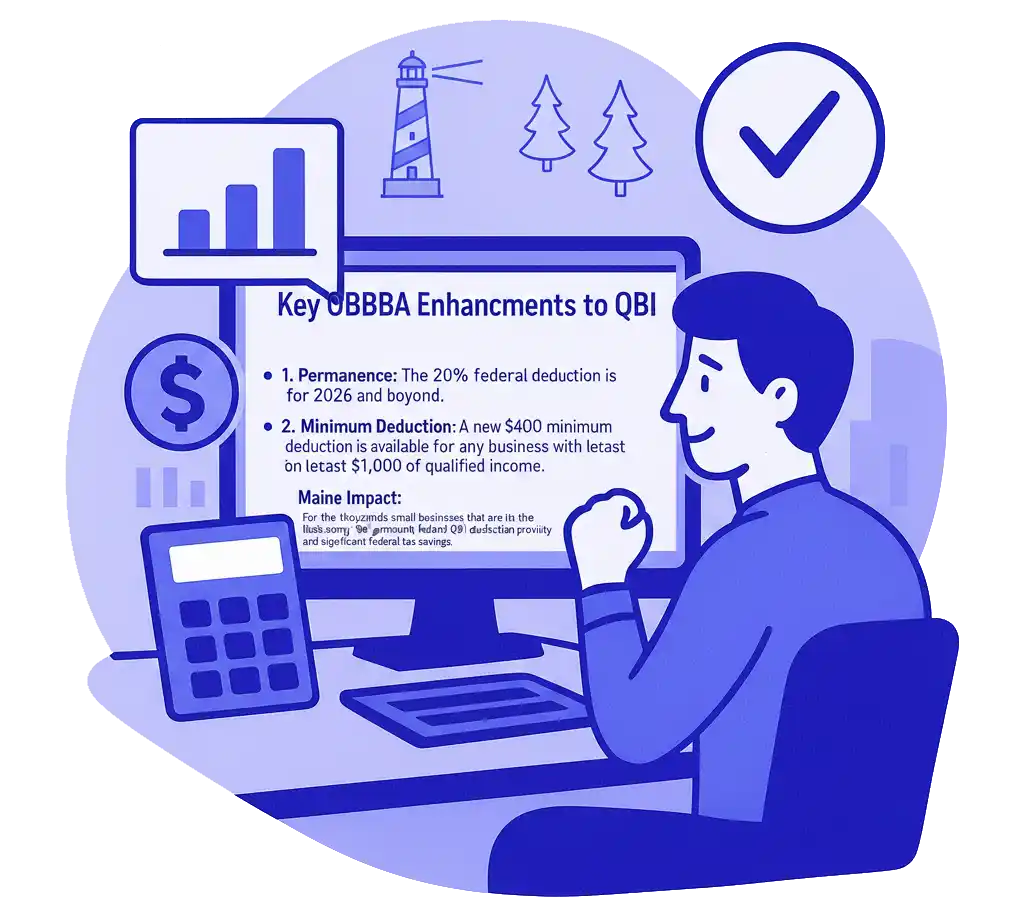
The QBI Deduction is PERMANENT and ENHANCED (Federal Level)
OBBBA has made it a permanent part of the federal tax code and even improved it.
Important Note for Maine: Maine is a non-conforming state, meaning it does not offer a state-level QBI deduction. However, this powerful 20% deduction remains fully available on your federal tax return.
This is a major federal benefit for Maine’s:
- Lobstermen, fishermen, and forestry workers
- Tourism-based businesses (guides, charters, shops)
- Skilled trades, construction contractors, and builders
- LLCs, S-Corps, and Sole Proprietors
- Real estate investors and STR hosts

Key OBBBA Enhancements to QBI:
1. Permanence: The 20% federal deduction is locked in for 2026 and beyond.
2. Minimum Deduction: A new $400 minimum federal deduction is available for any business with at least $1,000 of qualified income.
👉 Maine Impact: For the thousands of small businesses that are the backbone of Maine’s economy, the permanent federal QBI deduction provides certainty and significant federal tax savings.
New Federal Tax Breaks for Maine Residents
- Tip Income Deduction: Deduct up to $25,000 in tip income—a massive benefit for workers in Maine’s world-class tourism and hospitality industry in Portland, Bar Harbor, Kennebunkport, and beyond.
- Senior Deduction: An additional $6,000 deduction for individuals 65 and older, providing federal tax relief for Maine’s large retiree population (subject to phase-out).
- Overtime Deduction: Deduct up to $12,500 ($25,000 for joint filers) of qualified overtime pay, a significant benefit for Maine’s skilled trades and manufacturing workers.

Maine-Specific Tax Considerations for 2026
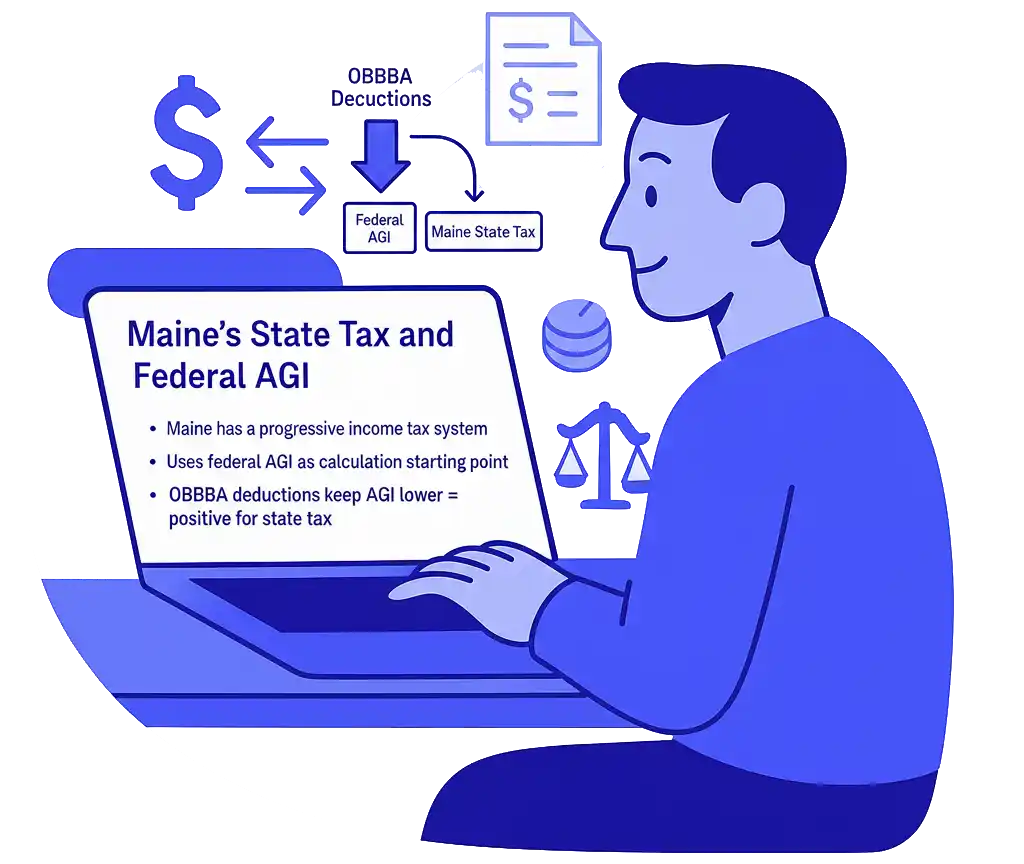
Maine’s State Tax and Federal AGI
A Major Win for Tourism and Hospitality Workers

Real Estate and Short-Term Rentals (STRs)

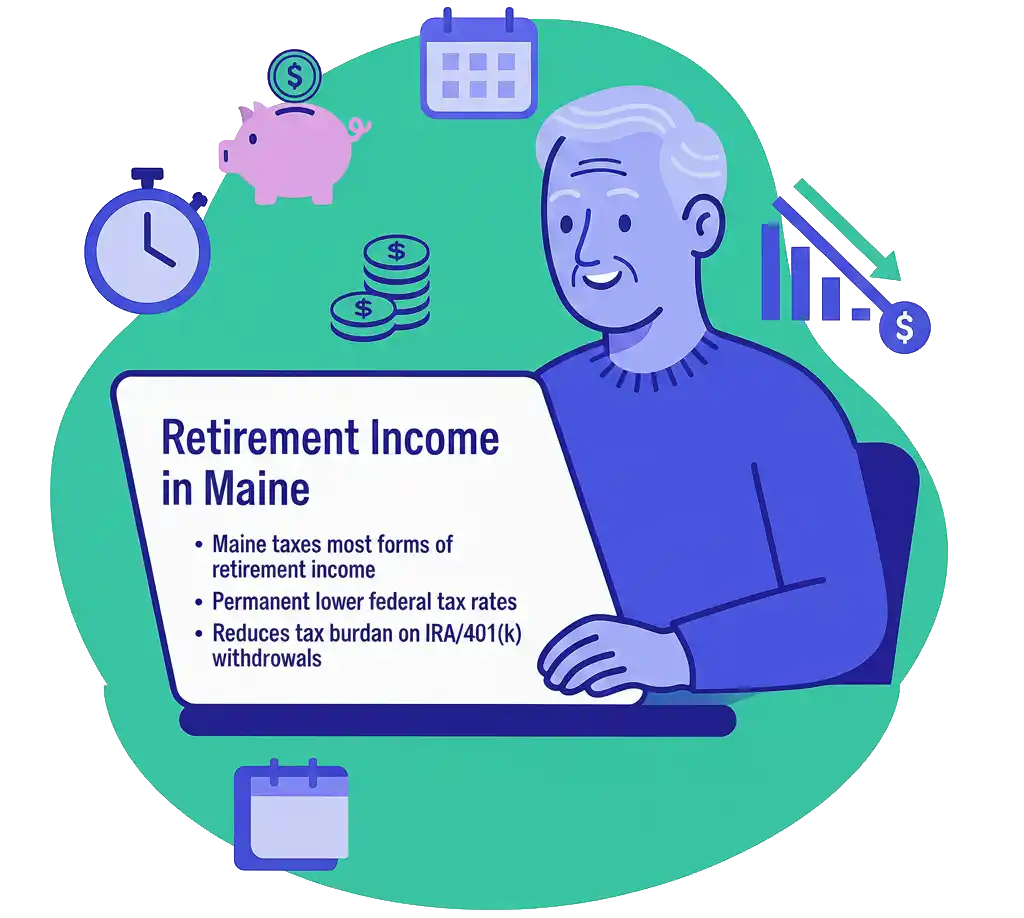
Retirement Income in Maine
What Maine Taxpayers Should Do Now
- Update Your Tax Plan: Your old strategy, based on the fear of expiring tax cuts, is obsolete. It’s time to build a new plan based on permanence and new federal opportunities.
- Integrate Federal and State Planning: Work with a professional who understands how to maximize permanent federal benefits while navigating Maine’s specific state tax laws.
- Maximize New Deductions:If you work in the hospitality industry, start planning now to document your tip income to take full advantage of this new federal deduction.
- Leverage Real Estate Benefits: Plan your real estate investments to take full advantage of permanent 100% bonus depreciation on your federal return.

Maine 2026 Tax FAQ
Does Maine conform to QBI?
No — QBI is federal-only.
Will Maine taxes increase?
Rates remain the same, but taxable income rises due to federal changes.
Are families affected?
Yes — reduced child credits and higher federal taxable income impact refunds.
Are STR owners impacted?
Yes — depreciation and participation rules tighten.
Are retirees affected?
Yes — both federal and state taxation of retirement withdrawals may increase.
Get Your Personalized 2026 Maine Tax Plan
The tax landscape has permanently shifted in your favor. Don’t operate on outdated assumptions. A personalized strategy session will ensure you are structured to maximize every new and permanent benefit under OBBBA, fully integrated with Maine’s unique economic and tax environment.
Because tax situations vary by individual and business, many Maine residents choose to work with a qualified tax professional. You can explore available Maine tax services here: