
Alaska 2026 Tax Changes — What Residents & Business Owners Need To Know

Even though Alaska has no state income tax, every Alaska resident is still affected by federal tax changes:
- W-2 earners in Anchorage, Fairbanks, Juneau, Wasilla, Kenai
- Oil & gas workers on the North Slope
- Fishermen, guides, tour operators, and bush pilots
- Military families at JBER, Eielson, and Fort Wainwright
- Small business owners, LLCs, and S-Corps
- Real estate investors and short-term rental hosts
This guide breaks down exactly how the 2026 tax changes impact Alaska taxpayers — in clear, practical terms.

Guaranteed Strategy Backed by IRS Code
Every recommendation is tied directly to federal tax law changes taking effect in 2026.

Maximum Savings Promise
If you qualify for a federal tax-saving strategy and we miss it, we redo your plan free.

100% Accuracy Guarantee
All strategies are reviewed by a licensed MERNA™ Strategist who understands Alaska-specific realities — from oilfield rotations to seasonal income.
What’s Changing Federally in 2026 — Alaska Edition
Even with no state income tax, Alaska residents still file a federal return — and that’s where 2026 hits hardest.
Below are the biggest changes.
Standard Deduction Drops in 2026
Because Alaska has:
- High cost of living
- Higher average wages in oil & gas, construction, logistics
- No state income tax deduction to “pad” your itemized list
…the drop in the standard deduction can noticeably increase your taxable income.
Alaskans most affected:
- Dual-income couples in Anchorage and the Mat-Su Valley
- Families with mortgages in Anchorage, Eagle River, and Juneau
- Higher-earning professionals in healthcare, engineering, and energy
More people will be pushed into itemizing again — and many will see a higher overall tax bill.
2026 Federal Tax Brackets Increase
Who feels this in Alaska:
- Oilfield workers with 2/2 or 3/3 rotations and high overtime
- Medical professionals in Anchorage and Fairbanks
- Federal employees and contractors
- Small business owners and independent contractors
- Military households where both spouses work
If your household income lands roughly between $75,000 and $350,000, expect a larger tax hit in 2026 unless you plan ahead.
QBI (20% Pass-Through Deduction) Is Now Permanent — With New Rules
The Qualified Business Income (QBI) deduction — the 20% pass-through deduction for many small businesses — has been made permanent under the One Big Beautiful Bill Act (OBBBA).
Good news:
If you own an LLC, S-Corp, sole proprietorship, or rental activity that qualifies, QBI remains one of your strongest deductions.
- Income thresholds and phase-outs adjust
- Specified Service (SSTB) rules tighten for high earners
- Documentation requirements increase
- Wage and capital tests are more strictly enforced
Alaska Impact
These changes matter for:
- Guides and outfitters (hunting, fishing, tourism)
- Independent contractors on the Slope or in mining
- LLC owners in construction, trucking, and logistics
- Real estate investors with rentals in Anchorage, Fairbanks, Juneau, Kenai, and tourist hubs
- Online and remote businesses based in Alaska
QBI is still a massive opportunity — but you need a 2026-ready entity and bookkeeping setup to fully benefit.
Child Tax Credit Shrinks
- Families in Anchorage, Fairbanks, Juneau, Mat-Su, and the Kenai Peninsula
- Single parents with 1–3 children
- Dual-income families in the $75K–$200K range
Combined with higher brackets and a lower standard deduction, many Alaska families will see smaller refunds and higher tax bills.
Marriage Penalty Returns in 2026
Under TCJA, many married couples were shielded from the old “marriage penalty.”
- Brackets for married couples no longer simply “double” the single thresholds
- Two solid incomes stacked together push you up the bracket ladder faster
- Credits like the Child Tax Credit phase out sooner for married couples
- Two professionals (nurse + lineman, pilot + teacher, etc.)
- Military + civilian couples at JBER, Eielson, and Wainwright
- Two oilfield or union incomes in the same home
A 2026 plan can help re-balance income, use business structures, and optimize retirement to offset the marriage penalty.

Alaska-Specific Considerations
Even though Alaska doesn’t tax personal income, its unique economy and lifestyle change how you should plan for federal taxes.
1. No State Income Tax — All the Pain Is Federal
- Every extra federal dollar matters more
- You have fewer “state-level” deductions to offset income
- The higher 2026 brackets hit your net income directly
This makes federal tax strategy critical for Alaskans.

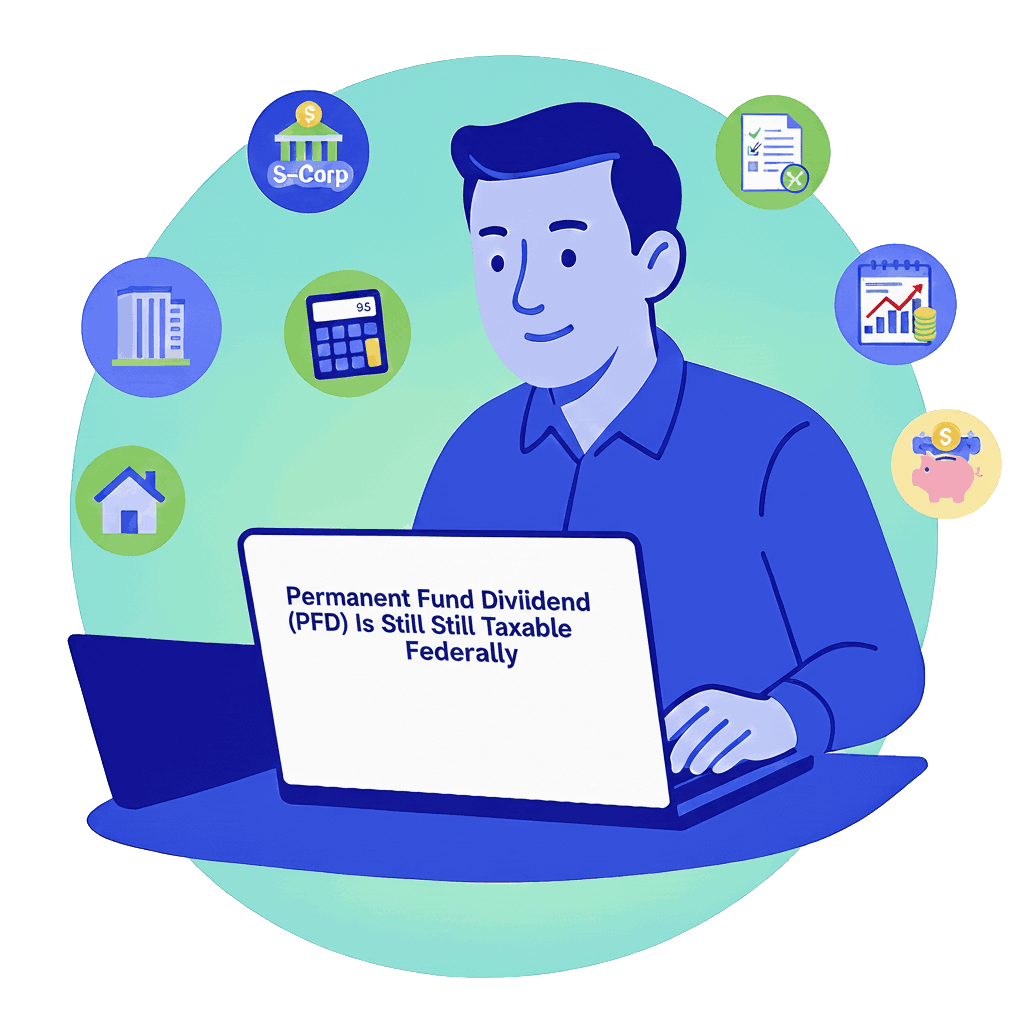
2. Permanent Fund Dividend (PFD) Is Still Taxable Federally
- Is NOT subject to state income tax
- IS taxable on your federal return
- Counts as unearned income for both adults and children
- Can affect the kiddie tax for minors with investment or PFD income
- Track PFD amounts
- Plan around how PFD adds to your AGI
- Coordinate PFD with capital gains, freelance income, and business deductions
3. Alaska Real Estate & STR (Short-Term Rentals)
- Anchorage, Eagle River, Girdwood (ski + STR)
- Fairbanks & North Pole (military, tourism, aurora tourism)
- Juneau, Ketchikan, Sitka (cruise ports & seasonal tourism)
- Kenai, Homer, Seward (fishing & adventure tourism)
2026 Changes Affect:
- Depreciation (bonus depreciation continues to phase down)
- STR rules and material participation tests
- Capital gains thresholds on property sales
- REPS (Real Estate Professional Status) documentation
If you operate an Airbnb, VRBO, mid-term rental, or multi-unit property, 2026 planning can save tens of thousands over the next decade.

4. Seasonal & Rotational Work
- 2 weeks on / 2 weeks off
- Remote oilfield or mining shifts
- Seasonal fishing, tourism, or construction
- Lumpy income patterns
- High overtime
- Per diem and travel reimbursement questions
- Complex deduction and QBI scenarios
A proper 2026 strategy can coordinate:
- Per diem rules
- Travel deductions
- Entity structures (LLC / S-Corp)
- Retirement contributions during “heavy” income years
Who Is Hit Hardest in Alaska (2026)
- W-2 earners making $75K–$350K
- Dual-income married couples
- Oil & gas workers with high overtime
- Military families where both spouses work
- Small business owners (LLCs, S-Corps, contractors)
- STR owners and real estate investors
- Freelancers and 1099 contractors (guides, outfitters, pilots)
- Families with multiple children
- High-income professionals in Anchorage, Fairbanks, and Juneau
If you’re in one of these groups, ignoring 2026 is expensive.

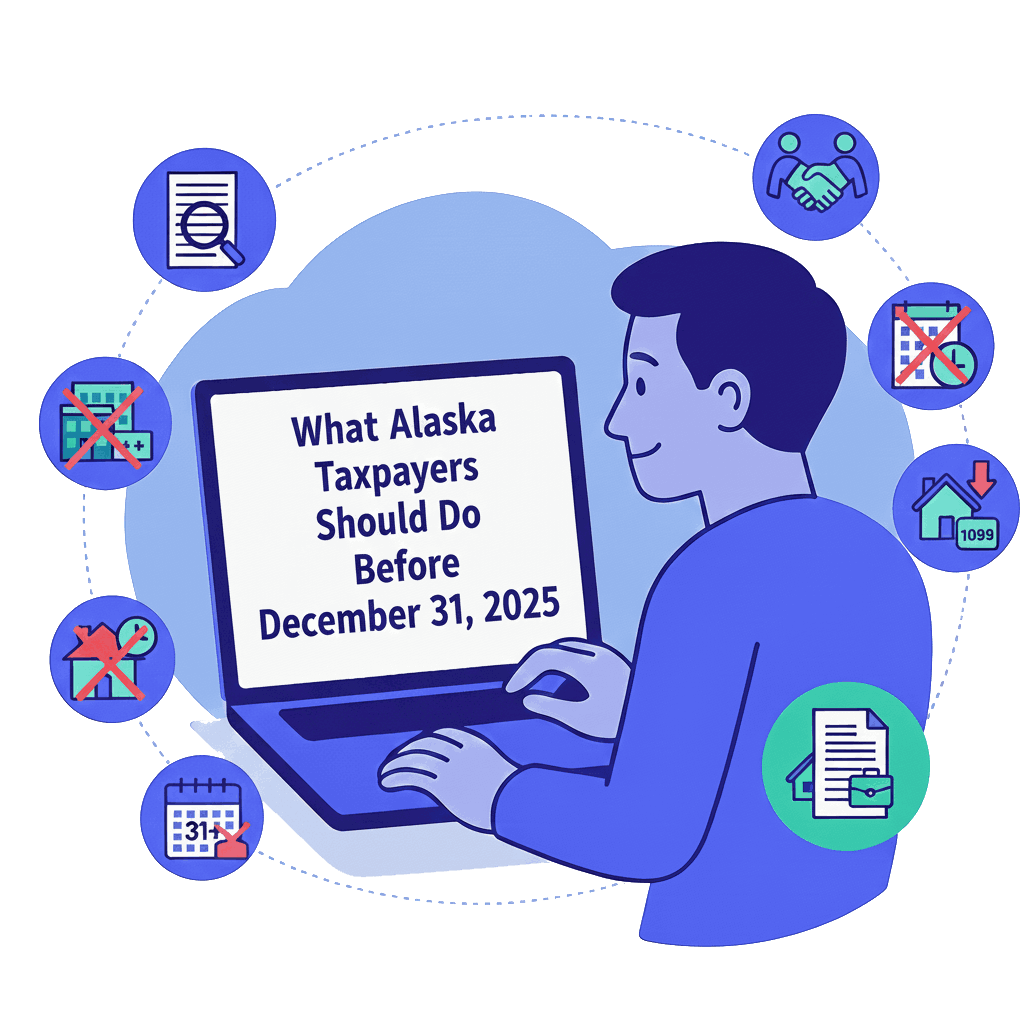
What Alaska Taxpayers Should Do Before December 31, 2025
Here are key actions Alaska residents should consider before the new rules fully take effect:
- Maximize retirement contributions while brackets are lower
- Review your entity structure (LLC vs S-Corp) if you’re self-employed
- Optimize for QBI under the new permanent rules
- Time big purchases (vehicles, equipment, rentals) around bonus depreciation
- Review capital gains exposure for real estate, stocks, and crypto
- Plan STR and rental strategies before STR rules fully tighten
- Check your withholding so 2026 doesn’t ambush you
- Build a 2025–2026 custom tax plan specific to Alaska income patterns
THIS is the point of the 2026 planning window:
Use 2025 to get ahead of the tax wave, not caught under it.
Alaska 2026 Tax FAQ
Are Alaska state taxes going up in 2026?
No. Alaska still has no state income tax. The changes are federal.
If there’s no state income tax, why should I care about 2026?
Because federal brackets go up, the standard deduction shrinks, and credits drop — all of which increase your federal tax bill.
Is my PFD taxed in 2026?
Yes. The Alaska Permanent Fund Dividend is taxable federally, even though there’s no state income tax.
Are Alaska homeowners affected?
Yes. A smaller standard deduction and higher brackets mean mortgage interest and property taxes matter more when you itemize.
Do STR owners and real estate investors in Alaska get hit?
Yes. Depreciation, capital gains, and STR rules all change — especially in tourist-heavy areas like Anchorage, Girdwood, Juneau, and the Kenai Peninsula.
Should Alaska LLCs switch to S-Corp before 2026?
If your net business income is roughly $60K–$250K, it’s worth exploring. A 2026-ready entity structure can save thousands per year.
Will my paycheck be smaller in 2026?
Most likely yes, if you do nothing — higher brackets and a lower standard deduction mean more withholding or a larger bill at tax time.
Get a 2026 Tax Plan for Alaska
Alaska may not have a state income tax, but federal changes in 2026 will still hit:
- Your paycheck
- Your family credits
- Your rental and STR income
- Your small business
- Your long-term wealth plans
Your income is unique. Your schedule is unique. Your mix of W-2, 1099, PFD, and business income is unique.
Your tax strategy must be unique too — and it must be in place before 2026 fully takes effect.
Because tax situations vary by individual and business, many Alaska residents choose to work with a qualified tax professional. You can explore available Alaska tax services and professionals by location and specialty.