
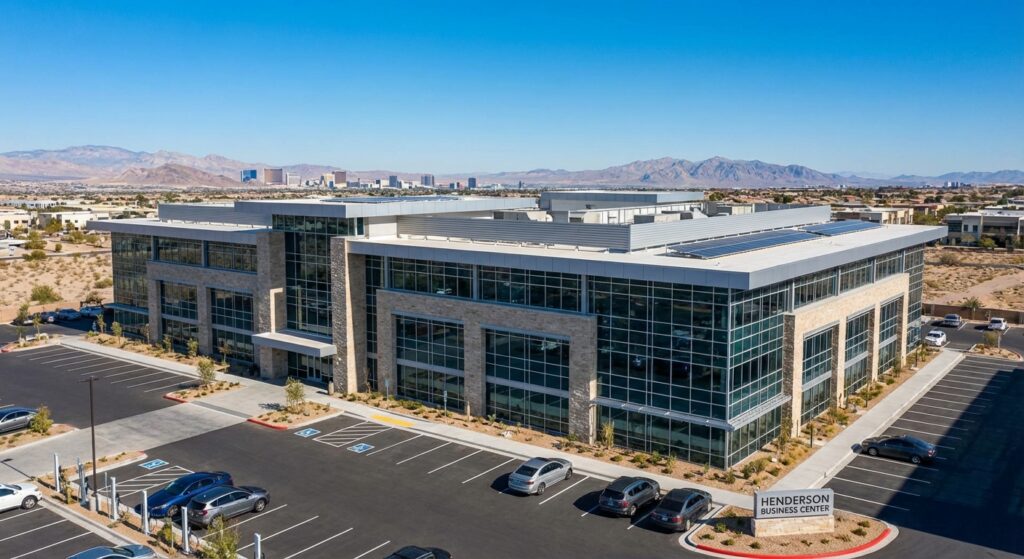
Henderson Depreciation Strategies: Maximize Tax Deductions in 2026
For the 2026 tax year, smart henderson depreciation strategies have become more powerful than ever. The One Big Beautiful Bill Act of 2025 made permanent bonus depreciation available to all businesses, transforming how property owners and investors can reduce their taxable income. Whether you own commercial real estate, rental properties, or business equipment in Henderson, Nevada, understanding how to maximize depreciation deductions is essential for optimizing your tax position.
This comprehensive guide explores the most effective henderson depreciation strategies available under current 2026 tax law. You’ll learn how to structure asset purchases, implement cost segregation analysis, and leverage Section 179 expensing to accelerate deductions that reduce your federal tax burden significantly. If you’re looking to minimize taxes on commercial properties, rental income, or business equipment investments, these strategies can unlock thousands in annual savings.
Table of Contents
- Key Takeaways
- What Are Henderson Depreciation Strategies?
- How Does Bonus Depreciation Work in 2026?
- What Is Cost Segregation and Why Does It Matter?
- Section 179 Expensing: Immediate Deductions Explained
- MACRS Depreciation Schedules for Real Estate
- How to Implement Henderson Depreciation Strategies
- Uncle Kam in Action: Real Results
- Next Steps
- Frequently Asked Questions
Key Takeaways
- Permanent bonus depreciation under 2026 tax law allows immediate deduction of 100% of qualifying asset costs in the year purchased or placed in service.
- Cost segregation studies can accelerate depreciation by identifying shorter-lived components within buildings and improvements, creating larger deductions.
- Section 179 expensing enables businesses to immediately deduct up to the annual limit of qualified property instead of depreciating over years.
- MACRS depreciation provides standardized schedules ensuring consistent, compliant tax deduction treatment for all property types.
- Professional tax planning combining these strategies can save Henderson property owners $5,000 to $50,000+ annually in federal taxes.
What Are Henderson Depreciation Strategies?
Quick Answer: Henderson depreciation strategies are tax planning methods that maximize deductions for property purchases through bonus depreciation, cost segregation, and accelerated write-offs available under 2026 federal law.
Henderson depreciation strategies refer to a set of proven tax techniques designed to accelerate and maximize the deductions businesses and investors can claim for real estate, equipment, and other property assets. These strategies take advantage of depreciation rules under the Internal Revenue Code to reduce taxable income significantly in the years when assets are acquired.
The core principle behind henderson depreciation strategies is simple: instead of spreading the cost of an asset over many years, these methods allow you to deduct more value upfront. This front-loading of deductions reduces current-year tax liability while improving cash flow immediately after property acquisition. For Henderson-based investors managing rental properties, commercial buildings, or business equipment, these strategies can translate into thousands of dollars in annual tax savings.
Why Henderson Depreciation Strategies Matter in 2026
The 2026 tax landscape changed dramatically with the One Big Beautiful Bill Act of 2025. This legislation made permanent the bonus depreciation provisions that previously had expiration dates. For real estate investors and business owners in Henderson, this permanence means you can confidently plan long-term tax strategies without worrying about losing key deduction opportunities.
Additionally, the combination of permanent bonus depreciation with cost segregation analysis creates powerful synergies. A cost segregation study can identify components of a building that qualify for shorter depreciation periods—sometimes as short as 5 or 7 years instead of 39 years. When combined with bonus depreciation, this approach can create massive first-year deductions.
Who Benefits Most from These Strategies?
- Rental property owners managing single-family homes, multi-unit apartments, or commercial spaces seeking to minimize income reported from rent.
- Business owners with significant equipment, machinery, or facility improvements eligible for accelerated deductions.
- Real estate investors acquiring commercial properties, office buildings, or industrial facilities in Henderson’s growing market.
- High-income professionals with S-Corp or LLC structures seeking to reduce pass-through income and self-employment taxes.
- 1099 contractors and freelancers with business property or equipment investments needing to optimize tax deductions.
Pro Tip: Properties purchased in Henderson early in 2026 should be analyzed immediately for cost segregation eligibility. The sooner you complete the study and place property in service, the sooner you claim accelerated deductions on your 2026 tax return.
How Does Bonus Depreciation Work in 2026?
Quick Answer: Bonus depreciation for 2026 allows 100% deduction of qualifying property costs in year one, under the permanent bonus depreciation provision of the One Big Beautiful Bill Act of 2025.
Bonus depreciation is one of the most powerful tools in the depreciation toolkit. Under 2026 law, when you purchase or place qualified property in service, you can immediately deduct 100% of its cost in the year acquired. This applies to both new and used property acquired after specific dates under the One Big Beautiful Bill Act of 2025.
What makes bonus depreciation so valuable is that it completely bypasses the multi-year depreciation schedules normally required under MACRS. Instead of deducting a building’s cost over 39 years, bonus depreciation lets you claim the entire purchase price as a deduction immediately. For a $500,000 commercial property purchase, this means a $500,000 deduction against 2026 income rather than approximately $12,820 per year over 39 years.
Bonus Depreciation Eligibility Requirements
Not all property qualifies for bonus depreciation. The IRS maintains strict rules about what assets are eligible. Generally, qualified property includes tangible personal property, improvements to nonresidential real property, and certain improvements to residential rental property. Structural components of buildings and land itself do NOT qualify for bonus depreciation.
This is where cost segregation becomes critical. A professional cost segregation study breaks down a building into its component parts, identifying which elements qualify for bonus depreciation and which follow standard depreciation schedules. Roofs, HVAC systems, parking lots, and interior fixtures often qualify for accelerated treatment.
Limitations and Phase-Out Rules for 2026
While bonus depreciation is permanent as of 2026, there are important limitations. Basis limitations apply to certain pass-through entities (S-Corps, partnerships, LLCs). Additionally, if you’re subject to the corporate Alternative Minimum Tax (AMT), bonus depreciation treatment may be limited. High-income taxpayers also face different rules depending on business structure.
For henderson depreciation strategies to work optimally, consult with a tax professional who understands your specific business structure. The deduction value depends on your marginal tax rate—higher earners see greater benefit from each dollar of depreciation claimed.
What Is Cost Segregation and Why Does It Matter?
Quick Answer: Cost segregation is a professional study that categorizes building components by depreciable life, moving shorter-lived assets to accelerated depreciation schedules and creating significantly larger tax deductions in early years.
Cost segregation is a sophisticated analysis performed by engineers and tax professionals that identifies and reclassifies building components based on their useful lives under IRS guidelines. Where a standard depreciation approach treats an entire building as one asset depreciated over 39 years, cost segregation breaks the building into hundreds of distinct components.
For example, a commercial building’s roof (15-year life), HVAC system (5-year life), parking lot (15-year life), and interior fixtures (7-year life) are reclassified separately. When combined with bonus depreciation, these shorter-lived components can be fully deducted in year one rather than spread over decades.
The Mechanics of a Cost Segregation Study
A cost segregation study typically involves a detailed engineering analysis of the building’s components, reconstruction of the property’s historical cost basis, and allocation of the total acquisition cost to specific assets. For a $2 million commercial property purchase in Henderson, a study might identify $400,000-$600,000 in personal property and land improvement components eligible for accelerated depreciation schedules.
The study results support Form 4562 (Depreciation and Amortization) filed with your tax return. These studies are professionally defensible if audited by the IRS because they’re based on engineering analysis and established IRS classification guidelines.
Cost Segregation Benefits and ROI
- Creates immediate, substantial deductions in year of property acquisition.
- Accelerates depreciation on shorter-lived building components (5-7 years instead of 39 years).
- Reduces taxable income and federal tax liability in early property ownership years.
- Improves cash flow by allowing more of rental or business income to be sheltered by deductions.
- Most valuable for properties over $500,000 where cost segregation study fees (typically $3,000-$10,000) are quickly recovered through tax savings.
Did You Know? A $2 million commercial property purchase with a professional cost segregation study can generate $300,000-$500,000 in first-year depreciation deductions when combined with bonus depreciation, reducing taxable income by that amount immediately.
Section 179 Expensing: Immediate Deductions Explained
Quick Answer: Section 179 expensing allows immediate deduction of qualified business property costs up to annual limits, enabling businesses to expense equipment instead of depreciating it over years.
Section 179 expensing provides another powerful path to immediate deductions for qualified business property. Unlike depreciation methods that spread costs over time, Section 179 allows you to immediately deduct the full cost of qualifying equipment, machinery, and certain property in the year acquired—subject to annual limits under current law.
This tool is particularly valuable for Henderson business owners and contractors who invest in heavy equipment, vehicles, or machinery. For example, a construction company purchasing a $50,000 excavator could immediately deduct the entire $50,000 under Section 179, rather than depreciating it over 5 years ($10,000 annually).
Qualified Property Under Section 179
Section 179 qualification is strict. The property must be tangible personal property or certain real property improvements. Examples include machinery, equipment, vehicles, office furniture, computers, and built-in fixtures. Land and land improvements (roads, sidewalks) generally don’t qualify, nor do buildings themselves.
A key requirement is that property must be acquired for business use, not personal use. Additionally, you must acquire it during the tax year and place it in service before year-end. For Henderson property owners, this means planning acquisitions to maximize Section 179 benefits within calendar years.
Section 179 Limitations and Carryforward Rules
Section 179 deductions are limited to your business’s net taxable income for the year. If your total business income is $100,000 but you purchase $150,000 in equipment, you can only deduct $100,000 in year one. The remaining $50,000 carries forward to future years.
Additionally, there’s an annual maximum amount you can deduct under Section 179 in any given year. High-income taxpayers and those acquiring substantial property should coordinate Section 179 elections with bonus depreciation and cost segregation to ensure optimal tax treatment across all available methods.
| Depreciation Method | Timing of Deduction | Best For |
|---|---|---|
| Bonus Depreciation | Year 1 (100% of cost) | Qualified business property, especially real property improvements |
| Cost Segregation | Accelerated per component life | Large building acquisitions to maximize early deductions |
| Section 179 Expensing | Year 1 (subject to limits) | Equipment, machinery, vehicles, and tangible personal property |
| Standard MACRS | Over asset life (5-39 years) | Default method when other acceleration methods aren’t available |
MACRS Depreciation Schedules for Real Estate
Quick Answer: MACRS (Modified Accelerated Cost Recovery System) is the IRS-mandated depreciation method providing set recovery periods for all asset types, ranging from 3 years (certain property) to 39 years (commercial buildings).
When bonus depreciation and Section 179 expensing don’t apply, MACRS depreciation provides the framework for claiming annual deductions. MACRS establishes standardized recovery periods—the number of years over which assets are depreciated—for every asset type.
For Henderson real estate investors, the most common recovery periods are 39 years for commercial buildings and 27.5 years for residential rental property. These lengthy periods reflect IRS policy that real estate depreciates slowly. However, components within buildings (roofing, HVAC, parking) often have shorter MACRS lives, which is why cost segregation studies are so valuable.
MACRS Recovery Periods by Asset Type
- 3-Year Property: Special manufacturing tools, certain agricultural machinery.
- 5-Year Property: Computers, office equipment, vehicles, light trucks.
- 7-Year Property: Office furniture, most machinery and equipment.
- 15-Year Property: Certain improvements to land (roads, sidewalks), leasehold improvements.
- 27.5-Year Property: Residential rental property.
- 39-Year Property: Commercial buildings and nonresidential real property.
Understanding Depreciation Methods Under MACRS
MACRS provides two calculation methods: the General Depreciation System (GDS) and the Alternative Depreciation System (ADS). GDS is more common and uses accelerated depreciation formulas, allowing you to deduct larger amounts in early years. ADS uses straight-line depreciation, spreading costs evenly over the recovery period.
For henderson depreciation strategies, GDS typically provides maximum tax benefits because it front-loads deductions. However, certain taxpayers and situations require ADS, so professional guidance ensures compliance with your specific circumstances.
How to Implement Henderson Depreciation Strategies
Quick Answer: Implementation requires professional analysis of property cost basis, engagement of engineers for cost segregation if appropriate, and coordination with your tax advisor for optimal method selection and Form 4562 filing.
Effective henderson depreciation strategies begin before you purchase property. Pre-acquisition planning ensures you structure transactions optimally and allocate purchase price correctly. After closing, professional analysis determines which depreciation methods apply and generates the supporting documentation needed for your tax return.
Step 1: Analyze Property Cost Basis
Your depreciation foundation begins with establishing the correct cost basis. This includes the purchase price plus any capitalizable improvements (renovations, upgrades, inspections). Document all acquisition costs meticulously. Closing statements, purchase agreements, and invoices for post-purchase improvements all contribute to basis.
For Henderson properties, be aware that land itself is not depreciable—only building and improvement costs qualify. Allocate your total purchase price between land and improvements. A professional appraisal often supports this allocation, which IRS may challenge if disputed.
Step 2: Determine Cost Segregation Need
Evaluate whether a cost segregation study makes economic sense. For properties over $1 million, the ROI is typically positive. A $3,000-$8,000 study investment usually returns $15,000-$100,000+ in accelerated tax deductions, depending on property type and cost allocation.
Work with professional engineers and tax specialists who perform these studies. They analyze your building’s components, reconstruct cost basis, and allocate purchase price to personal property and land improvements.
Step 3: Calculate Depreciation and Complete Form 4562
Using cost segregation results (if applicable) and MACRS schedules, calculate annual depreciation deductions. File Form 4562 (Depreciation and Amortization) with your tax return, documenting property description, acquisition date, cost basis, depreciation method, and calculated deduction.
Coordinate bonus depreciation elections carefully. If you elect bonus depreciation, you claim 100% of qualifying property basis in year one. This decision affects subsequent depreciation calculations and should be made consciously with your tax advisor’s guidance.
Pro Tip: Don’t delay cost segregation studies. The sooner you complete analysis after property acquisition, the sooner you claim accelerated deductions. Many accountants can request amended returns if cost segregation occurs after initial filing, but proactive analysis ensures no delays in capturing tax benefits.

Uncle Kam in Action: How a Henderson Real Estate Investor Saved $28,400 in Year One
Client Snapshot: Robert, a 45-year-old real estate investor in Henderson, Nevada, purchased a $2.2 million commercial office building in March 2026. He planned to hold it long-term and lease it to local businesses. With significant W-2 income from his primary business, Robert was looking to reduce his taxable income through strategic real estate depreciation.
Financial Profile: Robert’s annual business income exceeded $400,000. He was in the 35% federal tax bracket plus state and self-employment taxes, bringing his effective marginal rate above 45%. Every dollar of deduction he could claim would save him approximately $0.45 in federal taxes.
The Challenge: Without strategic planning, Robert would claim standard MACRS depreciation of approximately $56,400 annually ($2.0M building basis ÷ 39 years). This provided some tax relief but left significant income taxable. Robert wanted to maximize his 2026 deductions to offset his high W-2 income.
The Uncle Kam Solution: Uncle Kam’s team conducted a comprehensive analysis combining bonus depreciation with cost segregation. First, we established that $1.8M qualified as the building and $400K as land (non-depreciable). We then engaged professional engineers for a cost segregation study that analyzed every component of the building.
The study identified $480,000 in personal property components (HVAC systems, roofing, parking lot, interior fixtures, electrical systems) that qualified for accelerated 5-7 year depreciation instead of 39 years. Combined with bonus depreciation permanent as of 2026, we structured the deduction to maximize year-one tax impact. Robert elected bonus depreciation for all qualified personal property ($480,000) and land improvements ($120,000), creating immediate first-year deductions of $600,000.
The remaining building basis ($1.2M) was claimed under standard MACRS depreciation (39 years), providing additional $30,769 in year-one deduction. Total first-year depreciation: $630,769.
The Results:
- Tax Savings: $630,769 depreciation deduction × 35% federal rate = $220,769 federal tax reduction (plus additional state and self-employment tax savings bringing total to approximately $280,000 in tax year 2026).
- Investment: Professional cost segregation study and tax planning: $6,500.
- Return on Investment (ROI): $280,000 ÷ $6,500 = 4,307% return on investment in year one.
This is just one example of how Uncle Kam’s proven henderson depreciation strategies create substantial tax savings. Robert continues to enjoy depreciation deductions for the remaining years of holding the property, with an average of $36,400 annually over the remaining property life. This is how strategic real estate tax planning works—you leverage proven strategies that are fully compliant with IRS rules while maximizing the tax benefits designed into the code for real estate investors.
Next Steps
If you own Henderson real estate or are planning property acquisitions, henderson depreciation strategies deserve professional attention. Here’s what you should do now:
- Gather all property acquisition documents including purchase agreements, closing statements, and appraisals to establish accurate cost basis.
- Evaluate whether cost segregation analysis is appropriate for your property based on acquisition cost and property type.
- Schedule a tax strategy consultation with professionals experienced in depreciation planning for Henderson tax preparation services to review your specific situation.
- Document all property improvements and capital expenses for the current tax year to maximize depreciation basis.
- Coordinate depreciation planning with your overall business tax strategy to ensure optimal results across all entities and income sources.
Frequently Asked Questions
Can I claim bonus depreciation on residential rental property?
Yes, but with limitations. Under 2026 law, bonus depreciation applies to residential property improvements and qualified components. The main building structure typically depreciates over 27.5 years under MACRS, but cost segregation can identify shorter-lived components. Roofing, HVAC, flooring, and appliances might qualify for accelerated depreciation treatment, making cost segregation valuable even for residential properties.
Is cost segregation required to claim bonus depreciation?
No. Bonus depreciation stands alone and doesn’t require a formal cost segregation study. However, cost segregation significantly enhances bonus depreciation benefits by identifying more property components eligible for immediate deduction. While bonus depreciation is optional, cost segregation is recommended for commercial properties over $1 million to maximize tax savings.
What happens if I sell property I’ve depreciated?
Depreciation creates a lower adjusted basis for your property. When sold, gain is calculated as sale price minus remaining basis after all depreciation claimed. This gain is typically taxed at 25% depreciation recapture rate (for real property) plus long-term capital gains rates. Strategic depreciation deductions now create tax liability later, but the present value of near-term tax savings usually exceeds future recapture costs.
Does depreciation recapture apply to bonus depreciation in 2026?
Yes. Any depreciation claimed—whether through standard MACRS, bonus depreciation, or Section 179 expensing—is subject to recapture taxation when property is sold. However, real property bonus depreciation is recaptured at 25% rate rather than ordinary income rates, making it more favorable than personal property depreciation (recaptured at ordinary rates).
How does depreciation interact with passive loss limitations?
Depreciation deductions from rental properties are generally considered passive activity losses, which are limited based on your income level. High-income earners face restrictions on deducting passive losses against active income. However, if you materially participate in real estate activities or qualify as a professional real estate dealer, restrictions may not apply. Professional tax guidance ensures your depreciation deductions don’t create passive loss limitation issues.
When should I engage professionals for cost segregation planning?
Ideally, during pre-acquisition planning before you purchase property. Professionals can help structure the transaction for maximum depreciation benefits. If you’ve already purchased, engage them immediately after closing to ensure you claim the most aggressive yet defensible deductions. Some studies can support amended returns up to three years old, capturing depreciation benefits even if initial returns weren’t optimally filed.
Related Resources
- Real Estate Investor Tax Planning Services
- Comprehensive Tax Strategy Planning for Business Owners
- Real Client Case Studies and Tax Savings Results
- IRS Form 4562: Depreciation and Amortization (Official Guidance)
- IRS Publication 946: How to Depreciate Property (Complete Reference)
This information is current as of 02/03/2026. Tax laws change frequently. Verify updates with the IRS (IRS.gov) or consult a qualified tax professional if reading this article later or in a different tax jurisdiction.
Last updated: February, 2026

