
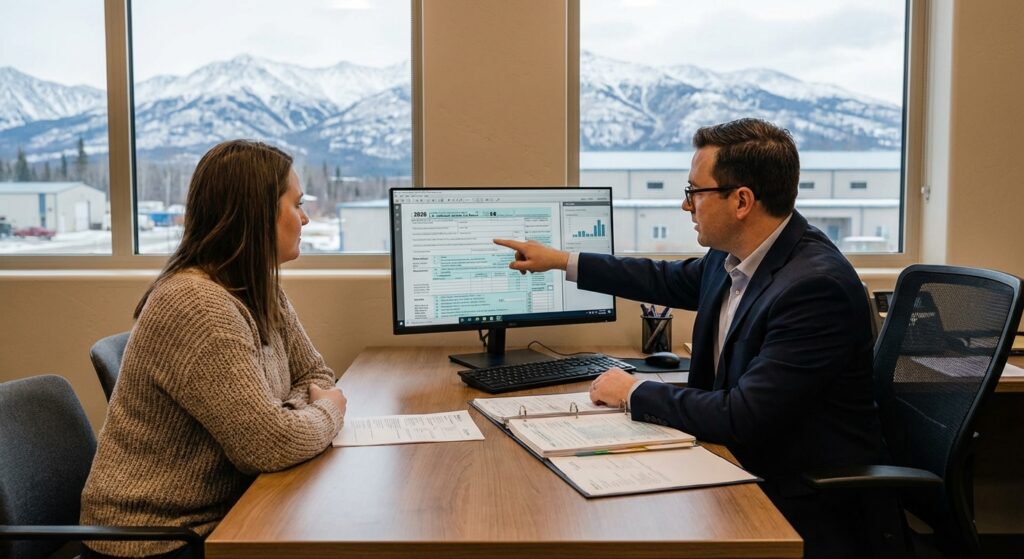
How to Choose the Right Fairbanks Tax Advisor for Your 2026 Taxes: A Complete Guide
Finding a qualified Fairbanks tax advisor is one of the most important financial decisions you’ll make this year. As the 2026 tax season begins, Alaska residents face significant changes under the new One Big Beautiful Bill Act. The landscape has shifted dramatically with updated standard deductions, new senior deductions, and complex rules affecting everyone from business owners to employees. This comprehensive guide walks you through selecting the right tax advisor who understands Alaska’s unique tax situation.
Table of Contents
- Key Takeaways
- What Does a Fairbanks Tax Advisor Do?
- Why Hire a Professional Fairbanks Tax Advisor in 2026?
- What 2026 Tax Changes Affect Fairbanks Residents?
- What Credentials Should Your Tax Advisor Have?
- How Do You Find the Right Tax Advisor in Fairbanks?
- What Tax Services Should You Expect?
- Uncle Kam in Action
- Frequently Asked Questions
Key Takeaways
- For 2026, a qualified Fairbanks tax advisor helps maximize the new $15,750 standard deduction (single) and $31,500 (married filing jointly).
- The One Big Beautiful Bill Act introduces new senior deductions of $6,000 and expanded SALT deduction limits to $40,000 for 2026.
- Certified tax professionals in Fairbanks understand Alaska’s unique no-state-income-tax advantage and can structure your filing strategy accordingly.
- The IRS is processing returns slower in 2026 due to 27% workforce reductions—professional filing ensures accuracy and faster processing.
- A Fairbanks tax advisor should be a CPA or Enrolled Agent with experience in Alaska tax compliance and federal strategy.
What Does a Fairbanks Tax Advisor Do?
Quick Answer: A Fairbanks tax advisor prepares and files your federal tax returns, identifies deductions and credits, and develops year-round tax strategies specific to your financial situation.
A Fairbanks tax advisor serves as your guide through the complexities of both federal and Alaska tax requirements. Since Alaska has no state income tax, the primary focus remains federal compliance. However, a skilled tax advisor does much more than file forms.
Core Responsibilities of Your Tax Advisor
- Return Preparation: Professional preparation of your 1040 and all required schedules using current 2026 forms and calculations.
- Deduction Identification: Finding every eligible deduction under 2026 tax law, including new senior deductions up to $6,000 for those 65 and older.
- Year-Round Planning: Proactive tax strategy to minimize liability, rather than reactive filing in April after the year has ended.
- IRS Representation: Acting as your representative in any IRS inquiries or audits through authorized representation.
- Record Organization: Helping you organize receipts, income documents, and deductible expenses throughout the year.
Beyond the mechanical aspects of filing, a Fairbanks tax advisor builds a relationship with you. They understand your unique situation—whether you’re self-employed, retired, or earning investment income—and tailor strategies specifically for you.
How a Tax Advisor Saves You Money in 2026
The average American leaves thousands in tax savings on the table simply because they’re unaware of deductions or credits. For 2026, the stakes are higher with new rules implemented under the One Big Beautiful Bill Act. A professional tax advisor paying attention to your situation can uncover:
- Eligible business expenses if you’re self-employed
- Depreciation on rental properties or investments
- Qualified charitable contributions
- Tax-advantaged education savings opportunities
- Timing strategies for income and deductions
Pro Tip: A good Fairbanks tax advisor meets with you quarterly or semi-annually, not just in March. This approach allows them to recommend tax-saving strategies throughout the year when adjustments are still possible.
Why Hire a Professional Fairbanks Tax Advisor in 2026?
Quick Answer: The 2026 tax season presents unusual challenges. The IRS faces 27% workforce cuts while implementing complex new tax law changes. Professional guidance ensures accuracy, compliance, and optimal refunds.
2026 is different from previous tax years. The combination of IRS staffing reductions and sweeping new tax legislation creates a perfect storm of complexity. Here’s why hiring a professional Fairbanks tax advisor matters more than ever.
The 2026 IRS Processing Challenges
According to the Treasury Inspector General for Tax Administration, the IRS workforce has dropped from its 2025 high of approximately 102,000 employees to around 74,000 by the start of 2026. This 27% reduction directly impacts processing speed. Paper tax returns that previously took 13 days to process are now taking 20 days. Return backlogs have surged from 52,293 in December 2024 to 294,052 in December 2025.
When you file electronically with a professional tax advisor using proper formatting and documentation, your return processes faster than the growing paper backlog. Electronic filing also creates a digital audit trail that protects you in case of IRS questions.
New Complexity in the Tax Code
The One Big Beautiful Bill Act introduced numerous changes that take effect for 2026 tax filing. Many of these changes are temporary and require careful tracking. A qualified Fairbanks tax advisor stays current on all amendments and ensures you take full advantage of beneficial provisions while avoiding costly mistakes.
Did You Know? The new senior tax deduction for those 65 and older (up to $6,000 for single filers or $12,000 for married couples) applies only through 2028. If you turn 65 in 2026, you need professional guidance to claim this correctly on your Form 1040.
What 2026 Tax Changes Affect Fairbanks Residents?
Quick Answer: Standard deductions increased, new senior deductions became available, and SALT deduction limits expanded to $40,000. These changes directly reduce your taxable income if you qualify.
Understanding 2026’s key tax changes is essential for every Fairbanks resident. These aren’t minor tweaks—they represent substantial shifts that affect how much tax you’ll owe. Let’s break down the most important changes:
2026 Standard Deduction Increases
| Filing Status | 2026 Standard Deduction | Impact |
|---|---|---|
| Single | $15,750 | Higher deduction reduces taxable income |
| Married Filing Jointly | $31,500 | Largest deduction available |
| Head of Household | $23,625 | Middle-ground option for single parents |
These increases mean that roughly 85-90% of taxpayers will benefit from taking the standard deduction. Your Fairbanks tax advisor will compare the standard deduction against itemized deductions to determine which approach saves you more money.
New Deductions for Seniors and Workers
The 2026 tax year introduces deductions that didn’t exist before. These are temporary benefits running through 2028, so taking advantage now is critical:
- Senior Social Security Deduction: Those age 65+ can claim an additional $6,000 deduction on income with Social Security (or $12,000 if married filing jointly with both over 65).
- Qualified Overtime Pay Deduction: Employees with overtime income can deduct up to $12,500 ($25,000 joint), with phase-out at higher incomes.
- Tips Deduction: Service workers can deduct up to $25,000 in annual tip income—a new break for restaurant, hotel, and bar workers.
These deductions require specific documentation and careful filing using a new Schedule 1-A. A qualified Fairbanks tax advisor ensures you report these correctly to avoid triggering audits.
SALT Deduction Cap Increases to $40,000
State and Local Tax (SALT) deductions are capped at $40,000 for 2026, up from $10,000 in previous years. While Alaska doesn’t have state income tax, this matters if you have real estate holdings in other states or significant property taxes. Your tax advisor can coordinate multi-state filing strategies.
What Credentials Should Your Tax Advisor Have?
Quick Answer: Look for a CPA (Certified Public Accountant) or EA (Enrolled Agent). Both credentials require extensive education and passing rigorous IRS exams. Verify credentials with the IRS Tax Professionals Directory.
Not all tax preparers have the same qualifications. Anyone can claim to prepare taxes, but only certain credentials indicate genuine expertise and IRS approval. Understanding these distinctions protects you from inadequate service.
CPA vs. Enrolled Agent: Understanding the Difference
| Credential | Requirements | IRS Representation Authority |
|---|---|---|
| CPA (Certified Public Accountant) | Bachelor’s degree, 150+ hours of accounting education, pass comprehensive CPA exam, continuing education requirements | Full representation including audits, appeals, and IRS offices |
| EA (Enrolled Agent) | Pass three IRS exams (Part 1, 2, 3) or have prior IRS work, continuing education requirements | Full representation before IRS including audits and appeals |
| Tax Preparer (no credential) | Varies by state; some require PTIN registration only | Limited—typically cannot represent you before the IRS |
For a Fairbanks tax advisor, look for either CPA or EA credentials. Both have passed rigorous qualifications and can represent you before the IRS. Verify any claimed credentials by searching the IRS database of authorized tax professionals.
Additional Qualifications to Look For
- Alaska Tax Expertise: A good Fairbanks tax advisor understands Alaska’s unique position as a no-state-income-tax state and can optimize your federal strategy accordingly.
- Business or Specialty Focus: If you’re self-employed or have investments, find an advisor with specific experience in your situation.
- Continuing Education: All CPAs and EAs must maintain continuing professional education. Ask how many hours they complete annually.
- Technology Proficiency: In 2026, your advisor should use modern tax software and offer electronic filing for faster processing.
How Do You Find the Right Tax Advisor in Fairbanks?
Quick Answer: Search for local CPAs and Enrolled Agents, check online reviews, verify credentials with the IRS, and interview at least three candidates before deciding.
Finding a qualified Fairbanks tax advisor takes research but pays dividends. The right advisor becomes a trusted partner in your financial life. Here’s a step-by-step process to guide your search.
Step-by-Step Selection Process
- Referral Search: Ask colleagues, neighbors, and business associates in Fairbanks for recommendations. Personal referrals often lead to best results.
- Professional Directories: Search the IRS Tax Professionals Directory for CPAs and Enrolled Agents specifically in Fairbanks, Alaska.
- Online Reviews: Check Google, Better Business Bureau (BBB), and local Fairbanks business directories for reviews and ratings.
- Interview Multiple Advisors: Always interview at least 2-3 candidates before selecting. Ask about fees, services, and their experience.
- Verify Credentials: Request proof of CPA or EA status. Cross-check with the Alaska Board of Accountancy or IRS database.
Pro Tip: When interviewing a Fairbanks tax advisor, ask specifically about their 2026 tax law knowledge. They should be able to explain the new senior deductions and SALT deduction cap changes confidently. If they can’t, they may not be current on this year’s changes.
Questions to Ask a Potential Tax Advisor
Before hiring, ask these critical questions:
- How many years have you been preparing taxes for Fairbanks residents?
- Can you represent me before the IRS if I’m audited?
- What are your fees, and are they based on hourly rates or a flat fee?
- Do you offer year-round tax planning or only filing?
- How do you stay current on 2026 tax law changes like the One Big Beautiful Bill Act?
- Will you file my return electronically to ensure faster processing?
What Tax Services Should You Expect?
Quick Answer: Beyond basic return preparation, expect comprehensive tax planning, record organization assistance, and year-round strategy consultations.
A full-service Fairbanks tax advisor offers more than just filing your Form 1040 in April. When you work with a quality professional, you receive comprehensive tax management tailored to your specific situation. Our professional Fairbanks tax preparation services include all of these essential components:
Comprehensive Service Portfolio
- Return Preparation & Filing: Complete preparation of federal 1040 with all schedules using current 2026 tax forms and latest IRS guidance.
- Tax Planning Consultations: Quarterly or semi-annual meetings to review income, expenses, and tax-saving opportunities before they’re lost.
- Deduction & Credit Review: Systematic review of all eligible deductions, including new 2026 categories like senior deductions and overtime pay deductions.
- Documentation Support: Help organizing receipts, invoices, and tax records throughout the year for easy filing preparation.
- IRS Representation: Acting as your authorized representative in IRS audits, correspondence, and appeals.
- Amended Return Filing: Preparing and filing amended returns if you missed deductions or credits on prior years.
Look for advisors who proactively reach out with tax planning ideas rather than just waiting until March to prepare your return. The best Fairbanks tax advisors schedule quarterly check-ins and help you position your finances for maximum tax efficiency throughout the entire year.

Uncle Kam in Action: Fairbanks Small Business Owner Saves $8,400 with Strategic Tax Planning
Client Snapshot: Sarah owns a consulting business in Fairbanks with approximately $120,000 in annual revenue. She’s married, filing jointly, with two children under 17. Sarah was previously handling her own taxes using generic tax software.
The Challenge: Sarah’s revenue was growing, but she wasn’t tracking deductible business expenses systematically. She was concerned about self-employment tax liability and unsure if she was missing deductions available under 2026 tax law changes. The new standard deduction of $31,500 (married filing jointly) meant she had questions about whether itemizing or taking the standard deduction made more sense.
The Professional Solution: Our Fairbanks tax advisor conducted a comprehensive review of Sarah’s business structure and income situation. We identified several opportunities: First, we implemented a quarterly tax planning system where Sarah sets aside estimated taxes and we review business deductions together. Second, we established documentation systems for home office depreciation, professional development costs, and marketing expenses. Third, we optimized her estimated quarterly tax payments under 2026 rules to reduce her final tax bill.
The Results: This is just one example of how our proven tax strategies have helped clients achieve significant savings and financial peace of mind:
- Tax Savings: $8,400 in reduced 2026 tax liability through optimized deductions and estimated payment strategy
- Investment: One-time fee of $2,500 for comprehensive tax strategy implementation and year-round planning
- Return on Investment (ROI): 3.36x return in the first year alone—meaning Sarah recovered her advisory fee over three times over
Sarah now has confidence that her 2026 taxes are optimized, documented, and compliant with IRS requirements. She meets quarterly with her tax advisor to discuss business growth strategies and tax implications, turning tax planning from a stressful April exercise into ongoing financial strategy.
Next Steps: Start Your Search for a Fairbanks Tax Advisor Today
Now that you understand what to look for in a Fairbanks tax advisor, take action:
- Gather Referrals: Ask colleagues, friends, and business contacts for tax advisor recommendations in the Fairbanks area.
- Verify Credentials: Search the IRS Tax Professionals Directory for CPAs and Enrolled Agents. Look specifically for those with Alaska and Fairbanks experience.
- Schedule Consultations: Contact at least three candidates and schedule 15-20 minute initial consultations. Ask about their experience with 2026 tax law changes.
- Compare Fees & Services: Get written fee schedules and service descriptions from each advisor. Don’t automatically choose the cheapest option.
- Make Your Selection: Choose the advisor who combines expertise, reasonable fees, and a communication style that matches your preferences.
For comprehensive support with your 2026 tax situation, consider our full-service Fairbanks tax preparation services. We specialize in helping Fairbanks residents and businesses navigate the complex 2026 tax landscape with confidence.
Frequently Asked Questions
How much does a Fairbanks tax advisor typically cost?
Pricing varies based on complexity. Simple individual returns typically range from $500-$1,200. Self-employed individuals or those with investments may pay $1,500-$3,000. Complex situations with multiple income sources, rental properties, or business ownership can range from $3,000-$8,000+. Most advisors offer either flat fees or hourly rates, typically $150-$350 per hour. Ask about package pricing that includes year-round planning in addition to filing.
Can a Fairbanks tax advisor represent me in an IRS audit?
Yes, if they hold proper credentials. CPAs and Enrolled Agents (EAs) can represent you before the IRS in audits, appeals, and other proceedings. Tax preparers without these credentials typically cannot represent you. This is an important reason to choose a credentialed professional—they can protect your interests if questions arise.
When should I start looking for a tax advisor in 2026?
Ideally, start your search in January or February 2026 before the tax filing rush. Many advisors fill their client schedules by March. If you wait until April to seek help, you’ll have limited options. Even better, hire an advisor for year-round planning beginning in January so they can guide your decisions throughout 2026.
What’s the difference between a Fairbanks tax advisor and a CPA?
“Tax advisor” is a general term for anyone who helps with taxes. “CPA” (Certified Public Accountant) is a specific credential earned through education, examination, and licensing. All CPAs can serve as tax advisors, but not all tax advisors are CPAs. CPAs also perform audits, consulting, and financial statement preparation. For tax-focused services, a CPA or Enrolled Agent is your best choice.
How do I know if my Fairbanks tax advisor is keeping up with 2026 tax changes?
All CPAs and Enrolled Agents must complete continuing professional education (CPE) hours annually. Ask your advisor how many CPE hours they completed recently. Request specific knowledge about 2026 changes: Can they explain the new senior deductions? Do they understand the SALT deduction cap increase to $40,000? Can they discuss the One Big Beautiful Bill Act’s impact on filing? If they struggle with these questions, they may not be current.
Is it better to hire a local Fairbanks tax advisor or use online/national services?
Both have advantages. Local Fairbanks advisors understand Alaska’s unique tax situation and can provide in-person consultation. National firms offer standardized processes and often lower fees. For complex situations requiring personalized strategy, local is often better. For simple returns, national services may suffice. Consider a hybrid approach: use local expertise for planning but national services for basic filing if you prefer.
What documentation should I bring to my first meeting with a Fairbanks tax advisor?
Bring W-2s or 1099s, prior year tax returns, documentation of deductible expenses (receipts, invoices, credit card statements), investment income statements, mortgage interest statements, charitable contributions records, and estimated tax payments made. If you’re self-employed, bring income and expense records. The more organized you are, the more efficiently the advisor can work and the lower your fees may be.
Related Resources
- Comprehensive 2026 tax strategy services for Fairbanks residents
- Professional tax preparation and IRS filing services
- Tax strategies for Fairbanks business owners and entrepreneurs
This information is current as of 02/03/2026. Tax laws change frequently. Verify updates with the IRS (IRS.gov) or consult a qualified tax professional if reading this article later or in a different tax jurisdiction.
Last updated: February, 2026

