
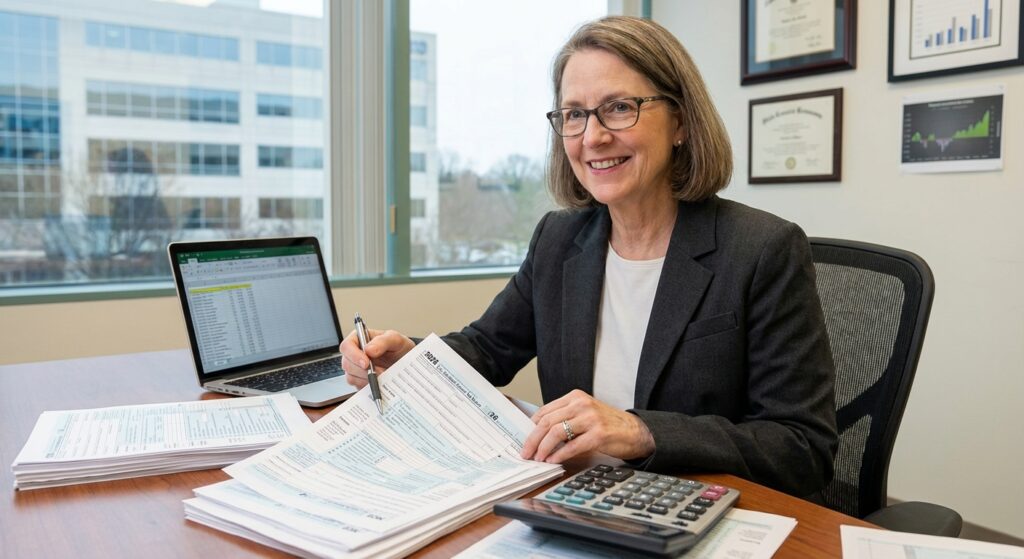
Best Tax Preparer Columbia Maryland 2026: Complete Guide to Finding Expert Tax Help
Finding the best tax preparer in Columbia, Maryland is crucial for 2026, especially with the new standard deduction of $31,500 for married couples filing jointly and significant changes from the One Big Beautiful Bill Act. Professional tax preparers help you navigate complex regulations, maximize deductions, and ensure compliance with current IRS requirements. This guide walks you through what to look for in a qualified tax professional and how to make an informed decision.
Table of Contents
- Key Takeaways
- What Makes the Best Tax Preparer in Columbia
- Understanding Tax Preparer Credentials and Qualifications
- Critical Questions to Ask Your Potential Tax Preparer
- Red Flags: What to Avoid When Choosing a Tax Professional
- How 2026 Tax Changes Impact Your Tax Preparation
- Uncle Kam in Action
- Next Steps
- Frequently Asked Questions
- Related Resources
Key Takeaways
- The best tax preparer in Columbia holds credentials like CPA or Enrolled Agent status and demonstrates specialized knowledge of 2026 tax law changes.
- For 2026, the standard deduction increased to $31,500 for married filing jointly, $15,750 for single filers, and $23,625 for heads of household.
- Expert tax preparers leverage new deductions including senior benefits ($6,000), overtime pay deductions ($12,500), and tips deductions (up to $25,000).
- Ask potential preparers about their continuing education, experience with your specific situation, and how they stay current with IRS changes.
- Local Columbia tax preparers should understand Maryland-specific tax rules and can provide personalized service beyond standard software-based filing.
What Makes the Best Tax Preparer in Columbia?
Quick Answer: The best tax preparer combines professional credentials (CPA or EA), deep knowledge of 2026 tax law changes, local expertise, and a personalized approach that goes beyond basic filing to identify tax-saving opportunities specific to your situation.
Choosing a tax preparer is one of the most important financial decisions you’ll make each year. With the 2026 tax season bringing significant changes from the One Big Beautiful Bill Act, working with a qualified professional becomes even more critical. The best tax preparer in Columbia, Maryland combines technical expertise, local knowledge, and a genuine commitment to minimizing your tax burden.
A top-tier tax preparer doesn’t simply process forms. Instead, they analyze your financial situation thoroughly, identify deductions and credits you might miss, plan strategically for tax efficiency, and ensure you’re in compliance with all applicable federal and Maryland tax requirements. This level of service directly impacts your bottom line—often by thousands of dollars annually.
Why Columbia Taxpayers Need Specialized Tax Preparation
Columbia, Maryland’s diverse population includes business owners, remote workers, real estate investors, and high-income professionals. Each group faces unique tax considerations. A generalist tax preparer using only software might miss opportunities specific to your situation. For example, a business owner needs different strategies than a salaried employee, and someone with rental properties requires a completely different approach than someone with standard W-2 income.
Additionally, Maryland-specific tax rules create additional complexity. Your tax preparer must understand both federal regulations and state-level requirements. This is especially important for taxpayers near state borders or those with income in multiple states. Working with a Columbia-based professional means you get someone familiar with local tax issues, not a generic national service.
2026 Tax Preparation: Why Expertise Matters More Than Ever
The One Big Beautiful Bill Act created extensive tax law changes that took effect for the 2026 tax year. These changes include new deductions for seniors, significant increases to standard deductions, expanded SALT deduction limits, and new savings accounts for children. Understanding which changes apply to your situation requires experience and expertise.
IRS processing challenges add another layer of complexity. With a 27% workforce reduction, the IRS is processing returns more slowly. A qualified tax preparer helps ensure your return is accurate the first time, reducing the likelihood of correspondence or audits. This preventive approach saves time and money down the road.
Understanding Tax Preparer Credentials and Qualifications
Quick Answer: Look for CPA (Certified Public Accountant) or EA (Enrolled Agent) credentials, as these indicate rigorous training, ongoing education requirements, and IRS authorization to represent clients in tax matters.
Not all tax preparers are created equal. Understanding the different credential levels helps you make an informed choice. Several professional designations exist in the tax preparation industry, each with different training requirements and levels of authority.
| Credential | Requirements | Authority Level | Continuing Education |
|---|---|---|---|
| CPA (Certified Public Accountant) | Accounting degree, 150+ college credits, exam, work experience | Highest—can represent clients and provide audits | 40+ hours annually required |
| EA (Enrolled Agent) | Pass IRS exam or 5 years tax experience, no degree required | High—can represent clients before IRS | 36 hours annually required |
| CTC (Certified Tax Coach) | Specialized tax planning training, varies | Medium—specialized in planning strategies | Varies by organization |
| Self-Employed Tax Preparer | May have minimal formal training or credentials | Low—limited to basic return preparation | Varies or none |
CPA: The Gold Standard for Complex Tax Situations
A Certified Public Accountant holds the highest credential in the tax profession. CPAs must complete college-level accounting education, pass a rigorous exam covering all areas of accounting and taxation, and meet work experience requirements. Most importantly, CPAs must complete at least 40 hours of continuing education annually, ensuring they stay current with changes like the 2026 tax law modifications.
For complex financial situations—multiple business entities, significant investment income, or potential audit risk—a CPA provides the comprehensive expertise and professional liability insurance that protects you. CPAs can represent you before the IRS, provide advisory services beyond simple tax return preparation, and offer strategic tax planning that extends beyond the current year.
Enrolled Agents: Specialists in IRS Representation
An Enrolled Agent is an IRS-recognized tax professional authorized to represent taxpayers before the IRS in all tax matters. EAs must pass a comprehensive IRS examination or demonstrate five years of tax experience, and they must complete 36 hours of continuing education annually. For many tax situations, an EA provides excellent expertise at a potentially lower cost than a CPA.
Pro Tip: If your situation involves a potential IRS dispute or audit, confirm your tax preparer holds either CPA or EA credentials. Only these professionals can legally represent you before the IRS without requiring a power of attorney through a CPA or attorney.
Critical Questions to Ask Your Potential Tax Preparer
Quick Answer: Ask about credentials, continuing education, experience with your situation type, technology used, fee structure, and how they stay current with 2026 tax law changes. A quality preparer welcomes these questions.
Before hiring a tax preparer, conduct a thorough interview. The best tax preparer in Columbia will welcome your questions and provide detailed, clear answers. Here are the essential questions every taxpayer should ask.
Questions About Credentials and Experience
- What are your professional credentials? Confirm they hold CPA, EA, or other relevant certifications and check with state licensing boards.
- How many years have you prepared taxes? Experience matters—someone with 10+ years understands multiple tax scenarios and market conditions.
- How much continuing education do you complete annually? Good preparers invest 40+ hours yearly to stay current with tax law changes.
- Have you worked with clients in my situation? Whether you’re a business owner, investor, or employee, experience with similar situations is invaluable.
- Are you a member of professional organizations? AICPA membership for CPAs or NAEA membership for Enrolled Agents indicates commitment to the profession.
Questions About Your Specific Situation
- How will you help identify deductions I might miss? The best preparers take time to understand your full situation and ask detailed questions about potential deductions.
- What new 2026 deductions or credits might apply to me? They should discuss items like the new $2,200 child tax credit, overtime pay deductions up to $12,500, and tips deductions.
- How can we plan beyond this year? Forward-thinking preparers discuss strategies for estimated taxes, quarterly planning, and multi-year tax efficiency.
- What’s your response if I get audited? Confirm they provide audit support and can represent you before the IRS if needed.
Questions About Fees and Process
- How are your fees structured? Understand whether they charge flat fees, hourly rates, or percentage-based fees.
- What information do you need from me? Quality preparers provide detailed checklists and organize required documentation systematically.
- How do you communicate throughout the process? The best preparers stay in touch, explain findings, and involve you in decision-making.
Red Flags: What to Avoid When Choosing a Tax Professional
Quick Answer: Avoid preparers who offer “guaranteed” refunds, don’t ask detailed questions about your finances, lack proper credentials, charge based on refund size, or resist discussing their qualifications and experience.
Recognizing warning signs helps you avoid unqualified or unethical tax preparers. Watch for these red flags when evaluating your options.
- “Guaranteed” large refunds: No preparer can guarantee specific refund amounts without seeing your complete financial picture. This is a major red flag.
- No discussion of your situation: If they don’t ask detailed questions, they’re likely using a one-size-fits-all approach that misses opportunities.
- Fees based on refund size: Ethical preparers charge fixed fees or hourly rates, not percentages of your refund. This creates incentive for inflated deductions.
- Lack of credentials: If they can’t clearly explain their qualifications or resist verification, look elsewhere.
- Encouraging aggressive positions: The best preparers follow IRS rules conservatively. Anyone pushing questionable deductions isn’t protecting your interests.
- No documentation: They should provide copies of all returns and supporting documentation for your records.
Did You Know? The IRS requires tax preparers to verify client credentials and use due diligence when claiming certain credits. A quality preparer understands these obligations and welcomes your transparency.
How 2026 Tax Changes Impact Your Tax Preparation
Quick Answer: The 2026 tax year brings higher standard deductions, new deductions for seniors and workers, increased child tax credits, and expanded SALT deduction limits. Your tax preparer must understand these changes and how they apply to your situation.
The One Big Beautiful Bill Act made extensive changes to the tax code, and 2026 is the first tax year these changes fully take effect. A quality tax preparer in Columbia will ensure you capture all available benefits.
Increased Standard Deductions and What They Mean
For 2026, standard deductions increased across all filing statuses. For married couples filing jointly, the standard deduction is now $31,500 (up from 2025). Single filers receive $15,750, and heads of household get $23,625. These increases matter significantly because they reduce taxable income automatically, potentially eliminating the need to itemize deductions for many taxpayers.
However, some taxpayers still benefit from itemizing, especially those with significant state and local tax payments. The SALT deduction limit increased from $10,000 to $40,000 through 2028, making itemization more attractive for higher-income earners. Your tax preparer should analyze whether itemizing or taking the standard deduction benefits you.
New 2026 Deductions Requiring Specialized Knowledge
The 2026 tax year introduces several new deductions that require careful planning and documentation. These include a $6,000 deduction for seniors 65+ on Social Security income (up to $12,000 for married couples), qualified overtime pay deductions up to $12,500 per return, and tips deductions up to $25,000 annually. Each has specific requirements and phase-out ranges.
Additionally, the child tax credit increased to $2,200 per child under 17, and new “Trump accounts” provide $1,000 government seed money for children born between 2025-2028. These benefits require proper documentation and filing using new forms like Schedule 1-A. Your tax preparer must stay current on these rules.
| 2026 New Benefit/Deduction | Amount | Who Qualifies | Key Requirement |
|---|---|---|---|
| Senior Social Security Deduction | $6,000 (single) or $12,000 (married) | Age 65+ with SS income | File Schedule 1-A; phases out at higher incomes |
| Overtime Pay Deduction | $12,500 (single) or $25,000 (married) | Qualified overtime workers | Must have actual overtime pay; phases out at higher incomes |
| Tips Deduction | Up to $25,000 annually | Service industry workers earning tips | File Schedule 1-A; must document tips received |
| Child Tax Credit | $2,200 per child under 17 | Parents and guardians | Child must have valid SSN; income limits apply |
When interviewing tax preparers, ask specifically how they handle these new deductions. A quality preparer will have detailed knowledge about eligibility, documentation requirements, and potential pitfalls. If they seem unfamiliar with these provisions, that’s a warning sign that they haven’t invested time in staying current with 2026 tax law changes.

Uncle Kam in Action: Maryland Business Owner Saves $18,500 with Expert Tax Preparation
Client Snapshot: Sarah is a 42-year-old marketing consultant operating as an S Corporation in Columbia, Maryland. She employs herself and one part-time contractor, generating approximately $185,000 in gross revenue annually. She owns a rental property generating $24,000 in annual income and has been filing using basic tax software for the past three years.
Financial Profile: Total household income of $210,000 (including spouse’s W-2 income), $24,000 rental income, $185,000 business revenue, $35,000 annual business expenses, significant state and local tax burden due to Maryland residency and property taxes.
The Challenge: Sarah was filing returns that simply reported income and took standard deductions. She wasn’t capturing business deductions, wasn’t optimizing her S Corp salary versus distributions, wasn’t leveraging the new $40,000 SALT deduction limit for 2026, and wasn’t planning for estimated taxes. Her prior-year refunds were minimal, suggesting she was paying too much throughout the year. Additionally, she wasn’t taking advantage of depreciation on her rental property, hadn’t set up a tax-advantaged retirement plan, and was unaware of the expanded child tax credit for her three children.
The Uncle Kam Solution: Our tax strategists conducted a comprehensive financial review, analyzing her business structure, rental property situation, and family circumstances. We implemented several key strategies: first, we optimized her S Corp salary-to-distribution ratio, reducing self-employment taxes through proper reasonable compensation planning. Second, we identified $18,500 in previously unclaimed business deductions including home office expenses, professional development, technology, and equipment depreciation. Third, we calculated that itemizing deductions (using the expanded $40,000 SALT limit) saved an additional $6,200 compared to the standard deduction. Fourth, we set up a SEP IRA allowing her to contribute $24,000 annually, creating tax-deferred growth for retirement. Fifth, we ensured she claimed the full $6,600 child tax credit for her three children under 17 (2026 amount of $2,200 each).
The Results: This is just one example of how our proven tax strategies have helped clients achieve substantial savings and financial peace of mind. Sarah achieved the following first-year outcomes:
- Tax Savings: $18,500 reduction in total tax liability through improved deductions, salary optimization, and retirement planning
- Investment: One-time consulting investment of $3,200 for comprehensive tax planning and strategy implementation
- Return on Investment (ROI): 5.78x return in the first year, with projected ongoing savings of 15-20% annually in subsequent years as systems remain optimized
Sarah’s story demonstrates why working with an expert is crucial. She paid roughly $18,500 in unnecessary taxes annually—money that could have been invested in her business, saved for retirement, or spent on her family. The right tax preparer identifies these opportunities and implements strategies that create substantial, sustainable savings.
Next Steps: Your Action Plan for Finding the Best Tax Preparer in Columbia
Now that you understand what makes an excellent tax preparer and what to look for, it’s time to take action. Here’s your step-by-step action plan:
- Step 1 – Identify Candidates: Compile a list of 3-5 tax professionals in Columbia with CPA or EA credentials. Ask for referrals from business owners, friends, and professional networks.
- Step 2 – Check Credentials: Verify each candidate’s credentials through the AICPA website for CPAs and IRS database for Enrolled Agents. Review online reviews and Better Business Bureau ratings.
- Step 3 – Schedule Consultations: Most quality preparers offer free initial consultations. Use this time to ask the critical questions outlined in this guide. Pay attention to how thoroughly they listen and explain concepts.
- Step 4 – Discuss Your Specific Situation: Be transparent about your financial complexity—business income, investments, dependents, deductions. Observe how they respond to learning about your situation.
- Step 5 – Evaluate Services Offered: Confirm they offer 2026 tax planning, not just return preparation. The best preparers provide ongoing advisory services and help with estimated taxes and year-end planning.
- Step 6 – Understand Your Local Options: Contact our Columbia tax preparation services to learn how professional tax preparation can transform your financial situation. A consultation with a local specialist provides clarity on what’s possible for your unique circumstances.
Don’t let another year pass without optimizing your tax situation. The difference between average tax filing and strategic tax planning often amounts to thousands of dollars annually. Work with someone who treats your financial success as their priority.
Frequently Asked Questions
How Much Does a Quality Tax Preparer Cost in 2026?
Tax preparation costs vary based on complexity and provider type. Simple returns filed by individuals might cost $150-$400 at a retail tax service. CPAs preparing complex business and investment returns typically charge $1,500-$5,000 or more, depending on return complexity and planning services included. Rather than focusing solely on cost, consider the value—a preparer who saves you $5,000 in taxes through proper deduction planning has more than paid for their $2,000 fee through the savings alone. Quality matters far more than lowest price.
What Is the Difference Between a Tax Preparer and a Tax Accountant?
A tax preparer focuses primarily on return preparation and filing. A tax accountant (usually a CPA) provides comprehensive accounting services including tax planning, bookkeeping, financial statement preparation, and strategic business advisory. For business owners and complex situations, a tax accountant provides broader services and deeper expertise. For simple W-2 income with minimal deductions, a tax preparer might suffice—but most taxpayers benefit from the advisory relationship an accountant provides.
Should I Use Tax Software or Hire a Professional for 2026?
Tax software works fine for very simple returns—W-2 income with standard deductions, single or married with no dependents, no business income or investments. However, if you have any complexity—business income, multiple properties, significant deductions, dependent care, education credits, or investment income—a professional is essential. The 2026 tax year’s new deductions and rule changes make professional guidance especially valuable. Software cannot identify opportunities you don’t know exist, and it cannot provide the strategic planning that protects your financial future.
How Does the Best Tax Preparer in Columbia Approach Tax Planning?
Quality tax preparers take a forward-looking approach. Rather than simply preparing last year’s return, they analyze your current situation, identify risks and opportunities, plan for this year’s tax burden, and make recommendations for next year. This includes quarterly estimated tax planning for self-employed individuals, strategic business structure optimization, retirement planning integration, and year-end tax reduction strategies. The best preparers schedule a planning meeting in November or December to implement strategies before the year ends, not after.
How Quickly Can a Tax Preparer File My 2026 Return?
Quality preparers typically file returns within 2-3 weeks of receiving complete documentation. However, in peak tax season (February-March), backlogs can extend this timeline. Starting early is essential—don’t wait until March to gather documents. The 2026 filing deadline is April 15, 2026, but early filing (January-February) provides several advantages: faster refunds, greater likelihood of corrections if issues arise, and fewer concerns about missed filing deadlines due to delays.
What Documents Should I Prepare for My First Meeting with a Tax Preparer?
Bring all income documentation (W-2s, 1099s, investment statements), deduction receipts (business expenses, charitable donations, medical records), property records (home, rental property, vehicle details), and your prior-year return. For business owners, prepare business bank statements, profit-and-loss statements, and depreciation schedules. The more complete your documentation, the more efficiently your preparer can work and the more likely they are to identify every available deduction and planning opportunity for your situation.
Can a Tax Preparer Represent Me in an IRS Audit?
Only CPAs and Enrolled Agents can represent you before the IRS without a power of attorney. Other tax preparers can prepare documents but cannot officially represent you. This is an important distinction—if there’s any risk of audit or if your return involves complex positions, ensure your preparer holds CPA or EA credentials. These professionals carry malpractice insurance and are bound by professional ethics rules that protect you.
How Often Should I Meet with My Tax Preparer?
For optimal results, meet with your tax preparer at least twice annually: once in November-December for year-end tax planning and once in January-February for return preparation. Self-employed individuals and business owners should consider quarterly meetings to review estimated taxes, make adjustments to business structure, and capture opportunities for tax reduction throughout the year. The more frequently you engage with your preparer, the better they understand your situation and the more they can help you.
Related Resources
- Comprehensive 2026 Tax Strategy Services
- Professional Tax Advisory and Planning for Your Situation
- American Institute of CPAs – Verify CPA Credentials
- IRS Tax Professional Information and Enrolled Agent Directory
- MERNA™ Method – Our Proprietary Tax Strategy Framework
This information is current as of 02/03/2026. Tax laws change frequently. Verify updates with the IRS (IRS.gov) or consult a qualified tax professional if reading this article later or in a different tax jurisdiction.
Last updated: February, 2026

