
Washington 2026 Tax Changes — How Federal OBBBA Law Amplifies the Washington Advantage

On January 1, 2026, the tax landscape for Washington residents underwent a historic and positive transformation. At the federal level, the One Big Beautiful Bill Act (OBBBA ) made the popular 2017 TCJA tax cuts permanent and introduced new benefits, avoiding the feared “tax cliff.”
For residents of Washington, a state with no personal income tax, this federal relief is a massive win. The permanence of lower federal taxes amplifies the already significant tax advantages of living in the Evergreen State, creating a powerful combination for tech professionals, entrepreneurs, and families.
This guide provides a clear, localized breakdown of how these permanent federal tax laws will impact your income, business, and financial strategy in 2026 and beyond, while also navigating Washington’s unique state-level taxes like the Capital Gains Tax and Business & Occupation (B&O) Tax.
The Washington Advantage: No State Income Tax + Permanent Federal Relief
Permanent Federal Relief from OBBBA
OBBBA has made the federal tax picture much brighter for all Americans, including Washington residents.
- Lower Federal Tax Brackets are PERMANENT: The lower individual income tax rates from the TCJA are here to stay. This is a crucial win for Washington's high-earning tech and professional workforce.
- The Federal Standard Deduction is PERMANENT: The higher federal standard deduction is also permanent, simplifying filing and lowering federal taxable income for the majority of households.
- The QBI Deduction is PERMANENT and ENHANCED: The 20% Qualified Business Income (QBI) Deduction is a permanent part of the federal tax code. This is a massive benefit for Washington's thriving ecosystem of tech startups, consultants, and small businesses, providing significant federal relief even as they navigate the state's B&O tax.
New Federal Tax Breaks for Washington Residents
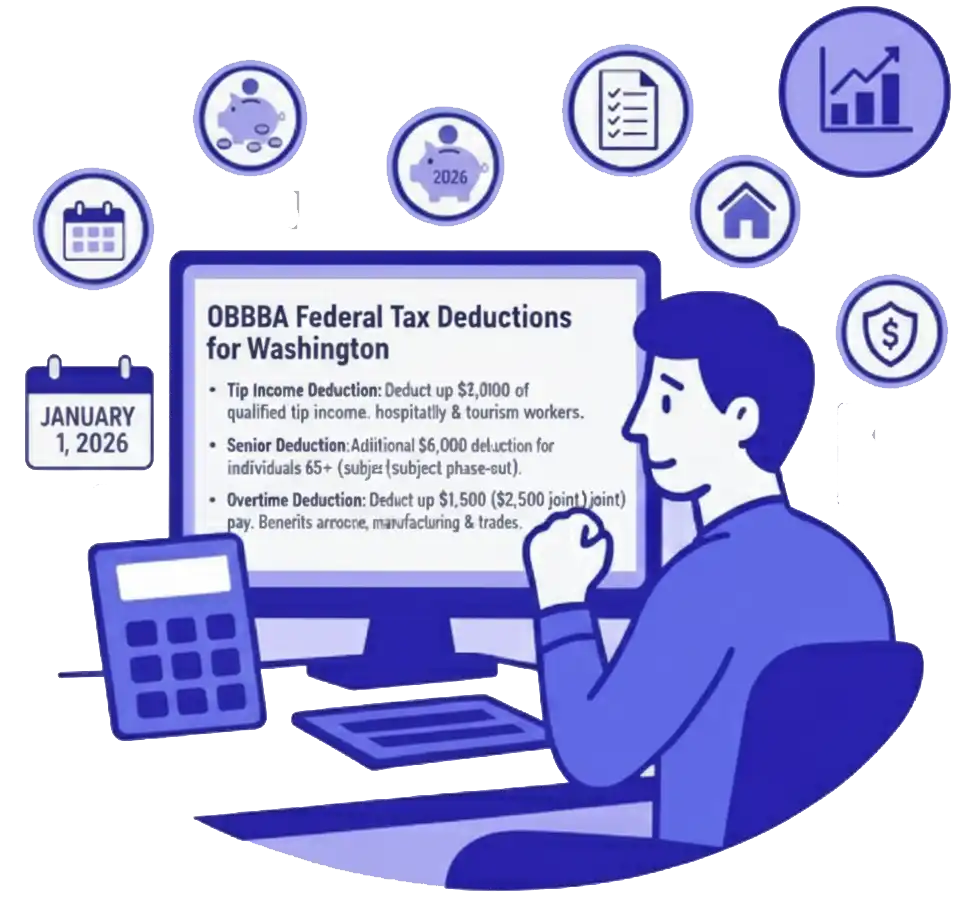
OBBBA also introduced several new federal deductions that will directly benefit many in Washington:
- Tip Income Deduction: Deduct up to $25,000 of qualified tip income. This is a game- changer for workers in Seattle's vibrant hospitality scene and tourism-heavy areas.
- Senior Deduction: An additional $6,000 deduction for individuals 65 and older, providing federal tax relief for Washington’s retirees (subject to phase-out).
- Overtime Deduction: Deduct up to $12,500 ($25,000 for joint filers) of qualified overtime pay, a great benefit for workers in the state's aerospace, manufacturing, and skilled trades industries.
Washington-Specific Tax Considerations for 2026
Navigating the B&O Tax and Capital Gains Tax
While Washington has no income tax, it’s not entirely tax-free. Business owners must contend with the Business & Occupation (B&O) tax, a tax on gross receipts, not profit. The permanent federal QBI deduction does not reduce your B&O tax liability, but it significantly lowers your federal tax burden, improving overall cash flow.
Additionally, Washington has a 7% tax on long-term capital gains exceeding $250,000. The permanence of lower federal capital gains rates provides some relief, but strategic planning is essential for high-income investors and those selling highly appreciated assets, such as real estate or a business.
A Major Win for the Tech and Startup Ecosystem
For the thousands of professionals working at Amazon, Microsoft, and the countless startups in the Seattle, Bellevue, and Redmond corridor, the permanence of lower federal tax brackets is a significant financial win. The enhanced QBI Deduction is also a boon for consultants and founders, providing a powerful tool to reduce their federal tax liability.
Real Estate and STRs in a High-Value Market
For property owners in hot markets like Seattle, Bellevue, and STR destinations like Leavenworth or the San Juan Islands, OBBBA brings welcome news. The 100% bonus depreciation for qualified property is now permanent. This allows real estate investors to immediately write off the cost of certain assets on their federal return, making strategies like cost segregation incredibly powerful to offset rental income.
What Washington Taxpayers Should Do Now
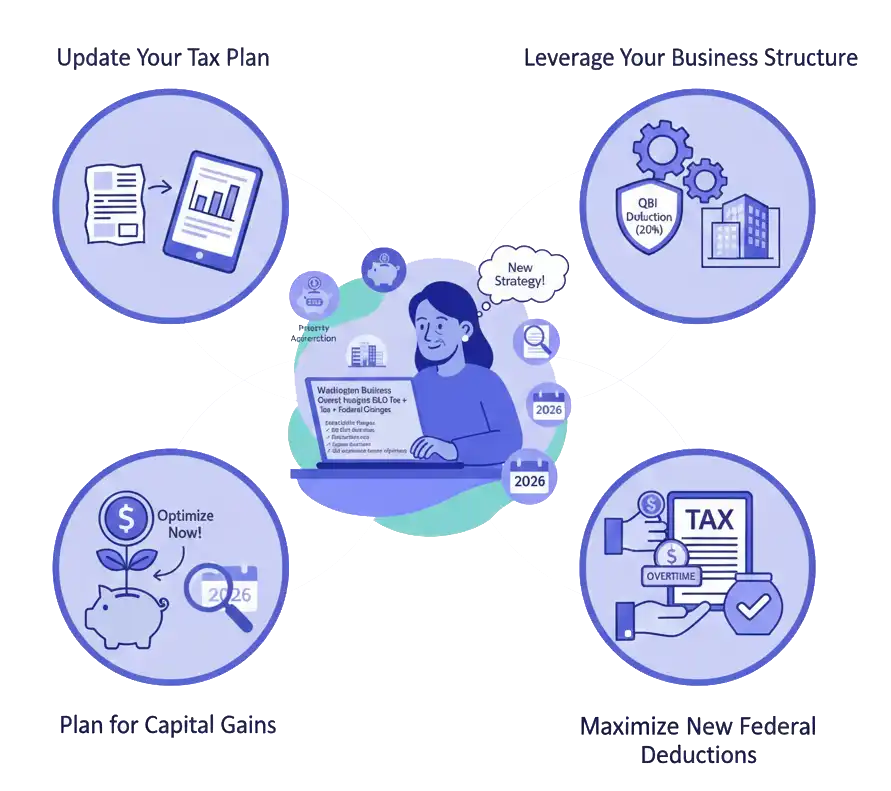
- Update Your Tax Plan: Your old strategy is obsolete. It’s time to build a new plan based on the reality of permanent federal tax cuts and how they interact with Washington's B&O and capital gains taxes.
- Leverage Your Business Structure: Work with a professional to ensure your business is structured to maximize the permanent 20% federal QBI deduction while managing your state B&O tax liability.
- Plan for Capital Gains: If you have highly appreciated assets, create a strategy to manage your exposure to both the federal and state capital gains taxes.
- Maximize New Federal Deductions: If you earn tip income or overtime, ensure you are accurately tracking your income to take full advantage of these powerful new federal deductions.
Washington 2026 Tax FAQ
Washington 2026 Tax FAQ
No. Washington does not tax wages or earned income.
Does Washington tax capital gains?
Yes. Certain high-value capital gains are taxed at the state level.
Does OBBBA affect Washington businesses?
Yes — QBI is now permanent federally, but Washington’s B&O tax still applies to gross receipts.
Are STR owners impacted?
Yes. Federal depreciation and participation rules tighten in 2026.
Are retirees affected?
Yes. Federal bracket changes increase the tax cost of retirement withdrawals.
Get Your Personalized 2026 Washington Tax Plan
The tax landscape has permanently shifted in your favor. Don’t operate on outdated assumptions. A personalized strategy session will ensure you are structured to maximize every new and permanent benefit under both federal and state law.