
Tennessee 2026 Tax Changes — What Residents & Business Owners Must Know

Beginning January 1, 2026, major federal tax changes take effect as the Tax Cuts and Jobs Act (TCJA) sunsets and updated rules under the One Big Beautiful Bill Act (OBBBA) become active.
Tennessee has no state income tax, but federal tax liability affects every taxpayer — and in 2026, that liability will rise for many households.
- W-2 earners in Nashville, Memphis, Knoxville, Chattanooga, Clarksville, Murfreesboro
- Healthcare, logistics, construction, hospitality, and entertainment workers
- Contractors, freelancers, and small business owners
- Real estate investors and landlords
- Short-term rental hosts
- Families with children
- Retirees drawing taxable income
- Dual-income households
Here is the complete Tennessee-focused overview of the 2026 federal tax changes.
Key 2026 Federal Changes Affecting Tennessee
Standard Deduction Shrinks
TCJA temporarily increased the standard deduction, but OBBBA did not extend this part of the law.
- Single: ~$8,300
- Married Filing Jointly: ~$16,600
- Head of Household: ~$12,400
Even without a state income tax, Tennessee residents will see higher federal taxable income, affecting refunds and withholding.
Federal Income Tax Brackets Increase
- 12% → 15%
- 22% → 28%
- 24% → 31%
- dual-income households
- hospitality and entertainment workers
- transportation and logistics workers
- healthcare and service industry employees
- households earning $50K–$250K
Higher brackets reduce take-home pay and increase tax due for many Tennessee families.
QBI Deduction Made Permanent Under OBBBA
- LLCs
- S-Corps
- sole proprietors
- contractors
- freelancers
- qualifying rental operations
- updated income thresholds
- revised SSTB phaseouts
- stronger IRS documentation standards
Tennessee residents benefit fully from QBI since there is no state income tax.
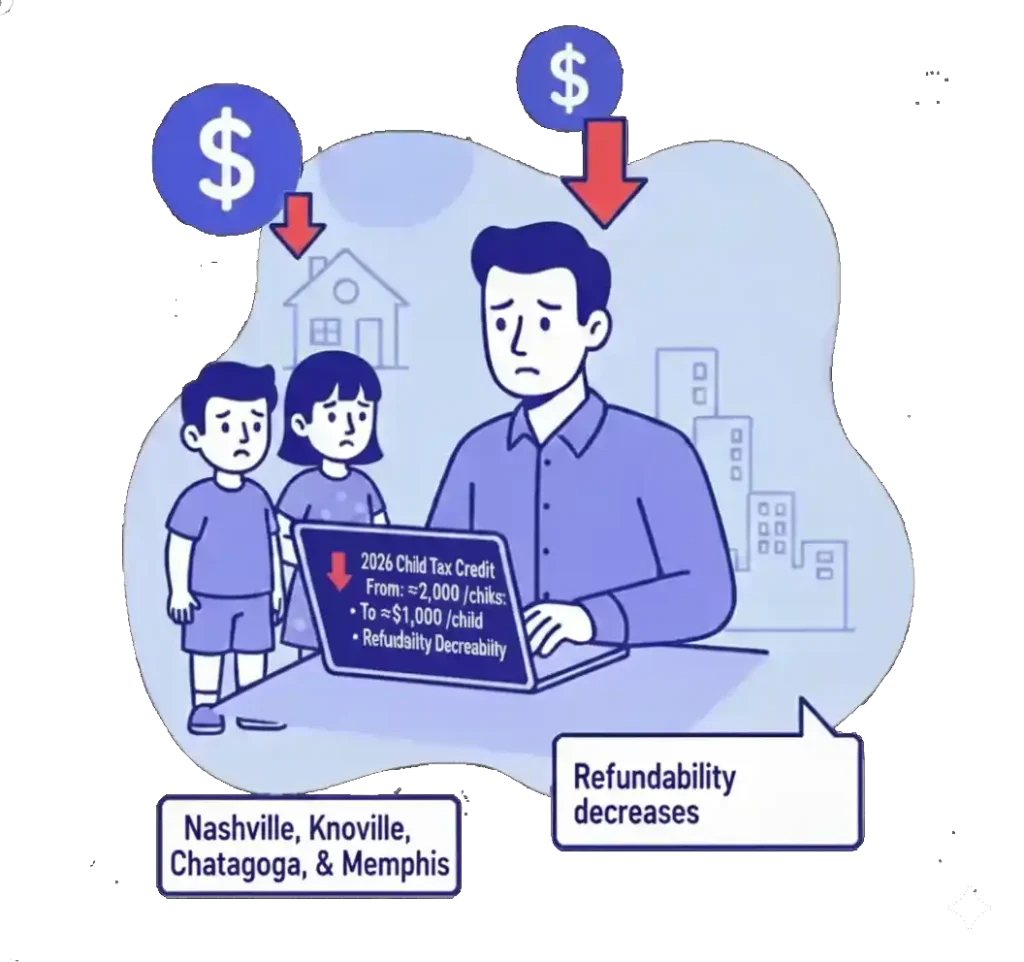
Child Tax Credit Shrinks
- The Child Tax Credit decreases from about $2,000
- To roughly $1,000 per child
- Refundability decreases
Families across Tennessee — especially in Nashville, Knoxville, Chattanooga, and Memphis — will see smaller refunds.
Marriage Penalty Returns
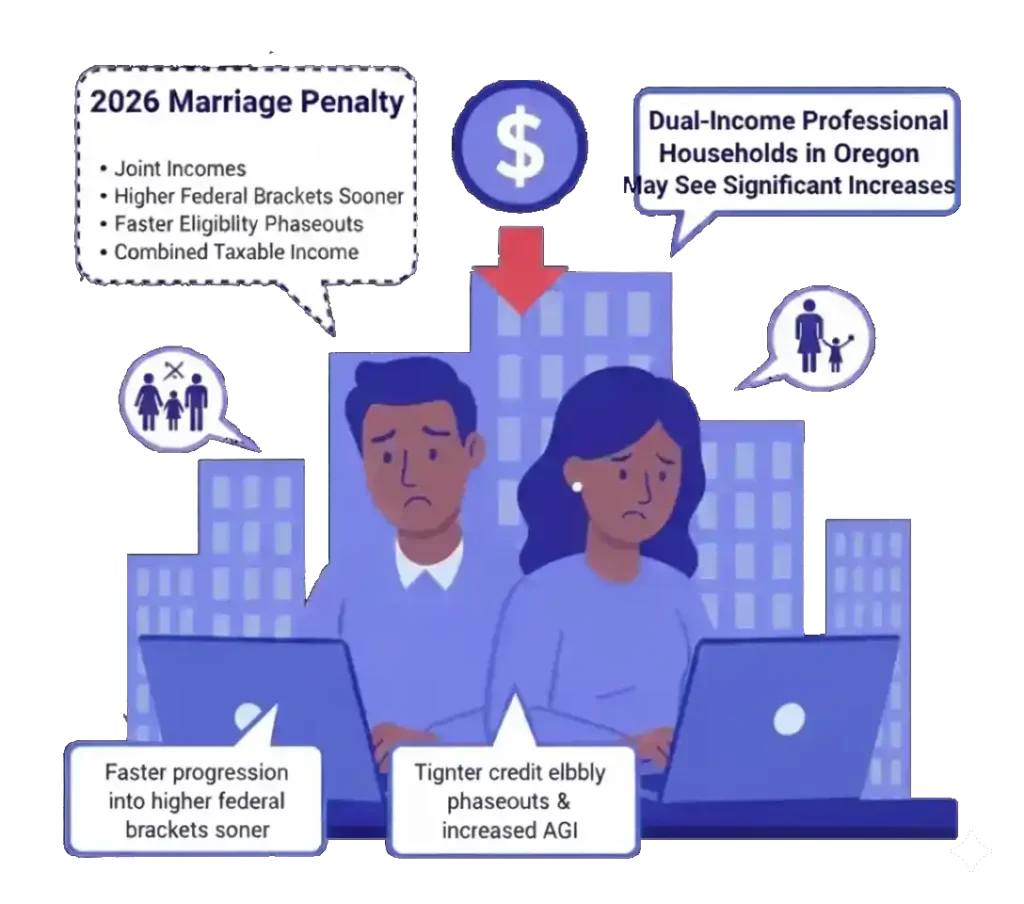
TCJA’s marriage penalty relief expires in 2026.
- dual-income couples
- married households earning $70K–$200K+ combined
- families reliant on both spouses’ incomes
Married couples will move into higher brackets faster and lose credits sooner.
Tennessee–Specific Tax Considerations
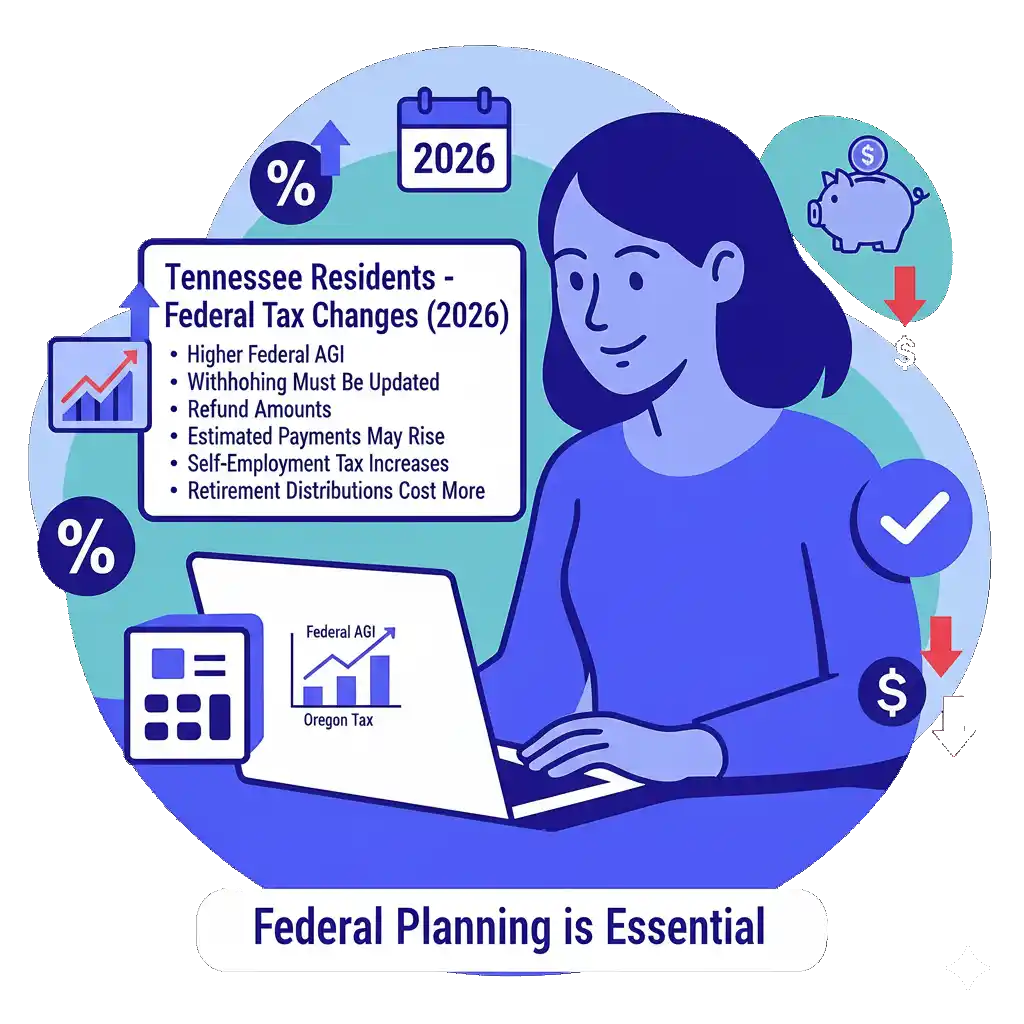
1. No State Income Tax — But Federal Changes Still Matter
- withholding must be updated
- refund amounts shrink
- estimated quarterly payments may rise
- self-employment tax increases as taxable income rises
- retirement distributions become more costly
Federal planning is essential.
2. Real Estate Owners & Rental Investors Will See 2026 Impacts
- Nashville
- Knoxville
- Chattanooga
- Memphis
- Clarksville
- Murfreesboro
- capital gains
- depreciation
- rental loss limitations
- STR participation rules
- property sale timing
Rising home values across Tennessee increase exposure to capital gains and recapture.

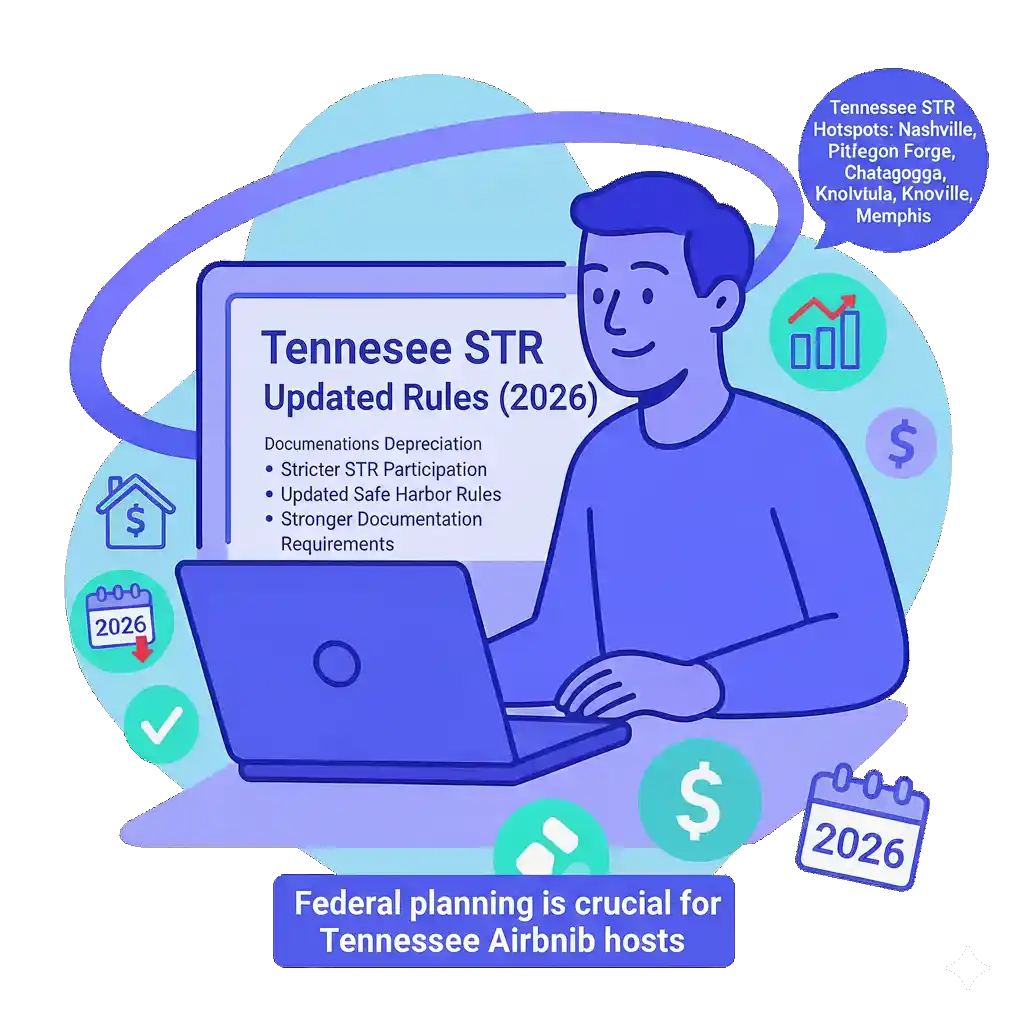
3. STR Owners Must Prepare for Updated Rules
- Nashville
- Gatlinburg
- Pigeon Forge
- Chattanooga
- Knoxville
- Memphis
- reduced bonus depreciation
- stricter STR participation requirements
- updated safe harbor rules
- stronger documentation requirements
Many Airbnb hosts in Tennessee rely on STR tax strategies; planning is crucial.
4. Tennessee’s Entertainment, Tourism & Hospitality Workforce Is Affected
- entertainment
- events
- tourism
- nightlife
- music and production
often receive variable income.
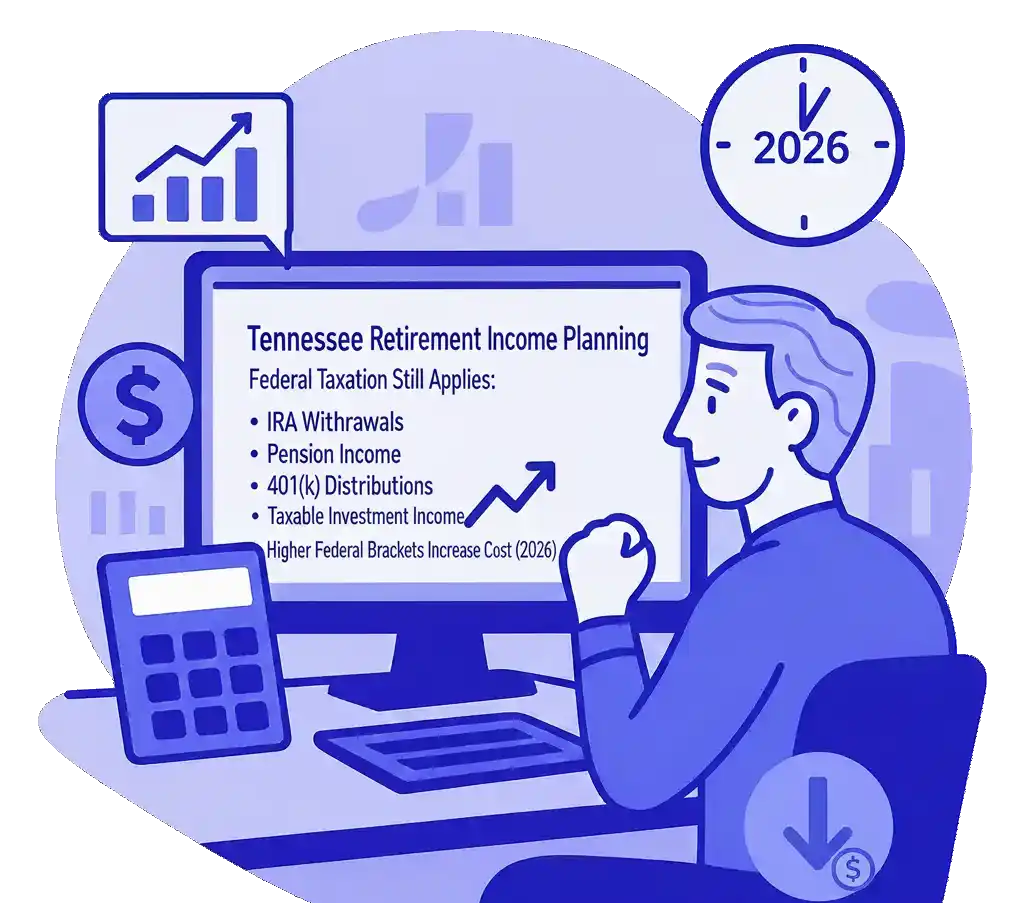
5. Retirement Income Still Subject to Federal Taxation
- IRA withdrawals
- pension income
- 401(k) distributions
- taxable investment income
Higher federal brackets increase the tax cost of distributions in retirement.
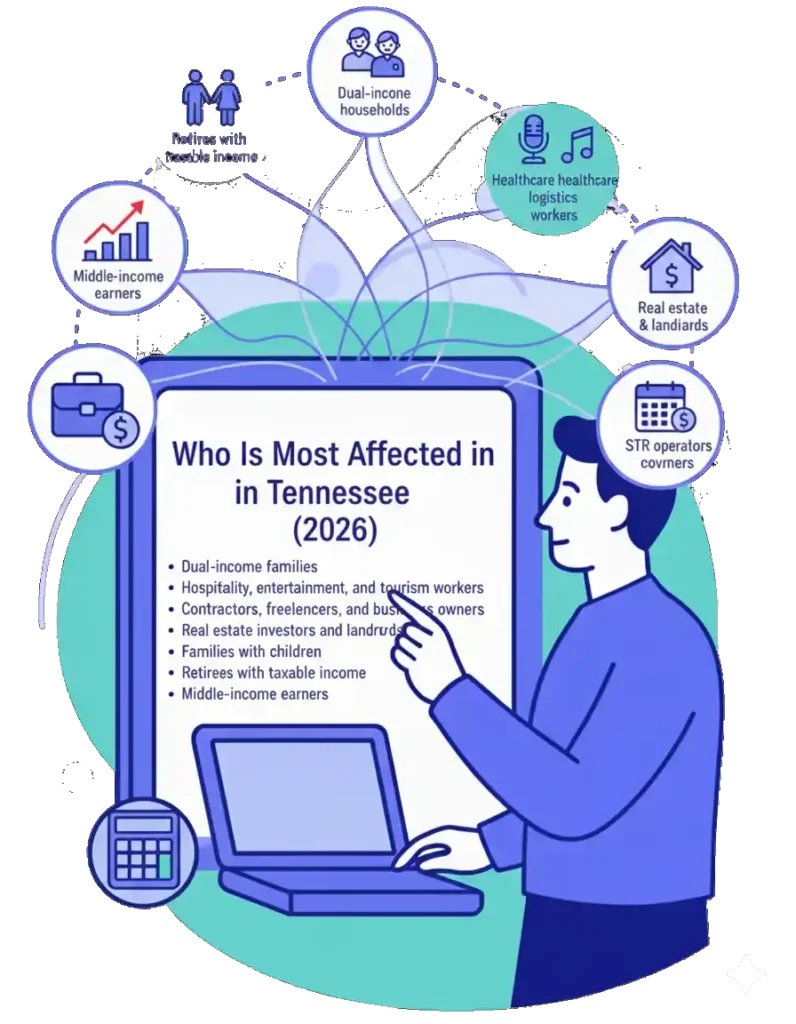
Who Is Most Affected in Tennessee (2026)
- Dual-income families
- Hospitality, entertainment, and tourism workers
- Healthcare and logistics workers
- Contractors, freelancers, and business owners
- Real estate investors and landlords
- STR owners
- Families with children
- Retirees with taxable income
- Middle-income earners
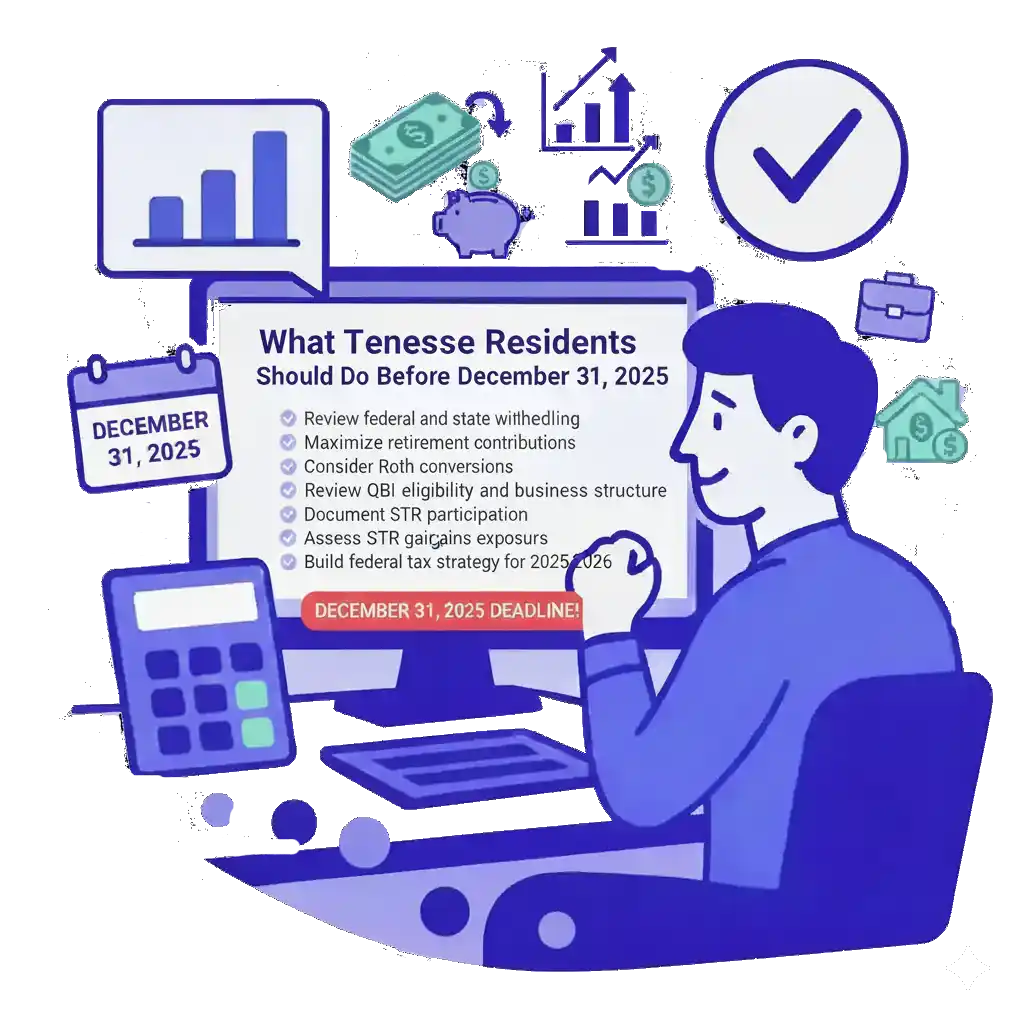
What Tennessee Residents Should Do Before December 31, 2025
- Review federal withholding
- Maximize retirement contributions
- Consider Roth conversions
- Review QBI eligibility and business structure
- Document STR participation
- Assess capital gains exposure
- Time property or investment sales
- Build a federal tax strategy for 2025–2026
Tennessee 2026 Tax FAQ
Does Tennessee have state income tax?
No. Only federal taxes apply.
Did OBBBA prevent taxes from rising?
OBBBA preserved QBI but allowed many TCJA provisions to expire.
Are families affected?
Yes. Reduced credits and increased taxable income lower refunds.
Are STR owners affected?
Yes. Participation rules, depreciation, and deduction rules tighten.
Are retirees affected?
Yes. Federal bracket increases raise the cost of withdrawals.
Get your 2026 Tennessee Tax Strategy
Tennessee residents will feel the 2026 federal tax changes in their paychecks, retirement accounts, rental income, and small business operations.
A personalized tax strategy helps minimize the impact and prepare for the new tax environment.
Because tax situations vary by individual and business, many Tennessee residents choose to work with a qualified tax professional. You can explore available Tennessee tax services here: