
Nevada 2026 Tax Changes — How OBBBA Supercharges the "Nevada Advantage"

On January 1, 2026, the federal tax landscape underwent a historic and positive transformation. The One Big Beautiful Bill Act (OBBBA ), signed into law on July 4, 2025, made permanent many of the major tax cuts from the 2017 Tax Cuts and Jobs Act (TCJA) and introduced new, powerful benefits for taxpayers. The long-feared 2026 “tax cliff” has been avoided.
For residents of Nevada, this is exceptionally good news. As one of the few states with no state income tax, the permanent reduction in federal taxes creates a powerful “double advantage,” making Nevada an even more attractive place to live, work, and do business. This guide provides a clear, localized breakdown of how the permanent tax laws under OBBBA will impact your income, business, and financial strategy in 2026 and beyond.
Permanent Federal Tax Cuts Amplify Nevada's Appeal
Lower Federal Tax Brackets are PERMANENT
The biggest news is that the lower individual income tax rates from the TCJA are now permanent. The anticipated jump in federal tax rates has been avoided.
👉 Nevada Impact: This is a crucial win for everyone, from hospitality workers on the Las Vegas Strip to tech professionals in Reno. Lower, predictable federal tax rates mean more of your paycheck stays in your pocket.
The Federal Standard Deduction is PERMANENT
The higher federal standard deduction, which simplifies tax filing for millions, is also here to stay.
👉 Nevada Impact: A permanent, higher federal standard deduction is a direct benefit for the majority of Nevadans. It provides a substantial, straightforward deduction on your federal return, lowering your taxable income without the need for complex itemization.
The QBI Deduction is PERMANENT and ENHANCED
This is a critical update for Nevada’s massive population of small businesses, independent contractors, and gig economy workers. The 20% Qualified Business Income (QBI) Deduction is not expiring. OBBBA has made it a permanent part of the federal tax code and even improved it.
This is a major federal benefit for Nevada’s:
- Independent contractors and 1099 earners in the entertainment and service industries
- LLCs, S-Corps, and Sole Proprietors
- Real estate investors and landlords
- Skilled trades and construction contractors
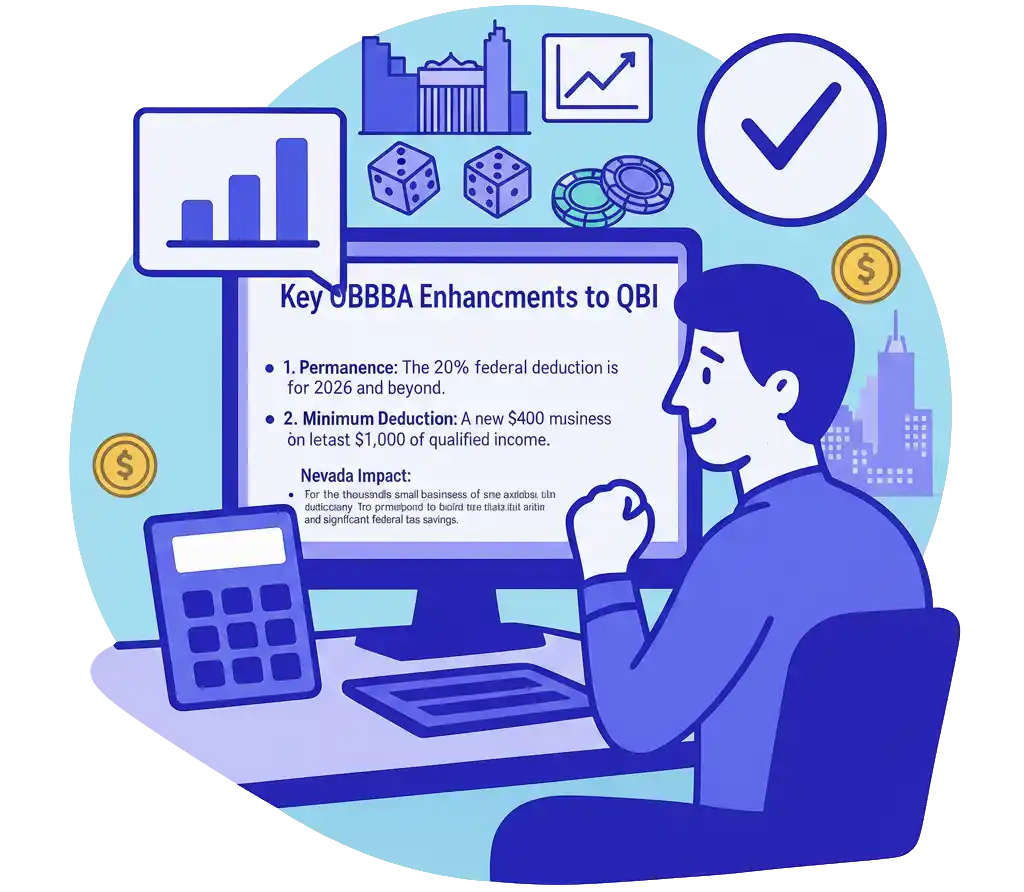
Key OBBBA Enhancements to QBI:
- Permanence: The 20% federal deduction is locked in for 2026 and
- Minimum Deduction: A new $400 minimum federal deduction is available for any business with at least $1,000 of qualified income.
👉 Nevada Impact: For the thousands of entrepreneurs and self-employed professionals who power Nevada’s economy, the permanent federal QBI deduction provides certainty and significant tax savings.
A Game-Changer for Nevada: The New Tip Income Deduction
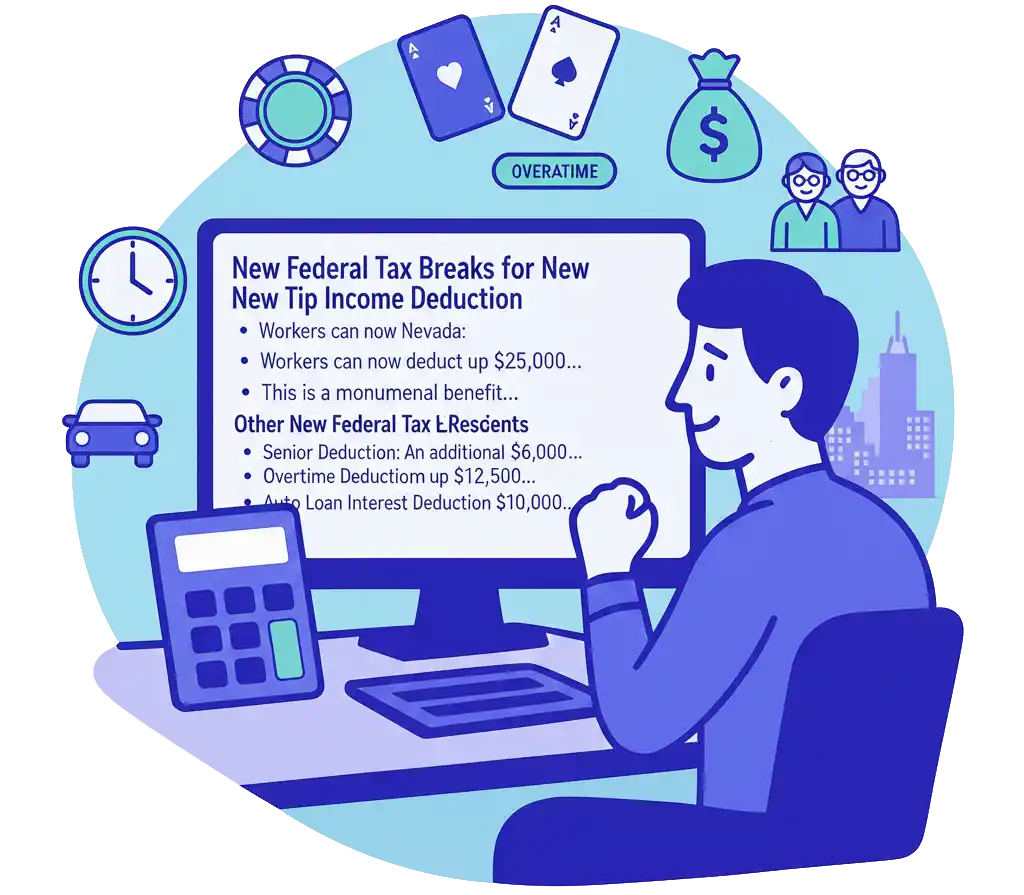
OBBBA introduced a new federal deduction that seems tailor-made for Nevada: the Tip Income Deduction.
This is a monumental benefit for the hundreds of thousands of Nevadans working in hospitality, gaming, food and beverage, and tourism. For the first time, a significant portion of tip income is now federally tax-deductible, providing direct and substantial relief.
Other New Federal Tax Breaks for Nevada Residents
- Senior Deduction: An additional $6,000 deduction for individuals 65 and older, providing federal tax relief for Nevada’s growing retiree population (subject to phase- out).
- Overtime Deduction: Deduct up to $12,500 ($25,000 for joint filers) of qualified overtime pay.
- Auto Loan Interest Deduction: Deduct up to $10,000 in interest on new personal vehicle loans from 2025-2028.
Nevada-Specific Tax Considerations for 2026
The Ultimate Retirement Destination
Nevada already attracts retirees because it does not tax Social Security or any other form of retirement income. The permanent lower federal tax rates under OBBBA make it even better, reducing the federal tax burden on IRA and 401(k) withdrawals.
Real Estate and STRs in a Hot Market
For property owners in Las Vegas, Henderson, Reno, and Lake Tahoe, OBBBA brings welcome news. The 100% bonus depreciation for qualified property is now permanent. This allows real estate investors and STR hosts to immediately write off the cost of certain assets on their federal return, making strategies like cost segregation incredibly powerful.
What Nevada Taxpayers Should Do Now
- Update Your Tax Plan: Your old strategy, based on the fear of expiring tax cuts, is obsolete. It’s time to build a new plan based on permanence and new federal opportunities.
- Maximize the Tip Deduction: If you earn tips, ensure you are accurately reporting all income to take full advantage of this powerful new federal deduction.
- Leverage Your Business Structure: Work with a professional to ensure your LLC or S- Corp is structured to maximize the permanent 20% federal QBI deduction.
- Plan for Real Estate: Plan your real estate investments to take full advantage of permanent 100% bonus depreciation on your federal return.

Nevada 2026 Tax FAQ
Does Nevada have state income tax?
No. Nevada’s 2026 impact is federal only.
Did OBBBA prevent taxes from rising?
OBBBA made some deductions permanent (including QBI) but allowed many TCJA provisions—like brackets and the standard deduction—to expire.
Are STR owners affected?
Yes. New rules apply to participation, depreciation, and rental loss limitations.
Are retirees affected?
Yes. Higher federal brackets increase the cost of retirement withdrawals.
Will families receive smaller refunds?
Yes. The Child Tax Credit reduction affects most families.
Get Your Personalized 2026 Nevada Tax Plan
The tax landscape has permanently shifted in your favor. Don’t operate on outdated assumptions. A personalized strategy session will ensure you are structured to maximize every new and permanent benefit under OBBBA, amplifying your “Nevada Advantage.”
Because tax situations vary by individual and business, many Nevada residents choose to work with a qualified tax professional. You can explore available Nevada tax services here: