
South Carolina 2026 Tax Changes — What Residents & Business Owners Must Know

On January 1, 2026, significant federal tax changes take effect as several Tax Cuts and Jobs Act (TCJA) provisions expire and new rules continue under the One Big Beautiful Bill Act (OBBBA).
South Carolina residents — who pay a state income tax based on federal AGI — will feel these federal changes directly.
These shifts affect:
- W-2 earners in Charleston, Columbia, Greenville, Rock Hill, Mount Pleasant, Spartanburg
- Contractors, trades, and manufacturing workers
- Small business owners, LLCs, freelancers, and S-Corps
- Real estate investors and landlords
- Short-term rental hosts (especially coastal areas)
- Families with children
- Retirees drawing IRA or pension income
- Dual-income households
Below is the complete South Carolina–specific breakdown of the 2026 tax changes.
Key 2026 Federal Changes Affecting South Carolina
Standard Deduction Shrinks
TCJA’s doubled standard deduction ends in 2026. OBBBA does not extend it.
- Single: ~$8,300
- Married Filing Jointly: ~$16,600
- Head of Household: ~$12,400
Because South Carolina uses federal AGI as the starting point, this reduction increases both federal and South Carolina taxable income.
Federal Income Tax Brackets Increase
- 12% → 15%
- 22% → 28%
- 24% → 31%
- dual-income families
- healthcare and education professionals
- manufacturing and trades workers
- service and hospitality workers
- households earning $50K–$250K
More income will be taxed at higher federal rates.
QBI Deduction Made Permanent Under OBBBA
One of the most favorable changes under OBBBA is the permanent extension of the 20% Qualified Business Income (QBI) deduction.
This benefits:
- LLCs
- S-Corps
- sole proprietors
- contractors and freelancers
- certain rental property owners
- new income thresholds
- revised SSTB phaseout rules
- stronger documentation requirements
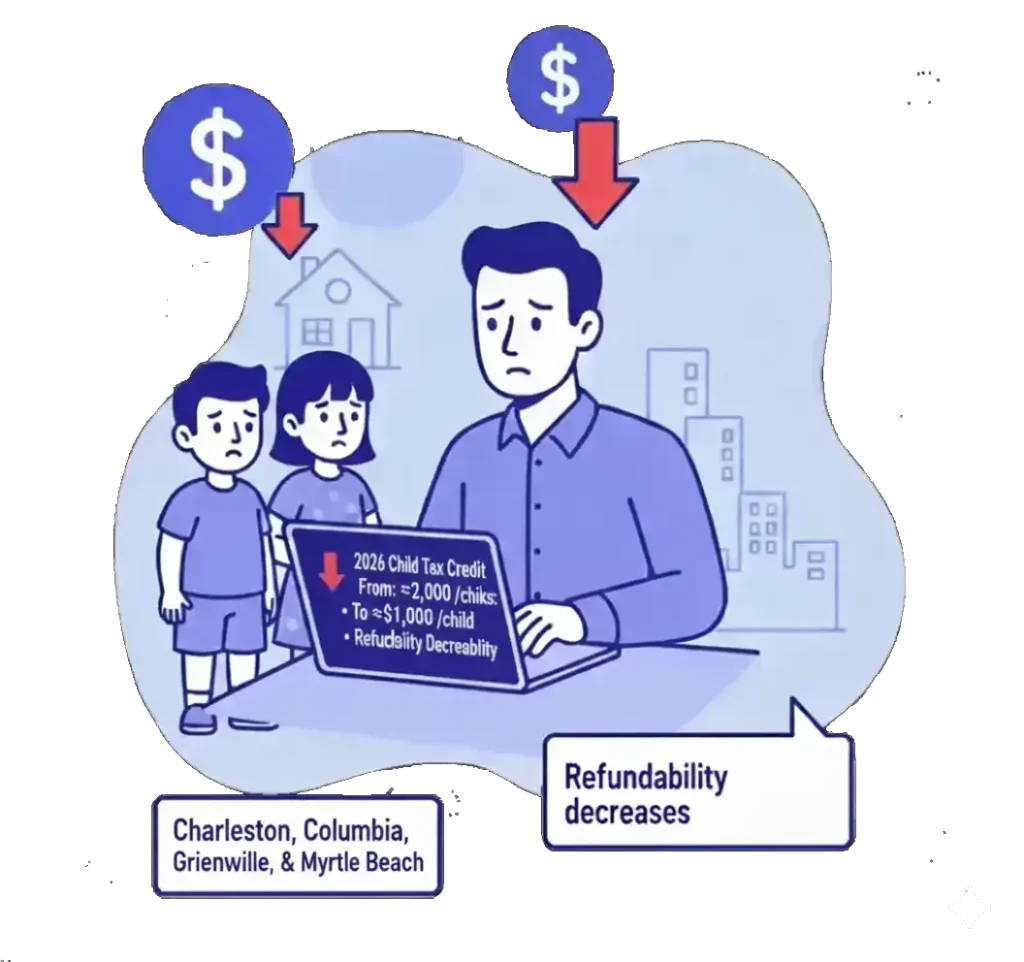
Child Tax Credit Shrinks
- The federal Child Tax Credit reduces from about $2,000
- To roughly $1,000 per child
- Refundability decreases
Families across Charleston, Columbia, Greenville, and Myrtle Beach will see smaller refunds.
Marriage Penalty Returns
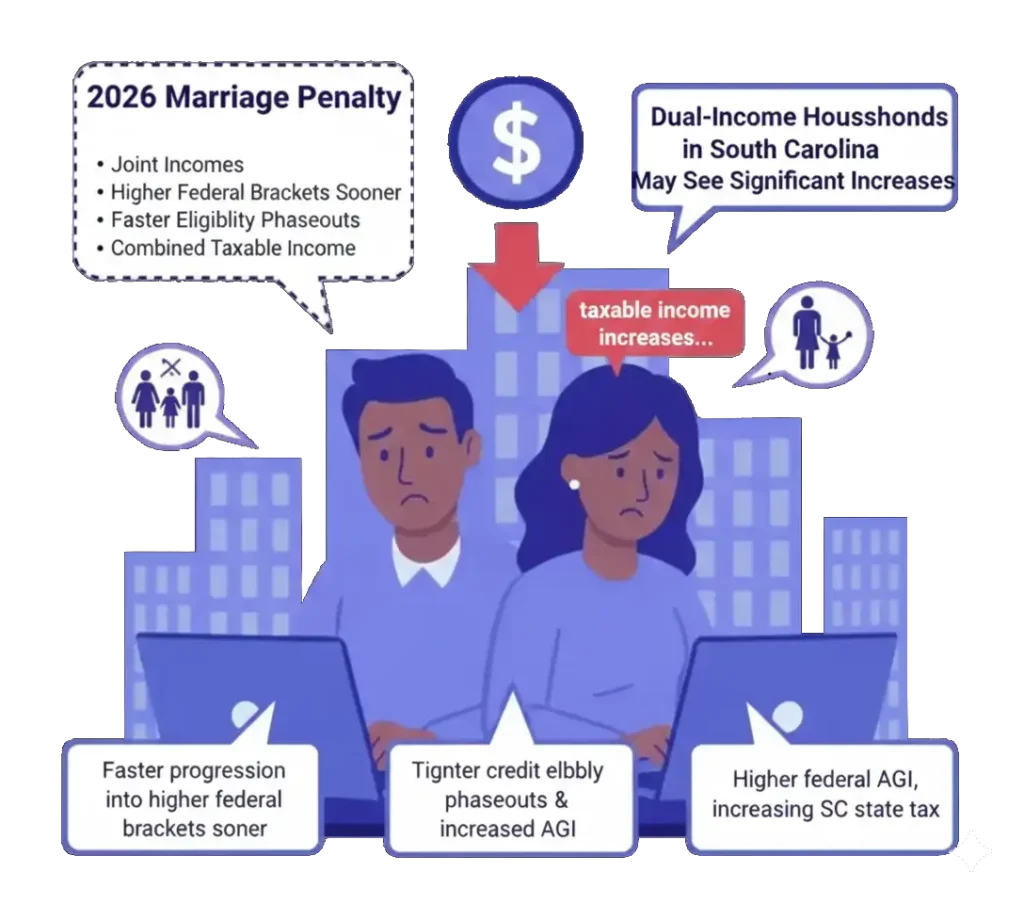
The temporary marriage penalty relief under TCJA expires in 2026.
- reach higher brackets sooner
- lose credit eligibility faster
- face higher federal AGI, increasing SC state tax
This strongly impacts dual-income households.
South Carolina–Specific Tax Considerations
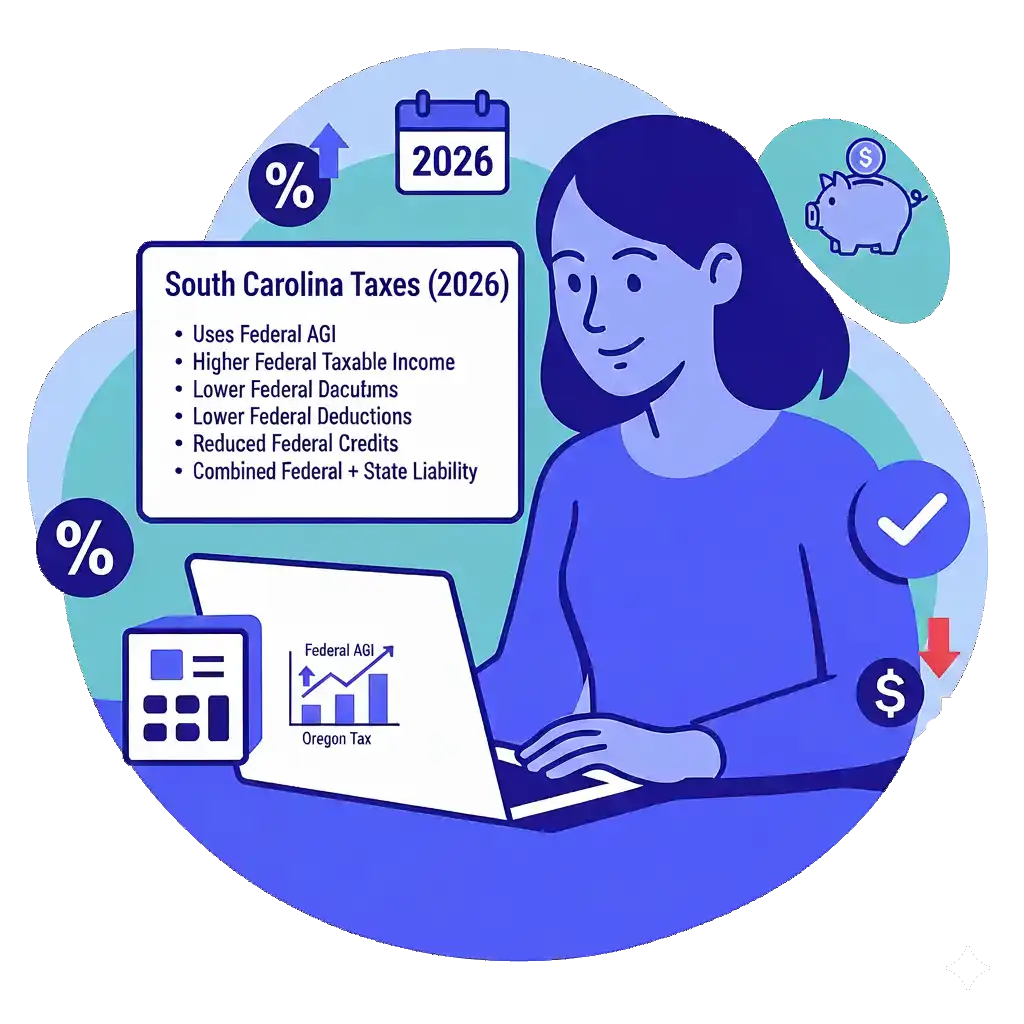
1. South Carolina Uses Federal AGI for State Tax Calculations
- reduced federal deductions
- higher federal taxable income
- lower federal credits
…all increase South Carolina taxable income.
Residents will feel a combined federal + state tax impact in 2026.
2. Real Estate Owners & Rental Investors See Significant Changes
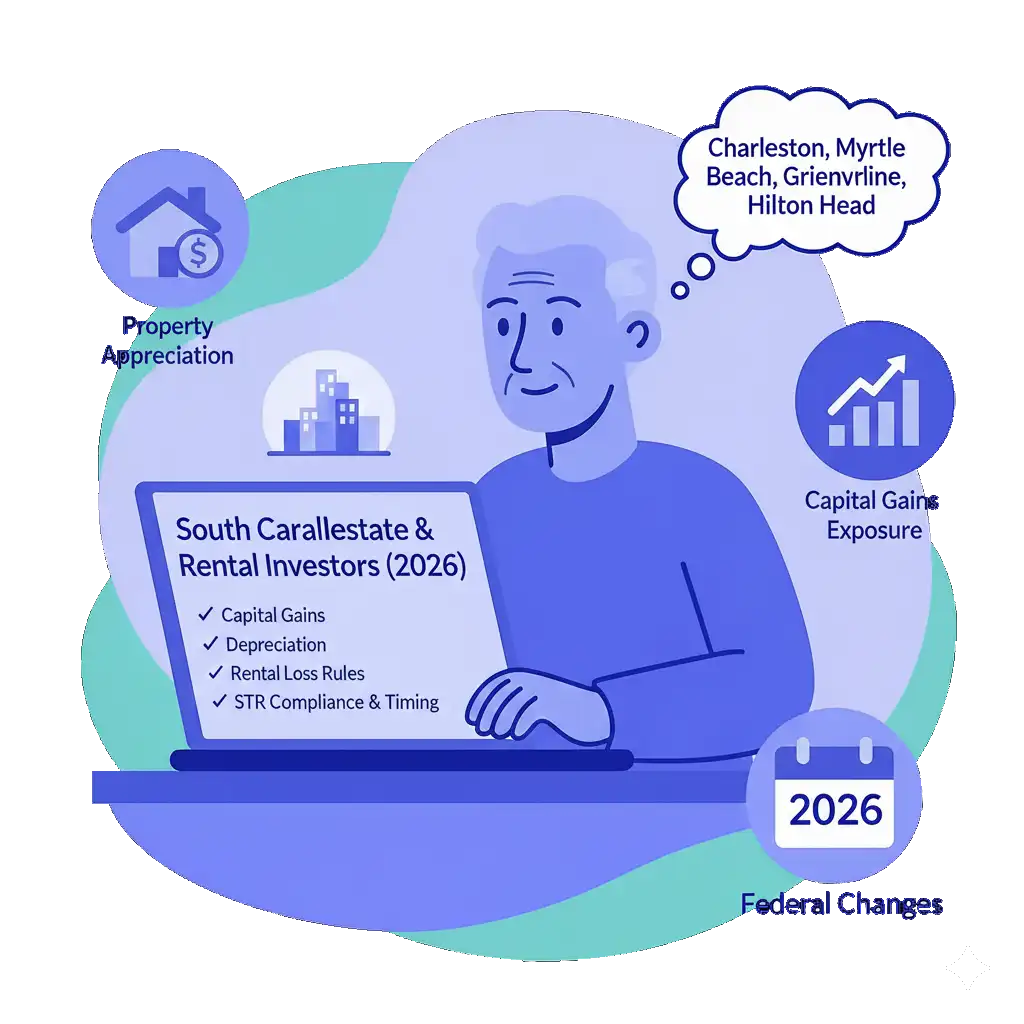
- Charleston
- Myrtle Beach
- Greenville
- Hilton Head
- Columbia
- Spartanburg
- capital gains
- depreciation
- rental loss rules
- STR participation and compliance
- property sale timing
As home values continue rising across SC, capital gains planning becomes more important.
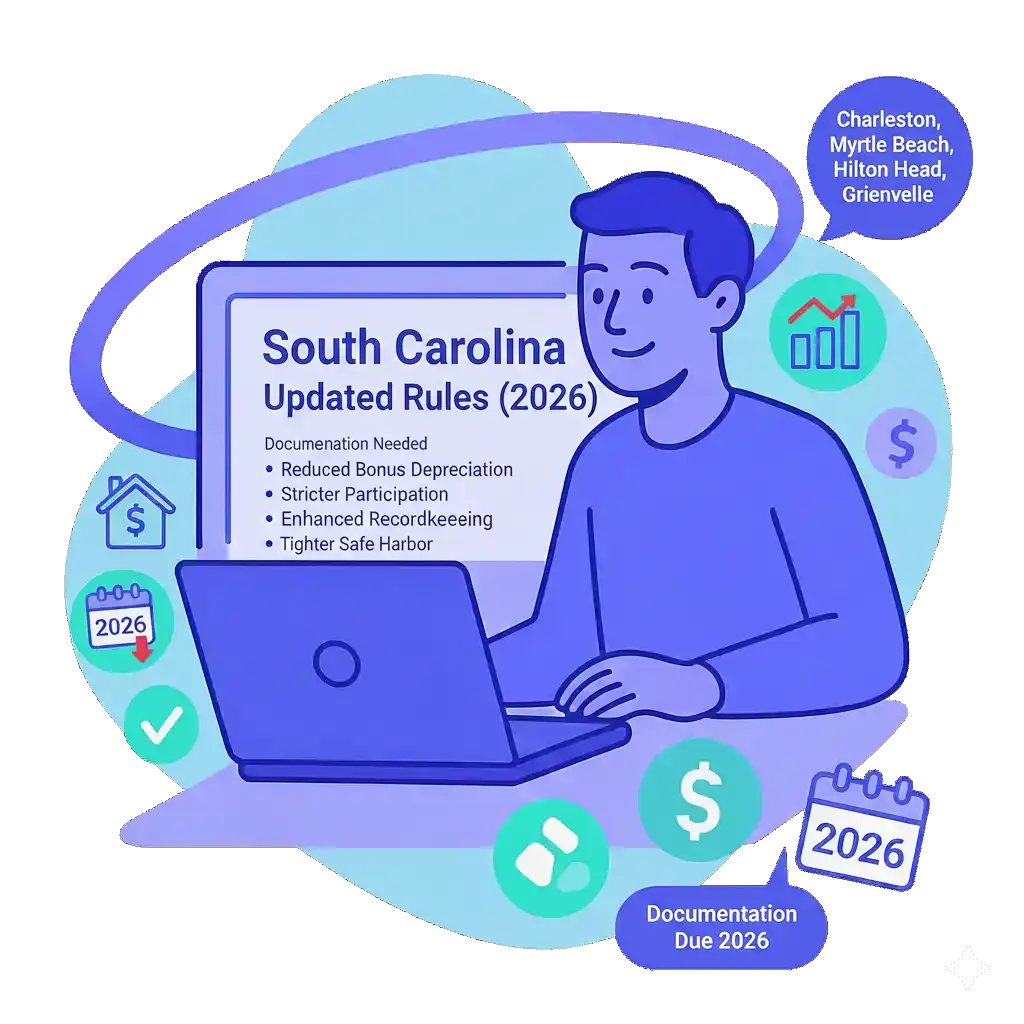
3. STR Owners Must Prepare for Updated Rules
- Charleston
- Myrtle Beach
- Hilton Head
- Greenville
- Upstate lake communities
- reduced bonus depreciation
- stricter participation requirements
- enhanced IRS recordkeeping standards
- tighter safe harbor rules
STR owners must document participation thoroughly starting in 2026.
4. South Carolina’s Retiree Population Will Feel Federal Changes
South Carolina is a major retirement destination.
- IRA withdrawals
- pension income
- 401(k) distributions
- investment withdrawals
Higher federal brackets increase total tax costs for retirees.
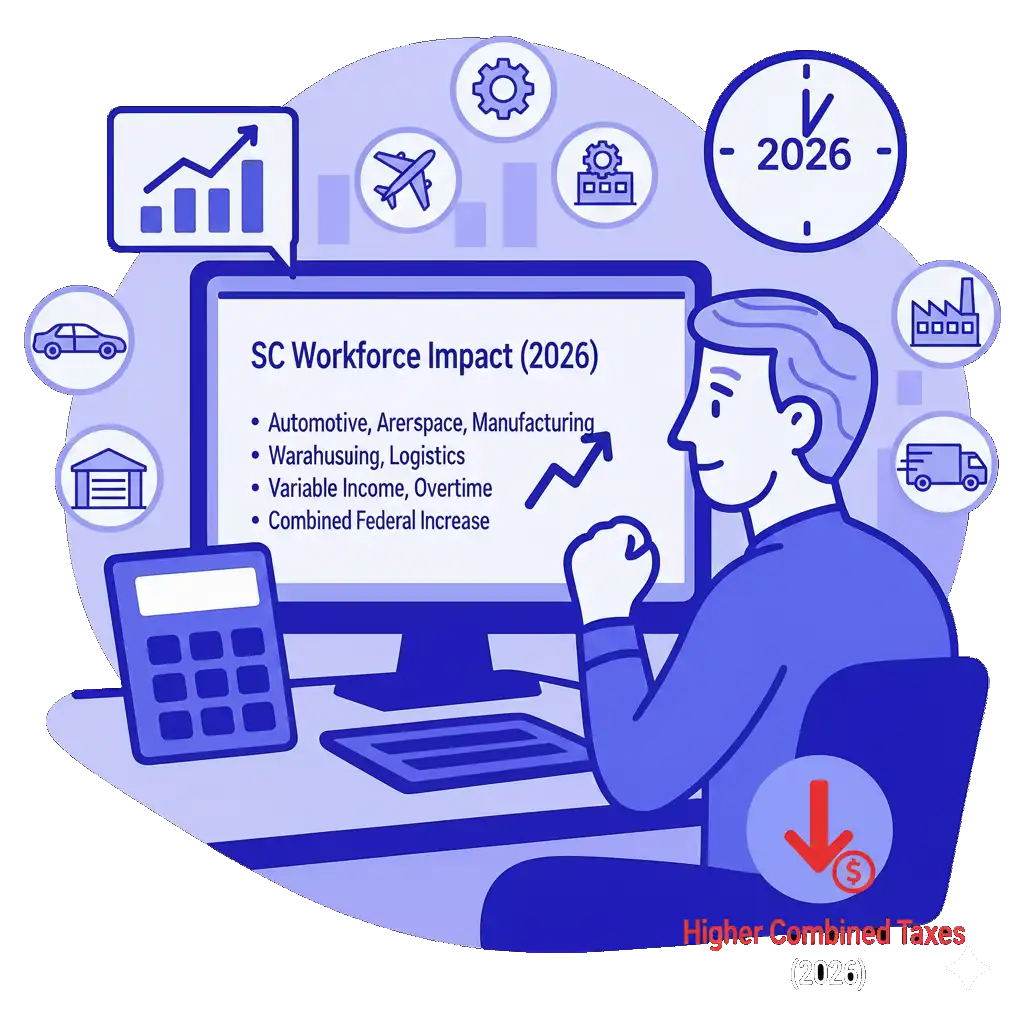
5. Manufacturing, Trades, and Logistics Workers Impacted Heavily
- automotive
- aerospace
- manufacturing
- warehousing
- logistics
Many workers earn overtime and variable income, which is more heavily taxed under higher federal brackets.
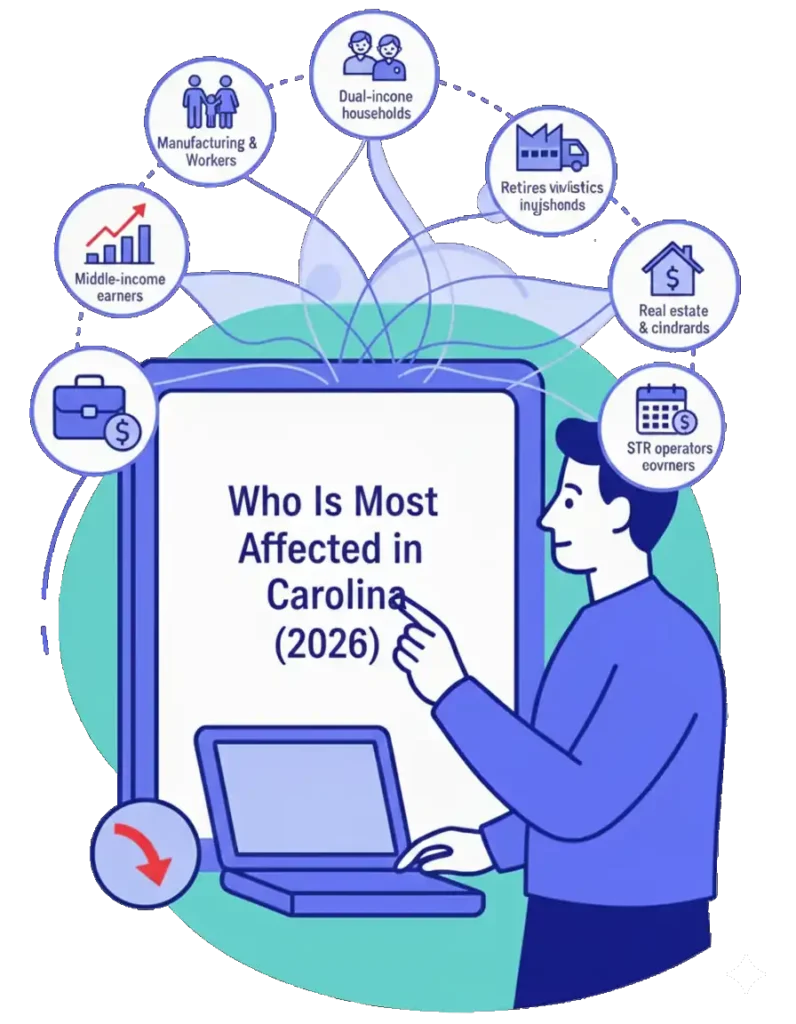
Who Is Most Affected in South Carolina (2026)
- Dual-income households
- Contractors, trades, and small business owners
- Real estate investors and landlords
- STR operators
- Families with children
- Middle-income earners
- Retirees with taxable income
- Manufacturing and logistics workers
What South Carolina Residents Should Do Before December 31, 2025
- Update federal and state withholding
- Maximize retirement contributions
- Consider Roth conversions
- Review QBI eligibility and business structure
- Maintain STR and rental documentation
- Evaluate capital gains exposure
- Time property and investment sales strategically
- Build a multi-year federal + South Carolina tax plan

South Carolina 2026 Tax FAQ
Does South Carolina conform to the QBI deduction?
No. QBI is federal-only.
Will South Carolina taxes increase?
Rates stay the same, but taxable income rises due to federal changes.
Are families affected?
Yes. The reduced Child Tax Credit and higher AGI shrink refunds.
Are STR owners impacted?
Yes. STR depreciation and participation requirements tighten.
Are retirees affected?
Yes. Federal bracket increases raise the tax cost of withdrawals.
Get your 2026 South Carolina Tax Strategy
South Carolina residents face significant federal tax changes in 2026.
Reduced deductions, higher brackets, new rental requirements, and shifting business rules make early planning essential.
Because tax situations vary by individual and business, many South Carolina residents choose to work with a qualified tax professional. You can explore available South Carolina tax services here: