
North Dakota 2026 Tax Changes — How Federal OBBBA & State Tax Cuts Create a Double Win

On January 1, 2026, the tax landscape for North Dakota residents underwent a historic and positive transformation. At the federal level, the One Big Beautiful Bill Act (OBBBA ) made the popular 2017 TCJA tax cuts permanent and introduced new benefits, avoiding the feared “tax cliff.”
This federal relief is amplified by North Dakota’s own major tax reform: a significant reduction in state income tax rates, converting the state to a simpler, lower three-bracket system with a top rate of just 2.5%. This combination of permanent federal cuts and lower state taxes creates a powerful “double win” for residents, investors, and business owners in the Peace Garden State.
This guide provides a clear, localized breakdown of how these permanent federal and state tax laws will impact your income, business, and financial strategy in 2026 and beyond.
The Double Win: Federal Relief and State Tax Reduction
Permanent Federal Relief from OBBBA
- Lower Federal Tax Brackets are PERMANENT: The lower individual income tax rates from the TCJA are here to stay. This is a crucial win for North Dakota's energy sector workers, agricultural families, and skilled professionals.
- The Federal Standard Deduction is PERMANENT: The higher federal standard deduction is also permanent, simplifying filing and lowering federal taxable income for the majority of households. This is critical because lower federal Adjusted Gross Income (AGI) directly reduces your state taxable income.
- The QBI Deduction is PERMANENT and ENHANCED: The 20% Qualified Business Income (QBI) Deduction is a permanent part of the federal tax code, a massive benefit for the state's many small businesses, farmers, and energy contractors.
North Dakota's Own Tax Cuts
Complementing the federal relief, North Dakota has enacted its own historic tax cuts, moving to a three-bracket system with a top rate of just 2.5%.
North Dakota Impact: This is a significant win for all taxpayers. The combination of permanent lower federal rates and a dramatically reduced state rate means you keep more of your money, making North Dakota one of the most tax-competitive states in the Midwest.
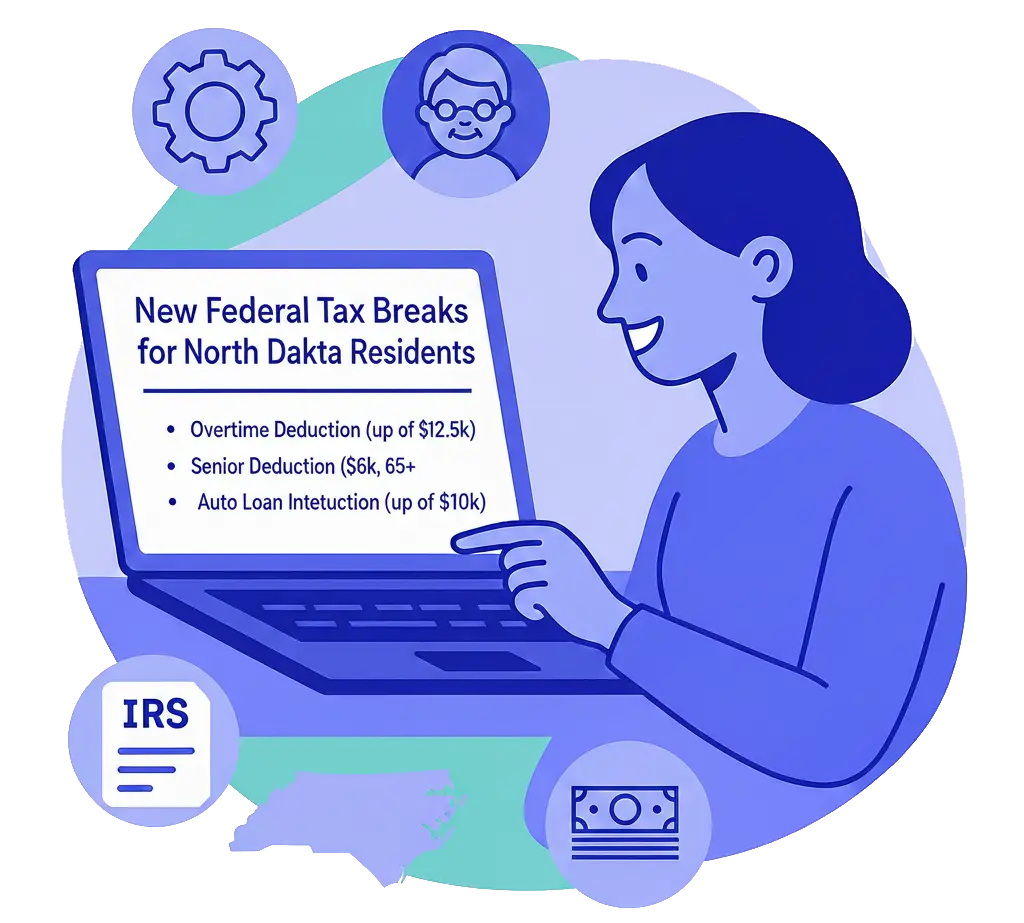
New Federal Tax Breaks for North Dakota Residents
OBBBA also introduced several new federal deductions that will directly benefit many in North Dakota:
- Overtime Deduction: Deduct up to $12,500 ($25,000 for joint filers) of qualified overtime pay. This is a game-changer for workers in North Dakota's booming energy sector in the Bakken region.
- Senior Deduction: An additional $6,000 deduction for individuals 65 and older, providing federal tax relief for North Dakota’s retirees (subject to phase-out).
- Auto Loan Interest Deduction: Deduct up to $10,000 in interest paid on loans for new or used cars and trucks, a significant benefit in a state where vehicles are essential.
North Dakota-Specific Tax Considerations for 2026
A Major Win for the Energy and Agriculture Sectors
The new federal Overtime Deduction is a massive benefit for the thousands of North Dakotans working in the oil and gas industry. For workers in the Bakken and across the state, this provides direct, substantial federal tax relief on overtime earnings.
The permanent 20% QBI Deduction is a cornerstone of tax planning for North Dakota’s farmers, ranchers, and the many small businesses that support the agricultural and energy industries.
Real Estate and STRs in a Growing State
For property owners in growing cities like Fargo, Bismarck, and Grand Forks, OBBBA brings welcome news. The 100% bonus depreciation for qualified property is now permanent.
This allows real estate investors and STR hosts to immediately write off the cost of certain assets on their federal return, making strategies like cost segregation incredibly powerful to offset rental income.
Retirement in the Peace Garden State
While North Dakota taxes most retirement income, the new federal Senior Deduction and permanent lower federal tax rates help reduce the overall tax burden for retirees, allowing them to keep more of their savings.
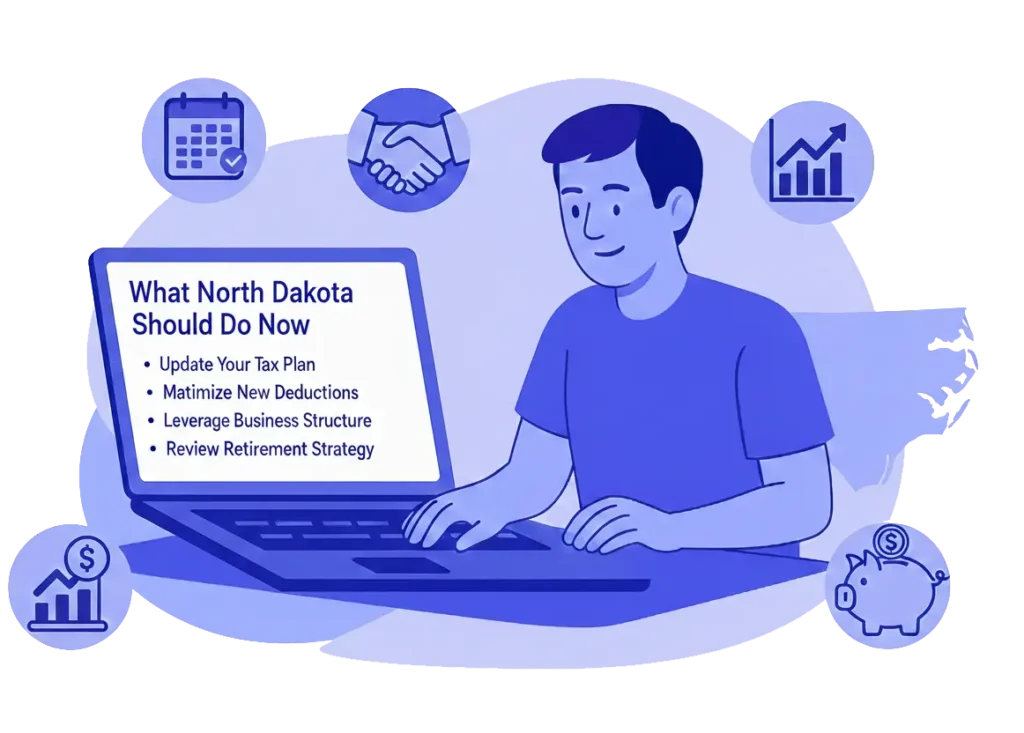
What North Dakota Taxpayers Should Do Now
- Update Your Tax Plan: Your old strategy is obsolete. It’s time to build a new plan based on the dual benefits of permanent federal cuts and North Dakota's lower state tax rates.
- Maximize New Federal Deductions: If you earn overtime, ensure you are accurately tracking your income to take full advantage of this powerful new federal deduction.
- Leverage Your Business Structure: Work with a professional to ensure your farm, ranch, or small business is structured to maximize the permanent 20% federal QBI deduction.
- Review Your Retirement Strategy: Factor in the new federal Senior Deduction and permanent lower rates when planning your retirement distributions.
North Dakota 2026 Tax FAQ
Does North Dakota conform to QBI?
No. QBI is federal-only.
Will North Dakota taxes increase?
Rates remain the same, but taxable income will rise due to federal changes.
Are families affected?
Yes. Child Tax Credit reductions and higher taxable income shrink refunds.
Are STR owners impacted?
Yes. Depreciation and participation rules become more restrictive.
Are retirees affected?
Yes. Federal bracket increases raise the tax cost of retirement withdrawals.
Get Your Personalized 2026 North Dakota Tax Plan
The tax landscape has permanently shifted in your favor. Don’t operate on outdated assumptions. A personalized strategy session will ensure you are structured to maximize every new and permanent benefit under both federal and state law.
Because tax situations vary by individual and business, many North Dakota residents choose to work with a qualified tax professional. You can explore available North Dakota tax services here: