
Mississippi 2026 Tax Changes — What Residents & Business Owners Must Know

On January 1, 2026, major federal tax changes take effect as temporary TCJA provisions expire and updated rules continue.
Mississippi has a state income tax system that begins with federal AGI, so federal changes will directly increase state taxable income for many residents.
- W-2 earners in Jackson, Gulfport, Biloxi, Hattiesburg, Southaven, Oxford
- Construction workers, trades, and manufacturing employees
- Small business owners, freelancers, and LLC/S-Corp operators
- Teachers, healthcare workers, and state employees
- Real estate investors, landlords, and STR owners
- Families with children
- Retirees drawing taxable retirement income
- Dual-income households
Below is a full breakdown of how 2026 affects Mississippi taxpayers.
Key Federal Changes Affecting Mississippi Residents
Standard Deduction Shrinks in 2026
Mississippi households — especially families, homeowners, and retirees — will see higher federal taxable income.
Because the federal AGI flows into Mississippi state tax calculations, state taxes may also increase.
Federal Tax Brackets Increase
- 12% → 15%
- 22% → 28%
- 24% → 31%
- dual-income households
- trades and construction workers
- manufacturing and logistics workers
- healthcare professionals
- teachers and public employees
- households earning between $50K–$200K
Higher brackets mean more federal tax and a larger Mississippi state tax base.
QBI (20% Business Deduction) Remains Federal; Mississippi Does Not Conform
QBI continues federally, but Mississippi does not apply a similar state-level deduction.
- Federal taxable income may decrease
- Mississippi taxable income does not
- Business owners must plan around the differences
- contractors and trades
- small LLCs and S-Corps
- self-employed professionals
- agricultural and rural businesses
- real estate agents
- service-based businesses
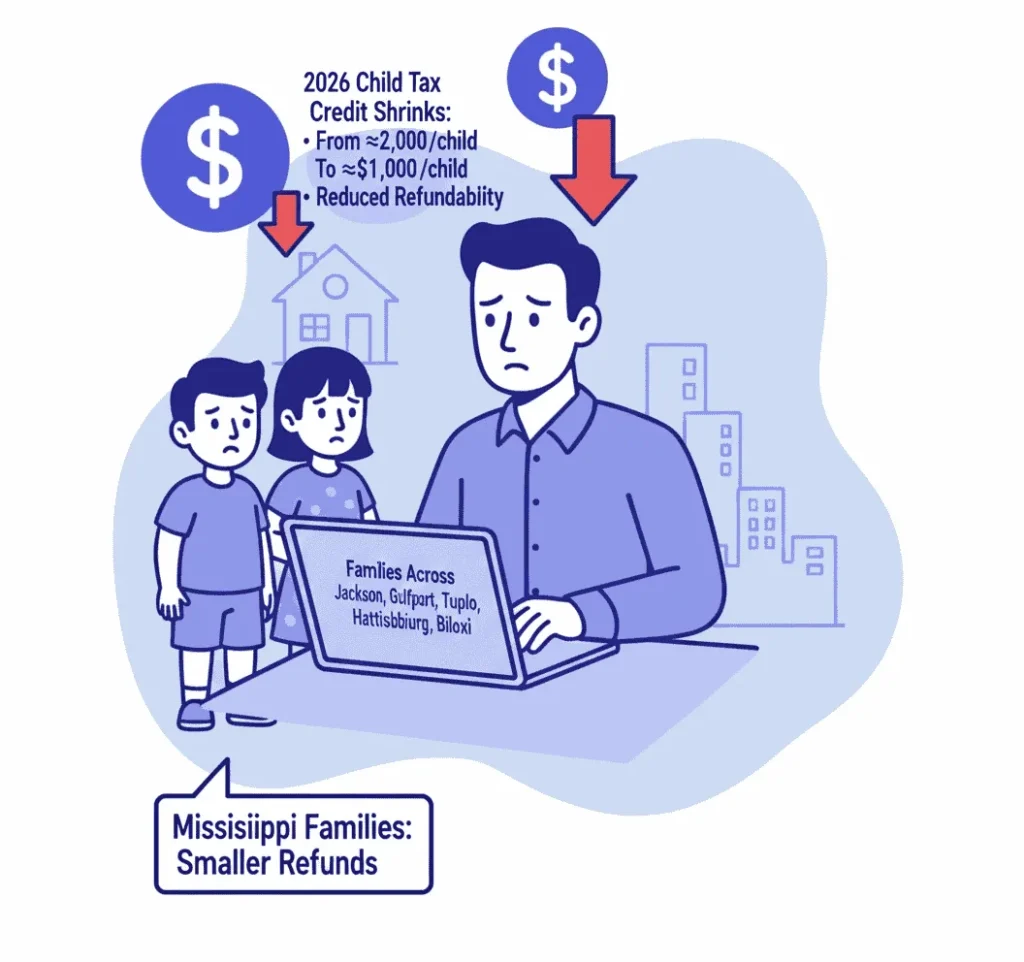
Child Tax Credit Shrinks
- reduces from around $2,000
- To roughly $1,000 per child
- with reduced refundability
Families across Mississippi — especially in Jackson, Gulfport, Tupelo, Hattiesburg, and Biloxi — will see smaller refunds.
Marriage Penalty Returns
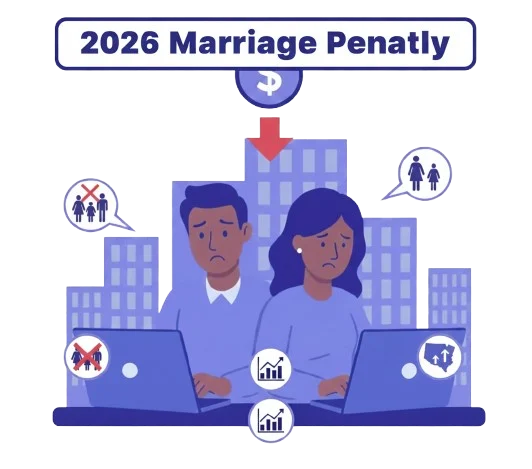
Mississippi is heavily populated with dual-income households.
- married couples filing jointly move up brackets faster
- combined incomes disqualify families from credit eligibility sooner
- federal AGI increases, raising both federal and state tax burdens
Households earning $70K–$180K combined will feel these changes the most.
Mississippi-Specific Tax Considerations
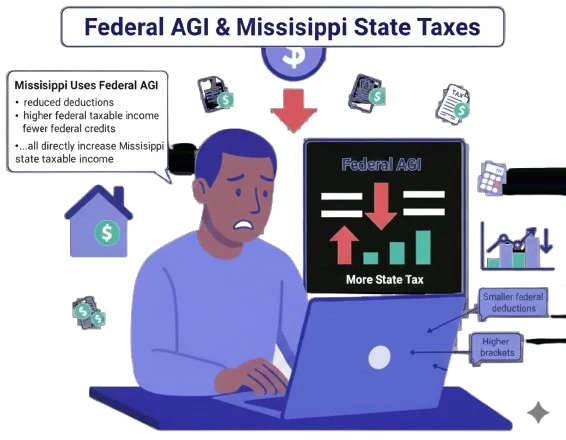
1. Mississippi Uses Federal AGI for State Tax Calculations
- reduced deductions
- higher federal taxable income
- fewer federal credits
…all directly increase Mississippi state taxable income.
Even if Mississippi adjusts rates in the future, federal changes still affect how much Mississippians owe.
2. Real Estate Owners & Rental Investors Face New Rules
Mississippi’s real estate markets — including Gulfport, Biloxi, Jackson suburbs, Oxford, and Starkville — will be affected by:
- capital gains changes
- depreciation rule adjustments
- STR participation requirements
- rental activity classification
- timing of selling rental or investment property
As property values rise in many areas, capital gains impact becomes more significant.

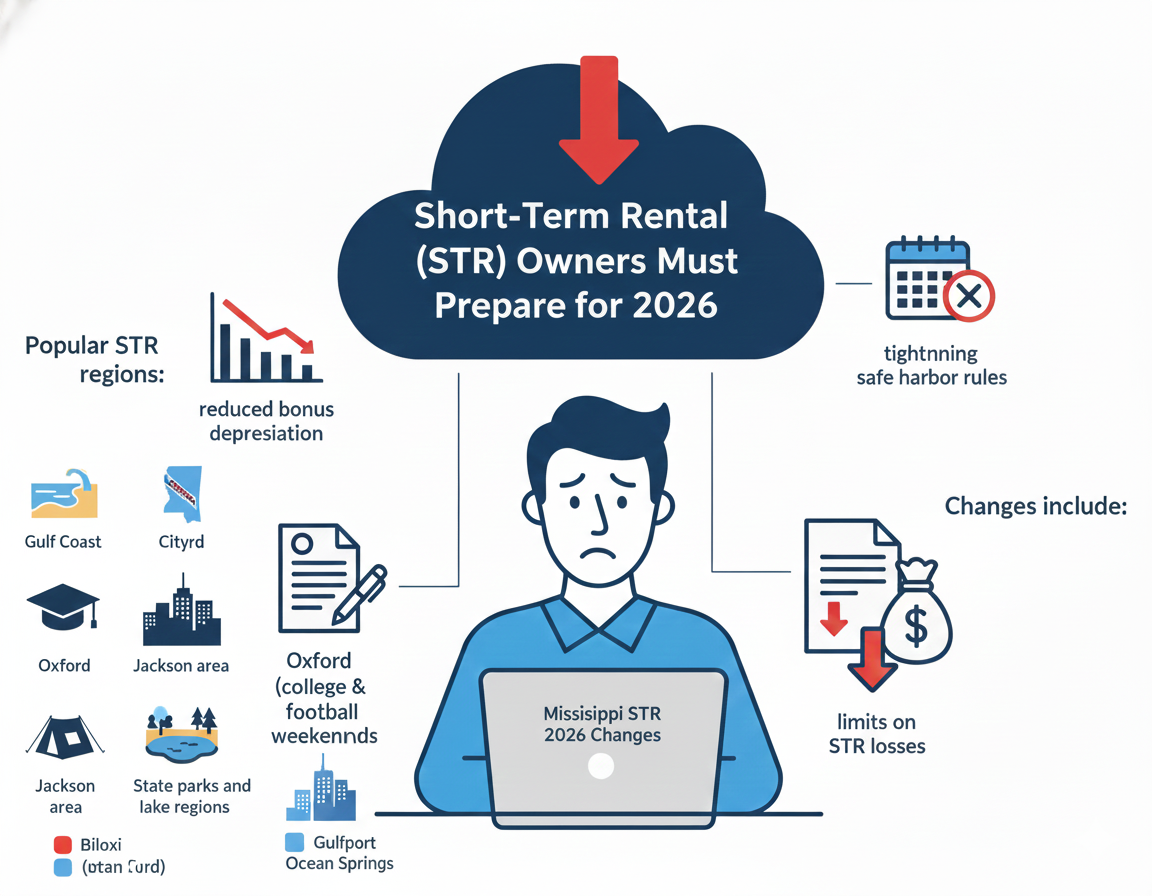
3. Short-Term Rental (STR) Owners Must Prepare for 2026
Popular STR regions:
- Gulf Coast (Biloxi, Gulfport, Ocean Springs)
- Oxford (college & football weekends)
- Jackson area
- State parks and lake regions
- reduced bonus depreciation
- stricter participation documentation
- tightening safe harbor rules
- limits on STR losses
4. Agriculture & Rural Households Will Be Impacted
- farming families
- livestock operations
- crop producers
- forestry-based operations
- equipment depreciation
- capital gains on land sales
- treatment of farm income
- operating loss rules
- income averaging
Agricultural households should plan strategically.

5. Retirement Income Planning Is More Important in 2026
- IRA withdrawals
- 401(k) distributions
- pension income
- investment income
With higher federal brackets, retirees may owe more even with state-level relief.
Who Is Hit Hardest in Mississippi (2026)
- Dual-income households
- Trades, construction, and industrial workers
- Business owners and contractors
- Real estate investors and landlords
- STR operators
- Agricultural and rural households
- Families with children
- Retirees drawing taxable retirement income
- Middle-income earners

What Mississippi Residents Should Do Before December 31, 2025
- Review federal and state withholding
- Maximize retirement contributions
- Evaluate Roth conversions
- Review business entity structure (LLC vs S-Corp)
- Prepare STR and rental documentation
- Evaluate capital gains exposure
- Time property or equipment sales strategically
- Build a complete 2025–2026 tax plan

Mississippi 2026 Tax FAQ
Does Mississippi conform to QBI?
No — QBI is federal-only.
Will Mississippi taxes go up?
Rates are unchanged, but taxable income rises due to federal changes.
Are families affected?
Yes — child credit reductions and higher taxable income impact refunds.
Are STR owners impacted?
Yes — depreciation and participation rules tighten.
Are retirees affected?
Yes — federal bracket changes increase tax cost on withdrawals.
Get a 2026 Mississippi Tax Strategy
Mississippi residents face important tax changes from reduced deductions, higher federal brackets, shifting credit rules, and updates affecting business owners, families, retirees, and property owners.
A personalized tax plan ensures you’re prepared before 2026 rules take effect.
Because tax situations vary by individual and business, many Mississippi residents choose to work with a qualified tax professional. You can explore available Mississippi tax services here: