
Florida 2026 Tax Changes — What the One Big Beautiful Bill Act (OBBBA ) Means for Residents

As of January 1, 2026, the federal tax code has undergone a historic, positive transformation. The One Big Beautiful Bill Act (OBBBA), signed into law on July 4, 2025, made permanent the major tax cuts from the 2017 Tax Cuts and Jobs Act (TCJA) and introduced a range of new, taxpayer-friendly benefits. The long-feared “tax cliff” has been avoided.
For Florida residents, this is exceptionally good news. While you already enjoy the benefit of no state income tax, these permanent federal changes significantly enhance your financial outlook. This guide explains what the OBBBA tax law means for every Floridian—from business owners in Miami and real estate investors in Orlando to retirees in The Villages.
What Makes Florida Different: A Permanent Federal Advantage
Florida’s tax-friendly environment is one of its biggest draws. OBBBA solidifies this advantage at the federal level.
- No State Tax on Retirement IncomeFlorida does not tax wages, salaries, or business income at the state level.
- No State Personal Income Tax: All forms of retirement income, including Social Security, pensions, and IRA/401(k) distributions, remain untaxed by the state of Florida.
- No State Estate or Inheritance TaxYour assets can be passed to your heirs without being taxed by the state.
While Florida provides a powerful state-level tax shelter, your federal tax obligations remain. The permanent changes under OBBBA make your federal picture much brighter.
What’s Actually Changing Federally in 2026 — The Florida OBBBA Update
The narrative of expiring tax cuts is officially over. OBBBA has locked in lower taxes and created new opportunities for savings.
Lower Federal Tax Brackets are PERMANENT
The lower individual income tax rates from the TCJA are now permanent, preventing a sudden and significant tax hike for all Florida residents.
Florida Impact:
For Florida’s diverse economy—from the tourism and hospitality sectors in Orlando and Miami to the growing tech hubs in Tampa and Jacksonville—this means more money stays in the pockets of working families and professionals. Dual- income households and high-earning individuals will see their federal tax rates remain at the lower, more favorable TCJA levels.
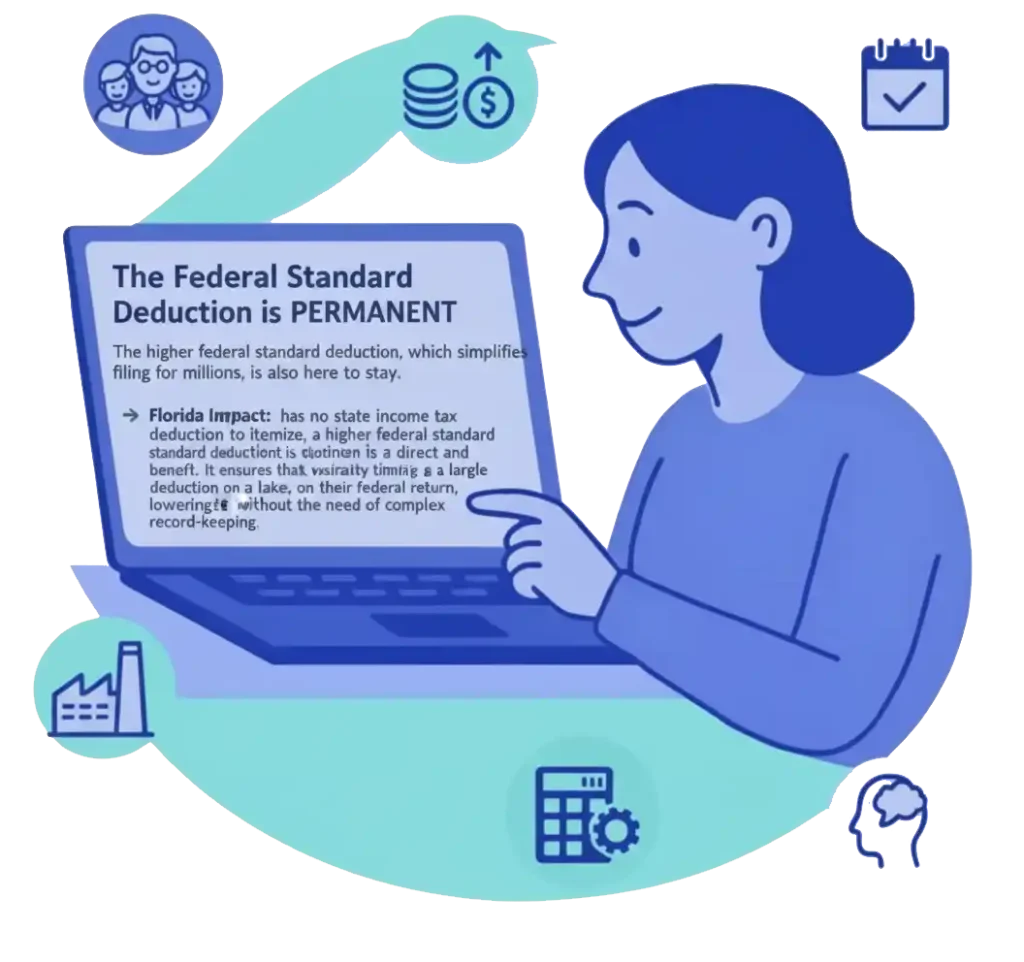
The Federal Standard Deduction is PERMANENT
The higher federal standard deduction, which simplifies filing for millions, is also here to stay.
Florida Impact:
Because Florida has no state income tax deduction to itemize, a higher federal standard deduction is a direct and significant benefit. It ensures that the vast majority of Floridians can take a large, simple deduction on their federal return, lowering their taxable income without the need for complex record-keeping.
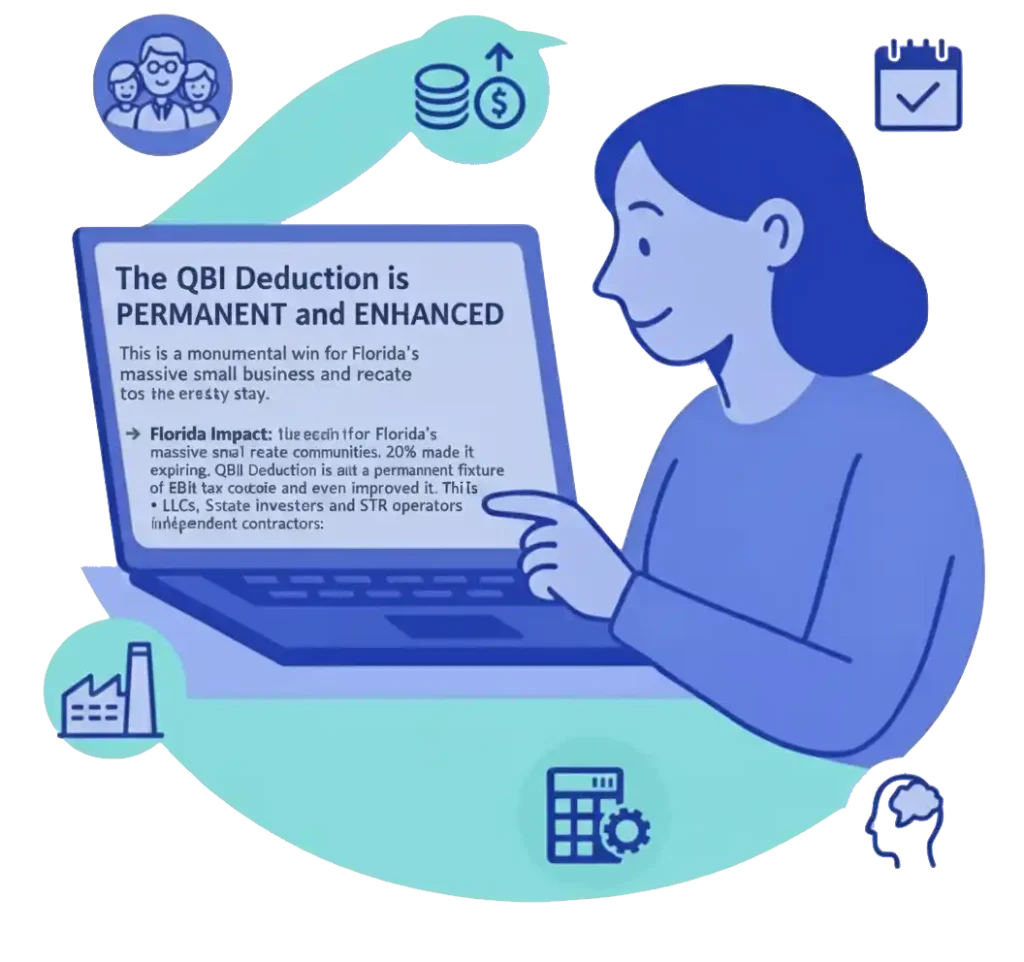
The QBI Deduction is PERMANENT and ENHANCED
This is a monumental win for Florida’s massive small business and real estate communities. The 20% Qualified Business Income (QBI) Deduction is not expiring. OBBBA made it a permanent fixture of the tax code and even improved it.
This is a game-changer for Florida’s:
- LLCs,S-Corps, and Sole Proprietors
- Real estate investors and STR operators
- Consultants, freelancers, and independent contractors
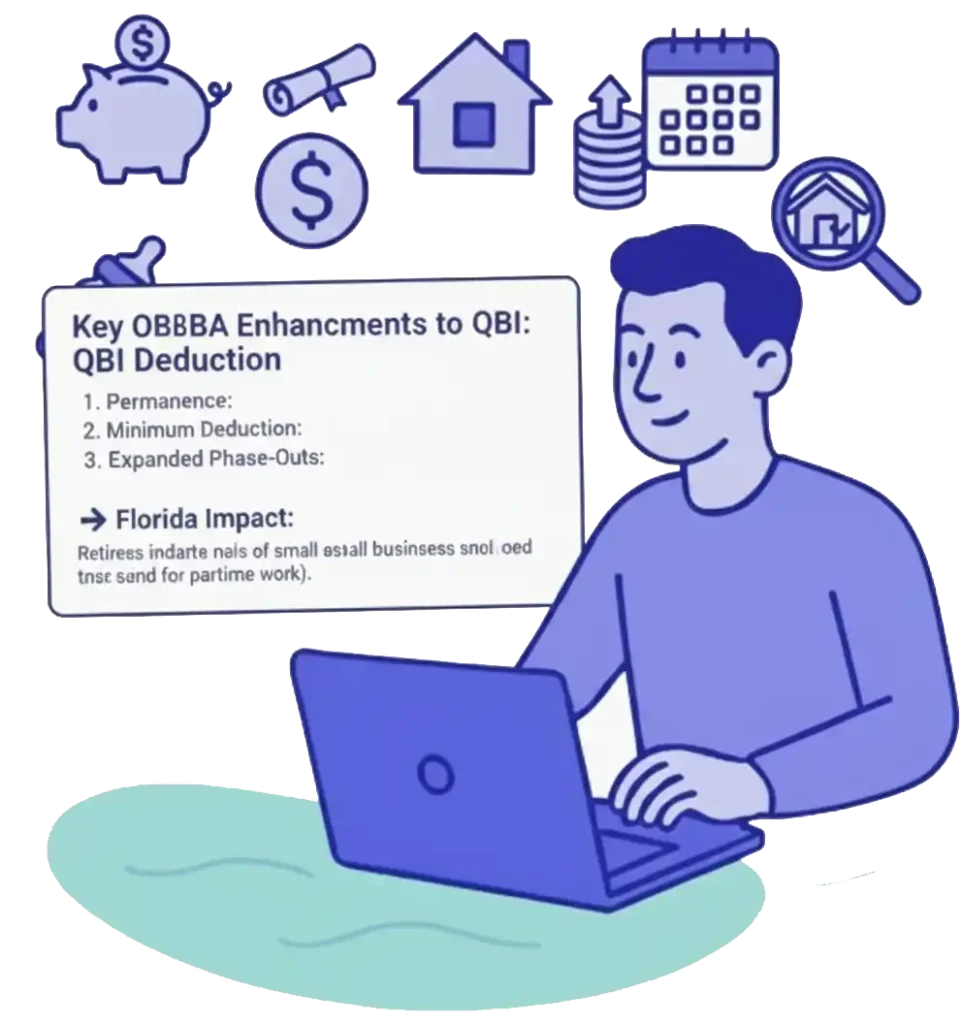
Key OBBBA Enhancements to QBI:
- Permanence: The 20% deduction is locked in for 2026 and beyond.
- Minimum Deduction: A new $400 minimum deduction is available for any business with at least $1,000 of qualified income.
- Expanded Phase-Outs: The income limitations for service-based businesses (SSTBs) have been expanded, allowing more high-income professionals to claim this powerful deduction.
Florida Impact:
For the millions of small businesses that form the backbone of Florida’s economy, the permanent QBI deduction provides certainty and tens of thousands of dollars in annual federal tax savings, encouraging further investment and job creation.
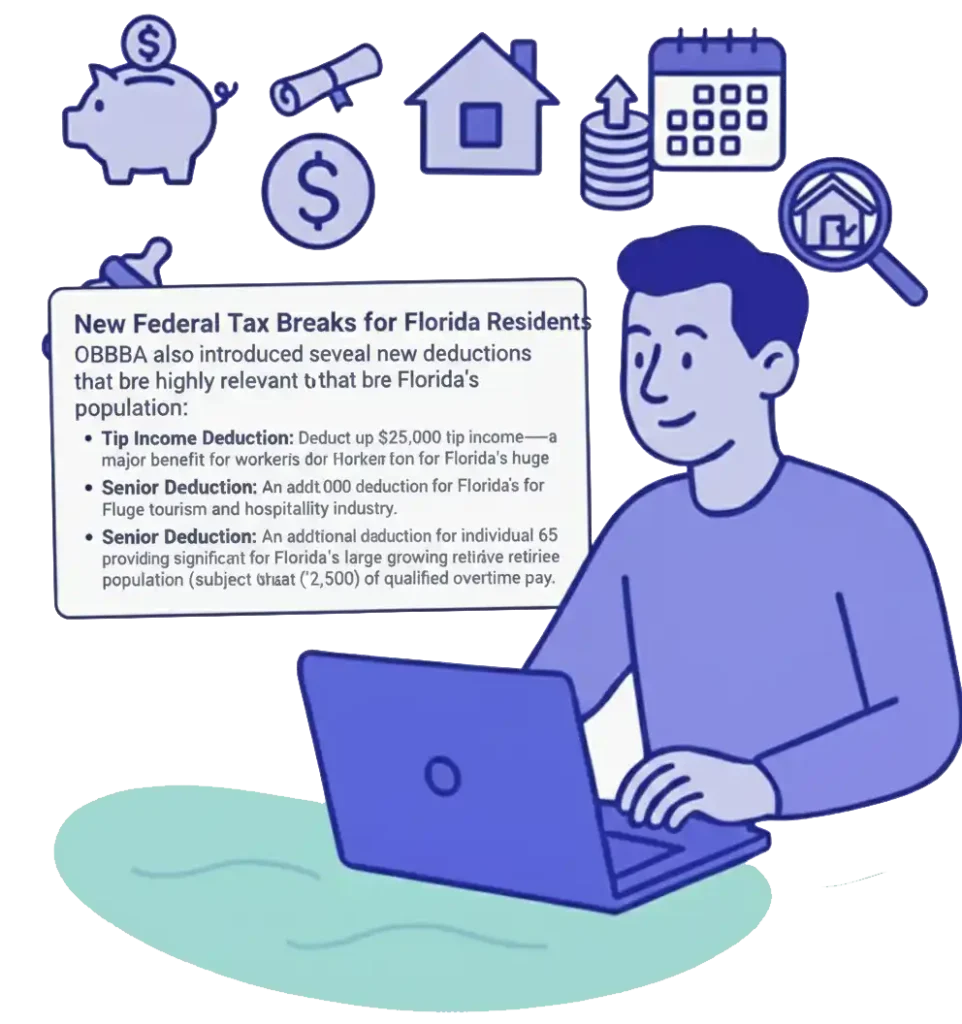
New Federal Tax Breaks for Florida Residents
OBBBA also introduced several new deductions that are highly relevant to Florida’s population:
- Tip Income Deduction: Deduct up to $25,000 in tip income—a major benefit for workers in Florida’s huge tourism and hospitality industry.
- Senior Deduction: An additional $6,000 deduction for individuals 65 and older, providing significant relief for Florida’s large and growing retiree population (subject to phase-out).
- Overtime Deduction: Deduct up to $12,500 ($25,000 for joint filers) of qualified overtime pay
Florida-Specific Considerations for 2026
Retirees: A Golden Age for Tax Planning
With federal tax rates permanently lowered, Florida retirees have a unique window of opportunity. While your retirement income is safe from state taxes, strategic planning for your federal liability is more important than ever. This is the ideal time to consider Roth conversions, manage RMDs, and structure withdrawals to take advantage of the permanent lower-rate environment.
Real Estate Investors: A Permanent Green Light
OBBBA made 100% bonus depreciation a permanent feature of the tax code. Florida’s booming real estate market, this is a powerful incentive. Investors can For immediately write off the cost of qualifying property improvements, making strategies like cost segregation more valuable than ever. Whether you own rentals in Tampa or STRs in the Keys, this permanent provision provides a stable foundation for growing your portfolio.
What Florida Taxpayers Should Do Now
- UpdateYour Financial Plan: Your old strategy, based on expiring tax cuts, is It’s time to build a new plan based on permanence and new opportunities.
- ReviewYour Business Structure: With the QBI deduction now permanent, ensure your entity (LLC, S-Corp) is optimized for maximum federal tax savings.
- Strategize Retirement Withdrawals: Work with a professional to model your federal tax liability on IRA/401(k) distributions and plan for tax-efficient Roth conversions.
- LeverageReal Estate Benefits: Plan your real estate investments to take full advantage of permanent 100% bonus depreciation.

Florida 2026 Tax FAQ
Does Florida still tax wages or retirement income?
No — Florida doesn’t have a personal income tax. Tax Foundation+2AARP States+2
Does a lack of state income tax mean 2026 doesn’t affect me?
No — federal tax changes still apply, and most Floridians file federal returns.
Will retirees owe more taxes in 2026?
Possibly — higher taxable income thresholds and lower deductions may increase federal tax on pension/IRA withdrawals and Social Security.
Are business owners impacted?
Yes — self-employed and small business owners may see higher federal tax liability if income isn’t structured properly.
Do property or investment gains get taxed?
Yes — those remain under federal jurisdiction, and 2026 changes to federal law may affect capital gains and depreciation recapture.
Get Your Personalized 2026 Florida Tax Plan
Florida’s state-level advantages are now amplified by a more favorable and permanent federal tax code. To maximize your savings, you need a strategy that aligns with this new reality. A personalized strategy session will ensure you are structured to capture every new and permanent benefit under OBBBA .