
2026 STR Loophole Updates: A New Era for Airbnb & Short-Term Rental Investors

The One, Big, Beautiful Bill Act (OBBBA) has brought significant changes to the tax landscape for short-term rental (STR) investors. While the feared expiration of many tax benefits has been averted, the rules of the game have changed. The “STR Loophole” still exists, but its power and application have been altered.
- Airbnb hosts
- VRBO operators
- STR investors
- Travel-nurse & mid-term rental owners
- Real estate professionals
- Luxury vacation rental operators
- BRRRR → STR converters
- Multi-property STR hosts
- House hackers
The STR Loophole has been one of the most powerful tax strategies in the U.S.
This comprehensive guide breaks down everything Airbnb, VRBO, and other short-term rental hosts need to know about the new tax reality for 2026 and beyond.
Even though QBI is now permanent under OBBBA, STR rules are separate — and STR owners face new compliance standards, reduced depreciation benefits, and updated participation rules.
This guide breaks down everything hosts need to know.
The STR Loophole: What Has Changed?
The STR Loophole is a powerful tax strategy that allows investors to use depreciation losses from their rental properties to offset their W-2 or other active income. This is possible because STRs are not considered “rental activities” in the same way as long-term rentals, and therefore are not subject to the same passive loss limitations.
While OBBBA did not eliminate the STR Loophole, it has changed the landscape in two critical ways:
- 1. Bonus Depreciation Phase-Out: The ability to take large upfront depreciation deductions is diminishing.
- 2. Increased IRS Scrutiny: The IRS is cracking down on improper use of the STR Loophole.
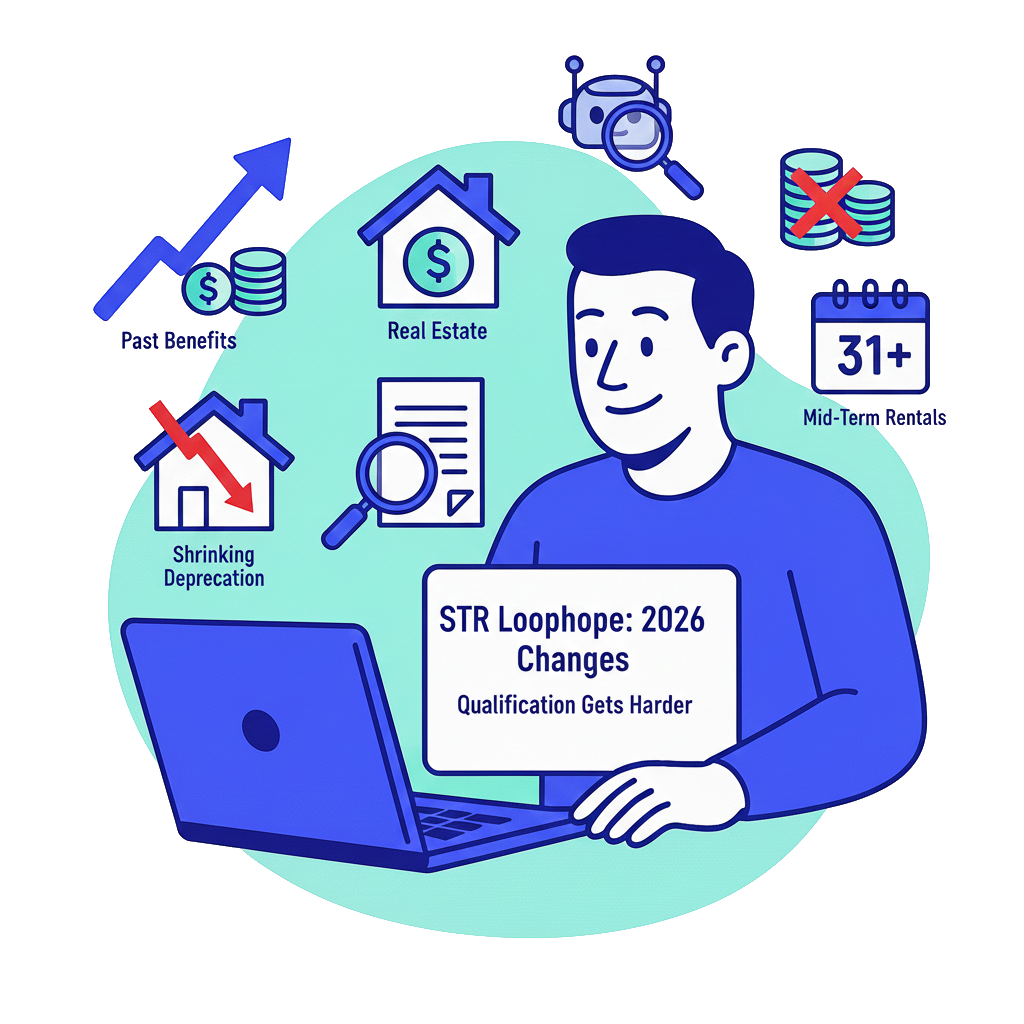
The Impact of the Bonus Depreciation Phase-Out
- 2023: 80%
- 2024: 60%
- 2025: 40%
- 2026: 20%
- 2027: 0%
Material Participation is More Important Than Ever
To qualify for the STR Loophole, you must materially participate in your STR business. This means you must be actively involved in the day-to-day management of your property. With the changes in the tax law, the IRS is expected to increase its scrutiny of material participation claims.
It is now more important than ever to keep detailed records of your time and activities related to your STR business. This includes time spent on:
- Guest communication
- Managing bookings
- Coordinating cleaning and maintenance
- Marketing your property

The QBI Deduction and STRs
The good news for STR investors is that the 20% Qualified Business Income (QBI) Deduction is now permanent. This means that if your STR business is profitable, you may be able to deduct up to 20% of your net rental income, in addition to your other deductions.
Strategic Planning for STR Investors in 2026 and Beyond
In this new tax environment, STR investors need to be more strategic than ever. Here are some key strategies to consider:
- Cost Segregation Studies: Even with the phase-out of bonus depreciation, a cost segregation study can still be a valuable tool for accelerating depreciation deductions.
- Meticulous Record-Keeping: Keep detailed logs of your material participation hours to protect yourself in the event of an audit.
- Focus on Profitability: With smaller depreciation deductions, it is more important than ever to run a profitable STR business.
- Maximize the QBI Deduction: Work with a tax professional to ensure you are taking full advantage of the permanent QBI deduction.

2026 STR FAQ
Is the STR Loophole ending in 2026?
No, the STR Loophole is not ending. However, the phase-out of bonus depreciation will reduce the size of the deductions you can take.
Can I still offset W-2 income with STR losses?
Yes, if you materially participate in your STR business, you can still use losses to offset your W-2 income.
Should I buy an STR in 2025 or 2026?
The decision of when to buy an STR depends on your individual financial situation. However, keep in mind that the bonus depreciation rate is higher in 2025 (40%) than in 2026 (20%).
Get a 2026 STR Strategy Before Rules Tighten
The STR loophole still exists — but the rules are changing fast.
Your participation logs, depreciation strategy, QBI qualification, and capital gains timing MUST be aligned before December 31, 2025.