
2026 Real Estate Tax Updates: A New Landscape for Investors

The One, Big, Beautiful Bill Act (OBBBA) has fundamentally altered the tax landscape for real estate investors. The feared expiration of the Tax Cuts and Jobs Act (TCJA) is off the table, replaced by a new set of permanent rules that create both stability and new strategic imperatives.
This guide explains the permanent changes, what they mean for your real estate investments, and the key strategies you should be considering now.
Even though QBI is now permanent under OBBBA, real estate still faces massive tax changes because TCJA expires and depreciation benefits shrink.
This page breaks down every update in simple language.
Key Federal Tax Changes for Real Estate Investors under OBBBA
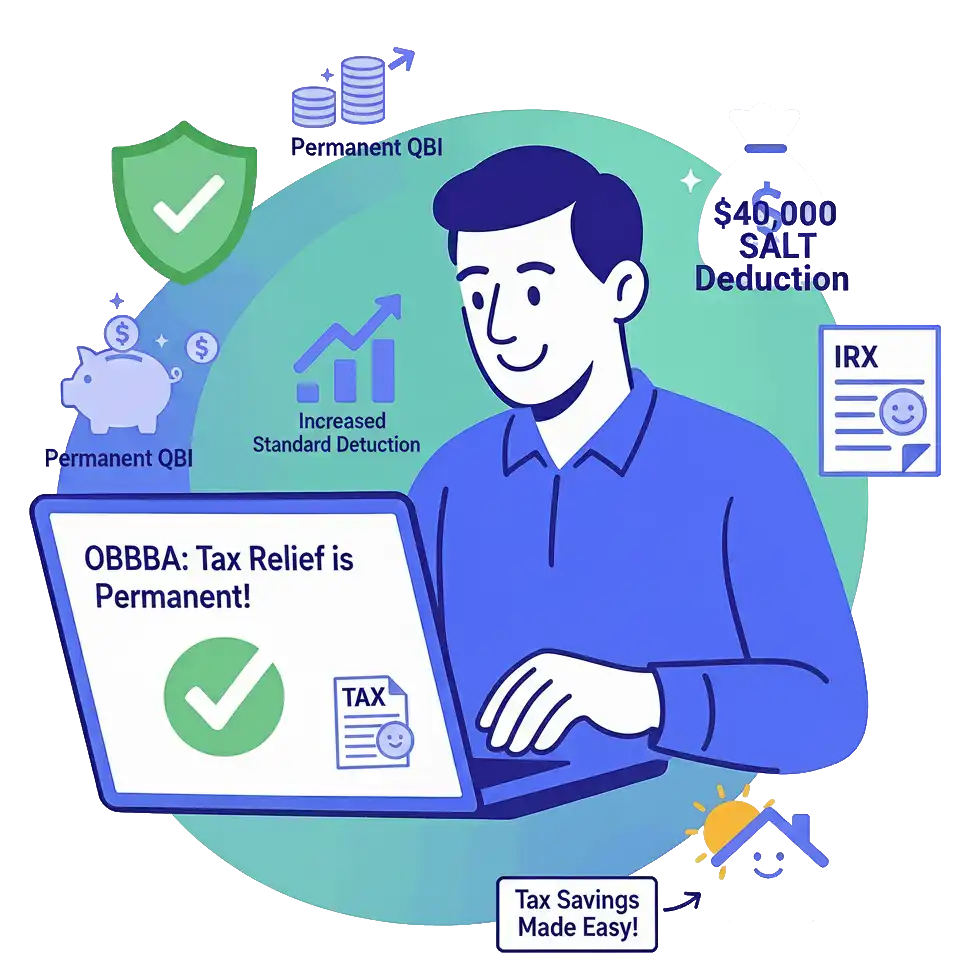
The new law provides a stable foundation for real estate tax planning. Here are the most important changes:
| Tax Provision | The Old Fear (Pre-OBBBA) | The New Reality (Post-OBBBA) |
|---|---|---|
| QBI Deduction | Expiring in 2026 | Permanent |
| Individual Tax Brackets | Rising to pre-TCJA levels | Permanent at lower TCJA rates |
| Standard Deduction | Dropping by nearly 50% | Permanent and increasing with inflation |
| SALT Deduction | Capped at $10,000 | Increased to $40,000 for most taxpayers |
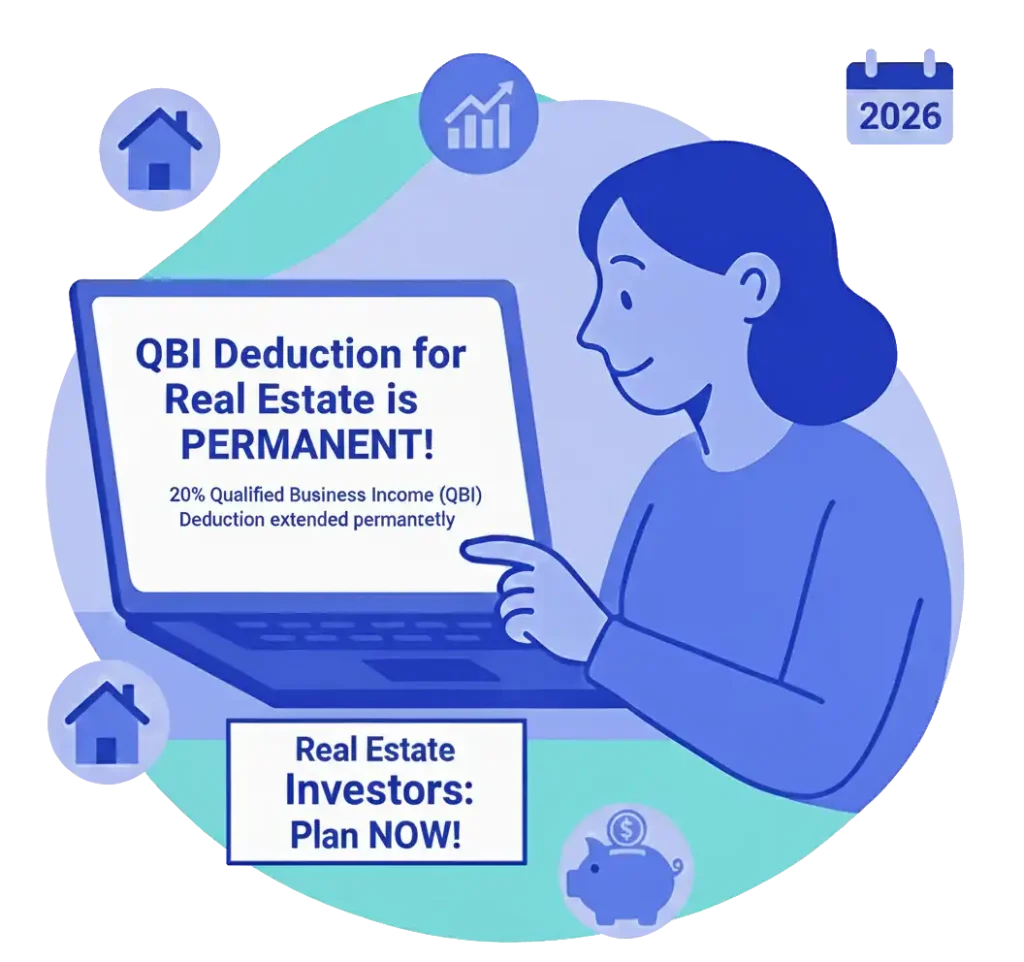
The QBI Deduction for Real Estate is PERMANENT
The permanent extension of the 20% Qualified Business Income (QBI) Deduction is a major win for real estate investors. This allows owners of rental properties and other real estate businesses to continue to deduct up to 20% of their qualified business income.
Bonus Depreciation Phase-Out Continues
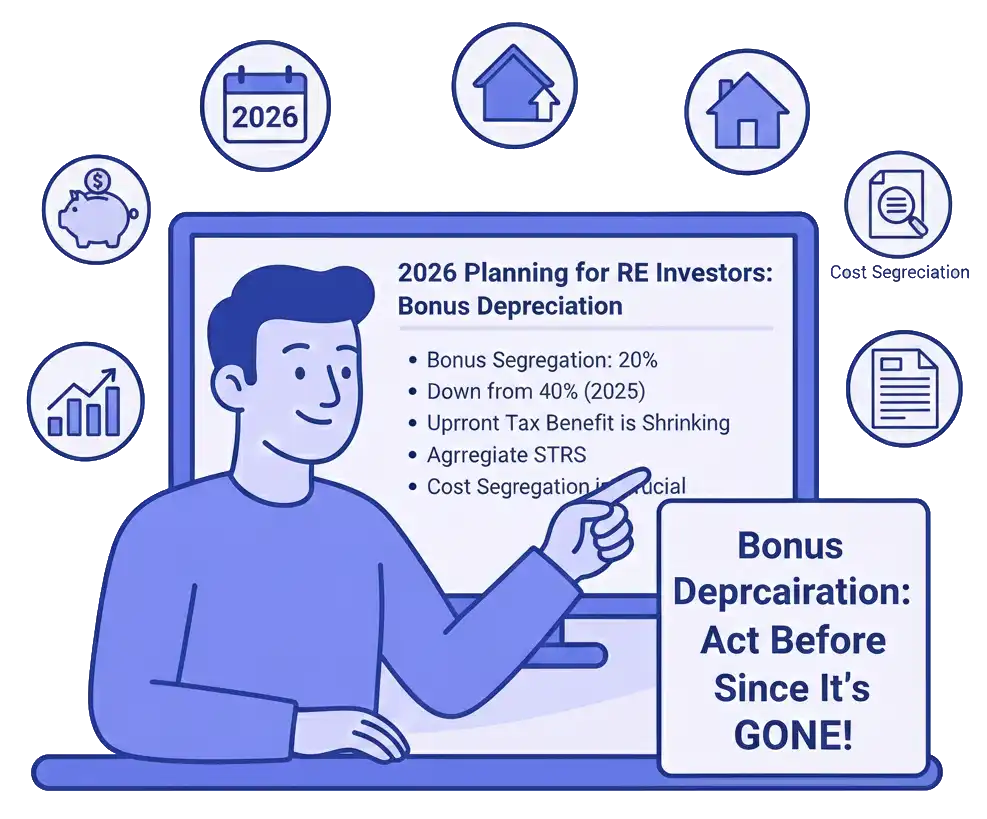
While many TCJA provisions are now permanent, it is crucial to remember that bonus depreciation is still phasing out. For 2026, the bonus depreciation rate is 20%, down from 40% in 2025. This means that the upfront tax benefit of acquiring new properties and making improvements is diminishing each year.
This makes cost segregation studies more important than ever to maximize depreciation deductions.
Short-Term Rentals (STRs) and the STR Loophole
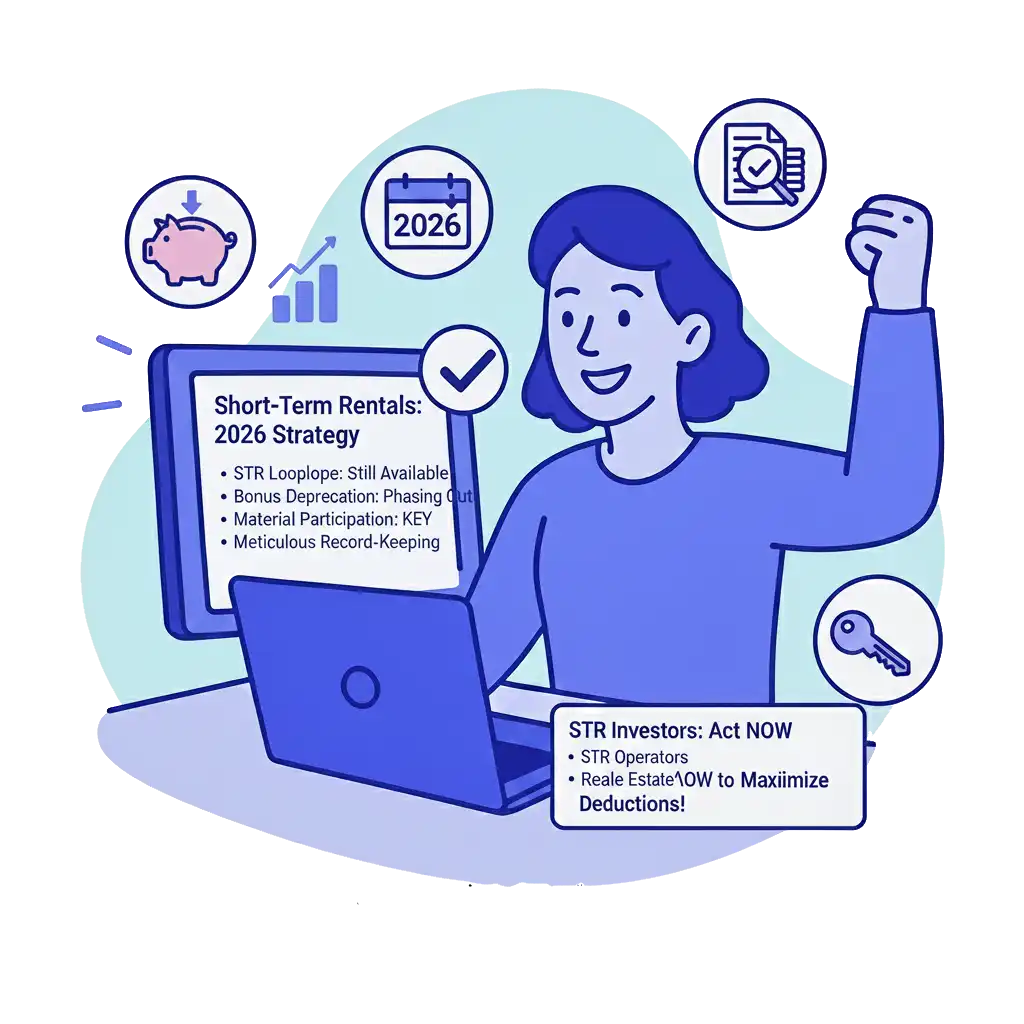
The “STR Loophole” (which allows investors to use depreciation from STRs to shelter other income) is still available, but the phase-out of bonus depreciation reduces its power. STR owners should focus on meticulous record-keeping to prove material participation and maximize their deductions.
Real Estate Professional Status (REPS)
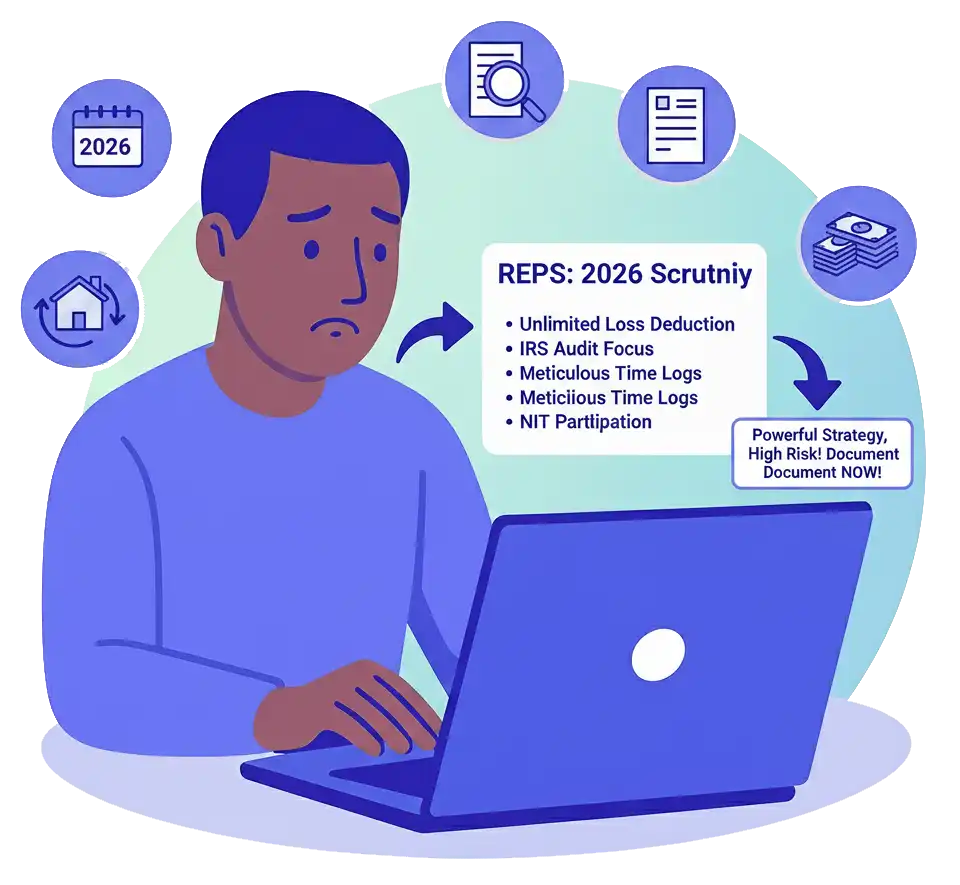
REPS remains one of the most powerful tax strategies for real estate investors, allowing them to deduct unlimited rental losses against other income. With the new tax landscape, the IRS is expected to increase scrutiny of REPS qualifications. Proper documentation of hours and activities is essential.
1031 Exchanges
1031 exchanges are still a valuable tool for deferring capital gains taxes on the sale of investment properties. With the permanence of the current capital gains tax rates, the strategic use of 1031 exchanges becomes even more important.

What Real Estate Investors Should Do Now
Cost Segregation Studies
With bonus depreciation phasing out, a cost segregation study is the best way to accelerate depreciation deductions and reduce your taxable income.
Entity Structuring
Review your entity structure (LLC, S-Corp, etc.) to ensure it is optimized for the new tax landscape.
REPS Documentation
If you are claiming REPS, ensure your documentation is airtight.
Frequently Asked Questions
Do real estate taxes go up in 2026?
Not necessarily. While the phase-out of bonus depreciation will increase taxable income for some, the permanence of the QBI deduction and lower tax brackets will be beneficial for many.
Is REPS still available?
Yes, REPS is still available, but expect increased IRS scrutiny.
Is 1031 still allowed?
Yes, 1031 exchanges are still allowed.
Does QBI still apply to rentals?
Yes, the QBI deduction is now permanent and continues to apply to qualifying rental real estate businesses.
Build Your 2026 Real Estate Tax Strategy Before Prices Shift
Real estate investors face some of the biggest 2026 tax changes.
Your gains, depreciation strategy, entity setup, STR classification, and REPS documentation must be aligned to avoid overpaying.